Book review

The hooligan and the psychopath

From our UK edition

A Season with Verona (2002), Tim Parks’s account of a year on tour with the Italian football club Hellas Verona’s notorious travelling fans (motto ‘we have a dream in our heads, to burn the south’), contains a memorable scene in which Parks spots a teenage boy screaming abuse at some rival supporters before returning to the mobile to assure his mother that, no, they don’t have much homework that weekend. Here, doubtless, was the raw material for 17-year-old Hellas fan Mauro Duckworth, whose absence from his father’s investiture with the honorary freedom of the city is explained by his confinement in a Brescia police cell after a pitched battle with the local constabulary.

The case of the amnesiac autobiographer

From our UK edition

In October 2002, 28-year-old David Stuart MacLean woke up at Hyderabad railway station. He was standing at the time, and had no idea where or who he was. A kindly tourist police officer reassured him that his case wasn’t unusual: plenty of young people came to India, took too many drugs and ended up similarly ‘confused’. MacLean immediately had a flashback to injecting heroin with a redhead called Christina — but this proved to be untrue. (Nor was the universe, as he then believed, created by Jim Henson at a studio in Burbank.) Instead, after he’d been taken to a local mental hospital, the doctor diagnosed the side effects of Lariam, an anti-malaria drug with a history of causing psychosis in a minority of users.

Fifty years of Inspector Wexford – and a new detective on the block

From our UK edition

Early on in The Girl Next Door, Ruth Rendell gives the reader a sharp nudge. ‘Colin Quell had very little interest in people, what they might think, how they might act in the future.’ The novel is Rendell’s latest stand alone mystery, the uninterested Quell its detective inspector. Forcibly she announces that neither physically nor temperamentally is this Wexford territory. Quell’s stomping grounds are the outer suburbs of London, where the capital spills into Essex, specifically Loughton, where once the octogenarian Rendell herself attended the County High School. In the present day, though not at the time of the novel’s buried crime, Loughton lacks the residual rural outlook of Wexford’s Kingsmarkham, itself inspired by Midhurst in West Sussex.

Chris Barber should let someone meaner tell his story

From our UK edition

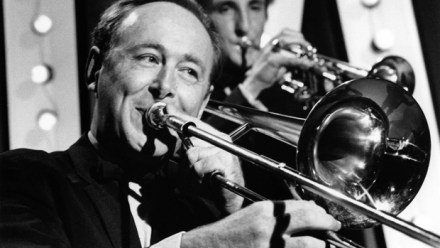
Chris Barber, still going strong with his big band, was born in 1930. He heard jazz as a schoolboy on the radio programme Music While You Work and tried to find out more about this wonderful music. He soon discovered that, in his words, ‘black music was the real thing, although some white people managed it pretty well’. By the time I became a secondary schoolboy in the 1950s, Chris Barber’s band was the sensation of the age. Chris played the trombone, sometimes switching to harmonica on blues numbers. He and his glamorous Northern Irish wife, Ottilie Patterson, seemed a golden couple. Ottilie had a superb voice for the blues, ancient or modern. She sounded like a classic blues singer of the 1920s, presenting a style that had died out in North America.

What’s eating London’s songbirds?

From our UK edition

This book, with its absurdly uninformative photographs, dismal charts and smattering of charmless drawings, looks like a report. A pity, because it is a thorough and entertaining history; the first to cover the entire London area within a 20-mile radius of St Paul’s, from the earliest record, in Roman times, to the present. A chronology lists the date when the 369 species were first recorded, from the red kite in the 2nd century AD to Bonaparte’s gull and the buff-bellied pipit in 2012. The last named illustrate the recent rise in esoteric sightings following the postwar birth of the bearded-birder brigade, with their competitive box-ticking and ever more hi-tech equipment. There are many surprises.

The Zone of Interest is grubby, creepy – and Martin Amis’s best for 25 years

From our UK edition

‘Everybody could see that this man was not a “monster”, but it was difficult indeed not to suspect that he was a clown,’ wrote Hannah Arendt of Adolf Eichmann, in Eichmann in Jerusalem. Indeed, Eichmann was certified as ‘normal’ by half a dozen psychiatrists. On more than one occasion in Martin Amis’s troubling new novel one of its main characters, the fictionalised commandant of a thinly disguised Auschwitz, declares himself ‘completely normal’. He also happens to be an oaf, a clown. We are dealing, then, with the banality of evil. Set in the months from August 1942 to April 1943, when it became clear that the Germans were going to lose the war and that the Final Solution had better be hurried up, the story is told in three voices.

The lost Victorian who sculpted Churchill

From our UK edition

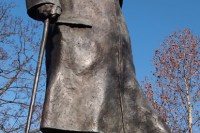
Ivor Roberts-Jones was in many ways the right artist at the wrong time. Had the sculptor been born a few decades earlier and worked in the Victorian age, when statues of the builders and defenders of empire were erected proudly and prolifically across the land, he’d surely have received no end of garlands. As it is, Roberts-Jones (1913–96) found himself constantly battling against artistic fashions and today is barely even talked about. Born in the Welsh border town of Oswestry, he moved to London to study at the Royal Academy Schools and Goldsmiths College (the latter’s fame as a breeding ground for conceptual excess still a long way into the future).

Soldier, poet, lover, spy: just the man to translate Proust

From our UK edition

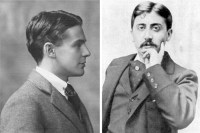
Charles Kenneth Scott Moncrieff’s Englishing of Proust — widely and immediately agreed to be one of the greatest literary translations of all time — very nearly didn’t happen. Scott Moncrieff only suggested the project to his publisher after they rejected a collection of satirical squibs in verse (sample: ‘Sir Philip Sassoon is the Member for Hythe;/ He is opulent, generous, swarthy and lithe.’). Like any good hack, he had another suggestion up his sleeve: there was this character Proust just starting to be published — making a bit of noise in France. Constable didn’t immediately see the value: ‘They replied that they did not see much use in publishing a translation of Prevost [sic].

Interviews with the great, the good, the less great and the really quite bad

From our UK edition

The TV chat show, if not actually dead, has been in intensive care for a while now, hooked up to machines that go bleep. But the long-form interview, as pioneered by John Freeman’s Face to Face in the 1960s, is a tougher customer. Laurie Taylor’s In Confidence series on Sky Arts has featured the great and the good, the less great and the really quite bad, all of them attracted by the professor’s gentle sociological probing and the show’s reliably modest viewing figures, which suggest that no one will notice if it all goes terribly wrong. This book is Taylor’s artful distillation of more than 60 interviews, shaped according to his own tastes and preferences. Cleo Laine was his teenage crush, Alan Ayckbourn is a friend from way back, E.L.

Reynolds produced some of the finest portraits of the 18th century – and a few of the silliest

From our UK edition

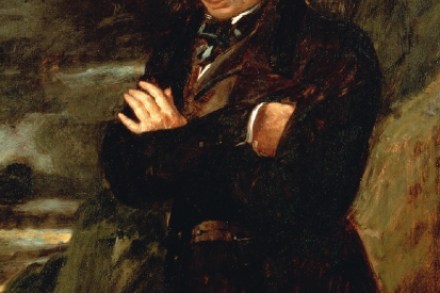
On Monday 21 April 1760 Joshua Reynolds had a busy day. Through the morning and the afternoon he had a series of sitters. Each of these stayed for an hour in the painter’s premises on St Martin’s Lane and was no doubt ‘greatly entertained’ — as another of Reynolds’s clients recorded — by watching the progress of their portraits in a large looking-glass strategically placed behind the easel so the subject could view the artist at work. However, Mark Hallett suggests in this masterly and pioneering new study of Reynolds at work, the most interesting hour of the day would have begun at one o’clock. That was the time at which the Revd Laurence Sterne arrived for his appointment.

The Jane Austen of Brazil

From our UK edition

When the American poet Elizabeth Bishop arrived in Brazil in 1951, she expected to spend two weeks there and ended up staying 15 years, a time of emotional turbulence and creative productivity. Bishop wrote poetry and prose and translated Latin American writers, including Octavio Paz, but this project, suggested by friends as a way to improve her Portuguese, is something completely different. It’s a teenager’s diary, written between 1893 and 1895 in the remote mining town of Diamantina, the highest town in Brazil. It’s a delightful, funny and revealing memoir, a little bit of Austen in the Americas. Helena’s real name was Alice Dayrell, (the pseudonym came from her English relations).

Falling in love with birds of prey

From our UK edition

Is it the feathers that do the trick? The severely truculent expressions on their faces? Or is it their ancient origins? Or the places where they live? Whatever their secret, birds of prey have exercised an extraordinary hold on human beings for tens of thousands of years. In the bad old days, their fans ranged from ancient Teutonic kings to Hitler’s right-hand-man Hermann Göring. Today, it seems to be artistic types and country-lovers who keep the flag flying. Or, do I mean keep the tail feathers fluttering? In this exhilaratingly honest and passionately broadminded book, the poet and Cambridge academic Helen Macdonald combines her ‘sorry story’ of hawk addiction with the similar trials and tribulations suffered by the great T.H.

An invisibility cloak? You might just be able to see it on the horizon…

From our UK edition

The best books by good writers — and Philip Ball is a very good writer indeed — are sometimes the ones that don’t quite work. This brilliant study of how occultists and scientists alike have attempted to see the invisible is very much that kind of fascinating failure. Its subject is just too large — and, well, it is just too hard to see its edges clearly. Ball begins with pseudo-medieval recipes for invisibility: Take a black cat and a new pot, a mirror, a lighter, coal and tinder. Gather water from a fountain at the strike of midnight...

James Bond’s secret: he’s Jamaican

From our UK edition

Ian Fleming’s first visit to Jamaica was pure James Bond. In 1943, as assistant to the Director of Naval Intelligence, he flew from Miami to Kingston to attend an Anglo-American naval conference and to investigate the rumour that Axel Wenner-Gren, a rich Swede and supposed Nazi, had built a secret submarine base at Hog Island, near Nassau. He was accompanied by his old friend Ivar Bryce, who was also in intelligence, and who put him up at a house his wife had recently bought. As they left the island, Fleming told Bryce, ‘When we have won this blasted war, I am going to live in Jamaica… swim in the sea and write books.

Murakami drops magic for realism in this tale of a lonely Tokyo engineer

From our UK edition

When Haruki Murakami — Japan’s most successful novelist at home and abroad — was interviewed by the Paris Review in 2004, the questions weren’t always characterised by their pithiness. Many of his novels, the interviewer suggested at one point, are variations on a theme: a man has been abandoned by, or has otherwise lost, the object of his desire, and is drawn by his inability to forget her into a parallel world that seems to offer the possibility of regaining what he has lost, a possibility that life, as he (and the reader) knows it, can never offer. Would you agree with this characterisation? Murakami’s answer, in full, was ‘Yes’. Ten years on, his new novel won’t require him to revise that answer a great deal.

Banned – and booming: the strange world of Chinese golf

From our UK edition

I was in Shanghai interviewing a Chinese film director and an actor. We were discussing government censorship. How did anyone manage in China, I lamented. The two men burst out laughing. I had not understood at all. ‘Because everything is forbidden, everything is permitted. You are free to do anything,’ they assured me. Dan Washburn in his book The Forbidden Game: Golf and the Chinese Dream, uses golf and the business around it to pin down the paradox that is China today. Golf is his back door into understanding the last 20 years, as China has grappled with modernity and an unnerving speed of change.

Creepy, dizzying and dark: a choice of recent crime fiction

From our UK edition

Philip Kerr is best known for his excellent Bernie Gunther series about a detective trying to survive with his integrity more or less intact in Nazi Germany. His latest novel, however, is a standalone thriller set in literary territory that might have appealed to Hitchcock. Research (Quercus, £18.99, Spectator Bookshop, £15.99) opens with the murder of the beautiful Irish wife of one of the world’s bestselling novelists in the couple’s luxurious Monaco apartment. Her husband, John Houston, has disappeared. He is the prime suspect. Houston researches and plans his thrillers but employs an ‘atelier’ of jobbing novelists to do the hard grind of writing what he describes as ‘books for people who have never read them before’.

Potato prints, paintings and the Soviet Union: the real Miss Jean Brodie

From our UK edition

During the second world war, when not only food, but paper and artists’ materials were scarce, Peggy Angus made a virtue of necessity. Potatoes were one of the few foods not rationed, so she began cutting them in half, carving designs into the cut side and printing them onto old newspapers in repeated patterns of oak leaves, smiling suns, waves, chevrons and Welsh dragons. It was with these playful, naïve designs — which she later turned into tiles and wallpapers — that she made her name. Angus, like Eric Ravilious and Edward Bawden, her contemporaries at the Royal College of Art, moved easily between media: potato prints, silkscreens, oil paintings, watercolours, and ‘stained glass’ made from coloured tissue paper.