Book review

Religion does not poison everything – everything poisons religion

From our UK edition

It slips so easily off the tongue. In fact, it’s a modern mantra. ‘Religion causes all the wars.’ Karen Armstrong claims to have heard it tossed off by American psychiatrists, London taxi-drivers and pretty much everyone else. Yet it’s an odd thing to say. For a start, which wars are we talking about? Among the many causes advanced for the Great War, ranging from the train timetables on the continent to the Kaiser’s withered left arm, I have never heard religion mentioned. Same with the second world war.

Rebellion without a cause: Peter Ackroyd’s curious Civil War

From our UK edition

How our perceptions of 17th-century England are dominated by the convulsions of the two decades at its centre! Peter Ackroyd’s book, the third of what have been announced as six volumes of his History of England, covers the period from the accession of James I in 1603 to the overthrow of his grandson James II in 1688. His priority is established by his title and by the facing portraits of Charles I and Oliver Cromwell on the front cover. He gives proportionately much more space to the conflicts of 1640–60 than to events on either side of them.

This new translation of Crime and Punishment is a masterpiece

From our UK edition

Subscribers to this periodical, while Mark Amory has been literary editor, must often have felt they were enjoying an incomparable feast. Even The Spectator at its best, however, could not quite rival the periodical the Russian Herald (Russkii Vestnik) under the editorship of M.N. Katkov. This phenomenal editor, in the year 1866, secured serial publication of the two giants of Russian fiction. Tolstoy had been slow in giving Katkov enough material for continuous serial publication of War and Peace. To fill the gap, Katkov enlisted Dostoevsky. Readers could enjoy episodes from War and Peace in the spring numbers of the magazine. Then in May, they could start Crime and Punishment.

Confused, unbalanced, brilliant: the Blanche Dubois of Tennessee Williams biographies

From our UK edition

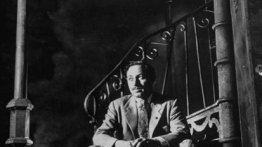
Anyone for Tennessee? At a best guess, the answer to that’s yes. There’s scarcely a moment these days when there isn’t a Williams play on somewhere in the West End or along the Great White Way. One reason for this is that he wrote such succulent roles, and I don’t mean just his steamroller leads, though for a kind of bruised or brittle actress, Blanche Dubois is as close to a female Hamlet as it gets. In A Streetcar Named Desire, there’s also the surly stud Stanley; Stella, his sex-drunk bride; and the courtly, perspiring Mitch, bewitched by Blanche’s blend of magic. Then think of The Glass Menagerie, which has the smothering mother Amanda, the crippled Laura, and the conflicted Tom, who abandons both to pursue his vocation as an author.

When Rachel Cusk went to Greece: would she be nice or nasty?

From our UK edition

Last year in Athens, rumours raced about Rachel Cusk’s creative writing classes at the British Council. Some of the (mostly Athenian) pupils revered her for her intelligence and pitiless honesty, while others reviled her for her ‘colonial attitude’ and an apparent antipathy towards Greeks. One might suspect Greeks of tending towards intense emotional reactions, but the phlegmatic British have had no less divided opinions about Cusk’s books. The author of seven novels, she was amongst Granta’s best young writers in 2003, yet her memoirs about the horrors of having babies (A Life’s Work: On Becoming a Mother) and about the break-up of her ten-year marriage (Aftermath) provoked outrage as well as adulation.

Charles Saatchi’s new book of photos makes me feel sick

From our UK edition

Charles Saatchi, the gallery owner, has created his own Chamber of Horrors in this thick, square book, ‘inspired by striking photographs’. One of the most successful of these is a black and white image of male and female figures: ‘Gruesome and gaunt, they look like extras from an early piece of zombie cinema.’ They are, it soon becomes clear, oddments saved by firemen from a blaze at Madame Tussauds in 1925. Madame Tussaud, the author reminds us, ‘would ‘tiptoe through the piles of corpses behind the guillotine to discover the most illustrious of the heads, and would promptly make casts of them, her hands bathed in their blood’.

How dare this author trash one of the great screenwriters of the 20th century?

From our UK edition

Should one say ‘vicious circle’ or ‘vicious cycle’? That’s a question that just goes round and round inside my head. In the case of the American novelist and screenwriter William Goldman, he has always abhorred reviewers (‘whores and failures’, in his eyes), and the reviewers have returned the compliment. When he was paid $400,000 for the script of Butch Cassidy and the Sundance Kid in 1969, it was the highest price ever for a screenplay, and the pundits were quick to pan it. The public differed, and the film was a smash hit (the script, of course, is a masterpiece). But it’s interesting to consider why Goldman has always been quite so critical of the critics.

Margaret Atwood settles her accounts with this new short story collection

From our UK edition

Margaret Atwood is in the first rank of literary fame and her trophy cabinet is handsomely stocked; yet she has never fully shaken off the suspicion that her politics have spoiled her writing. Despite the practised prose, delicate observation and steady-handed drip-feed of plot, there sometimes rises off the page a teacherly spirit that grabs you by the lapels and says, ‘Now listen here’. Gender relations, climate change; Atwood would probably say these subjects are more important than whether the direction of a book isn’t just a bit too obvious. And maybe she’s right. But it bodes well for the reader that in Stone Mattress, her new collection of ‘tales’, she gravitates towards a more personal subject.

It’s not easy for a middle-aged woman to get inside the head of a 12-year-old innkeeper’s son in 1914

From our UK edition

Esther Freud wrote dazzlingly in the first person through the eyes of a five-year-old child in her first novel, Hideous Kinky (1992). What made that book so captivating was the young narrator’s sweet, naïve total acceptance of the chaotically nomadic existence her hippy mother brought her to in Morocco. The first-person voice was enchantingly concise, always noticing colours, as little girls do (‘the red and green town’), and unquestioningly stating the facts: ‘Bea and I waited at the Polio school while Mum looked for somewhere else to live.’ Freud’s latest novel, Mr Mac and Me, is also written in the first person through the eyes of a child: a 12-year-old boy in 1914 called Thomas Maggs, the only surviving son in a large and poor innkeeping family near Southwold.

Britain’s own game of thrones

From our UK edition

Thank goodness for Game of Thrones. I think. Apparently it is inspired by the Wars of the Roses, drawing inspiration from the bloody, ruthless machinations of England’s power-brokers at the waning of the Middle Ages. Anyway, plenty of readers and watchers of George R.R. Martin’s work think that it is; what with that and BBC television’s recent The White Queen and She-Wolves series and (spot the marketing opportunity) the Shakespearean trilogy of, ahem, The Hollow Crown, undergraduates are queuing up for courses on this period of history. As I teach one, that has to be a good thing. Chuck ‘the Tudors’ into the title of your book and you’re on to a sure-fire winner.

A flashlight into the cellar of the lawless ‘dark net’

From our UK edition

This year marks the 25th anniversary of the world wide web, and I wonder whether its inventor, Tim Berners-Lee, would still have given it away had he known where it would be now. Had he foreseen Google and Facebook and Twitter, the conquest of web porn and the normalisation among teen-agers of misogyny and sodomy, the endless harvesting and mining of data, the surveillance, the cruelty and vulgarity and invasive crassness, the commercialisation of everything — would he still have said, ‘Have it for free, in the common good’? That’s a question that only he can answer. But the great fascination of the web lies in the near-asymptotic rate at which it has grown, not only in scope but in its domination of our lives.

Bees make magic: an inspirational case for biodiversity

From our UK edition

The importance of biodiversity, a handy concept that embraces diversity of eco-systems, species, genes and molecules, has been promoted for over three decades. Yet much life on Earth still faces unsustainable loss or extinction, perhaps because, as an otherwise upbeat Dave Goulson notes in A Buzz in the Meadow, ‘at a global level, conservation efforts so far have been a dismal failure’. A bumblebee specialist with an extensive interest in the natural world, Goulson presents an inspirational case for awareness and appreciation of the teeming diversity of living things that exists even in our gardens or the local park.

A Troubles novel with plenty of violence and, thank heaven, some sex too

From our UK edition

‘The Anglo-Irish, their tribe, are dying. . . . They will go without a struggle, unlamented,’ Christopher Bland, 76, declares at the outset of his exciting, poignant and ultimately consoling debut novel. He refers particularly to the Protestant landed gentry, who achieved political and economic ascendancy in Ireland even before the Penal Laws disenfranchised and dispossessed the Catholic majority, until, in the 20th century, rebellion and civil war brought about independence, with incomplete national unity.

Corrie and ready-salted crisps: the years when modern Britain began

From our UK edition

In Burberry’s on Regent Street on a dank December day in 1959, David Kynaston records, ‘a young Canadian writer, Leonard Cohen [...] bought a not-yet-famous blue raincoat’. For those joining Kynaston’s groaning historical wagon train for the first time, this is a sample of the sort of thing with which it abounds. Here is a fun little fact — gathered in from a distinctly marginal source — dropped in a wry half-sentence where it belongs chronologically, but looking forward to the future: a stitch in time. A Shake of the Dice is the sixth book in Tales of a New Jerusalem, the great historian’s ‘projected sequence of books about Britain between 1945 and 1979’. He is chewing his way through the giant lettuce-leaf of his chosen decades like a particularly thorough tortoise.

Improbable, unconvincing and lazy – Ian McEwan’s latest is unforgivable

From our UK edition

The Children Act could hardly be more attuned to the temper of the times, appearing just as our newspapers are full of a story about parents absconding to Spain with their critically ill child. The incident makes us wonder who should have ultimate responsibility for a sick minor: his parents, his doctors, the law? Ian McEwan’s short novel examines these very questions and, like the family currently in the headlines, his patient is a Jehovah’s Witness. Here the boy is suffering from leukemia and requires immediate treatment, but his religion forbids the transfusion of blood. The book’s heroine, Fiona Maye, is a judge whose task it is to determine what is in the boy’s best interests.

A book about human nature that makes your head spin – in a good way

From our UK edition

Vincent Deary is a therapist, and this book is the first part of a trilogy. How We Are is about human nature. Books two and three will be called How We Break and How We Mend. Three serious tomes, backed by a serious publisher. You open it thinking: this is not going to be an easy self-help book where everything is mapped out for you. It won’t be a walk in the park. In fact, pretty much the first thing Deary does is to examine the concept of walking in a park. ‘“A walk in the park” is a synonym for ease,’ he tells us, ‘because the park knows how to walk.’ In other words, when you enter a park, you don’t have to make any decisions, because the park has already made them for you. The paths are marked out. All you have to do is follow them.

Enjoy gin but don’t read books? Or read them only while drinking gin? This is the book for you

From our UK edition

Gin Glorious Gin: How Mother’s Ruin Became the Spirit of London is a jaunty and diverting history of ‘a wonderful drink that embodies the best of London’, which is a judgment that would raise eyebrows even at closing time in Soho. It is not a remotely scholarly book. There are no notes or index, and on the second page Olivia Williams informs us that the first citation for gin in the OED is from 1714, as ‘an infamous liquor’. It’s actually from 1723, as ‘the infamous liquor’ — mere details, but still. I stopped checking things after that.

How on earth did David Mitchell’s third-rate fantasy make the Man Booker longlist?

From our UK edition

Reincarnation has hovered over David Mitchell’s novels since the birth of his remarkable career. His haunting debut novel, Ghostwritten (1999), featured a disembodied spirit that wandered around making itself at home in other people’s souls. Transmigration spread throughout that book — the lives of its characters intertwined in brilliantly intricate ways — and has continued to throughout Mitchell’s fiction. When his characters aren’t being reborn as new people in one book, they’re turning up alive and well for a second outing in another. His latest, The Bone Clocks, continues the cycle of endless rebirth. Like four out of five of his earlier works, this supernatural, intertwining epic has made it onto the Man Booker longlist.