Bletchley park

A feast of wartime espionage: the latest crime fiction

Do novelists need credentials? Once, almost a century ago, the vogue for hard-boiled fiction meant that in the masculine Hemingway hegemony then holding sway, novelists needed to be graduates of the ‘University of Life’. Writers, it was argued, had to spend their apprenticeship riding the rails, tending bar in tough-guy saloons and doing almost any work that could be described as manual labour.  This changed postwar, with greater affluence and millions more people in higher education, including women. Among them were a growing number taking postgraduate degrees in creative writing – most famously at the Iowa Writers’ Workshop, but followed quite credibly in this country at the University of East Anglia.
Rebels and whistleblowers: a choice of recent crime fiction

No one joins the CIA for the money, which might explain the spate of thrillers now emerging from former officers. The latest addition, The Peacock and the Sparrow (No Exit Press, £7.99) by I. S. Berry, comes festooned with praise from other CIA officers turned authors. Set in Bahrain during the Arab Spring, the novel is told in the first person by Shane Collins, a veteran CIA officer nearing the end of his tour there. Divorced, estranged from his son and engaged in a desultory affair with the wife of a colleague, Collins is weary. As his source Rashid declares: ‘This is your problem. You have no expectations... You are like this air. Empty.’ Rashid is one of the leaders of the increasingly restive dissidents in Bahrain, whose corrupt king lives distanced from his subjects.

The philosophical puzzles of the British Socrates

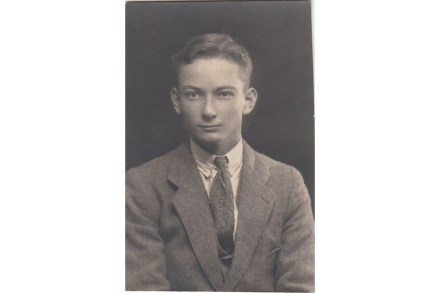
Imagine your donkey and mine graze in the same field. One day I conceive a dislike for my donkey and shoot it: on examining the victim, though, I realise with horror I’ve shot your donkey. Or imagine a slightly different scenario. As before, I draw a bead, but just as I pull the trigger, my donkey – perhaps more invested in this vale of tears than yours – steps out of the firing line and I shoot your donkey. Now here’s the question. When, in either case, I turn up on your doorstep with the remains of your donkey, how should I frame my apology to you? In his 1956 presidential address to the Aristotelian Society, J.L. Austin (1911-1960), White’s Professor of Philosophy at the University of Oxford, a man who, M.W.

Behind the Five Eyes intelligence alliance

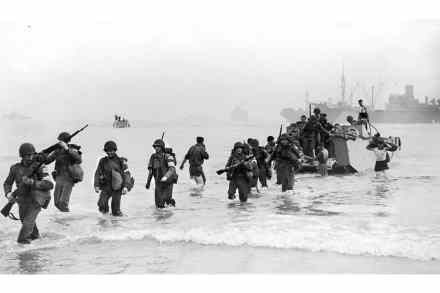
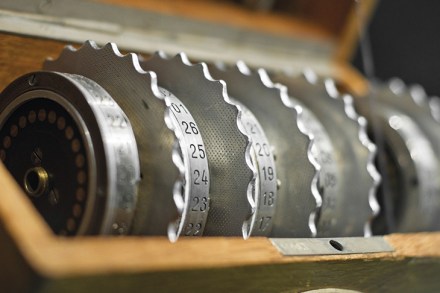
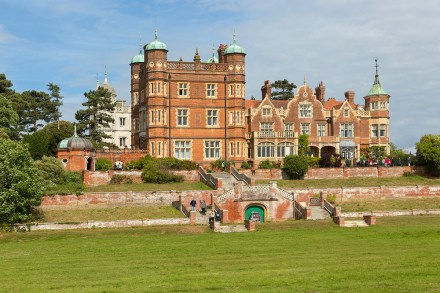
In February 1941 four US officers were landed from a British warship at Sheerness, bundled into vehicles and driven to Bletchley Park, Buckinghamshire, a large redbrick house amid wartime huts. They were greeted at midnight by the head of Bletchley with sherry, whisky being in short supply. They carried with them a secret device called the Purple Machine, which deciphered previously impregnable Japanese communications. In return, they were given full details of Bletchley’s breaking of the German Enigma cipher. Yet it would be another ten months before the US entered the war.

Behind the veil of secrecy: GCHQ emerges from the shadows

Is it ever possible to truly see inside the heart of another? To divine hidden intentions and the darkest of thoughts? For a long time — before we all became sourly aware of our own computers spying on us like HAL 9000, and flashing ads for haemorrhoid ointments — this godlike omniscience was ascribed to the secret listeners at GCHQ. Above all other intelligence agencies it held a special place in the imaginations of urban paranoiacs. The organisation itself nurtured this sinister reputation by its insistence upon remaining deep in the shadows, even as its siblings MI5 and MI6 boldly came out. Not all that many years ago, simply publishing the initials GCHQ could invite grief.