Bitcoin

What Bitcoin’s crypto critics get wrong

From our UK edition

What's the truth about Bitcoin? Critics couldn't be clearer: it's a fad that can’t decide whether it’s a currency or a speculative investment. 'You’re betting, essentially, on being the last person holding the bomb before it goes off,' wrote Sam Leith on Coffee House. Many others agree. But Bitcoin's critics are wrong: there's nothing faddish about it. Bitcoin is a monetary revolution and is here to stay. Perhaps it's no surprise that Bitcoin has attracted its sceptics. Understanding what it's about isn't easy. In short, Bitcoin is a monetary network, an incorruptible ledger, with the money supply fixed by code (there will only ever be 21 million Bitcoin).

The Bitcoin delusion

From our UK edition

Cast your mind back a few years to last week – when there was much laughing and wailing at the collapse of Squid coin, a meme cryptocurrency launched to capitalise on the popular Netflix show. It had gone to market, had rocketed 23 million per cent in value to $28,000-odd a unit... and then plummeted to zero on Monday morning after the creators cashed out for real-world money. Yet like the battle-hardened protagonist of the show, amazingly, the currency is down but not out. Yesterday it was reported to have been the top gainer in the global crypto market, having rocketed more than 800 per cent in 24 hours to... $0.65. Not much consolation, I suppose, to those who bought the peak, but hope obviously springs eternal.

Will China’s ‘digital yuan’ reinvent money as we know it?

From our UK edition

What’s behind China’s latest crackdown on crypto? For some time, Beijing has banned bitcoin and other cryptocurrency exchanges from operating within its borders. Last week, the Chinese Communist party extended the ban to criminalise anyone dealing in crypto. ‘Virtual currency-related business activities are illegal,’ declared the People’s Bank of China. The CCP would ‘resolutely clamp down on virtual currency speculation… to safeguard people’s properties and maintain economic, financial and social order’. China accounts for nearly half of the world’s crypto mining, a process in which high-powered computers are used to generate the digital currencies.

El Salvador’s crackpot currency switch

If you’re reading this in El Salvador, you’re probably taking a break from street protests against President Nayib Bukele’s adoption of bitcoin as legal tender, enacted last week. This small, heavily indebted Central American republic abandoned its own currency, the colón, 20 years ago in favor of using the US dollar — and has enjoyed relative financial stability ever since. The populist right-wing president’s insistence on shifting to the unregulated, ultra-volatile virtual currency favored by gamblers and money-launderers will supposedly bring savings of $400 million a year in commissions on the remittances from expatriate workers on which his economy depends.

el salvador

Bitcoin’s whiplash volatility is still a problem

From our UK edition

Crypto markets were in a tizzy over the past week following rumours – later quashed – that Amazon was planning to accept bitcoin for payments. Last Thursday, Amazon posted a job opening for a digital currency and blockchain lead, prompting a media frenzy that culminated with a report that the company would accept bitcoin payments by the end of the year. Bitcoin prices had been declining since April, but they surged by almost 15 per cent to hit £29,000, before moderating to around £27,000 yesterday after Amazon denied the report, saying the speculation around specific plans for cryptocurrencies was not true.

Should the EU diversify – with blockchain?

From our UK edition

The European Investment Bank has warned that the EU is not investing enough in blockchain — the technology that underpins cryptocurrencies — and artificial intelligence. In a report released Tuesday, the EIB wrote that the EU is falling behind both China and the US in these two areas, with the funding gap estimated at between €5 billion and €10 billion annually. This is problematic because, as the bank argues, AI and blockchain are two of the most significant disruptive technologies of our time, and they will have a major impact on the future economy. At present, the US and China account for more than 80 per cent of annual equity investments in AI and blockchain, compared to the EU’s 7 per cent.

Comedy gold: the economics of internet irony

From our UK edition

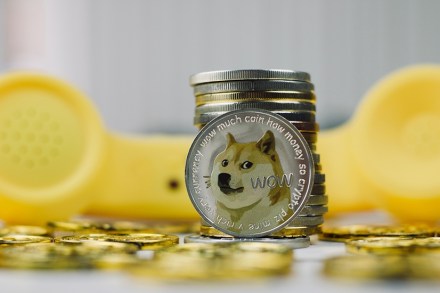
If you’re looking for proof we live in a computer simulation, consider the farcical story of dogecoin. Named after an internet meme about a talking dog, the joke currency was created as a parody of bitcoin. Dogecoin has no practical uses, yet online investors have ploughed billions into it. ‘We thought it would just make the viral rounds on social media,’ said founder Jackson Palmer. Last week the valuation passed $68 billion — more than Kraft Heinz and Ford. Palmer is now worth several hundred million dollars. Not bad for a Twitter gag. Although it’s seven years old, dogecoin wasn’t a big deal until a few months ago, when supportive tweets from Elon Musk, the world’s richest man, fuelled an explosion in popularity.

The problem with investing in cryptocurrency

From our UK edition

'This time next year Rodney, we will be millionaires.' If Only Fools and Horses was still being made I imagine the scriptwriters would have got Del Boy disastrously deep into cryptocurrencies. Dodgy, Get Rich Quick schemes, skirting around the law always were his forte. And that is how I view cryptocurrencies.  The bulls will cry, Louise you are wrong! The price of Bitcoin has doubled since the start of the year and up over 500 per cent in a year. The value of rival cryptocurrency Etherium has risen more than 1,500 per cent in the last twelve months. But cashing in depends on buying and selling at the right time and there's no telling when that will be. The price of Bitcoin and other cryptocurrencies is highly volatile. And that is why it is risky.

Are cryptocurrency transactions the future?

From our UK edition

To most of us, cryptocurrencies remain an esoteric world, beloved by nerds and incomprehensible to the rest of us. Does Visa’s announcement this week that it will now process payments directly in a cryptocurrency called USDCoin change that, and hasten us to a day when we will all have cryptocurrency accounts which we use to do our day-to-day shopping? You don’t need to understand the mathematics of cryptocurrencies and blockchain to work out that the prospect of shopping with crypto is rather concerning for two reasons. Firstly, cryptocurrencies are an unregulated Wild West.

Sell bitcoin, buy Tesla

From our UK edition

Which is madder, bitcoin at $41,500 — oops, make that $31,000 on Monday — or Tesla shares at $880 apiece? Don’t get me started on the crypto-mania in which the Financial Conduct Authority has warned gamblers ‘they should be prepared to lose all their money’. But Tesla, relatively speaking, is a real thing: a California-based carmaker which has expanded the frontiers of the electric vehicle market that’s going to become huge in the next decade and could soon make carbon--fuelled road transport extinct. Put that way, it’s not so surprising — in tech stock terms — that investors should value Tesla higher than the rest of the US auto industry combined.

Philip Green will be remembered as a nasty stain on capitalism

From our UK edition

There really isn’t much left to be said about Sir Philip Green as his Arcadia fashion empire collapses into administration, taking the Debenhams chain down with it, unless a new rescuer steps in. An aggressive rag-trade wheeler-dealer since he started selling cheap jeans in the 1970s, Green was also once regarded as a brilliant merchandiser — until, it seems, he got too rich to bother keeping up with online competitors such as Asos, rising brands such as Zara and price-slashers such as Primark. So he won’t be remembered for his fashion sense — as the era’s other trouble-prone ‘King of the High Street’, George Davies of Next and Per Una, might be.

Beware online investment apps and ‘experts’

From our UK edition

Remember day trading, the fad for retail investors trying to emulate the hotshots of Wall Street from their spare bedrooms, and losing much of their money in the process? It is back with a vengeance, this time driven by a range of ‘disruptor’ apps which seek to lure risk-hungry traders by eliminating the cost of buying and selling assets. This time, the bets are even bigger. Controversially, some apps offer traders the chance to ‘leverage’ their bets: that is to borrow money to increase their gains. Or losses. The story of canny investors looking to outsmart the system — and the charismatic ‘experts’ that lead them — is as old as the market itself.

gerald cotten quadrigaCX

The nightmare after crypto

What’s worse to lose – your keys or your wallet? That’s the question more than 100,000 angry investors who used the QuadrigaCX exchange to purchase cryptocurrency now contemplate. The apparent sudden death in December of Canadian Gerald Cotten, the exchange’s 30-year-old founder, has without warning left them in a $250 million-shaped hole. Mr Cotten, who had Crohn’s disease, is said to have died while on honeymoon in India after his bowel became perforated during what is reported to have looked at first like a bad case of Delhi belly. With him, we are led to believe, went the only crypto key to the place in which QuadrigaCX investor money is stored – repositories known as offline ‘wallets’.

Has Hammond saved the high street? No, but every little helps

From our UK edition

How much did Philip Hammond’s giveaway Budget help dying town centres? Not enough, say campaigners, but let’s give the Chancellor some credit. A one-third relief in business rates for retail properties with a rateable value of less than £51,000 means an annual saving of up to £8,000 for a huge number of small businesses; pubs where people still drink beer and spirits in old-fashioned style benefit from a duty freeze that one industry body says will ‘secure upwards of 3,000 jobs’; and there’s money to help convert disused premises into homes.

Data breaches show we’re only three clicks away from anarchy

From our UK edition

An IT glitch afflicting BP petrol stations for three hours last Sunday evening might not sound like headline news. A ten-hour meltdown of Visa card payment systems in June was a bigger story — as was the notorious TSB computer upgrade cock-up that started on 20 April, which was still afflicting customers a month later and was reported this week to be causing ruptures between TSB and its Spanish parent Sabadell. Meanwhile, what do Fortnum & Mason, Dixons Carphone, Costa Coffee and its sister company Premier Inn have in common with various parts of the NHS? The answer is that they have all suffered recent large-scale ‘data breaches’ that may have put private individuals’ information at risk.

Enjoy your feelgood summer – there may be trouble ahead

From our UK edition

I’ve been on a mini-tour, full of echoes and warnings. First, to the Grange Festival in Hampshire, where we might still have been enjoying the summer of ’87: a moneyed audience in a Barings mansion laughing at funny foreigners in John Copley’s retro Seraglio (see Richard Bratby’s crit last week). Then to Oxford, to show an American friend the gardens of my alma mater, Worcester College, and recall the sweltering heat of ’76 that distracted us from revising for finals or noticing the Labour-driven economic crisis that would blight the start of our careers that autumn. Then to London, to make light of Trump with other American friends — and back home to Helmsley, of which more in a moment.

High life | 15 March 2018

From our UK edition

Gstaad I never made it to Zurich but met up with Steve Bannon through the miracle of technology, thanks to my hosts at the Swiss weekly Die Weltwoche, who gave him my telephone number. He rang at a civilised time and we had a very cosy chat for an hour or so. I don’t know how it was done, and don’t ask me for details, but I could see him and apparently he could see me too. The first things I said were that I was 100 per cent heterosexual and what a pity it was that I had to be initiated into this technology while talking to a man — a man I much admire but a man none the less. ‘That makes two of us,’ answered the great one, ‘and we used to go out with the same girl....’ Like a gent, he never mentioned her name, and I didn’t ask.

How the Rat sniffed out £15,000 down the back of my virtual sofa

From our UK edition

It must be about 25 years since the Rat first made an appearance in The Spectator. He started out as my girlfriend’s six-year-old boy, then became my stepson and featured here quite often over the years because, being a scaly-tailed creature of evil, he was always good for some copy. This new year, with his agreement, I upgraded him to full son status. Let me explain why in a way that I hope you’ll find charming, rather than one that makes you want to throw up. The first reason is purely mercenary. During Christmas, while over with his wife Chloe from Hong Kong, the Rat managed to find about £10,000 down the back of my virtual sofa, in the form of seven Bitcoin Cash that I thought I’d lost forever.

Is it possible to defend the Persimmon boss’s nine-digit bonus? Well, let me try

From our UK edition

New Year’s Eve was certainly a day for celebration in the household of 53-year-old Jeff Fairburn, chief executive of the housebuilder Persimmon. He was due to receive the first £50 million tranche of shares under a bonus scheme that has won him total entitlements of £110 million. He must have done a terrific job, you’ll be thinking, if shareholders value him so highly. But in fact his winnings (plus £400 million shared by 150 other Persimmon executives) are the freak outcome of a 2012 scheme that was tied to the company’s share price and dividend record but failed to include a cap on how high rewards might go.

Why cryptocurrencies are the answer

From our UK edition

The craze for cryptocurrency can be explained by a host of factors: the allure of getting rich quick; the attraction of off-the-grid accountancy for malefactors like tax evaders and drug dealers (though Bitcoin is traceable); the glamour of the new. Despite blockchain currencies’ wild volatility thus far, I’d still posit that the more underlying attraction is to a reliable store of value. Bitcoin investors may not recognise their motivation as such, but the impulse behind computer-generated currency is revolutionary: to take the production and control of money away from government. Now that we live in a world of 100 per cent fiat currencies — backed by nothing — governments can print their hearts out, and they do.