Bitcoin

A fogey’s guide to cryptocurrency

From our UK edition

All innovations seem unseemly to fogeys. When bitcoin, the first of the cryptocurrencies, was launched in 2009, we dismissed it as a deplorable and transient phenomenon. Its inventor, who called himself Satoshi Nakamoto, would not reveal his real name. Perhaps he did not exist and whoever hid behind the pseudonym was having a joke at our expense. When Satoshi created the first bitcoin on 9 January 2009, he embedded within its code a headline from a recent Times: ‘Chancellor on brink of second bailout for banks.’ Crypto appeals to people who distrust banks, as well one may. ‘Never trust the bankers,’ Winston Churchill warned in old age. History suggests one can trust neither governments nor central banks to maintain the value of money.

Live from the Presidential Inaugural Ceremony

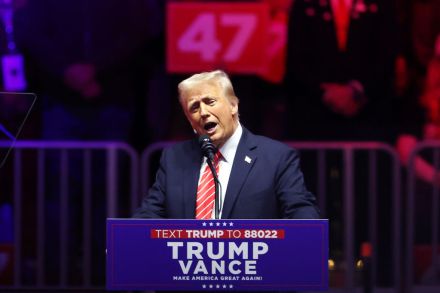
The 60th Presidential Inaugural Ceremony Viewing and Parade at the Capitol One Arena was an event of juxtaposition. The piercing cold endured by those who waited for hours, in weather so frigid it forced the day’s festivities indoors, contrasted sharply with the heat and energy that filled the stadium during the celebration of their political victory.The red carpet and the caps of the crowd blended with the blue lights above, mirroring not only the colors of the nation’s flag but also the hue of the 47th president’s inaugural tie.

Don’t count Bitcoin out

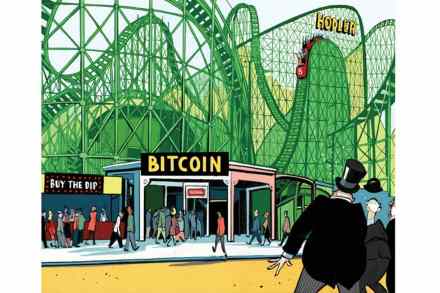
Bitcoin is crashing all over again, and it is taking the smaller crypto currencies down with it. It has fallen by a quarter from its highs, and there is little sign that the relentless selling is going to stop anytime soon. Plenty of people will be reheating arguments about how the digital currency is completely worthless and that the bubble was always going to pop one day. But Bitcoin has been through plenty of bear markets and it has always bounced back – and there is little reason to believe this crash will be any different. It is certainly a substantial fall. From a high of $114,000 a coin at the end of last month it has fallen all the way back to $83,000. It has been just as bad for the other crypto currencies, such as Ethereum and Dogecoin.

Bitcoin

Are AI stocks about to crash?

Bitcoin has lost almost a quarter of its value. The tech-heavy NASDAQ index on Wall Street has started to fall. And even leaders of the industry, such as the Google CEO Sundar Pichai, have started to warn about valuations getting out of control. We already knew that AI was driving a boom in investment. But this week there are worrying signs the market is about to crack. The only real question is whether that turns into a full scale crash. Bitcoin, as so often, is leading the market rout. More than $1 trillion has been wiped off the value of the crypto market over the last six weeks, with Bitcoin itself down by 28 percent since its peak.

AI

Which party has the crypto factor?

From our UK edition

He helped ‘break’ the Bank of England – but now Scott Bessent is helping to shape its future. As a young hedge-fund manager, he served in George Soros’s firm when it made $1 billion on Black Wednesday. But as Donald Trump’s Treasury Secretary, he has overseen an explosion in cryptocurrencies this year which has left many in London looking on enviously. While the use of cryptocurrencies such as bitcoin has trebled in Britain since 2021, this country’s governing framework has struggled to keep up. A shortage of political bandwidth has meant the UK lacks a national equivalent to Europe’s MiCA rules or America’s Genius Act, passed in July. Our policy is moulded by a trio of the Bank, the Treasury and the Financial Conduct Authority.

Trump brothers go mining

After a day where the very alive President Trump bombed a Venezuelan drugs boat, moved Space Force headquarters out of Colorado because that state has mail-in voting, declared he was sending federal troops into Chicago and claimed that AI generated a video of someone throwing a plastic bag of construction debris out of the window of the White House, it became clear that the real action was going on outside the White House walls, with Trump’s very rich sons. As Cockburn reported yesterday in The Spectator, the Trump Brothers, Don Jr, Eric, and the true genius behind the operations, Barron, had somehow amassed $5 billion in paper wealth thanks to savvy investments, based in no way on shady insider information, in WLFI, the family’s nascent cryptocurrency venture.

Bitcoin

Trumpworld’s embrace of crypto should raise suspicion

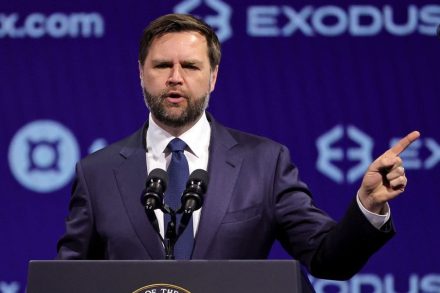
“It’s been quite a while since I’ve been to a conference with this level of energy… I promise I’m not just saying that to juice my own memecoins.” After dropping this clanger in his keynote speech at the 2025 Bitcoin Conference, J.D. Vance paused awkwardly for an applause which never arrived. Bar a few perfunctory laughs, this was one buzzword the Vice President rolled out which failed to impress the thousands-strong crowd in Vegas yesterday afternoon. To understand the frosty reception, a cursory glance through Trump’s recent dealings in this chaotic corner of the crypto industry is required. On January 17 this year – a mere three days before his inauguration – the soon-to-be president of the United States launched his own memecoin: $TRUMP.

Vance crypto

Tales from the crypto

I don’t gamble. But in October 2016, I made a bet. It was obvious Trump didn’t just have skeletons in his closet but a walk-in necropolis. As we stumbled toward November, the question wasn’t whether one of these skeletons would break free, but just how bad the October Surprise would be. It was supposed to be a polling-shifting, election-sealing, reputational nuclear bomb. And if you read the press, that’s what the “Pussy-Grabbing Tape” was. But to me, it was just another example of Trump being vulgar. And Trump had always been vulgar. And voters liked that he was vulgar, or didn’t care that he was vulgar, or liked that he was so unlike other politicians that he could be vulgar.

crypto

Don’t put your savings in meme coins

The Hawk Tuah girl, a young woman famous for a viral video in which she tawdrily describes a sex act, launched a meme coin this week — because of course she did. It instantly lost over 90 percent of its value. This, too, comes as no shock. But out of ignorance, stupidity and greed, many people put their real money into $Hawk and lost it all. And so, 2024 ends with assassinations in the middle of New York City, attempted coups in South Korea and @jiggadrin_ tweeting out that his $35,000 in “$Hawk is now $2,000 after ten minutes of buying,” and that “I am a huge fan of Hawk Tuah but you took my life savings.” In some replies, he tried to spin this as a joke post. But it appears he genuinely lost the money, as did many others.

meme coins

The new alliances dedicated to destroying democracy

From our UK edition

After staging a failed coup and going to prison, the Venezuelan army officer Hugo Chavez ran to be president in 1998, campaigning against corruption and offering revolutionary change. His nation was seen as a prosperous beacon of stability, built on its great oil wealth, envied by many people elsewhere in the region. He won by promising to tackle the inequality that scarred it so badly and take on the oligarchs enriching themselves through favours and nepotism. Western celebrities, journalists and politicians, from Sean Penn through to Jeremy Corbyn, started flocking to South America to hail their new progressive hero supposedly fighting for social justice.

Welcome to the crypto winter

Last year, Austin scored a major coup when it landed Consensus 2022, a big in-person conference focused on the digital finance industry, specifically cryptocurrencies like Bitcoin and Ethereum. CoinDesk, a news and research company focused on the cryptocurrency industry, chose the Texas capital for its return to an in-person conference and it arrived splashy and huge, taking over not only the Austin Convention Center but several adjacent hotels and event spaces, its 17,000 attendees swarming downtown. This was June of last year. Three months earlier, South by Southwest, the city’s long-running big tech and culture conference had been a veritable playground for NFT enthusiasts, and dozens of panels hyped the transformative importance of the blockchain.

crypto

Laughing at libertarians as crypto burns

In many countries, tricking stupid people out of money is a crime. In the United States, it’s the basis of a whole economy. Cryptocurrency is the crowning glory of this broken system. You give me a bunch of your real money, and I’ll give you some of my fake money. Fantastic! It’s like tulip mania, only instead of flowers, you get… nothing. The collapse of FTX — the second largest crypto exchange in the world — will cost millions of customers billions of dollars. Some expect it to significantly worsen the recession, though I’m not so sure. If those folks hadn’t wasted their savings on Bitcoin, they probably would have wasted it on some other scam. (Is William Duvane still selling gold?) In theory, this is bad news for the Democrats.

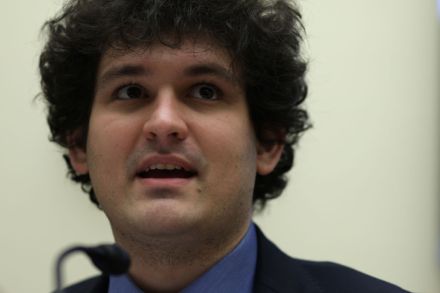
Meet Sam Bankman-Fried’s crypto-enablers

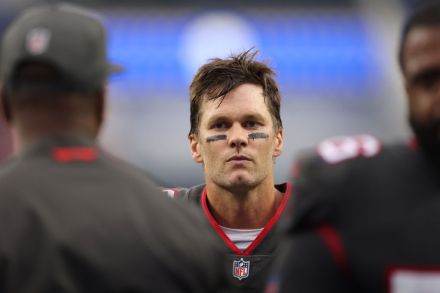
Things aren’t going well for Tom Brady. His team, the Tampa Bay Buccaneers, has a losing record. He is getting divorced, and FTX, the crypto exchange he was touting a year ago — and in which he was invested — has gone bust. He isn’t the only sports star with egg on his face after the collapse of FTX. Stephen Curry, Shohei Ohtani and Naomi Osaka, to name just three, also got greedy and believed the vision of Sam Bankman-Fried. Overnight, Sam Bankman-Fried has gone from crypto wunderkind to infamous huckster. The celebrities, influencers and traditional media outlets that helped make him a star shouldn’t be allowed to absolve themselves as quickly.

Tom Brady Sam Bankman-Fried

Saying goodbye to the crypto nerd utopia

It’s been a great year for those of us who didn’t have the nerve to invest in crypto. The value of Bitcoin, Ethereum and Luna crashed in May. Now, crypto giant FTX has gone bankrupt amid serious allegations of criminal misconduct. At last! For years, we kicked ourselves for not investing in Bitcoin, ETH, et cetera, when we had the chance. We heard tales of people who went from bums to millionaires, while we grinded in our offices and fretted about debts. Suddenly, we can reframe our risk aversion as foresight! Of course we knew that this would happen! Of course we did! Really, I shouldn’t joke about this crypto craziness. A lot of people have lost a lot of money. People will lose businesses, homes, and families. Some might even commit suicide.

The fall of Sam Bankman-Fried is crypto’s Enron moment

In recent weeks, the world’s richest man and his flailing attempts to figure out what to do with Twitter have dominated the news cycle. However, his unhinged management-by-tweets reality show are nothing compared to an almighty tussle between two crypto-bros. Internet magic money (aka crypto) billionaire Sam Bankman-Fried, better known as SBF, is the man behind FTX, a crypto exchange. He seems to have angered fellow magic money billionaire and fremeny, Changpeng Zhao, better known as CZ and CEO of the rival exchange Binance. It might have to do with FTX cozying up to regulators to get the regulations beneficial to the FTX but not its rivals.

Sam Bankman-Fried

Crypto keeps bouncing back

From our UK edition

This time it was surely all over. As inflation started to rise towards a 40-year high, as central banks started raising interest rates for the first time in more than a decade, and as the monetary printing presses finally stopped running, the cryptocurrencies crashed.  What a crash it was. Bitcoin, the best-known crypto, fell all the way from $61,000 last November to less than $19,000 in June, a spectacular drop of more than two thirds. Ethereum, Solana and other, frailer ‘coins’ – as well as the even flimsier digital collectors’ items known as NFTs – all tanked. This appeared finally to confirm what the doubters had said all along.

The ancient problem of the man who threw away £150m in bitcoin

From our UK edition

James Howells has spent years trying to persuade Newport council to allow him to spend millions digging up a rubbish tip to find a computer hard-drive, possibly containing yet more millions, which he threw away in 2013. The ancients, who found obdurate behaviour fascinating, often explored such human failings in their myths, many of which featured horribly appropriate outcomes. Erysichthon (‘one who pulls up the land’) provides a good example. Let the poet Ovid explain. Erysichthon, a man who never sacrificed to any gods, hacked away at and pulled down a much-venerated oak tree, hung with votive offerings and sacred to Ceres, goddess of the grain that feeds the world; further, he both beheaded a man who tried to stop him and ignored the tree’s threats of punishment.

The madness of El Salvador’s Bitcoin city

From our UK edition

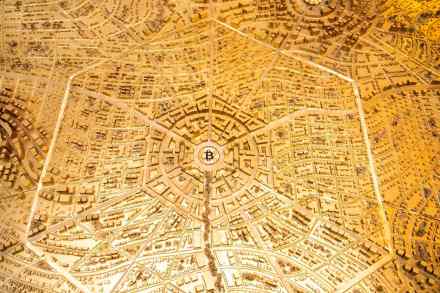
A golden city on the coast of the tropical Pacific. A metal walkway suspended above a verdant volcano. And a glossy marina that looks like it belongs in Monte Carlo rather than a near failed-state besieged by some of the world’s most violent criminals. The detailed gilded model released this week of ‘Bitcoin city’ – the first ever dedicated cryptocurrency trading hub, to be built on El Salvador’s western shore and powered by geothermal energy from a volcano – is nothing if not spectacular.

Crypto is dead

From our UK edition

When Britain voted for Brexit, Macron boasted that Paris would eat the City of London’s lunch. It didn’t quite work out that way, with most league tables continuing to put London as the number one or two financial centre, with not a single EU city in the top ten. Emmanuel Macron's government has now announced that it has invited Binance, a crypto exchange site, to set up a European HQ in Paris. You have to ask: has Macron leapt on a bandwagon which has already started to lose its wheels?  The warning sign for cryptocurrencies is not so much that they have crashed – Bitcoin is down 50 per cent from its peak last November – but that they have become boring.

Like it or not, cryptocurrency is here to stay

From our UK edition

There was a time when you could read a book to keep up to date about a subject. Well, that’s over. If a week is a long time in politics, in crypto it’s like a geological period. By the time a book on crypto hits the shelves it needs to be in the ancient history section. The Cryptopians is an attempt to sum up ‘the first big cryptocurrency craze’ by Laura Shin, a financial journalist who writes for Forbes and who has a successful crypto podcast. Its scope is the first decade of crypto, from the creation of Bitcoin to the current frenzy of DeFi (Decentralised Finance) and NFTs.