Biology

Who wants to bring back the Neanderthals?

From our UK edition

In the not-too-distant future, if your T-shirt starts giving fashion advice or we’re all enslaved by a race of disease-resistant metahumans, then blame Martin Amis. More precisely, blame his obsession with Space Invaders. With a foreword by Steven Spielberg, Amis’s 1982 Invasion of the Space Invaders: An Addict’s Guide to Battle Tactics, Big Scores and the Best Machines gave intellectual heft to a pursuit – videogaming – that had hitherto been the preserve of glassy-eyed youths. His advocacy proved prescient. Over the next couple of decades, the best minds of a generation dedicated their lives to making pixellated worlds as compelling and realistic as possible.
The mystery of what makes us special remains unsolved

From our UK edition

Consciousness is thought by many to define what it is to be human. We know that animals are conscious to some extent, but they don’t have what we have in that department. So if we can explain how human self-awareness works it will be a Rosetta Stone to understanding what makes our species so odd, or, depending on your view, so special. Also: big brains love exercise. And the great thing about this topic is that it can be tackled by biologists, neurologists, philosophers, physicists and even novelists. It’s an interdisciplinary, no-holds-barred intellectual wrestling match. Michael Pollan, an American journalist and academic who works at both Harvard and Berkeley, comes from a literature background but is fluent in the relevant science.

The truth about trans violence

The latest “trans violence” was committed by a heterosexual man who went to a hockey game in Rhode Island and shot his family, then himself. His daughter described him as sick and mentally ill. Robert Dorgan, who preferred the name Roberta, is just the latest in a long line of violent people claiming to be transgender. Last week, a 6ft 18-year-old boy, who wanted to be a “petite” woman, was identified as the main suspect in the worst mass shooting in Canada’s history. Last summer, a male called Robert Westman killed two children and injured many more at the Annunciation Catholic School in Minneapolis. The 2023 Nashville school shooter was a girl called Audrey, who identified as a man called Aiden.

trans

Searching for the one and only is futile, say the sexologists

From our UK edition

In a tiny town tucked into the desert an hour’s drive out of Nevada, a legal brothel operates. Its ‘menu’ of services range from less expensive sexual intercourse to the most expensive, ‘the White Whale’, starting at $20,000. Dr Justin Garcia, there with his colleagues doing research, asked the manager, a woman with bright yellow hair and a Minnie Mouse voice, what the White Whale was. She explained: ‘Oh, that’s the full Girlfriend Experience… sex isn’t necessarily part of it, but you’ll get a hell of a cuddle.

The science of marriage

“Those whom God hath joined together, let no man put asunder.” With this stern admonition, the Church has long been a fervent defender of marriage. But as religion has faded as a social force, so too has marriage.  Does it much matter if people choose to shack up together instead of tying the knot? What is lost if some men want to be incels or some women decide a husband is a bothersome surplus to their needs? The problem is that all lifestyles alternative to marriage serve to undermine it. And like other major social institutions, marriage is not some arbitrary cultural construct like a federal holiday. Rather, it rests on genetically shaped behaviors that evolution has written into the human genome because of their survival value.

Marriage

Seeds of hope in the siege of Leningrad

From our UK edition

The idea was revolutionary – yet there was something ancient at its heart. The scientist Nikolai Vavilov, arriving in Petrograd in 1921 to take the helm of the Bureau of Applied Botany and Plant Breeding, was on a sacred mission: to make, in his words, ‘a treasury of all known crops and plants’. The world’s first seed bank would shape the future of agriculture – possibly even eliminate failed harvests and hunger. This was gleaming scientific idealism, but there was also an element of the Old Testament Ark about it. Throughout the siege, the botanists had to find the superhuman strength not to eat the seeds themselves The vision would collide with the brute reality of Stalin’s own efforts to bend nature to his will, and then the nightmarish Nazi invasion of Russia in 1941.

What rats can teach us about the dangers of overcrowding

From our UK edition

The peculiar career of John Bumpass Calhoun (1917-95), the psychologist, philosopher, economist, mathematician and sociologist who was nominated for the Nobel Peace Prize and was the subject of a glowing article in Good Housekeeping, comes accompanied with more than its fair share of red flags. He studied how rodents adapted to different environments and specifically how the density of a population affects an individual’s behaviour. He collected reams of data but published little, and rarely in the mainstream scientific journals. He courted publicity, inviting journalists to draw from his studies of rats and mice apocalyptic conclusions about the future of urban humanity.

Harris Tweed, the miracle fabric

From our UK edition

To understand the development of technology, you may be better off studying evolutionary biology rather than, say, computer science. A grasp of evolutionary theory, with the facility for reasoning backwards which it brings, is a better model for understanding the haphazard nature of progress than any attempt to explain the world by assuming conscious and deliberate intent. One useful concept from evolutionary thinking is the idea of the ‘adjacent possible’. As the science writer Olivia Judson explains: ‘Evolution by natural selection only works if each mutational step itself is advantageous. There’s no such thing as advantageous in a general sense. It’s advantageous in the circumstances you’re living in.

Not everything in the garden is lovely

From our UK edition

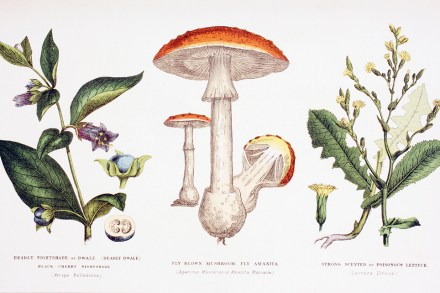
While I was reading Most Delicious Poison, I visited a herbal garden in Spain which features the plants grown by the Nasrid rulers of Granada hundreds of years ago. They cultivated myrtle for its medicinal uses and jasmine for its fragrance. How did they know of myrtle’s properties? Some ancient ancestor must have figured it out. And that ancestor might be more ancient than we realise. Noah Whiteman explains that DNA from plants found in Neanderthals’ teeth tartar suggests even they were self-medicating with herbs. We have been entangled with the chemicals around us for as long as we have been human. The author of this book, a professor of biology at Berkeley, takes us on a global trip through plants and their chemicals.

Laurel Hubbard is the beginning of the end of women’s sports

From our UK edition

When women’s professional soccer was deemed good enough for our TV screens a couple of years ago, I was watching with a friend and her four-year-old son. He was enthralled by the game, and asked his mother, ‘Are boys allowed to play football as well as girls, mummy?’ This little boy’s comment clearly highlighted the insidious sexism prevalent in all aspects of competitive sport. When it comes to soccer, rugby, weightlifting, darts, you name it, commentating, sports writing, sports photography and so many other operational aspects of competitive sports are dominated by men. Female sports champions can be such important feminist role models for girls. Look at Martina Navratilova, Jessica Ennis-Hill, Nicola Adams and Sian Massey-Ellis.

The solving of a biological mystery

From our UK edition

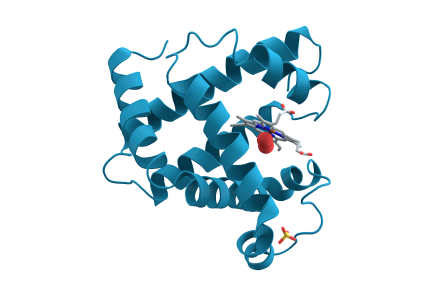
DNA is the blueprint that encodes the instructions to make proteins. Proteins are the building blocks and the machines that power life. And proteins make up the tissue that in turn comprise the organs and muscles that make up us. Considering how crucial proteins are to life itself, there is still so much we do not know about them. But Google’s AI firm Deepmind may just have helped us make a giant leap forward. When a protein is first made inside a living cell, it is merely a chain of connected amino acids — like beads on a string. Yet, it instantaneously folds into unique three-dimensional, beautiful shapes, which enable them to carry out their function.

Covid’s metamorphosis: has lockdown made the virus more deadly?

From our UK edition

‘Nothing makes sense in biology, except in the light of evolution,’ the splendidly named biologist Theodosius Dobzhansky wrote in 1973. It’s a good rule of thumb. Despite near-miraculous advances in medical science we remain biological beings, subject to biological laws. None is more central to our understanding of disease than evolution. Yet this theory remains poorly understood and poorly utilised in medicine. And an evolutionary perspective raises important questions about the drastic action we have been taking to confront Covid-19. Most doctors are too busy dealing with the day-to-day deluge of cases to have much time for what they may consider abstruse academic ideas.