Biography

Odd men out

From our UK edition

The first game played by the Allahakbarries Cricket Club at Albury in Surrey in September 1887 did not bode well for the club’s future. The first game played by the Allahakbarries Cricket Club at Albury in Surrey in September 1887 did not bode well for the club’s future. One player turned up wearing pyjamas, another held the bat the wrong way round while a third — a Frenchman — thought the game had finished every time the umpire called ‘Over’. The Allahakbarries were skittled out for just 11 runs and under the circumstances it seemed entirely appropriate that the team’s name should have been derived from the Moorish phrase for ‘Heaven Help Us’. However, the team’s captain, the playwright, J. M.

Keeping the lid on

From our UK edition

For all of the nine years that he worked, first as official spokesman for Tony Blair and then as Director of Communications for the government, Alastair Campbell was obliged to defend a huge lie: that all was well at the heart of the New Labour project when, manifestly, it was not. Gradually, as the years passed, the tensions surfaced and whispers that something was amiss reached the outside world, but by and large — and in no small measure due to the extraordinary resilience of Blair and Campbell — the lid was kept on. Until now. The fault lines are apparent from the outset. This volume covers the three years from the day of John Smith’s death on 12 May 1994 to the triumphal progress to Downing Street on 1 May 1997.

A rather orthodox doxy

From our UK edition

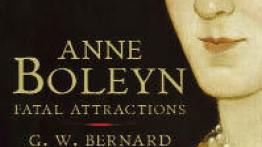
‘His cursed concubine.’ That was the imperial ambassador Eustace Chapuys’ judgment on Henry VIII’s second wife, Anne Boleyn. ‘His cursed concubine.’ That was the imperial ambassador Eustace Chapuys’ judgment on Henry VIII’s second wife, Anne Boleyn. And that was mild. The abbot of Whitby called Anne a ‘common stud whore’. The judge Sir John Spelman noted during her trial that ‘there never was such a whore in the realm’. And, of course, Henry VIII beheaded her. Anne, rather like our own Diana, caught some heavy flak for having a sexy reputation.

Mystery of the empty tomb

From our UK edition

John Henry Newman was an electrifying personality who has attracted numerous biographers and commentators. John Cornwell, in his excellent guided tour around this well-ploughed field, recalls the young woman in Oxford in the 1830s who ‘wept with emotion’ at Newman’s very appearance. W. G. Ward recalls the awe which fell upon him and his undergraduate friends if Newman so much as passed them in the street. And figures such as Mark Pattison, James Anthony Froude and Matthew Arnold, none of them followers of the Newman cult in grown-up life, recollected similar feelings in their youth. When the mature George Eliot read Newman’s spiritual autobiography, she said it ‘breathed much life into me’.

Golden youth or electric eel?

From our UK edition

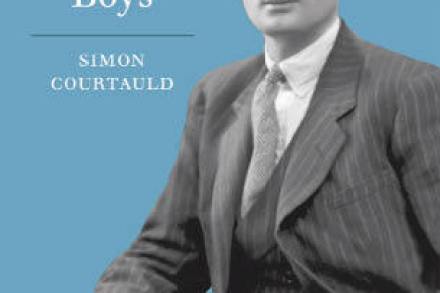
Patrick Shaw-Stewart was the cleverest and the most ambitious of the gilded gang of young men who swam in the wake of the not-so-young but perennially youthful Raymond Asquith. Julian Gren- fell, Duff Cooper, Charles Lister, Edward Horner: they were as one in their conviction that the British were superior to other races, that public schoolboys were superior to other Britons, that Etonians were superior to other public schoolboys, and that their own precious clique was superior to other Etonians. Apart from that, the only obligatory common factor was that one should love, or at least profess to love, Lady Diana Manners. The corrupt coterie, as they proudly styled themselves, knew that they were the future. They had no future.

Painting the town together

From our UK edition

This book recounts a terrible story of self-destruction by two painters who, in their heyday, achieved considerable renown in Britain and abroad. Robert Colquhoun (1914-62) and Robert MacBryde (1913-66), both from Scottish working-class families, met in 1932 when they were students at the Glasgow School of Art. From then onwards they were personally and professionally inseparable in their headlong rise to fame and descent downhill. Although both have been the subject of anecdotes and snapshots in many a memoir of the period — all those accounts of Soho and ‘Fitzrovia’ — this is the first full-length study devoted to them, the result of over 20 years’ research.

Cherchez la femme

From our UK edition

The 22nd Earl of Erroll, Military Secretary in Kenya in the early part of the second world war, was described by two of his fellow peers of the realm as ‘a stoat — one of the great pouncers of all time’ and ‘a dreadful shit who really needed killing’. The 22nd Earl of Erroll, Military Secretary in Kenya in the early part of the second world war, was described by two of his fellow peers of the realm as ‘a stoat — one of the great pouncers of all time’ and ‘a dreadful shit who really needed killing’.

Blood relatives

From our UK edition

The last time I saw Benazir Bhutto was at Oxford, over champagne outside the Examination Schools, when she inquired piercingly of a subfusc linguist, ‘Racine? What is Racine?’ Older and richer than most undergraduates, and as a Harvard graduate presumably better educated, she was already world famous, and was obviously not at Oxford to learn about classical tragedy. The last time I saw Benazir Bhutto was at Oxford, over champagne outside the Examination Schools, when she inquired piercingly of a subfusc linguist, ‘Racine? What is Racine?’ Older and richer than most undergraduates, and as a Harvard graduate presumably better educated, she was already world famous, and was obviously not at Oxford to learn about classical tragedy.

Under false colours

From our UK edition

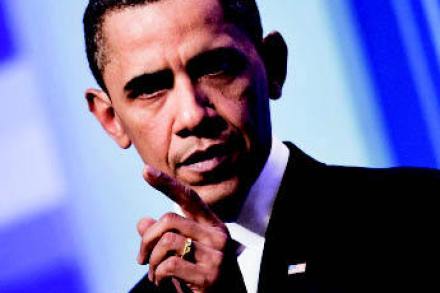
‘With time,’ writes David Remnick, ‘political campaigns tend to be viewed through the triumphalist prism of the winner.’ Never more so, perhaps, than in Remnick’s idolatrous new biography of Barack Obama, which presents the First Black President’s ascension to the White House as nothing less than a glorious saga. Deeply read — if not rooted — in the civil rights movement of the 1950s and 1960s, Obama is said to have derived his spectacular political success from the great and martyred prophet Martin Luther King, Jr and King’s closest disciples, especially John Lewis.

A bolt from the blue

From our UK edition

The memoirs of the Grand Duchess Olga are an entertaining record for anyone interested in the imperial family’s home life during the last years of Russian autocracy. The memoirs of the Grand Duchess Olga are an entertaining record for anyone interested in the imperial family’s home life during the last years of Russian autocracy. Olga was the youngest of Alexander III’s six children; her mother was the Danish princess, Maria Fyodorovna. She was born just after her father’s accession, in 1882, when the throne was already in crisis.

To strive, to seek, to find . . .

From our UK edition

In 1931, a 23-year-old Englishman called Henry ‘Gino’ Watkins returned from an expedition to the white depths of the Greenlandic ice cap. In 1931, a 23-year-old Englishman called Henry ‘Gino’ Watkins returned from an expedition to the white depths of the Greenlandic ice cap. He was hailed as a precocious talent, even as a worthy successor to Fridtjof Nansen, who had recently died.  When Watkins died the following year, during another expedition to Greenland, King George remarked on the tragedy of his death, and Stanley Baldwin wrote that ‘If he had lived he might have ranked . . . among the greatest of polar explorers’. Yet Watkins had only just begun to establish himself, and his reputation swiftly faded.

Scourge of the ancien régime

From our UK edition

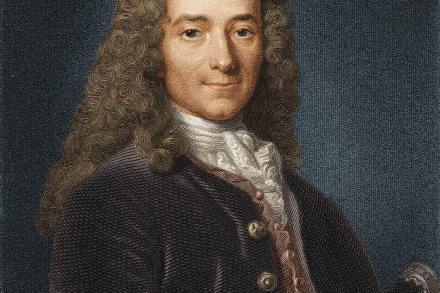
Voltaire’s was a long and amazing life. Voltaire’s was a long and amazing life. He was tragedian, satirist, mathematician, courtier, exile, jailbird, swindler, gardener, plutocrat, watchmaking entrepreneur, penal reform campaigner, celebrity, provocateur, useless loan-shark, serial feuder, coward, astronaut, niece-shagger, spy . . . Except ‘astronaut’, obviously. I made that up to check you were still paying attention. But he did shack up with his niece, the filthy old goat. It seems a shame, then, that for most of us nowadays that long and amazing life is compressed into a couple of quotes from Candide and a few apocryphal stories about his table talk. Ian Davidson’s biography is the corrective: here’s the great man in the round.

Anything for a laugh

From our UK edition

A hundred years ago, when Britannia still ruled the waves, the Royal Navy fell victim to a humiliating hoax, reports of which kept the public amused for a few wintry days in February 1910. Disguised as ‘members of the Abyssinian Royal family’, with woolly wigs, fancy-dress robes and burnt-cork complexions, a gaggle of young people managed to trick naval leaders into receiving them on an official visit aboard the state-of-the-art battleship Dreadnought, Britain’s proudest national emblem. The ridiculous party, which included Virginia Stephen (the future novelist Virginia Woolf), were conducted solemnly round the wonders of the newest naval technology, jabbering in a nonsense language and escaping just as the spirit-gum holding on their beards began to melt.

Our squandered national treasure

From our UK edition

Torn with grief, Melvyn Bragg has produced a condolence book for the South Bank Show (born 1978, died of neglect, 2010). These 25 vignettes, based on the best of his interviews, are more than just the cosy clippety-cloppety sounds of an old cowboy trotting into the sunset. They offer intriguing comments on the film-making process and present valuable new insights into their subjects. Most have the shape and phrasing of short stories and his meetings with the gravest maestros read like mini-epics. We watch plucky little Melvyn as he approaches the armoured titan in his lair, tempts him forth and charms him into dropping his guard. He meets Francis Bacon at 9 am and finds six bottles of champagne waiting on the table, one open.

Survival of the fittest

From our UK edition

When I was at Eton, many years before David Cameron, much of the school was run by a self-elected society known as ‘Pop’. When I was at Eton, many years before David Cameron, much of the school was run by a self-elected society known as ‘Pop’. Some members were elected ex officio; but the majority belonged because they stood well with the Society’s membership. Most members of ‘Pop’ in my day put me in mind of David Cameron now. The principal difference is that he is by a distance cleverer than they were. However, the apparent social self- confidence and the toughness of mind and of spirit seem very familiar. It went with a certain cliquishness and a determination to be in charge.

Triumph of the will

From our UK edition

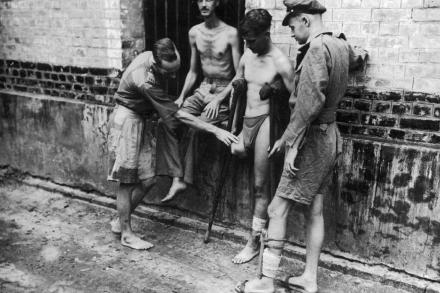
Alistair Urquhart describes himself as ‘a lucky man as well as an angry man’. Alistair Urquhart describes himself as ‘a lucky man as well as an angry man’. No one who reads his remarkable autobiography will doubt either the phenomenal extent of his good fortune or the extraordinary justification for his anger. Yet his story will be remembered for qualities that are universal rather than personal. At the age of 20, with a job as a warehouseman in Aberdeen, he was called up in 1939 for service in the Gordon Highlanders, and sent to Singapore.

Refusing to play the game

From our UK edition

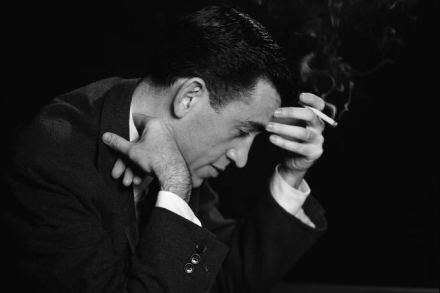
What sort of person would you expect to be bringing out a life of J. D. Salinger two months after his death, bearing in mind that Salinger was more obsessive about his privacy than any other writer in human history and fought the publication of the last biography all the way to the US Supreme Court? You might not expect the answer to be Kenneth Slawenski. Who, you may ask, is he? Well, he is a pretty private person too. I pummelled the web and the only meagre intelligence I could extract is that he was born and raised in New Jersey and has worked in computers. This may be his first book, for he mentions no other on the dustjacket, and tells us only that he runs the ‘definitive Salinger website’, deadcaulfields.com. So he is not by trade a biographer or a critic.

Pearl of the Orient

From our UK edition

When she was a little girl, playing in the countryside around her missionary parents’ home in China, Pearl Buck used to come across the scattered body parts of babies abandoned for animals to devour. She would bury them, and tell no one. When she was a little girl, playing in the countryside around her missionary parents’ home in China, Pearl Buck used to come across the scattered body parts of babies abandoned for animals to devour. She would bury them, and tell no one. Born in 1892, she buried painful experiences all her life, telling no one, apparently forgetting — but they came out in her stories and novels. Her most famous novel, The Good Earth, has never been out of print and has sold millions of copies in many countries.

Fine artist, but a dirty old man

From our UK edition

I have always been sceptical of those passages in the ‘Ancestry’ chapters of biographies that run something like this: Through his veins coursed the rebellious blood of the Vavasours, blended with a more temperate strain from the Mudge family of Basingstoke. I have always been sceptical of those passages in the ‘Ancestry’ chapters of biographies that run something like this: Through his veins coursed the rebellious blood of the Vavasours, blended with a more temperate strain from the Mudge family of Basingstoke. Those passages seem to claim too much for heredity, and to bear out A. J. P. Taylor’s dictum that snobbery is the occupational disease of historians.

The whirlwind and the saint

From our UK edition

Dave Eggers is the very model of the engaged writer. Since publishing his first book, the memoir A Heartbreaking Work of Staggering Genius, he has branched out into all kinds of philanthropic literary activity. His organisation, McSweeney’s, has become a major imprint, championing emerging writers. In San Francisco, he has set up a community writing project, called 826 Valencia, which now has branches in six other cities. In 2004, he created Voice of Witness, ‘a series of books that use oral history to illuminate human rights crises around the world’.