Biography

Life beyond the canvas

From our UK edition

Angela Thirlwell’s previous book was a double biography of William Rossetti (brother to the more famous Dante Gabriel) and his wife Lucy (daughter of the more famous Ford Madox Brown). Angela Thirlwell’s previous book was a double biography of William Rossetti (brother to the more famous Dante Gabriel) and his wife Lucy (daughter of the more famous Ford Madox Brown). Now she has once again turned her attention to the margins of the Pre-Raphaelite group, with a joint portrait of the four women who influenced Ford Madox Brown: his two wives, Elisabeth and Emma, and two women for whom he had spiritual affinities, and (probably platonic) romantic yearnings. Elisabeth was, in reality, the least influential, for her life was pathetically brief.

The greatest rogue in Europe

From our UK edition

On 11 November 1743, the most sensational trial of the 18th century opened in the Four Courts in Dublin. The plaintiff, James Annesley, claimed that his uncle, Richard Annesley, the sixth earl of Anglesey, had robbed him of immense estates in England and Ireland worth £10,000 a year. The scale of the theft and the rank of the alleged thief would by themselves have made the case exceptional. According to Viscount Perceval who was present, it was ‘of greater importance than any tryall ever known in this or any other kingdom.’ But what really attracted attention was James Annesley’s allegation that in 1727, the year he became heir to the earldom, his uncle had had him kidnapped and shipped to America as an indentured servant, and thereby stolen the title.

Not ‘a boy-crazed trollop’

From our UK edition

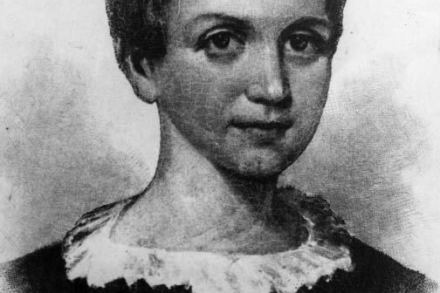
For someone who barely left the house, Emily Dickinson didn’t half cause a lot of trouble. For someone who barely left the house, Emily Dickinson didn’t half cause a lot of trouble. Lives Like Loaded Guns — which combines biographical material, critical readings, and an assessment of the history of her reputation — tells a completely hair-raising story. The Dickinsons were one of the first families of respectable Amherst. Emily and her sister Lavinia — ‘Vinnie’ — lived in one house, Homestead, right next door to her brother Austin, the head of the family, and his wife Sue. Susan Dickinson was a highly intelligent and sensitive woman, bosom friend to Emily. The poet called her ‘Sister’.

A dangerous fellow

From our UK edition

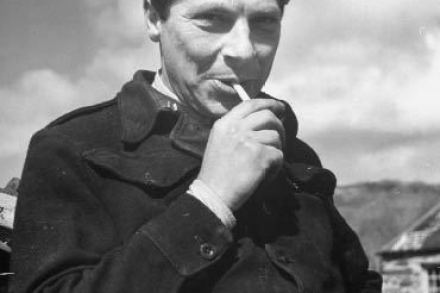
Do we need another huge life of Arthur Koestler? He wrote a great deal about himself, including three autobiographical works: Spanish Testament (1937), describing his experience as a death-row prisoner of General Franco, Arrow in the Blue (1952) and The Invisible Writing (1954). He also contributed to The God that Failed, the fascinating collection of testimonies by former Communists which Dick Crossman edited in 1949. He and his last wife wrote an unfinished joint memoir, published a year after their deaths as Stranger on the Square (1984). An ex-wife, Mamaine, contributed a volume, Living with Koestler (1985). Then a quarter-century after his death came a large-scale 640-page biography entitled Arthur Koestler: The Homeless Mind by David Cesarani (1998).

The grandest of old men

From our UK edition

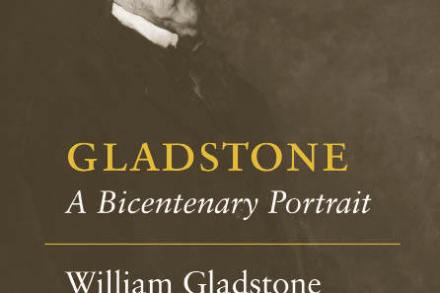
Mr Gladstone’s career in politics was titanic. Mr Gladstone’s career in politics was titanic. He sat for over 60 years in the Commons, was in the cabinet before he was 35, was four times prime minister, almost solved the Irish question, set new standards for the conduct of public business and of foreign policy, and took a leading part in the disruptions both of the Conservative and of the Liberal Party. The post office did get round to issuing a commemorative stamp for his bicentenary, which fell on 29 December; but the press, which used to publish every day in the 1880s a note of his doings, close to the court circular about the Queen’s, has taken it more quietly.

Celebration of old times

From our UK edition

Towards the end of 1979, Antonia Fraser gave an interview to the Washington Post in connection with her book Charles II (renamed ‘Royal Charles’ so as not to confuse a sequel-bombarded American public). She records her final exchange with the interviewer in the tersely effective style of the diaries from which this book is adapted: Man, hopefully, at the end: ‘Just one more question, what is Harold Pinter like about the house, all those pauses and enigmatic statements, I’ve always wondered?’ Me, briskly: ‘Keep wondering.’ ‘Keep wondering.’ Excellent phrase: curt, witty, and just abrupt enough to see off a line of inquiry without giving offence.

Master of accretion

From our UK edition

Frank Auerbach (born 1931) is one of the most interesting artists working in Europe today, a philosophical painter of reality who works and re-works his pictures before he discovers something new, something worth saving. William Feaver, in this grand new monograph, calls Auerbach’s paintings ‘feats of concentration’, and stresses the hard work which goes into their construction, despite their appearance of spontaneity. Feaver has a gift for the evocative phrase: ‘Studied yet impulsive, ranging from darkness to radiance and from the declamatory to the subdued, they are keyed to an air of resolve as unguarded as joy, as involuntary as grief.’ This is a book strong on context.

Ignoble nobles

From our UK edition

Badly behaved toffs have been a gift to writers since ancient times, and in English from Chaucer to Waugh.

Enjoyer and endurer

From our UK edition

I approached the late David Nokes’s scholarly book with some trepidation, having heard that it had been criticised for its apparent dismissal of James Boswell. I approached the late David Nokes’s scholarly book with some trepidation, having heard that it had been criticised for its apparent dismissal of James Boswell. As I had gained all my previous knowledge of the great Sam from Boswell’s magnificent biography I did not expect to enjoy this new exploration. But I did, very much indeed. Nowhere does he accuse Boswell of falsely creating the character of Johnson; indeed he acknowledges that he portrayed an irritable but very human subject.

The optimism of a suicide

From our UK edition

A postal strike would have been a disaster for Van Gogh. Letters were his lifeline and consolation. Not only did he receive through the mail his regular allowance from his brother Theo but, in letter after letter in return, he poured out his thoughts and feelings, recorded his work in progress and conveyed his impressions of books, people and places. In his often solitary existence, he was an avid recipient and kept in touch with a variety of correspondents, especially when he was in the South of France during the last two years of his life. The glory must be shared, however, with Theo, in that he kept Vincent’s letters, many of which contained drawings, either appended or on the sheet itself, surrounded by his tumble of words.

All Paris at her feet

From our UK edition

In what was intended as the opening line of a 1951 catalogue essay to an exhibition by the painter Leonor Fini, Jean Cocteau wrote: ‘There is always, at the margin of work by men, that luminous and capricious shadow of work by women.’ Not surprisingly, Fini excised it. In what was intended as the opening line of a 1951 catalogue essay to an exhibition by the painter Leonor Fini, Jean Cocteau wrote: ‘There is always, at the margin of work by men, that luminous and capricious shadow of work by women.’ Not surprisingly, Fini excised it. But it was an attitude that would plague her, and other female artists in Paris’s Surrealist milieu, for the rest of her life.

Adored friends

From our UK edition

Years ago the late ‘Brookie’ Warwick, 8th Earl, asked me to ghost his memoirs. Years ago the late ‘Brookie’ Warwick, 8th Earl, asked me to ghost his memoirs. In conversation he was full of amusing scandal, but the transcript of his dictated reminiscences was painfully discreet. I suggested they might be ‘sexed up’ — a new, comparatively innocent but still obviously vulgar expression — and he looked puzzled. ‘The first boy I met at Eton was my cousin Bingham,’ the transcript read, ‘who was very stupid and rather dirty, and came to a bad end.

Remembering a classicist

From our UK edition

Just as Alec Guinness resented being seen as Obi-Wan Kenobi for the rest of his life, Ian Richardson might have resented Francis Urquhart, the Machiavelli of Michael Dobbs’ House of Cards trilogy, whose catchphrase gives this book its title. Just as Alec Guinness resented being seen as Obi-Wan Kenobi for the rest of his life, Ian Richardson might have resented Francis Urquhart, the Machiavelli of Michael Dobbs’ House of Cards trilogy, whose catchphrase gives this book its title. Urquhart was a much better part to be identified with, of course; but it is a pity that an actor of such versatility and presence should be remembered only as a ruthless political operator.

When words were scarce

From our UK edition

Most of us are brought up not badly, but wrongly. Trained to the tenets of Mrs DoAsYou-WouldBeDoneBy, we are easily trampled underfoot by students of the Master DoItMyWay-OrBeDoneOver school. Consider the career of Field Marshal Bernard Montgomery as an example of the second method of upbringing. Mercilessly whipped and humiliated as a child, he grew up self-obsessed, wilful, arrogant, and it would seem without any redeeming personal qualities. Yet it was largely Monty’s egotistic drive that made him the most effective British general of the second world war, while more sympathetic commanders like Wavell and Alexander were relegated to the sidelines.

Nothing succeeds like excess

From our UK edition

‘Why are you laughing?’ they demanded again and again, as Cheever tittered at some grindingly miserable memory from his youth, or some cruelty he’d inflicted on his children. What his keepers were pathologising was the writer’s genius to see the hilarious in the chaotic, the respectable, the insulting and the desperate. Cheever was, above all, extremely funny, and he has been served now by a marvellous biography which, through it all, manages to keep its sense of humour. Blake Bailey’s Life is alarming, truthful, scabrous, but above all absurdly funny. You feel Cheever wouldn’t have wanted it any other way.

Cheering satanism

From our UK edition

‘For my generation of Essex teenagers, Dennis Wheatley’s novels represented the essential primer in diabolism,’ Ronald Hutton, the historian and expert on paganism, recalls. ‘For my generation of Essex teenagers, Dennis Wheatley’s novels represented the essential primer in diabolism,’ Ronald Hutton, the historian and expert on paganism, recalls. It wasn’t peculiar to Essex. In the Sixties, reading Dennis Wheatley was something one did to prove one’s daring — and to get the atmosphere right for spooky parties.

Skeletons in the cupboard

From our UK edition

Freudian analysis, Soviet communism and the garment industry: what do all of these things have in common? If your answer has something to do with central and east European Jews born at the end of the 19th century, you wouldn’t be far off. Freudian analysis, Soviet communism and the garment industry: what do all of these things have in common? If your answer has something to do with central and east European Jews born at the end of the 19th century, you wouldn’t be far off. That generation formed an important part of the intellectual and mercantile elite of Europe, but not the political elite — which is partly why some of them wound up in the radical communist anti-elite instead. In some families, various members dabbled in all of these worlds.

A bland villain

From our UK edition

I’ve always thought of fraud as a relatively attractive form of crime — not, of course, in the sense that I daydream of committing it, but in the sense that it involves intelligence, imagination and nerve, rather than violence and damage. I’ve always thought of fraud as a relatively attractive form of crime — not, of course, in the sense that I daydream of committing it, but in the sense that it involves intelligence, imagination and nerve, rather than violence and damage. Leaving aside the matter of moral conscience, a really smart fraudster has to combine the confidence of an actor with the sleight of hand of a magician and the technical skills of an accountant or a computer geek.

A conflict of wills

From our UK edition

It might seem odd that Eric Ives, the acclaimed biographer of Anne Boleyn, should turn his attention to another executed Tudor queen, Lady Jane Grey. As he points out, in the past six years alone, seven biographical studies of Lady Jane have appeared, and while this could be said to demonstrate the perennial fascination exerted by Jane’s short life and grim fate, the question inevitably arises as to whether even a scholar of Ives’s standing will be able to add much to what has been written. Yet it soon emerges that Ives is not primarily concerned with Lady Jane’s personal tragedy. Instead he focusses on the events that led to her being placed on the throne in July 1553, and the collapse of the regime 13 days later.

The Father of Scottish Tourism

From our UK edition

‘How do we make Scott more popular?’ The question ran round the table and none of us had an answer. ‘How do we make Scott more popular?’ The question ran round the table and none of us had an answer. It was a meeting of the Abbotsford Trust. I am not myself a trustee, but was there as a member of an advisory committee. The Trust itself was set up after the death of Dame Jean Maxwell-Scott, Sir Walter’s great-great-great-granddaughter who, with her late sister, Patricia, had owned Abbotsford for many years and had made it the happiest and most welcoming of houses. Scott bought it in 1812.