Biography

Imagining a future for John Keats — the novelist

From our UK edition

Keats long ago became the meaningless emblem of poetic genius. When the poet Amanda Gorman appeared at President Joe Biden’s inauguration, both detractors and admirers wanted to set her against the highest possible comparison. They didn’t reach for the US’s new Nobel laureate, Louise Glück. They went for Keats: either ‘Amanda Gorman is Keats-level brilliant’ or ‘Well, it’s not exactly Keats’. But what is Keats, exactly? It seems to me that there is a difference between the 5ft English poet who worked for a very few years before dying at 25 in 1821, and the idea of ‘Keats’.

Rescuing Elizabeth Barrett Browning from her wax-doll image

From our UK edition

‘Ah, did you once see Shelley plain?’ asks the speaker in Robert Browning’s poem ‘Memorabilia’ — a line which recognises how easy it is to misread a writer once they’ve passed into a hazy afterlife of fame, neglect or simple misunderstanding. Yet few of Browning’s contemporaries are as hard to see plain as his own wife: the poet who was known to her family as Ba, signed herself EBB, and published a number of popular works under her married name of Elizabeth Barrett Browning. During her lifetime she was one of the most admired poets of the age; a framed portrait of her hung in the bedroom of Emily Dickinson, and when Wordsworth died in 1850 there was serious talk of her becoming the first female poet laureate.

The programme of art plunder initiated by Hermann Göring continued long after the war’s end

From our UK edition

Making one’s fortune in Occupied Paris was largely a matter of knowing the right people: in fact, the further to the right the better. In 1941, Bruno Lohse, a lowly SS officer and art history PhD, was languishing on the Baltic coast recovering from a gunshot wound when he was seconded by Hermann Göring to work as his ‘personal art agent in Paris’, where he became one of history’s ‘greatest all-time art looters’.

A burnt-out case: the many lives of Dr Anthony Clare

From our UK edition

Those who best remember Dr Anthony Clare (1942-2007) for his broadcasting are firmly reminded by this biography that we didn’t know the half of him. Its authors are Brendan Kelly, professor of psychiatry at Trinity College, Dublin and editor-in-chief of the International Journal of Law and Psychiatry and Muiris Houston, a columnist for the Medical Independent and the Irish Times. Theirs is a meticulously sourced, clearly arranged, carefully assembled account of Clare’s packed life and multiple achievements. Yet through it thrums a sense that you can only really understand him if (a) you are a psychiatrist and (b) you are Irish. Born in Dublin, Clare was the youngest of three children, the only son. His mother was fiercely ambitious for him; his father was a solicitor.

Dolly Parton represents all that’s best about America

From our UK edition

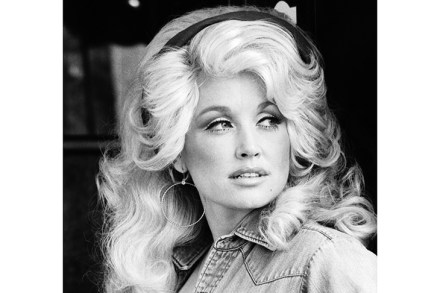
After the storming of Congress last week, numerous American commentators looked at the Proud Boys, the QAnon Shaman and Trump himself and said, in so many words: ‘This is not who we are.’ Undoubtedly true. It raises, however, an interesting supplementary question: who, in fact, are you? Looking through the ranks of those who might represent the best values of America, we arrive quite quickly at Dolly Parton. She came from a family in rural Tennessee of both grinding poverty and honest, decent aspiration. Sacrifices on their part, and a 30-hour bus journey to Louisiana, let her make her first recording in 1959, at 13.

Murder most casual: why Patricia Highsmith’s thrillers are so chilling

From our UK edition

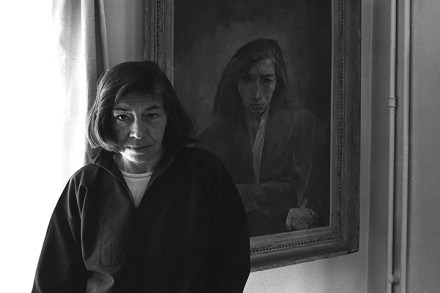
Patricia Highsmith’s life was filled with more eccentric, disturbing brilliance than most readers can normally handle; and so the chief attraction of this third biography in 18 years (released to commemorate her 100th birthday) may be its brevity. From the time Highsmith was born (after a failed abortion attempt by her parents), her story starts off dark and then gets much, much darker. Raised in Fort Worth, Texas by the granddaughter of former slave owners, she survived the Spanish influenza to become a smart, hard-drinking student at Barnard, where she exploited, at every opportunity, her affections for pretty, well-bred girls.

The life and loves of Mary Wollstonecraft

From our UK edition

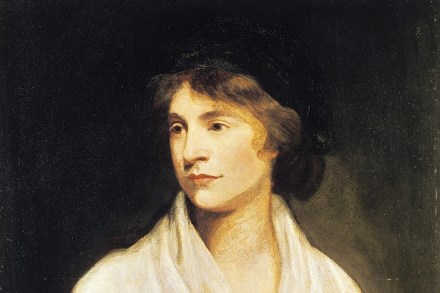
What did Mary Wollstonecraft like and love? This is the question Sylvana Tomaselli, a lecturer at Cambridge University, asks herself at the start of her new book about the writer and philosopher who is often described as ‘the mother of feminism’. After the unveiling of Maggi Hambling’s controversial statue in honour of Wollstonecraft on Newington Green last November, and the vitriolic spats between its detractors and supporters that ensued, a book that refocuses attention on the person at the centre of the storm is a welcome relief. Wollstonecraft, born in 1759, was determined to live independently by her pen.

Mozart the infant prodigy was also a child of the Enlightenment

From our UK edition

‘My dear young man: don’t take it too hard,’ Joseph II counsels a puppyish Mozart, the colour of his hair unknown in nature. ‘Your work is ingenious. It’s quality work. And there are simply too many notes, that’s all. Just cut a few and it will be perfect.’ ‘Which few did you have in mind, your majesty?’, Mozart enquires, the sinisterly oleaginous F. Murray Abraham as Salieri quietly registering the subtle brilliance of Mozart’s grinning lèse-majesté. Those interested in the subject of Miloš Forman’s 1984 film Amadeus are today faced with a not dissimilar predicament: which of the millions of words written about Mozart should we cut?

The only man who didn’t want to be Cary Grant was Cary Grant himself

From our UK edition

Cary Grant was a hoax so sublime his creator struggled to escape him. He was a metaphor, too, for the transformative magic of cinema, for its lies; and for the artifice and social mobility of the 20th century itself. His real name was Archie Leach, and he could, the critic David Thomson wrote, ‘be attractive and unattractive simultaneously; there is a light and dark side to him, but whichever is dominant, the other creeps into view’.

Joseph Ratzinger’s coat of many colours

From our UK edition

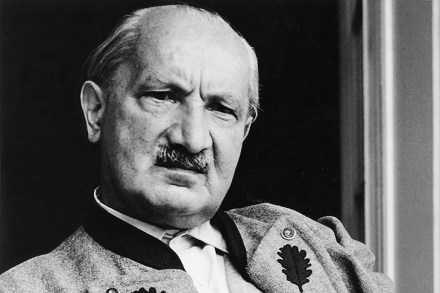
A common but flawed assumption about Joseph Ratzinger is that he is simply an ardent conservative. That’s the figure we see in Netflix’s The Two Popes. Anthony Hopkins’s performance may be a visual feast, but the script leaves no cliché unaired. Better informed observers note that the Vatican’s former doctrinal guardian is a poacher turned gamekeeper who once supported major reform of the Catholic Church but then performed a somersault, partly because of worry about threats including Marxism and moral relativism. Among the truest verdicts is that he has always been torn between different versions of himself.

War was never Sir Edward Grey’s métier

From our UK edition

This meaty but easily digested biography pivots around the events either side of that fateful evening of 4 August 1914 when Britain’s ultimatum to Germany over Belgium ran out and Sir Edward Grey memorably remarked that the lamps were going out over Europe. As foreign secretary for almost a decade before that, Grey had deftly orchestrated a web of alliances designed to keep the peace in Europe, and Britain the dominant global power. But war and its attendant carnage unravelled his life’s work, leaving him a nervous wreck. He hung on in office until 1916 when the new prime minister David Lloyd George unceremoniously swept him out.

Why I stopped reading novels

From our UK edition

New York I received a letter from a long-time Spectator reader, James Hackett, enquiring about books I am reading. It is not often that I get letters that delight me, as this one did. It is a far cry from the readers’ letters you see in newspapers and magazines in the United States. Lots of them seem sanctimonious, holier than thou; others, I suspect, are written by the glossy magazines themselves promoting their own celebrity culture worship. James Hackett is an American gent whom I’ve never met, and I hope I don’t disappoint with my choices. The last time I read novels was literally some 50 years ago.

Four German-speaking philosophers in search of a theme

From our UK edition

How do you write a group biography of people who never actually formed a group? Such is the challenge Wolfram Eilenberger sets himself in a book about the philosophers Martin Heidegger, Ludwig Wittgenstein, Walter Benjamin and — the surprisingly unstarry fourth subject — Ernst Cassirer, an urbane and now nearly forgotten neo-Kantian who might have deserved the made-up title of ‘symbologist’, thus far reserved for the heroes of Dan Brown’s novels. What these men have in common is that they spoke German and were philosophically active during the 1920s, but that is about it.

No writer was better suited to chronicle the Depression than John Steinbeck

From our UK edition

John Steinbeck didn’t believe in God — but he didn’t believe much in humanity either. When push came to shove, he saw people as cruel, selfish, dishonest, slovenly and, at their very best, outmatched by environmental forces. Like his friend, the biologist Ed Rickett, Steinbeck considered human beings to be no better and no worse than any community of organisms: they might aspire to do great things, but they always ultimately failed. In The Grapes of Wrath, the hard-working Joad family travel west, seeking a good life, and get taken apart by poor wages, malignant farm cooperatives and company stores. In Cannery Row, Mack and his boys want to repay their friend Doc for all his generosity, and end up burning down his lab after a drunken party.

The courage of a madman: Maurice Wilson’s doomed assault on Everest

From our UK edition

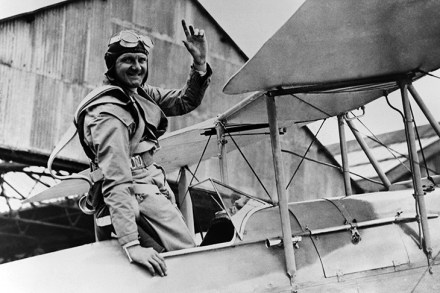
Reinhold Messner, the first person to climb all 14 of the planet’s peaks higher than 8,000 metres, is probably the finest high-altitude mountaineer in history. His list of astonishing achievements on dangerous ice-clad crags includes the first solo ascent of Mount Everest without use of oxygen. Yet as he sat exhausted at 26,000 feet with two days still to go on that pioneering ascent, he thought of an eccentric Englishman ‘tougher than I am’ who had set out before him with one crippled arm and no crampons, let alone knowledge of some basic climbing techniques. ‘Do I understand this madman so well because I am mad myself?’ he wondered.

Driven to distraction — the unhappy life of Vivien Eliot

From our UK edition

Do you think your mother slept with T.S. Eliot? That was the question I needed to ask the 98-year-old in front of me. It wasn’t easy. I’d never met him before. After some preliminary chat, though, I realised this affable man knew exactly where our conversation was heading and had pondered the question a good deal himself. The barrister Jeremy Hutchinson — Baron Hutchinson of Lullington — was the son of Mary Hutchinson, Eliot’s close friend. Infatuated with the poet for a time, she had met ‘Tom’ and his wife Vivien before Vivien’s adultery with Bertrand Russell, and some years before the publication of The Waste Land in 1922.

Sybille Bedford — a gifted writer but a monstrous snob

From our UK edition

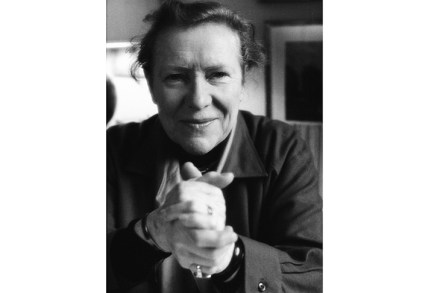
Sybille Bedford died in 2006, just short of 95. She left four novels, a travel book, two volumes of legal process and a memoir. Selina Hastings has written a wonderful biography, with lashings of lesbian lovers, which provides a soundtrack to one version of the 20th century. Born German in 1911, Bedford grew up in a schloss in Baden’s Feldkirch, near the French border, her father a Bavarian Catholic baron and old soldier, her mother a beautiful and unstable bolter. ‘Her childhood,’ writes Hastings, whose previous books include lives of Nancy Mitford, Somerset Maugham and Evelyn Waugh, ‘was both intellectually inspirational and... emotionally deprived.’ Both parents were wealthy.

The gospel of separation according to Malcolm X

From our UK edition

In late April 1962 Los Angeles police shot and killed an unarmed black man, Ronald X Stokes, during a disturbance outside a Nation of Islam temple. Malcolm X, then the second most powerful figure in the NOI, rushed to the city. At a rally he told protesters: ‘You’re brutalised because you’re black, and when they lay a club on the side of your head, they do not ask your religion. You’re black, that’s enough.’ Sound familiar? The Dead Are Arising, a new biography of Malcolm X, is timely. But perhaps this sobering book’s clearest message is that it will always be timely, because the story it narrates is timeless. In 1964 it would be Harlem, in 1965 Watts, in 1967 Detroit. Today, it’s Minneapolis and Louisville.

Tom Bower pulls his punches with his life of Boris Johnson

From our UK edition

Tom Bower explains in his acknowledgements that this is not an authorised biography and he did not seek Boris Johnson’s co-operation. Instead, he followed his usual biographical method of interviewing well over 100 people who knew Boris, some named, some not. Obvious sources are his mother Charlotte, his sister Rachel, his first wife Allegra, his long-serving mistress Petronella Wyatt, but not his second wife Marina, nor his current fiancée Carrie Symonds. He also explains, rather coyly: Readers should be aware that Boris Johnson is not a stranger in my home. Veronica Wadley, my wife, has known him as a journalist since he joined the Daily Telegraph in l988... Their long relationship is one of colleagues rather than friends.

‘I wonder about his humanity’: Malcolm McDowell on Stanley Kubrick

From our UK edition

Twenty-five years after making Spartacus, a parable of Roman decadence and rebellious slaves shot in California, Stanley Kubrick made Full Metal Jacket, a ’Nam flick shot in Beckton. Ever the perfectionist, Kubrick had imported palm trees from Africa, the better that the local gas works resemble downtown Hué. Alas, he wasn’t happy. Something about the clouds over east London wasn’t right, and as for the sunsets… Meanwhile, the crew and cast and hordes of extras thumb-twiddled in the silence Kubrick demanded. Then an extra kicked up: ‘Get him off the crane.’ An assistant was despatched to find the guilty party. ‘You’re working with Stanley Kubrick,’ he lectured the rhubarbers. ‘No talking.