Biography

An interest in the bizarre helps keep melancholy at bay

From our UK edition

If you crush the right testicle of a wolf and administer it in oil or rose water it will induce a loathing for sex. The Turks have a drink called coffee (for they use no wine). The Chinese have no nobility, or only those philosophers and doctors who have raised themselves by their worth. If you allowed a human being 25 square feet each, the Earth could bear 148,456,800,000,000 people. The Persian kings trained sparrows to hunt butterflies, inspired by hunting with hawks. Speaking of sparrows, the reason they are so short-lived is because of their salacity, which is very frequent.

A true bohemian: the story of Nico’s rise and fall

From our UK edition

It is well established that artists are not always the nicest people. On the surface, the life of the model, actress and singer Christa Päffgen, aka Nico, would appear to bear this out. Being Nico didn’t mean being nice. The story of Nico’s rise and fall usually goes like this. She grew up in the rubble of post-war Berlin, emerging from adolescence as both stunningly beautiful and remorselessly ambitious. By the time she was 28 she had appeared on the cover of Vogue, starred in Fellini’s La Dolce Vita and sung with the Velvet Underground; she counted Alain Delon, Bob Dylan and Jim Morrison among her numerous conquests.

How Foucault was shielded from scandal by French reverence for intellectuals

From our UK edition

Consider the hare and the hyena. The hare, Clement of Alexandria told readers of his 2nd-century sexual self-help manual Paedagogus, was thought to possess both male and female sexes and swapped their roles from year to year. As for the hyena, it was believed to acquire an extra anus annually and ‘to make the worst use of these added orifices’, as Michel Foucault puts it in the newly translated fourth volume of his History of Sexuality. For early church theologians the moral lesson was clear: we must not emulate gender-bending hares or randy hyenas. Rather, sex should be procreative, not pleasurable; we must go forth and multiply, borne by duty, not ecstasy.

The disappearing man: who was the real John Stonehouse?

From our UK edition

November 1974 was the month to disappear. On the 7th, Lord Lucan went missing, and a fortnight later John Stonehouse MP dis-appeared from a beach in Miami. Lucan was never found, so remains prominent in our national mythology. Nothing endures like a mystery. Stonehouse, on the other hand, was discovered in Melbourne six weeks later, living under an assumed name. His vanishing trick, so carefully rehearsed, had unravelled — partly due to Lucan, as it happened. Having been alerted to a suspicious Briton by a beady bank clerk, the Australian police thought he might be Lucan. Their first act after arresting their suspect was to lift his trouser leg to look for the missing earl’s telltale scar. Stonehouse had long had a tendency to vanish.

What is the secret of Duran Duran’s durability?

From our UK edition

In my second year at secondary school we were all deeply envious of a girl named Judi Taylor because, obviously, her name was only three letters away from John Taylor, the world’s most beautiful man, which meant she probably had the best chance of marrying him. I was thinking about this the other day just after I’d checked to find out if there were any VIP tickets left to see Duran Duran next year in Hyde Park (there aren’t), when one of my daughter’s friends jumped in the car.‘Hi, ‘she said. ‘I’m Charlotte Derulo. Well, I will be one day.’ Never underestimate the eternal passion of a tween girl.

The Browning version

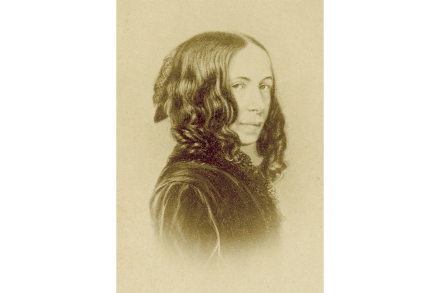
‘Ah, did you once see Shelley plain?’ asks the speaker in Robert Browning’s poem ‘Memorabilia’. Yet few of Browning’s contemporaries are as hard to see plain as his own wife: the poet who was known to her family as ‘Ba’, signed herself ‘EBB’ and published a number of popular works under her married name, Elizabeth Barrett Browning. During her lifetime she was one of the most admired poets of the age: a framed portrait of her hung in the bedroom of Emily Dickinson, and when Wordsworth died in 1850 there was serious talk of her becoming the first female poet laureate. Since her death in 1861, however, her reputation has sunk like a bad soufflé.

browning

We’ve embraced William Blake without having any idea of what he was on about

From our UK edition

Whose were those feet in ancient time that walked upon England’s mountains green? That William Blake assumed his readers were on his same wavelength is one of the things, according to John Higgs, ‘that makes his writing a glorious puzzle’. Equally puzzling, argues Higgs, is that the cockney visionary, unsung in his lifetime and buried in a pauper’s grave, has now been absorbed thoroughly into mainstream culture without our having the faintest idea of what he was on about.

The short, unhappy life of Ivor Gurney — wounded, gassed and driven insane

From our UK edition

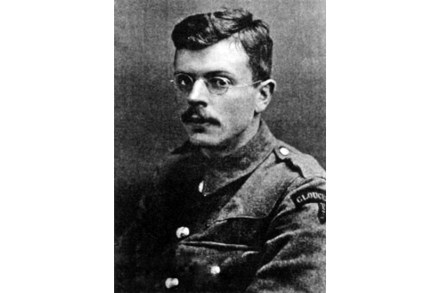
The poet and composer Ivor Gurney (1890-1937) is a classic but nevertheless shocking example of literary neglect. Although he brought out two respectfully received collections of war poetry during his lifetime, the idiosyncrasies of his style have prevented him from being widely recognised as the equal of his greatest contemporaries. His history of mental illness has further destabilised the reception of his work, not just by encouraging people to think of him as crazy, but by compounding practical difficulties surrounding its publication. In the 1980s Michael Hurd wrote a somewhat sketchy biography, and P.J. Kavanagh edited an expanded, but still partial, sample of his work.

Waiting for Gödel is over: the reclusive genius emerges from the shadows

From our UK edition

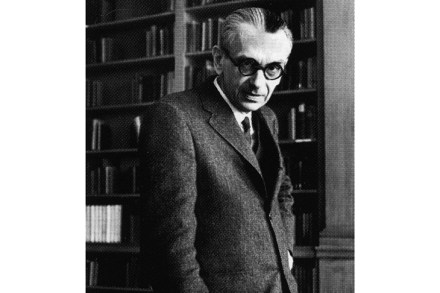
The 20th-century Austrian mathematician Kurt Gödel did his level best to live in the world as his philosophical hero Gottfried Wilhelm Leibniz imagined it: a place of pre-established harmony, whose patterns are accessible to reason. It’s an optimistic world, and a theological one: a universe presided over by a God who does not play dice. It’s most decidedly not a 20th-century world, but ‘in any case’, as Gödel himself once commented, ‘there is no reason to trust blindly in the spirit of the time’. His fellow mathematician Paul Erdös was appalled: ‘You became a mathematician so that people should study you,’ he complained, ‘not that you should study Leibnitz.

Stirling Moss’s charmed life in the fast lane

From our UK edition

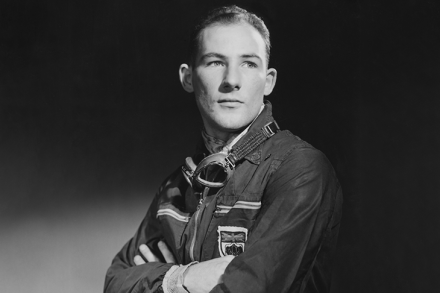
‘Who do you think you are — Stirling Moss?’ a genially menacing traffic cop would ask a hapless motorway transgressor. At the peak of his popularity as the most successful English motor-racing driver, Moss personified the glamorous daredevilry of racing at top speed. Richard Williams, the author of this sympathetic, exhaustive anatomy of an international sporting hero, part-time playboy (‘chasing crumpet’) and ultimate family man, is a veteran sportswriter for national broadsheets. He has also written critically acclaimed books, including one with the wonderfully comprehensive title A Race with Love and Death.

Out-scooping the men: six women reporters of the second world war

From our UK edition

Two war correspondents were hitching a lift towards Paris in August 1944 when a sudden wave of German bombers forced them to dive for cover. What the hell were they doing trying to cadge a ride when ‘war correspondents have their own jeeps and drivers?’ an American officer barked at them as his car screeched to a halt beside the shallow crater they had commandeered. ‘We happen to be women,’ Ruth Cowan replied steadily, as she straightened up and shook off the dust along with his words. Cowan was the first female journalist attached to the US army but, as a woman, she was denied the official facilities provided for the men of the press. At the outbreak of hostilities, British female correspondents were prohibited from combat zones.

A pawn in the Great Game: the sad story of Charles Masson

From our UK edition

‘Everyone knows the Alexandria in Egypt,’ writes Edmund Richardson, ‘but there were over a dozen more Alexandrias scattered across Alexander the Great’s empire.’ By the early 19th century, though, very few had been identified. Moreover, the prevailing scholarly view was that there remained ‘not a single architectural monument of the Macedonian conquests in India’ — let alone in Afghanistan, which had, ‘for more than 1,000 years... been a blank space in western knowledge’. So finding one would be ‘a world-changing achievement’.

Over the rainbow: D.H. Lawrence’s search for a new way of life

From our UK edition

When it comes to biography, some authors draw the punters, and others leave the mob cold. D.H. Lawrence has been written about a lot, from the moment he died. At least ten memoirs were published in the five years after his death by authors ranging from his sister and his wife to patrons such as Mabel Dodge Luhan. More followed, and only professional Lawrence scholars will have read all of them. There must be dozens of them, and some, such as the Cambridge three-volume effort by different authors, are immensely long. By comparison, there are only a handful of full-scale lives of James Joyce, and poor old Arnold Bennett has only one (excellent) biography, by Margaret Drabble. What is it about Lawrence that draws them so?

How St Ives became Barbara Hepworth’s spiritual home

From our UK edition

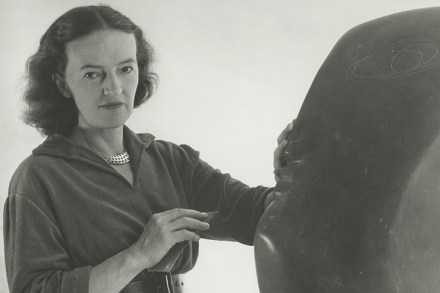
‘To see a world in a grain of sand’, to attain the mystical perception that Blake advocated, requires a concentrated, fertile imagination. Barbara Hepworth (1903-1975), one of the leading and most popular British sculptors of the 20th century, fervently imagined that her works expressed cosmic grandeur and her own spiritual aspirations. In the foreword to this thoughtful and enjoyable biography, Ali Smith testifies that Hepworth was ‘fiercely intelligent’, while its author, Eleanor Clayton, candidly declares: ‘I write as a curator who loves the artist she presents, a fan writing of her hero.’ Her research shows how frequently the sculptures convey ‘concepts [Hepworth] considered universal and eternal’.

Straight lines and grandiose schemes — Napoleon the gardener

From our UK edition

On 1 January 1806, a little over one year after his coronation, the Emperor Napoleon ordered the abolition of France’s new republican calendar and a return to the old Gregorian model. Over the past seven years republicans had grown used to ‘empire creep’, but even for those who had been forced to watch the principles of the revolution dismantled one by one and a republican general metamorphose into Emperor of the French, this last insult carried a peculiarly symbolic charge. For all its engaging dottiness — each new year, coinciding with the autumnal equinox, would begin on a different date — the short-lived republican calendar had embodied some of the most attractive and fragile dreams of the revolution.

The high and low life of John Craxton

From our UK edition

Charm is a weasel word; it can evoke the superficial and insincere, and engender suspicion and mistrust. But charm in its most authentic sense was surely the defining quality of the painter John Craxton, and it flavours this lively and richly coloured account of his life. Ian Collins only met the elderly Craxton — by now sporting the moustaches, shepherd’s stick and general demeanour of a Cretan chieftain — in the last decade of his life (he lived to 88), and was immediately seduced by his joie de vivre and his fund of recondite knowledge, stories and jokes, and drawn into Craxton’s charmed circle.

The jab that saved countless lives 300 years ago

From our UK edition

This timely book celebrates one of the most remarkable women of the 18th century. Lady Mary Wortley Montagu was so impressed by the Turkish technique of ‘engraftment’ to prevent smallpox that in 1721, exactly 300 years ago, she arranged for the first such inoculation in England — and, even more controversially, had it carried out on her own three-year-old daughter. Smallpox pus from a sufferer was carried in a walnut shell and applied to a cut made in her daughter’s arm. She discovered the technique too late to use it on herself. As a young woman and court beauty, she had contracted smallpox during one of the frequent epidemics that swept London, leaving her scarred and without any eyebrows.

Apostle of modernism: Clive Bell’s reputation repaired

From our UK edition

Clive Bell is the perennial supporting character in the biographies of the Bloomsbury group. The husband of Vanessa Bell, brother-in-law of Virginia Woolf and friend of Maynard Keynes and Lytton Strachey, he is often depicted as a witness to historical events rather than a participant in them, a sort of modernist Forrest Gump. At best he is a dilettante with good taste who didn’t quite belong with the intellectuals of Bloomsbury; at worst he is a womaniser with Nazi sympathies who took advantage of Virginia Woolf. In this useful book Mark Hussey lets him take centre stage and delivers a far more nuanced portrait. Bell liked to play up to his bad reputation — describing himself as ‘made for...

Shock tactics: the flamboyant life of a Hanoverian maid of honour

From our UK edition

At the masquerade celebrating the end of the War of Austrian Succession no one could take their eyes off the beautiful Elizabeth Chudleigh. She had come, she said, as ‘Iphigenia, ready for the sacrifice’, and it was what she was wearing — or to all appearances not wearing — that caused a sensation that lasted for months. In the candlelight, her clinging costume of flesh-coloured silk made her appear completely naked; ‘a perfect review of the unadorned mother of mankind’, said one account. The furore caused by this episode was only eclipsed when, 27 years later, Elizabeth, now the widowed Duchess of Kingston, was put on trial for bigamy.