Biography

The visionary genius of Harold Wilson

From our UK edition

‘Our generation owes an apology to the shades of Harold Wilson,’ the polling guru Peter Kellner once told me. Had Wilson not firmly resisted pressure from President Lyndon Johnson to send troops to Vietnam, Kellner and I were both old enough to have fought there. But in 1968 we loftily despised Wilson for twisting and turning to stay out of Vietnam and keep his party together. ‘What are the two worst things about Harold Wilson?’, we asked. ‘His face,’ we replied smugly. Britain has never quite forgiven Wilson for his cleverness. His reputation suffered a catastrophic decline in the immediate aftermath of his premiership.

The short-lived wonder of Creedence Clearwater Revival

From our UK edition

Million-selling rock bands are rarely happy families. They are an uneasy combination of a creative alliance and a business partnership, which is frequently thrown together on an ad hoc basis by people barely out of their teens. They are tested to destruction by long hours, minimal sleep, deafening noise, international travel, a bedroom schedule that would have made Caligula blush and a seemingly unending cocktail of legal and illegal stimulants. As the old joke goes, there is also a downside. This is the accepted pattern.

In search of the peripatetic philosopher Theophrastus

From our UK edition

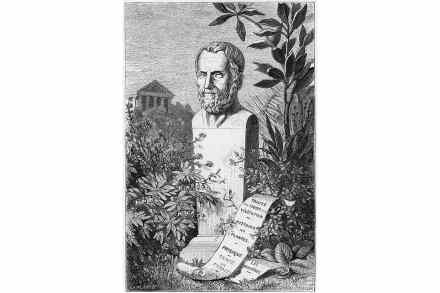
Publishers lately seem to have got the idea that otherwise uncommercial subjects might be rendered sexy if presented with a personal, often confessional, counterpoint. The ostensible subject of Laura Beatty’s book is the pioneering Greek botanist and philosopher Theophrastus. He was a friend of Aristotle’s, and was once thought his intellectual equal, but is now little known except to a few classicists and historians of science. But since no one wants to publish a straight book on Theophrastus, we get instead a book that is at least as much about Laura Beatty, her library researches, her travels in Greece and her kitchen garden. Her publishers describe the book as ‘genre-defying’.

Why was Henrietta Maria, Charles I’s beautiful wife, so reviled?

From our UK edition

On 15 June 1645, as Thomas Fairfax’s soldiers picked over the scattered debris on the Naseby battlefield, they made a sensational discovery. Amid the corpses and musket balls, dismembered limbs and severed swords there nestled a carrying case of personal letters and papers. It was nothing less than the king’s private correspondence. The cache included letters between Charles I and his queen, Henrietta Maria – his always opened ‘My deare harte’ – which discussed in detail the tactics and strategies of the war. Never ones to miss a PR opportunity, the Parliamentary high command ordered that a selection should be published with a guiding commentary.

Harpo Marx – genius, idiot savant or lovable overgrown child?

From our UK edition

It’s hard (if not impossible) to imagine a world worth living in that doesn’t include the Marx Brothers; and equally impossible to imagine the Marx Brothers without their forever silent, animal-loving, hilariously unpredictable Harpo, he of the moppet wig, trampish overcoat packed with stolen silverware and blow torches, and recurringly grotesque facial expressions. For while the greatest comic performers of the silent film era (such as Chaplin and Keaton) couldn’t speak to the camera, Harpo was the only comic of the talkie era who simply wouldn’t, as if human conversation were somehow beneath him.

Aleister Crowley was even more beastly than we’d imagined

From our UK edition

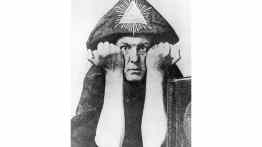
I have never had much time for Aleister Crowley. Magic(k) is nonsense; the mystical societies he founded were simply pretexts for him to take as many drugs and have as much sex as he could. And he was a second-rate writer at best. When the novelist Arthur Calder-Marshall said he had gone ‘from Great Beast to Great Bore’, I thought it a fair summing-up. Crowley initiates were some of the dodgiest people in the western world – either frauds or hucksters themselves or the most gullible of fools. There was always the matter of his self-reinvention. Aleister Crowley was not christened thus: he changed his first name because he thought that a dactyl followed by a spondee conferred the greatest chance of becoming famous. (I cannot say it has done me any favours.

How Alice Prin conquered bohemian Paris

From our UK edition

This book is about two people who reinvented themselves in 1920s Paris. Mark Braude focuses on Kiki de Montparnasse and Man Ray, the decade of their creative collaboration and the cafés and nightclubs of Montparnasse, immersing the reader in a world where everyone was pushing their creativity in unimaginable directions. Emmanuel Radnitzky, the Jewish tailor’s son from Brooklyn who turned himself into Man Ray, the painter and photographer, saw himself as the equal of Picasso, Duchamp, Picabia, Léger and the other artists who were being talked and written about with such excitement. Yet people found him more interesting as an innovative photographer than a painter, and while photography was definitely an art, it was not Art.

Blake Bailey deserves to be heard one more time

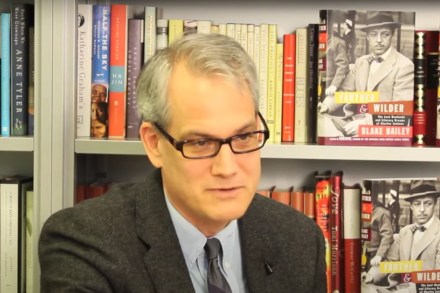
At the beginning of 2021, author Blake Bailey might have been forgiven for thinking that his literary career was not merely assured but stellar. He had gathered significant accolades for his writing, including a Guggenheim Fellowship and the National Books Critics Circle Award, and he was a Pulitzer Prize finalist. He had specialized in writing about heavy-drinking Great American Novelists, including the perennially underrated Richard Yates, John Cheever and The Lost Weekend’s Charles Jackson. His most recent subject was the elusive Philip Roth, a man whose literary brilliance was matched by his checkered reputation both on and off the page. Eighteen months later, matters have changed beyond recognition.

Who planned Field Marshal Sir Henry Wilson’s murder?

From our UK edition

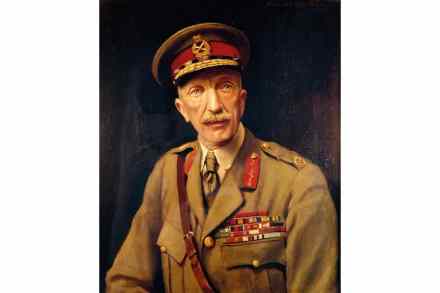
Until very recently, political assassination was a mercifully uncommon occurrence in British politics, though that has changed. Previously when such murders did happen, they were usually associated with Ireland: the 1882 Phoenix Park murders of Lord Frederick Cavendish and Thomas Burke, the killings of Airey Neave and Lord Mountbatten, and numerous unsuccessful plots and near misses. One spectacular example occurred in June 1922, when Field-Marshal Sir Henry Wilson was shot dead outside his Mayfair house by two IRA operatives called Reginald Dunne and Joseph O’Sullivan, who were swiftly captured and hanged, after a trial whose procedures were sharply criticised by George Bernard Shaw among others.

Homage to Sydney Kentridge, South Africa’s courtroom giant

From our UK edition

Sydney Kentridge, the protagonist of Thomas Grant’s superb legal saga The Mandela Brief, is that trickiest of biographical subjects: a great man. Grant acknowledges ‘it is rare that, on closer acquaintance, a person touted as a “great” man or woman conforms to the initial description’, but the South African lawyer has been described by countless barristers as the greatest courtroom advocate they had ever seen. Notable for the apartheid cases he conducted as a defence lawyer of especial distinction and passion, Kentridge has also been admired for his calm and assured bearing in court.

Lord Northcliffe’s war of words

From our UK edition

‘What a man,’ enthused Wilhelm II from exile in 1921. ‘If we had had Northcliffe we would have won the war.’ The Kaiser wasn’t describing a general or politician but a not- so-humble newspaperman, Lord Northcliffe, the pugnacious proprietor of the Times, Daily Mail and a host of other print publications, who had ended the Great War pumping news into Germany as the British government’s director of propaganda in enemy countries. Northcliffe brought to that post the drive he had shown building up his media empire over three decades.

‘That little venal borough’: a poet’s jaundiced view of Aldeburgh

From our UK edition

‘To talk about Crabbe is to talk about England,’ E.M. Forster declared in a radio broadcast in May 1941, but few people today talk about this Suffolk-born poet or indeed read him. This makes Frances Gibb’s slender but thorough account of George Crabbe’s life and work all the more welcome. In his time he was considered a leading, though controversial, figure, who wrote with stark realism about the spiritually and morally impoverished lives of East Anglian villagers and townspeople, in particular the inhabitants of the ‘little venal borough’ of Aldeburgh, where he was born in 1754 and spent an unhappy youth.

What shape is the Treasury in now?

From our UK edition

Don’t bring a bottle. Your chances of finding a party in full swing down those chilly corridors are close to zero. At most, you might hear the sound of a distant flute playing a courante by Lully. As Sir Howard Davies puts it in this insider’s view, which manages to be both authoritative and quite cheeky: The Treasury does not cultivate a warm and cuddly working environment. You may well not know if your immediate boss has a spouse or partner, and would certainly never meet them if they exist. Social events are at a premium. Yet this notoriously ascetic culture is not in the least hierarchical.

Is T.S. Eliot’s great aura fading?

From our UK edition

For much of his life T.S. Eliot was surrounded by an aura of greatness: people accepted it, and behaved accordingly. That kind of consensus is not helpful for a writer or his works, as Eliot himself clearly saw, observing that nobody had ever written anything significant after winning the Nobel Prize for Literature – true at the time and mostly true since. His work is now in the position of Hamlet when he wrote a famous essay on the play: that the universal agreement of its greatness had hidden an understanding of its failures, its strangeness and what it couldn’t do. We take the greatness of Eliot’s poetry pretty much for granted; but in the centenary of The Waste Land, some cracks are beginning to appear in a once unassailable reputation.

The lonely genius of Bronislava Nijinska

From our UK edition

Even in her lifetime, people had a habit of overlooking the talent of Bronislava Nijinska. Her famous brother Vaslav Nijinsky initially refused to recommend her to his lover Sergei Diaghilev when the impresario was signing up dancers for the 1909 Paris season of Ballets Russes. He didn’t introduce her to his friends, either and – in what can only be seen as an act of cruelty – took away her roles in the ballets she had helped him create. Diaghilev himself, whom she regarded as a father figure, treated her with something like disdain, declaring: ‘I cannot have two geniuses of the dance from one family’, and asked her to dye her hair red ‘and dress more like a ballerina’.

Is Anna Wintour human?

From our UK edition

Apparently Anna Wintour wants to be seen as human, and Amy Odell’s biography goes some way to helping her achieve that aim. Nearly all the photographs show her smiling, looking friendly, even girlish. And the text quite often mentions her crying. On 9 November 2016 she cried in front of her entire staff because Hillary Clinton lost the election. But then she immediately set about trying to persuade Melania Trump to do a Vogue shoot. Melania, another tough cookie, refused unless she was guaranteed the cover. Dame Anna has been the editor of American Vogue since 1988 and holds a position of extraordinary power in the fashion world. Designers, photographers, models and celebs tremble to obey her whim.

Gardening’s bad girl: the genius – and malice – of Ellen Willmott

From our UK edition

In October 1897, the grandees of the Royal Horticultural Society gathered to bestow their highest award, the Victoria Medal of Honour, struck to commemorate the Queen’s Diamond Jubilee, to 60 of gardening’s greatest luminaries. For the first time, these included two women. One was Gertrude Jekyll, known by all as the Queen of Spades; the other was the 39-year-old Ellen Willmott. But Willmott did not turn up. This public snub was the beginning of her reputation as ‘gardening’s bad girl’, as Sandra Lawrence puts it, one that increased exponentially until it exploded in stories of daffodils being booby-trapped to deter bulb thieves.

Disregarded for decades, Jean Rhys stayed true to her vision of life

From our UK edition

Jean Rhys, who died at the age of 88 in 1979, lived to be forgotten and rediscovered. Like many readers, I first came across her through her novel Wide Sargasso Sea, which imagines the pre-history of Jane Eyre’s ‘madwoman in the attic’, the Creole heiress married off to Mr Rochester and then incarcerated by him at Thornfield Hall. When it came out to great acclaim in 1966, it marked the rebirth of a writer who hadn’t published a book for more than a quarter of a century and who had even been presumed dead.

Is Mark Twain’s old age best forgotten?

From our UK edition

Mark Twain conquered almost every challenge that came his way except old age. Living well into his seventies, he was a printer, an investigative journalist, a riverboat captain, a government functionary, a bestselling novelist, an imperialism-defying political essayist, a successful playwright and a devoted father and husband. He travelled the world giving lectures that made him many fortunes, which he often used to replenish the fortunes he lost from his madder and most poorly managed investment schemes, such as the Paige Compositor, a self-justifying printing press which worked briefly for a few days in 1894 and then, just as mysteriously, stopped.

Friend of Elizabethan exiles: the colourful life of Jane Dormer

From our UK edition

Thomas Cromwell’s biographer Diarmaid MacCulloch once told me that my father’s family, the Dormers, had been servants of the great enforcer of Henry VIII’s Reformation. This may have been a tease. It is a matter of family pride that Jane Dormer’s great- uncle, the Carthusian monk Sebastian Newdigate, was executed for refusing to accept the Royal Supremacy. Jane, Duchess of Feria (1538-1612), was named after his pious sister, her grandmother. Most of Jane Newdigate’s Dormer descendants remained stubbornly Catholic over the centuries of persecution that followed, but they were never aggressive about it.