Benefits

Universal Credit and the future of the welfare state

Amid the many failures of public policy during the Covid crisis, one success has gone largely unnoticed. The Universal Credit system coped with a huge uplift in applications without breaking down. In February last year 2.6 million households were signed up; six months later that had swelled to 4.6 million. Some 554,000 people made new claims in the first week of lockdown, ten times the normal levels. For a benefit which not so long ago was being damned for the poor execution of its rollout, it is remarkable that the system coped. Its unexpected success offers plenty of lessons for the future of the welfare state. The digitisation of the system, controversial at the time, enabled the service to be delivered to those in urgent need of help.

Amber Rudd changes the Tory tune on food banks

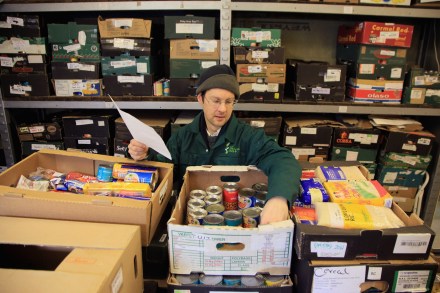
What's behind the rise in demand for food banks? Over the past few years, the default Conservative line has been that the reasons people need emergency help are 'complex'. This is certainly true: the figures released by the Trussell Trust, which runs the largest network of food banks in the country, show that there is no one factor in food bank use. But those figures also show quite clearly that problems with the payments of benefits, or cuts to benefits, are a major driver: the top four reasons cited for referring someone to a food bank in 2017-18 were low income (28.49 per cent), benefit delays (23.74 per cent), benefit change (17.72 per cent) and debt (8.53 per cent).

How Thérèse Coffey plans to help millions back to work

If you haven’t heard of Thérèse Coffey, then this will be — to her — a sign that she has been doing something right.  As Work and Pensions Secretary she has had to sign people on to benefits faster than anyone who has held the position before. If this had gone wrong during lockdown, she would be as infamous as Gavin Williamson. But the system, Universal Credit, managed 1.5 million claims in four weeks. Many things have gone wrong for the government over the past few months, but the welfare system has (so far) held up. Coffey has kept her anonymity.  ‘My main task has been making sure that DWP runs effectively. Being in the news would probably be a sign that it wasn’t,’ she says over lunch in The Spectator’s boardroom.

Sunak’s coronavirus rescue package looks increasingly unsustainable

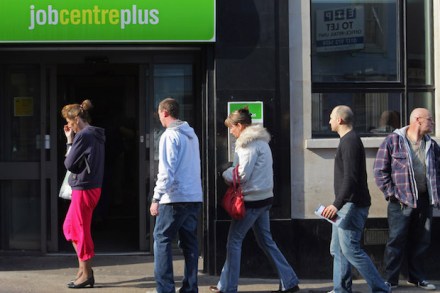
The number of people claiming unemployment benefits in Britain rose by over 856,000 to 2.1 million in April, the first full month of the lockdown. Figures from the Office for National Statistics reveal that the number claiming benefits due to unemployment has increased by nearly 70 per cent. This marks an unbelievable u-turn from the start of the year, when UK employment figures were hovering at record highs. These figures do not include ‘the furlough effect’: those who are still counted as employed, paid by the Government to stay home and wait for the green light to return to work.

The Tories only have themselves to blame for Labour’s threat to Universal Credit

The Labour Party is buzzing about in Iain Duncan Smith's constituency today, threatening both to unseat the former Conservative leader and scrap the reform he introduced: Universal Credit. Jeremy Corbyn made the promise, saying the changes to the benefits system have been an 'unmitigated disaster'. The party will first get rid of the most controversial aspects of UC - including the fitness-to-work tests, the two-child limit, and sanctions which dock benefits from claimants who miss appointments - before scrapping it entirely. This has naturally prompted protests from the Tories, including some of the many MPs who served as work and pensions Secretary at one point or another. But the truth is that the Conservatives have brought this on themselves with a series of avoidable mistakes.

Amber Rudd admits Universal Credit is in trouble

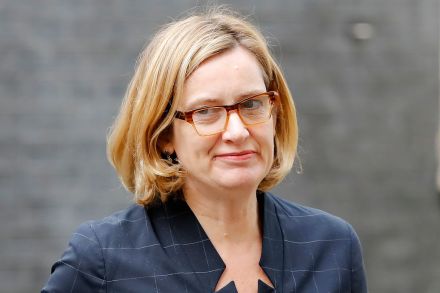
Amber Rudd left the Home Office over the Windrush scandal and has joined the Work and Pensions department just as its flagship benefits reform is under fire from all angles. The new Secretary of State spent most of her first session at the dispatch box this afternoon answering questions on Universal Credit - and she had arrived determined to strike a rather different tone from her predecessor. Esther McVey, who resigned from the role last week, had garnered a reputation for being rather hardline when dealing with criticisms of the benefit roll-out, while also managing to give far more away about some of its problems than Number 10 would have liked.

Delays to Universal Credit won’t fix its fundamental flaw

It's rare that a government pauses the implementation of a flagship policy. There's so much ego involved in these matters that to do so is to admit a failing, rather than merely being sensible. But the government has had little choice but to further delay the roll-out of Universal Credit while it sorts out some of the problems with it. The plan had originally been that a further roll-out to four million people would start in January, with more claimants moving in July. But today the Work and Pensions department confirmed that the July deadline has moved to November as a result of fears across Parliament that those who are already receiving the benefit are severely struggling.

The best place to be poor

I was born in north London, at the Whittington Hospital in Archway, and at the age of 62, after many years of trouble and wandering, I have come to rest in the streets where I was born. And in my usual cunning way I have become one of the roughly 300 or 400 people living in inner London you perhaps think of as ‘homeless’, making the rounds from drop-in centres to churches, from morning till night, in the hunt for free food. For this is what my life has come down to as I stand on the threshold of old age, the endless movement from one soup kitchen to the next, which at least gets me to the end of the day by a pleasant route. Or it might be not so pleasant, because of course a lot of conflict erupts at places where a large number of people benefit from organised kindness.

‘Remain’ dodges a hammer blow from the European Court of Justice

‘Remain’ might be trailing in the polls, but the campaign can at least be grateful they haven’t been dealt another hammer blow by the European Court of Justice today. The European Commission had tried to claim that the UK Government was wrong to check whether those getting child benefits were allowed to live in the country before paying out. But thankfully for ‘Remain’, the ECJ ruled that it was legal to hold back money for unemployed EU migrants who were not allowed to be here. The good news for ‘Remain’ is that the decision didn’t go the other way.

Employees lose out after salary sacrifice perks scrapped

If you're not familiar with the term, then 'salary sacrifice' is a bit of a puzzler. Just what is your boss expecting you to sacrifice? A chunk of your wages? A goat in the car park at lunchtime? Put simply, salary sacrifice arrangements enable employees to give up salary in return for benefits-in-kind that are often subject to more favourable tax treatment than their wage packet. They're a nice little earner for staff and employers as they essentially permit a bypassing of National Insurance (NI) payments. So, employers allow their workers to take a so-called 'pay cut' and that money is funnelled into a pension or another benefit such as childcare or a mobile phone. The end result: both parties pay less NI, as well as paying tax on a smaller income.

Barometer | 3 November 2016

Strike force Nissan is to expand its plant in Sunderland, building two new models there. The Japanese company is praised for not losing a day to strikes in three decades in the city. But labour relations weren’t always so good. — In 1953, when part of Nissan’s business was assembling Austin cars in Japan under licence, the company suffered a bitter 100-day strike. Occupying US forces became involved, helping the Japanese government to arrest union leaders. — As a result of the strike, a new, less militant union was formed, with a Harvard-educated leader. The union accepted job losses but became involved in discussions over new technology. Global race And where did the UK fit in among the world’s largest car producers in the second quarter of 2016?

Briefing: What’s holding up EU leaders in Brussels?

David Cameron is locked in negotiations with the other European leaders at the crunch summit in Brussels. With no sign of a deal, there is a chance the whole thing could drag on until Sunday. But what exactly are the issues that haven't been agreed? Here are the main areas which are proving a sticking point for the PM: Economic Governance: The Prime Minister wants recognition that the EU has more than one currency and that Britain won't be disadvantaged by not being within the Euro. As well as this, David Cameron is seeking assurances that British taxpayers will never be liable for propping up the Eurozone. The emergency brake: Another key factor being discussed is the issue of the emergency brake on in-work benefits for migrants.

With an 18-point lead in the latest poll, momentum is with the EU ‘in’ campaign. 

Why is David Cameron having such trouble persuading Jean-Claude Juncker to give in to his minimal demands for EU reform? The Prime Minister pledged, in a Tory manifesto, to restrict welfare for migrants for the first four years they're in Britain: not as an ‘emergency’, but as a matter of routine. He was returned with a majority, and under British democracy this means it ought to happen. If the Lords were to try to frustrate this, the PM would overrule them because it was a manifesto pledge, voted on by the public. Why accept a veto from the EU? But the polls show a clear lead for 'in' - a ComRes poll for the Daily Mail tomorrow shows in leading by 18 points (54pc to 36pc) with just 10pc as 'don't knows'.

Things we don’t mind paying for

Here’s a challenge for film buffs: can anyone remember, from the entire canon of cinema and television, a single scene set in an underground car park in which something unpleasant or nefarious did not occur? Yet I still rather like them. By far the best car park in London is the one found underneath Bloomsbury Square, which is in the shape of a double-helix. This allows you to drive all the way down and all the way up again with your steering wheel in one position. About once a year I park in the Mayfair car park at the bottom of Park Lane. I recently noticed that an annual season ticket for the car park is £3,900, which, provided you are happy to sleep in your car and wash in the nearby public toilets, makes it something of a bargain for central London property.

Does George Osborne really want to make himself the scourge of the strivers?

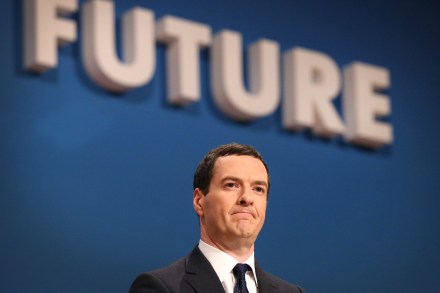
Without George Osborne, we’d probably be living under Prime Minister Ed Miliband right now. His value to the government goes far beyond his brief as Chancellor; he is across most departments most of the time. But as Chancellor, he is judged by the success (or otherwise) of his Budgets – which is why he is now in a moment of great danger. His love of complexity has come to threaten not just his own reputation, but that of the Conservative Party too. Sometimes, Osborne is so clever that he can be downright stupid: This is one of these times. In my Telegraph column today, I say that Osborne is currently planning to soften – but not abandon – his tax credit cuts programme.

The benefit cut that isn’t quite as it seems

MPs are voting on the Welfare Reform and Work Bill this afternoon, with the big story being about Labour turmoil over the second reading. Harriet Harman’s amendment looks rather forlorn on the order paper this morning, with just five frontbenchers signed up to support it. Helen Goodman, who was explaining why she was pressing ahead with her own rebel amendment on this morning’s Today programme, has 57 MPs — not all of them Labour — supporting her motion.

Harriet Harman: Labour will not do ‘blanket opposition’

Ever since Labour started having to respond to Tory policy announcements, there have been little fissures in the party over what sort of stance it should take on welfare. When Harriet Harman announced that the party was ‘sympathetic’ to lowering the £26,000 welfare cap for workless households, one leadership campaign told me it was no consulted before that policy changed and that ‘nothing Harriet does now is set (or written) in stone’.

How George Osborne’s Budget makes work pay less

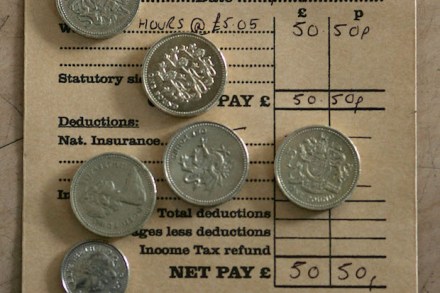
In his Budget, the Chancellor claimed that ‘those currently on the minimum wage will see their pay rise by over a third this Parliament, a cash increase for a full time worker of over £5,000.’ But this wasn’t quite the whole story. What he didn’t say is that a full-time worker could see just 7pc of this pay rise in their pockets due to the withdrawal of benefits and tax credits. Osborne’s Treasury will accrue the remaining 93pc in reduced welfare payments and increased tax revenue. The simple truth is that the Living Wage helps government more than it does workers. In Britain, tax credits and other benefits conspire to make low-paid work a fiendishly complex network of allowances and taper rates.

A British policeman shouldn’t take orders from a radical Islamist preacher

Each year Anjem Choudary earns more in benefits than a soldier does starting off in our armed forces. This is a fact I never tire of pointing out – especially to Anjem’s face whenever we have the misfortune to meet. The follow-on point, which I think also worth continuing to make, is that there is something suicidal about a society that rewards its enemies better than it does its defenders. Choudary and his family rake in around £25,000 each year  and - as you can see from this newly-released video above  – we taxpayers now get even more for our money than we had previously thought.

The lying game | 14 May 2015

My favourite scene in the first episode of the new series of Benefits Street (Mondays, Channel 4) — now relocated to a housing estate in the north-east, but otherwise pretty much unchanged — was the one where the street’s resident stoner and low-level crim Maxwell has to attend a court summons. Really, if the whole thing had been scripted and faked by the film-makers (as I’m sure it wasn’t: no need), it couldn’t have worked out better. With just 15 minutes to go before Maxwell’s court hearing seven miles away, his brother turns up to give him a lift on his motorbike. But there’s one small problem. Maxwell’s brother is still under the influence of the vast quantities of diazepam he’s carrying with him in his bag.