Beachcombing

Nothing works: The End of Everything, by M. John Harrison, reviewed

For more than half a century, M. John Harrison has been writing about decay and dispossession in a style that is at once restless and exacting. Often an audacious weaver of science fictions, he has also operated in a ruggedly realistic vein – though the distinction would probably strike him as bogus, a marketing position rather than useful framing. The End of Everything occupies typical Harrison terrain, with notes of J.G. Ballard and David Lynch as well as more than a hint of Stanley Spencer’s paintings (think compost heaps and clutter).

Islands of inspiration: a poet’s life on Shetland

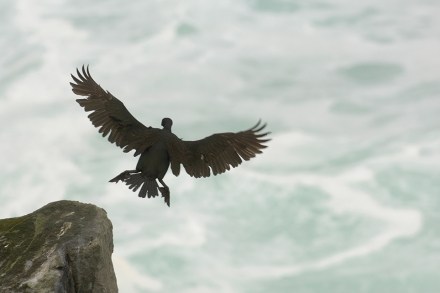
Shetland comprises an archipelago of some 300 islands and skerries situated roughly half way between London and the Arctic Circle. Stereotyped by many outsiders as bleak and somehow ‘on the edge’, according to the poet Jen Hadfield’s stylish memoir – about her 17 years of living there – it can be more illuminating to see these places as somehow central to everything. Visiting Foula, Hadfield overcomes her vertigo, finding the island ‘peaceful and dreadful’ all at once Storm Pegs is as much an account of the author finding new personal bearings as a series of magic lantern slides about insular life. The title alludes to a traditional piece of perforated wood used by mariners to keep track of their whereabouts: you stuck the peg in a hole and navigated accordingly.

We do love to be beside the seaside

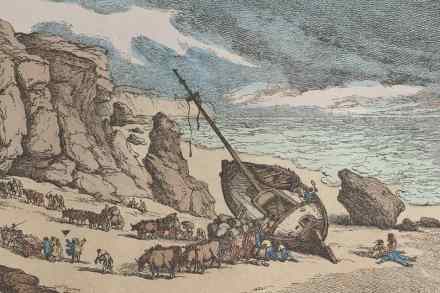
In the garden of my house in Cornwall there is a smooth granite stone about the size and shape of a goodly pumpkin. In the middle, where the stalk would be, there is a hole filled with rusting iron. The day I moved in, a neighbour told me that the hole was drilled and filled with molten iron to attach a hook, long since rusted away, to make a ‘sinking stone’. Smuggled cargo could be submerged just off shore if there were any danger of meeting King George’s men, to be harvested when the coast was clear.