Bbc

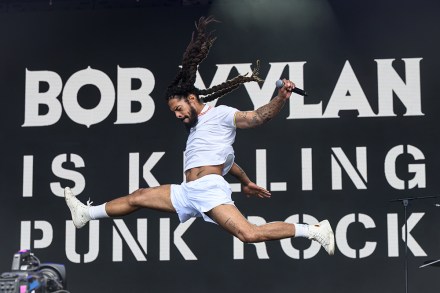
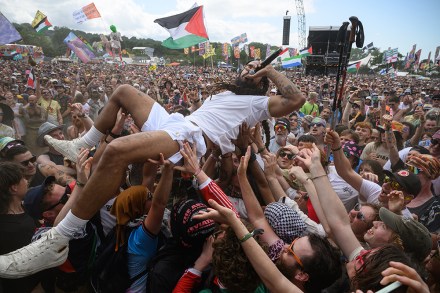
Tim Davie shouldn’t quit over Glastonbury

From our UK edition

There probably never has been a time when a governing party much liked its MPs. If you are on a mission, as governments imagine they are, you are always impatient when your own side raises objections. But it is only recently that governments have seemed positively affronted by the idea that their MPs should have a say. This was encapsulated by Sir Keir Starmer when he dismissed Labour’s backbench revolt over welfare cuts as ‘noises off’. Off what, exactly? Legislators have the sole right to legislate and that includes the right to refuse legislation. Those, like Rachael Maskell, who parade their consciences may be tiresome, but there is no way of governing this country except through parliament (though people like Lord Hermer are striving mightily to alter this).

And now let’s bomb Glastonbury

From our UK edition

A small yield nuclear weapon, such as the American W89, dropped on Glastonbury in late June would immediately remove from our country almost everybody who is hugely annoying. You would see a marked reduction in the keffiyeh klan, for a start, and all those middle-class Extinction Rebellion protestors would find, in a nanosecond, that their rebellion was pointless, because extinction had arrived even more summarily than they expected. Go on, glue yourselves to that, Poppy and Oliver. Street drummers, liberal politicians, provo vegans, radical rappers, spiritual healers, Billy Bragg, that bloke who owns Forest Green Rovers, druggies, tattooed blue-haired hags, almost the entirety of middle-class London – all evaporated.

Tim Franks goes in search of what it means to be Jewish

From our UK edition

It’s hard to classify this thought-provoking book – part memoir, part philosophical exploration, but mostly a deeply researched family history. And what a history that is. Tim Franks, born in 1968, has been a BBC reporter for almost two decades, and now presents Newshour on the World Service. So he knows how to tell stories about other people. But the events here concern himself, and many of them are heartbreaking, as he searches for an answer to the question of what comprises identity and to what extent we are products of our ancestors.

Who’s afraid of Virginia Woolf? The BBC, it seems

From our UK edition

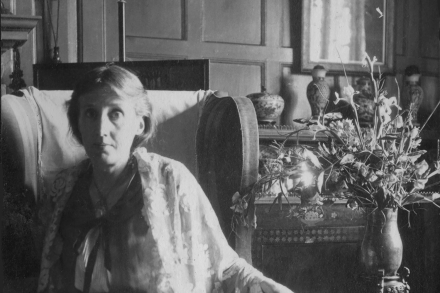
‘What a lark!’ I thought to myself as I rose on a hot June morning to listen to a documentary on Mrs Dalloway. A century has passed since Clarissa bought flowers for her midsummer party, and Radio 4 has commissioned a three-parter, with actress Fiona Shaw presenting. ‘What a plunge!’ The first programme had been playing for all of two minutes before my hopes began to wilt like a delphinium. ‘Her face adorns tote bags and internet memes,’ says Shaw of Woolf in the preamble, which sounds as though it has been lifted directly from the series pitch to the BBC. ‘I’ll be asking what… Virginia Woolf has to say to us today.

The vicious genius of Adam Curtis

From our UK edition

In an interview back in 2021, Adam Curtis explained that most political journalists couldn’t understand his films because they aren’t interested in music. Having known a fair few political journalists, I can say with some certainty that he was right. Most politically motivated types are – not to be unkind, but it’s true – total losers. This cuts across left and right, all ideologies and tendencies, from Toryism to anarchism to Islamism and back: whatever you believe, if you believe it too strongly you were probably a weirdo at school. The other kids went out clubbing; you stayed at home, drawing pictures of Lenin or von Mises on your satchel. The other kids were in bands, you were in a reading group.

Has my father’s BBC addiction peaked?

From our UK edition

‘I want the stairlift to go faster!’ said my mother, as the machine she was sitting on whirred furiously while she moaned to me about it on the phone. ‘How fast do you want it to go?’ I asked, imagining it doing 60mph down the short run of stairs in their little house in Coventry, coming to an abrupt halt at the bottom, then catapulting her across the living-room floor because she never does the seatbelt up. ‘It’s too slow!’ she declared, and I could hear her slapping various bits of it and banging the switches on the arm. ‘When the man comes to service it I’m going to tell him to make it go faster. Come on! Come on!

The BBC’s Israel problem

From our UK edition

Intrepidly, the BBC dared recently to visit Dover, Delaware – source, it implied, of starvation in Gaza. I listened carefully as its State Department correspondent, Tom Bateman, hunted down the Gaza Humanitarian Foundation in the state which, he explained, is ‘a corporate haven for those who like privacy’. Brave Tom did not find much, but that only proved to him that ‘The main ingredients of this aid are its politics’. The foundation’s chairman says he is a Christian Zionist which, for the BBC, is almost as bad as saying you are a neo-Nazi. The portentousness aside, it is reasonable to ask tricky questions of the American/Israeli organisation which claims it can solve aid in Gaza.

BBC editor accuses Trump of dishonesty – wrecking broadcaster’s impartiality

The BBC’s response to recent White House criticism over its Gaza coverage highlights the Corporation’s vulnerability on the question of impartiality in conflict reporting. What began as a public rebuke by Trump’s press secretary, Karoline Leavitt, over a disputed report quickly developed into a broader interrogation of the BBC’s editorial assumptions and its long-standing handling of the Israeli–Palestinian conflict. Jeremy Bowen, the BBC’s international editor, defended the Corporation and accused the Trump administration of dishonesty. Responding to Leavitt’s remarks, he said, “To be quite frank, the Trump administration does not have a good record when it comes to telling the truth itself. She’s making a political point, basically.

Donald Trump

The best radio at the moment is on the BBC World Service

From our UK edition

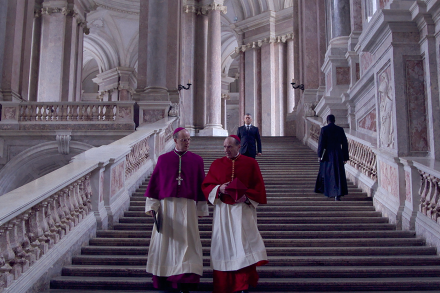
Online viewings of Conclave increased threefold following the death of Pope Francis last month. At least some of the traffic was rumoured to have come from the Vatican itself. This raises many questions, but the most pertinent for me this week is, what did the cardinals think of the carpets? Do they really have coffee machines in their rooms like Tremblay? Minibars like Bellini? Their peace spoiled by the sounds of a lift shaft as in the case of long-suffering Lawrence? If any of these details passed you by, it’s worth watching the film again. In fact, after listening to an interview with the production designer, to be broadcast on BBC World Service next week, you will feel positively compelled to do so.

Those remaking Threads mustn’t soften the horror

From our UK edition

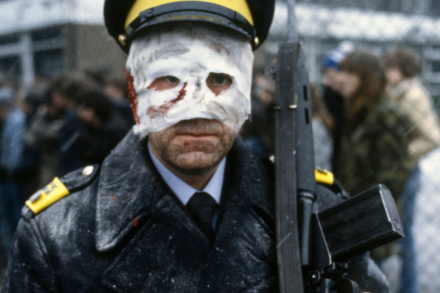
I was 11 years old when I saw the mushroom cloud go up but this wasn’t Hiroshima or Nagasaki in the 1940s – it was Sheffield in the 1980s. I was one of nearly seven million people who sat down on the evening of 23 September 1984 to watch a BBC drama called Threads, written by Barry Hines. For many viewers, choosing to watch this film about a nuclear attack on Britain turned out to be an epochal decision. Threads begins as a kitchen-sink drama, focused around a young couple in Sheffield. The realism of their lives is deftly blended with a documentary narration, making everything seem as real as any fictional drama ever could.

My friend the people smuggler

From our UK edition

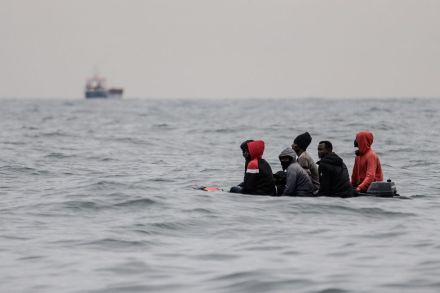
Usually when I start listening to a true-life podcast, I don’t know how it ends. That’s not the case with The Smuggler, BBC Radio 4’s new investigation into people smuggling. Across ten episodes, its Orwell Prize-winning presenter, Annabel Deas, tells the story of ‘Nick’, on the face of it an unlikely protagonist. Nick is white, English and a former soldier in the British Army. He’s also a friend of mine. We met in jail in 2021 and have stayed in contact ever since. So I know Nick’s story. I even know how it ends. Despite all this, I found myself absolutely gripped by The Smuggler. This is partly because it’s such a fascinating, and timely, topic. Migration is rarely out of the news. Keir Starmer keeps promising to ‘smash the gangs’ and ‘stop the boats’.

The BBC’s war on the SAS

From our UK edition

The SAS is under fire, not from terrorists or insurgents, but from ill-informed commentators and our state broadcaster. Our Special Forces are globally respected, they have been a vital part of Britain’s national security capability for nearly 80 years and they run enormous risks so that we might all be kept safe. Nevertheless, an exercise in making sure that they, like all who serve the Crown, are held properly to account risks being used by the ignorant, the sensationalist and the malicious to undermine the regiment and weaken our security.

The BBC’s problems go far beyond Gary Lineker

From our UK edition

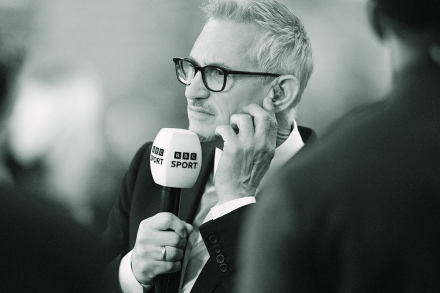
As one might expect from a 103-year-old organisation, the BBC has a very high opinion of itself. Outside Broadcasting House stands a statue of George Orwell. Inscribed next to it is a quotation by him: ‘If liberty means anything at all, it means the right to tell people what they do not want to hear.’ A noble sentiment, and a more flattering testament to the corporation than Orwell’s description of it after working there during the second world war: ‘Something halfway between a girl’s school and a lunatic asylum.’ In his growing outspokenness, the football pundit Gary Lineker might have thought that he was channelling Orwell.

The overlooked brilliance of BBC’s The Hour

From our UK edition

With reluctance – but enticed by its surprisingly starry cast and the fact that it had landed, ironically enough, on Netflix – I recently tuned in to The Hour, the BBC’s 2011 political drama series. It's about a BBC TV news programme being launched in 1956, against the backdrop of the Suez Crisis. And, goodness me, isn’t it good? Better than good, in fact – it’s a high-carat television diamond, and not some lab-grown job either, but the real, romantic, sparkling deal hewn out of the earth and hawked via Antwerp before ending up in the Imperial State Crown.

Biden has learned nothing from his foreign-policy experience

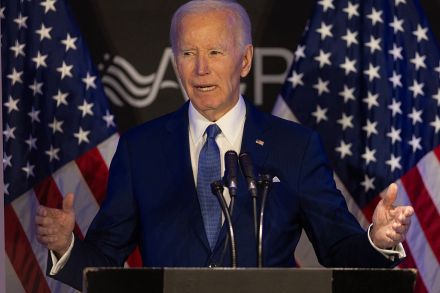
Historically, ex-presidents spend their golden years on the speaking circuit, writing their memoirs or planning for the inauguration of their presidential libraries. What they don’t do is lash out at their successors when they disagree with a policy or decision. Joe Biden, however, has no intention of keeping quiet. A little more than three months after vacating the White House, Biden is unencumbered from conventional decorum and feels free to speak his mind. Last month, he gave his first post-presidency speech in Chicago, where he blasted the Trump administration for taking a sharp hatchet to the federal workforce, including the Social Security Administration.

biden russia

The Kirsty Wark Edition

From our UK edition

30 min listen

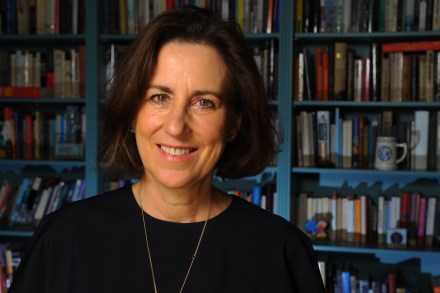
Kirsty Wark has worked for the BBC for almost 50 years and is one of the UK’s most recognisable broadcasters. In 1976 she joined BBC Radio Scotland as a graduate researcher. Having produced and presented several shows across radio including The World At One and PM, she switched to television, and went on to present shows such as Breakfast Timeand The Late Show. However, she is best known for presenting BBC Newsnight for over 30 years, which saw her interview key political and cultural leaders. Having stood down after the 2024 election, she now presents Front Row, The Reunion, and documentaries like Icons of Style.

‘I’ve seen controllers come and go’: Radio 3’s Michael Berkeley interviewed

From our UK edition

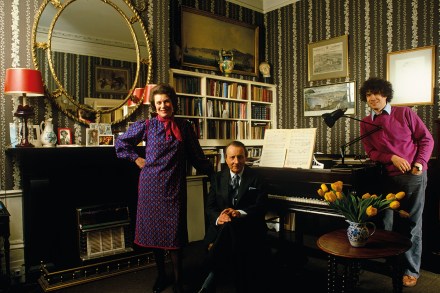
A few years ago I had a panic-stricken phone call from a female friend. ‘Help!’ she wailed. ‘Remind me what classical music I like. I think I’m going to be a guest on Private Passions.’ I could understand her anxiety. The programme, which celebrated its 30th birthday this month, is BBC Radio 3’s lofty version of  Desert Island Discs. Eminent writers, scientists, artists and businessmen, plus the occasional book-plugging celeb, explain how music – mostly but not exclusively classical – is, well, one of their private passions. Even if, as in the case of my friend, it isn’t. It’s an honour to be asked on the show, which is presented by Michael Berkeley – the first classical composer since Benjamin Britten to be elevated to the House of Lords.

When will the BBC ever learn?

From our UK edition

They say that death and taxes are the only certain things in this life. I would add BBC bias into that mix. It was probably about 20 years ago that I first went on Newsnight. In those days Jeremy Paxman ruled the roost and taught me an early lesson in live television. Jeremy asked me my view and I gave it. He then turned to the other guest and duffed him up a bit. I made the mistake of smiling briefly, only for Paxman to turn on me and say something along the lines of: ‘I don’t know what you’re grinning about.’ He then proceeded to duff me up a bit too. Lesson learned. Back then, when you left the Newsnight studio, your phone would explode. Like Question Time some decades ago, it was must-watch television.

Impeccable history of the free market – and from the BBC too

From our UK edition

The launch of Radio 4’s Invisible Hands series has been both blessed and cursed by timing. It tells the story of Britain’s ‘free market revolution’, just as President Donald Trump overhauls the free trade consensus of the past 40 years and world leaders grapple with how to respond. The problem is the hypotheticals posed at the start of the first episode – that free market capitalism ‘might be in crisis’; that ‘the global free market might be under threat’ – are already out of date. It’s settled. Free trade is out, tariffs are in. Welcome to the trade wars. The world could do worse than look to the ‘Invisible Hands’ for a solution to the crisis.

Heaven is an oeuf en gelée

From our UK edition

The cherry blossom was at its finest as I made my last early morning trip through Regent’s Park to Broadcasting House to present Radio 3’s Breakfast. When hire-bikes arrived in London, the planners were thoughtful enough to install a docking station outside my flat. I have used the heavy cycles for my commute ever since. Over the past 14 years I have become accustomed to the regular faces on my route: the man in an elegant dressing gown, surveying the morning scene while waiting for his dog to pee; the jogger who for some reason processes backwards along the pavement (whatever the supposed health benefits of his technique, I’ve always wondered how he avoids colliding with one of the elderly lampposts, some of which date back to the reign of George IV).