Bbc

Our verdict on the new In Our Time presenter

From our UK edition

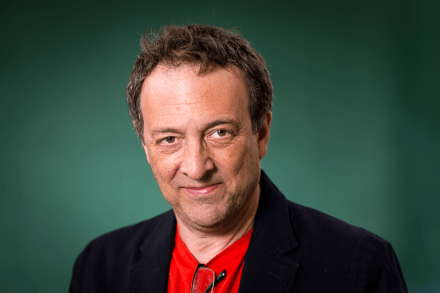
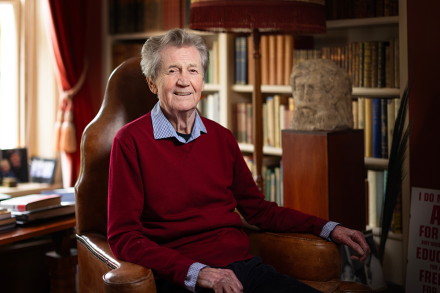
Melvyn Bragg’s first ever intro to In Our Time in 1998 clocked in at 21 seconds. Misha Glenny, meanwhile, took one minute and four seconds to get through his. The initial public reaction to Glenny taking over from Bragg was positive. The prevailing sentiment was ‘thank Christ it isn’t Stephen Fry’. But now you felt as though you could hear two million people shouting ‘Get on with it!!’ at the radio as he stressed and elongated virtually every syllable. John Stuart Mill and his wife had been labouring over ‘On Liberty together for soooome yeeaarrss’. Then we were away. And he’s all right, thank God. With In Our Time, there is no upper bound on how haughty and arrogant a presenter should be I emphasise ‘all right’, though, because there were definitely problems.

The age of absolutism

From our UK edition

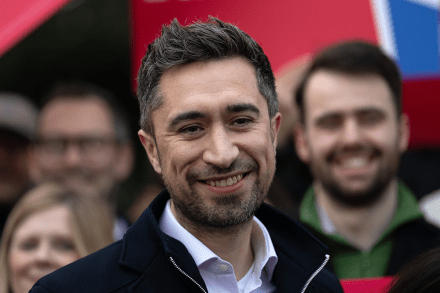
A Labour MP was prevented from visiting a school in his constituency because the teaching unions and the Palestine Solidarity Campaign do not like the fact that he believes Israel should have a right to exist. The MP in question is Damien Egan, who represents Bristol North East and who is vice-chairman of the Labour Friends of Israel caucus – or, as it is almost certainly referred to within the party, Labour Friends of Genocide. We haven’t heard from Egan just yet – perhaps he is less cross about it than I am, or simply doesn’t want to make a fuss. The school in question is the Bristol Brunel Academy, the principal of which is a woman called Jen Cusack who should, of course, be sacked.

Lucy Worsley’s sleuthing is rather impressive

From our UK edition

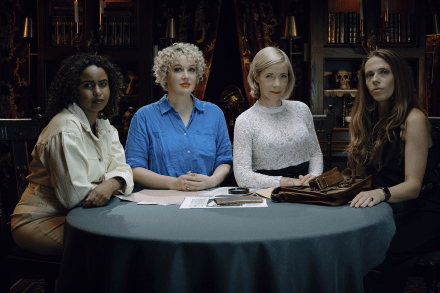
Lucy Worsley’s Victorian Murder Club opened with its presenter unexpectedly channelling that gravelly voiced bloke who used to do all those film trailers beginning ‘In a world…’. ‘The London Thames,’ she intoned as gruffly and menacingly as she could, ‘winding silently through the capital. But in Victorian times...’ dramatic pause ‘...it had a sinister side.’ She then introduced ‘a story that has haunted me since I first heard it’ – possibly, you couldn’t help thinking, from a TV producer keen to find her another true-crime project. In the late 1880s, a serial killer dismembered several women while also taunting the police and never being found.

My farewell to In Our Time

From our UK edition

I set up In Our Time 27 years ago. I had been shunted from Start the Week to what was cheerfully known as the ‘death slot’, 9 a.m. on Thursdays, because BBC management decided I could no longer present that programme after becoming a member of the House of Lords. I know I’ve said it before elsewhere, but its success from those inauspicious beginnings was very fulfilling for me. I decided to retire from IoT in September. I will miss it as it gave me a tremendous education, but I know it will be in very good hands – Misha Glenny is a first-class broadcaster and writer. While passing on the baton, I would like to say how much the audience reaction always meant to me. There were many young people who reacted to the programme and the podcast.

The obvious truth about BBC bias

From our UK edition

For quite a few members of the House of Commons culture, media and sport committee, the answer to the claims of left-wing bias against the BBC could be annulled by the simple expediency of firing the only supposedly right-of-centre person within the corporation, Robbie Gibb. It is a curious logic that the left employs. This is especially true in the case of Labour’s Rupa Huq, the MP for Ealing Central and Acton (which, I am told, is in London), who believes that people can only be ‘black’ if they subscribe to the same idiotic world view as herself.

Q&A: Is it time to abolish the Treasury?

From our UK edition

36 min listen

To submit your urgent questions to Michael and Maddie, go to: spectator.co.uk/quiteright This week on Quite right! Q&A: Is the Treasury still fit for purpose – or has ‘Treasury brain’ taken over Whitehall? Michael and Maddie dig into the culture and power of Britain’s most influential department, from the Oxbridge-heavy ‘Treasury boys’ to a ‘visionless’ Chancellor. Then: after Michael’s suggestion that Piers Morgan should be the next director-general of the BBC – why, in his view, could cnly a disruptive outsider could shake the organisation out of its complacency. Plus: the rise of ‘Mar-a-Lago face’ in US conservative politics, and whether Britain has its own aesthetic quirks – from Ozempic-thinned MPs to the enduring Labour ‘power bob’.

Was the BBC’s Trump edit outrageously wrong?

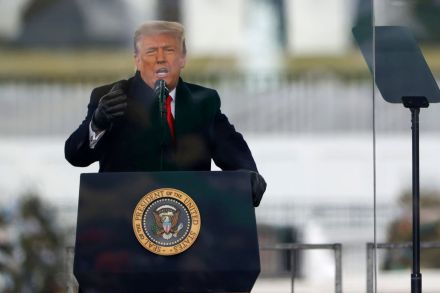
I should begin by making something clear. Splicing together two parts of a speech to give the impression they were one unbroken excerpt is a grave professional error, and would be viewed as such by any broadcaster in the business. The error would be egregious even if there were no suggestion it reinforced the accusation that Donald Trump was inciting riotous behavior, simply because what viewers thought they witnessed did not occur. There is no excusing what the BBC did to Donald Trump’s January 6, 2021 speech. Nobody in the senior ranks of the BBC is to blame for not knowing about this at the time; but once it did become known, an immediate and unconditional apology should have been made.

bbc

Letters: can you ever come back from Siberia?

From our UK edition

Cross channel Sir: As a supporter of the BBC, it pains me to say that Rod Liddle and Lara Brown both made excellent points in their articles (‘Agony Auntie’ and ‘Pushing it’, 15 November). It strikes me that the BBC could help itself by appointing journalists to the key BBC News roles who are not also seen as being campaigners. Contrast the consummate professionalism of Hugh Pym, the health editor, with the hyperbole of Justin Rowlatt, the climate editor, who gleefully predicts doom every time there’s a storm. It would be interesting to see what would happen if they swapped roles.

Was the BBC’s Trump edit outrageously wrong?

I should begin by making something clear. Splicing together two parts of a speech to give the impression they were one unbroken excerpt is a grave professional error, and would be viewed as such by any broadcaster in the business. The error would be egregious even if there were no suggestion it reinforced the accusation that Donald Trump was inciting riotous behaviour, simply because what viewers thought they witnessed did not occur. There is no excusing what Panorama did to Donald Trump’s 6 January 2021 speech. Nobody in the senior ranks of the BBC is to blame for not knowing about this at the time; but once it did become known, an immediate and unconditional apology should have been made.

I regret my intolerance over Brexit

From our UK edition

Cannabis smoke lingering along the sidewalks of Washington D.C. was the most palpable fruit of liberty since my last visit to the US capital. I’m in town to give a talk at Britain’s dazzling Lutyens Residence about the evergreen ‘special relationship’ ahead of the US’s 250th anniversary next July. Acting ambassador James Roscoe has stepped up with aplomb to fill Peter Mandelson’s big shoes, aided by his renaissance wife, the musician, author and broadcaster Clemency Burton-Hill. America’s anniversary will fall on the watch of its 47th President.

BBC in crisis, the Wes Streeting plot & why ‘flakes’ are the worst

From our UK edition

36 min listen

Can the BBC be fixed? After revelations of bias from a leaked dossier, subsequent resignations and threats of legal action from the US President, the future of the corporation is the subject of this week’s cover piece. Host William Moore is joined by The Spectator’s commissioning editor, Lara Brown, arts editor, Igor Toronyi-Lalic, and regular contributor, Melanie McDonagh. They also discuss the drama of this week’s Westminster coup plot, and Melanie’s new book about why Catholicism attracted unlikely converts throughout the twentieth century. Plus: what’s the most bizarre excuse a friend has used to back out of a social engagement?

Portrait of the week: BBC vs Trump, a plot against Starmer and a weight loss deadline for North Sea oil workers

From our UK edition

Home Tim Davie, the director-general of the BBC, resigned, as did Deborah Turness, the CEO of BBC News. Samir Shah, the chairman of the BBC, apologised for an ‘error of judgment’ in the editing by Panorama of a speech by President Donald Trump that made it look as though he was urging people to attack the Capitol in January 2021. This had been criticised in a 19-page memorandum to the BBC board by Michael Prescott, a former standards adviser, who also set out failings over Gaza and transgender matters. The leaked memo was published by the Telegraph. Trump wrote to the BBC threatening to sue it ‘for $1 billion’; he later told Fox News it was his ‘obligation’ to take action.

How to fix the BBC

From our UK edition

Assuming the BBC is still in existence by the time you read this, the scale of the task facing the next director-general would have been evident by listening to the output on Monday, the day after Tim Davie and Deborah Turness resigned. This was an organisation in utter denial. It began with Nick Robinson, puffed up with even more pompous self-regard than normal, treating Today listeners to a psychedelic monologue in which he disappeared down several capacious rabbit holes, jabbering about a sort of palace coup at the BBC, an assault by sinister right-wing forces.

Revealed: the bias of the BBC News app

From our UK edition

The most influential person in British media is not Rupert Murdoch or Lord Rothermere – it’s the editor who pushes out the BBC News app alerts. While many people gave up watching BBC News years ago, the corporation still dominates how millions receive their news, thanks to the app. Last year, it overtook Apple News to become Britain’s most-visited news app. Whoever controls those push notifications has the power to make the phones of the app’s 14.2 million users buzz with notifications several times a day, providing a constant stream of news updates and reaching a far larger audience than that of any television news bulletin, newspaper or magazine. Stories that flatter progressive orthodoxies are amplified; those that challenge them are sidelined So how is this power used?

BBC bias & Bridget ‘Philistine’s’ war on education

From our UK edition

50 min listen

This week: a crisis at the BBC – and a crisis of standards in our schools. Following the shock resignations of Tim Davie and Deborah Turness, Michael and Maddie ask whether the corporation has finally been undone by its own bias, and discuss how it can correct the leftward lurch in its editorial line. Then: Labour’s new education reforms come under the microscope. As Ofsted scraps single-word judgements in favour of ‘report cards’, could this ‘definitive backward step’ result in a ‘dumbing down’ that will rob the next generation of rigour and ambition? And will ‘Bridget Philistine’s’ war on education undo the positive legacy of the Conservatives on education?

What now for the BBC?

From our UK edition

12 min listen

It seems that the BBC is once again setting the news agenda – via tales of its own incompetence. The Corporation has spent days battling accusations that it aired a doctored clip of a speech by President Trump in a Panorama documentary back in January 2021. The White House Press Secretary has called the Beeb ‘100 per cent fake news’ while Kemi Badenoch has demanded that ‘heads must roll’ ... and now they have. For Tim Davie, the Director-General of the BBC, announced his resignation, alongside Deborah Turness, his senior colleague and CEO of News. But will two scalps be enough? James Heale speaks to Tim Shipman and Sonia Sodha. Produced by Oscar Edmondson.

trump uk free speech

Trump takes on the British disinformation complex

President Trump is waging war on the great British disinformation complex. The White House is gearing up to revoke the visa of British citizen and chief executive of the Centre for Countering Digital Hate (CCDH), Imran Ahmed, amid the Trump administration's greater battle against the BBC. By “countering digital hate,” the CCDH means censoring speech it disagrees with. The British campaign group, which has an office in Washington, has pushed for the deplatforming of Trump officials from social media and for greater restrictions on speech online generally. The CCDH advocated that Twitter/X remove Robert F. Kennedy Jr.

The rudeness of Reform

From our UK edition

Critics see Rachel Reeves as betraying her election manifesto tax promises; but she may well be trying ‘The Lady’s Not for Turning’ gambit. Her speech from Downing Street delivered before the markets opened on Tuesday, resembled – in content, if not in style – Margaret Thatcher’s 1980 party conference speech. In both cases, the incoming government had failed to get public spending and borrowing under control. (Indeed, government borrowing costs then were 6 per cent of GDP, compared with a mere 5.1 per cent today.) Also in both cases, the government sought simultaneously to go against earlier promises not to raise taxes, yet to do so in the name of long-term consistency. Both faced what was then called ‘a funding crisis’ in the bond market.

You can’t trust the BBC

From our UK edition

You may remember that in February the BBC found itself in a spot of bother regarding a film about the conflict in Gaza which, it transpired, had been narrated by the son of a Hamas minister. Some people, not least Jewish people, wondered if such an account perhaps might accidentally stray into the realms of partisanship, and the BBC was forced to withdraw the documentary forthwith. It then commissioned an internal report into why this young lad had been chosen to front the film, rather than, say, Rylan Clark or Clare Balding. As a consequence of the investigation, the BBC’s head of news, Deborah Turness, sent a round robin email to all BBC staff. Only now, nearly nine months later, can I reveal the disturbing truth about what Ms Turness told her colleagues.

Revealed: BBC doctored Trump January 6 speech

Fake news indeed! The British Daily Telegraph has reported that the BBC deceptively edited a speech by Donald Trump to make it look like the President had ordered his supporters to storm the Capitol on January 6, 2021.  The footage was aired as part of the BBC documentary Trump: A Second Chance? in October 2024. The ruse involved splicing together two statements made by Trump over an hour apart. This made it seem like Trump had said that "We’re gonna walk down to the Capitol and I’ll be with you and we fight. We fight like hell and if you don’t fight like hell, you're not gonna have a country anymore.” In fact, “walk down to the Capitol had actually been followed by “to peacefully and patriotically make your voices heard.

BBC Trump