Australia

Why Australia-style deal is the new Brexit buzzword in government

From our UK edition

As the second round of Brexit negotiations loom with the EU, there's already talk of an early bust-up coming up the track. James reports in his Sun column that the UK and the EU are currently very far apart when it comes to expectations for the trade talks. Figures on the Brussels side believe that they can get the UK to sign up to things – such as a continued role for the European Court of Justice – when Boris Johnson is seeking a much looser arrangement. This distance between the two sides means that figures in government have already begun work on a Plan B in the event Johnson cannot secure the Canada-style free trade deal – that would cover goods but at most only minimally cover services – he desires.

Portrait of the week: Crisis in Iran, fires in Australia and Manchester rapist jailed

From our UK edition

Home Dominic Raab, the Foreign Secretary, who had not been told in advance of America’s killing in Iraq of Qassem Soleimani, the leading Iranian military leader, said that America ‘had a right to exercise self-defence’. British troops were put on standby to be sent to the region, and the frigate Montrose and the destroyer Defender sent to the Strait of Hormuz. Boris Johnson, the Prime Minister, returning from holiday in Mustique, said: ‘Given the leading role he has played in actions that have led to the deaths of thousands of innocent civilians and western personnel, we will not lament his death.’ England secured a 189-run victory over South Africa on the fifth day of the second Test in Cape Town, levelling the series 1-1.

Fight fire with fire: controlled burning could have protected Australia

From our UK edition

 Sydney By modern standards, my grandfather would probably be considered an environmental criminal. To clear land for his farmhouse in north-eastern Victoria — and for his milking sheds, pig pens, chicken sheds, blacksmith shop and other outbuildings — he cleared hundreds of trees. And he cleared thousands more for his wheat fields, cattle paddocks and shearing sheds. Old man Hobbs would probably be found guilty of cultural appropriation, too, because he adopted the Aboriginal method of land-clearing. He burned all of those trees. He also established fire-delaying dirt paths through surrounding bushland.

Is the patriarchy as all-powerful as it’s cracked up to be? The Baby Has Landed reviewed

From our UK edition

Anybody who watched the opening episode of The Baby Has Landed (BBC2, Wednesday) might have found themselves wondering if the patriarchy is quite as all-powerful as it’s cracked up to be. The programme follows ‘six families over six life-changing weeks’ as they welcome a new member — and on the whole features women who radiate authority and men who do what they’re told. The most experienced parents are Nigel and Helen Pierce, first seen embarking on a lengthy quest for shoes as they tried to get their four children under five out of the house so that Helen could go to hospital and have a fifth. As old hands, they passed the time during labour doing crosswords. (‘Breed of hunting dog? You have your contraction and get back to me.

Portrait of the week: Farage’s climbdown, Yorkshire’s floods and Australia’s fires

From our UK edition

Home Nigel Farage, the leader of the Brexit party, climbed down from his resolution to field 600 candidates in the general election, promising not to contest the 317 seats won by the Conservatives in 2017. The Conservatives, Labour and the Liberal Democrats said they would spend large sums of taxpayers’ money on things that might please voters (such as the NHS or, from the Lib Dems, a ‘skills wallet’ of £10,000 for every adult). The Conservatives claimed that Labour’s promises would cost £1,200 billion, which Labour denied. A review commissioned by the government into the HS2 railway said it should be built, despite the cost.

The most uplifting film ever made

From our UK edition

New York   Should art mirror the world as it is, or does an artist fail the public if the work looks back to a time before the grotesqueries of the present? Back, back, I say, but that’s to be expected. I’m such a fan of the past that if I could have one wish granted by The Spectator it would be for a review by Deborah Ross of the most uplifting movie ever, Ladies in Black, directed by the great Australian Bruce Beresford. My, my, what memories of Australians and Oz it brought back.

Trump’s conversation with Australian PM Scott Morrison

President Donald Trump repeatedly pushed for Australian prime minister Scott Morrison for help with an investigation into the Mueller inquiry, during a phone call in July, according to a transcript of the conversation released by the White House today. Read the transcript here: UNCLASSIFIEDDeclassified by order of the PresidentOctober 1, 2019MEMORANDUM OF TELEPHONE CONVERSATIONSUBJECT: Telephone Conversation with Prime Minister Morrison of AustraliaParticipants: Prime Minister Morrison of AustraliaNotetakers: The White House Situation RoomDate, Time July 17, 2019, 10:07-10:15 am EDTand Place: ResidenceThe President: Congratulations again on your great victory in May. A tremendous victory. I was watching, America was watching, the world was watching and you did a terrific job.

scott morrison donald trump

A decorative pageant that would appeal to civic grandees: The Secret River reviewed

From our UK edition

The Secret River opens in a fertile corner of New South Wales in the early 1800s. William, a cockney pauper transported to Australia for theft, receives a pardon from the governor and decides to plant a crop on 100 acres of Aboriginal land. His doting wife, Sal, begs him to take her and their young sons back to her beloved London. They make a deal. William must succeed as a farmer within five years or pay for their passage home. He clashes with a tribe of spear-waving Aboriginals who make it clear that they want him off their ancestral turf. Neither side speaks the other’s language. ‘This is mine now. You lot can have the rest,’ says William, pointing vaguely at Australia.

What the Tories can learn from Australia’s election upset

From our UK edition

It is hard to exaggerate the level of shock caused by Scott Morrison’s Australian election victory. The re-election of the country's Liberal party prime minister – and the defeat of left-wing Labor leader Bill Shorten – took the polls and plenty of Aussies by surprise. Earlier this year, Shorten told a bemused Arnold Schwarzenegger “I’m going to be the next prime minister of Australia”. The Australian people had a different idea. In his victory speech, Morrison thanked “quiet Australians” for supporting him. A similar dynamic was, of course, at play among shy Tories in the 2015 election in Britain, shy Brexiteers in 2016 and then shy Trump voters later that same year.

How climate change decided Australia’s election

From our UK edition

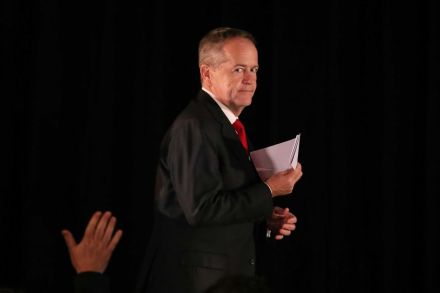
Australian Labor leader Bill Shorten will forever have the ignominious label of the man who lost the unlosable election – Australia’s answer to Neil Kinnock. After six years of the conservative Liberal-National coalition government, and three different prime ministers, Labor were considered the clear favourite to win Saturday’s general election. The government had been wracked with disunity over climate change and same-sex marriage and were governing in a minority for the past nine months. The Liberal party also saw several high-profile retirements in the lead up to the election as MPs started jumping off what they thought was a sinking ship.

Scott Morrison’s ‘miracle’ win in the Australian elections

From our UK edition

‘I have always believed in miracles,’ Scott Morrison beamed. Australia’s first Pentecostal prime minister was addressing a victory rally after an upset in Saturday’s federal election. Throughout the campaign, pollsters and pundits had been as one: the Coalition (a centre-right alliance between Morrison’s Liberal Party and the agrarian National Party) was finished and Labor was headed into government after six years in opposition. Morrison was the fractious Coalition’s third prime minister since 2013, his ministry was divided over climate change and Labor leader Bill Shorten had tapped into public anger at the banks and the top end of town. Then they voted.

We should be watching Chinese meddling, not Russian

‘Russian influence’ is everywhere these days, especially if you’re a liberal. From the White House to Brexit, the Donbass to the Baltics, the specter of Russian expansionism is inescapable in the news. But have Western media identified the wrong zeitgeist? For a malevolent power, Russia is all too conspicuous. Real mastery of subterfuge entails a degree of subtlety. ‘Russia is very aggressive...up-in-your face,’ says Donald N. Jensen, of the Center for European Policy Analysis. ‘China seems to be a bit more discreet...even when it fails, you don’t really know it.’ Chinese meddling may go unnoticed in Europe and North America, but it is more conspicuous in Australia and New Zealand.

chinese meddling

Daydreams in the outback

From our UK edition

Gerald Murnane is the kind of writer literary critics adore. His novels have little in the way of plot or even character, and it is hard to tell the narrator from the writer, so that all his stories might be essays; his sentences are weirdly flat but interrupted occasionally by wild visions. Try this, for example: There in a room with enormous windows a man with a polka-dotted bow tie broadcasts radio programmes to listeners all over the plains of northern Victoria, telling them about America where people are still celebrating the end of the war. Where are we? Who can see the bow tie on the radio announcer, and did the war end recently or long ago? At the risk of a little racial profiling, this all sounds so odd that it has to be Australia, and Murnane himself is a perfect Australian type.

Shark treatment

From our UK edition

All the good non-fiction things that were ever on TV — from Kenneth Clark’s Civilisation to David Attenborough’s Planet Earth (the bits where he’s not proselytising about climate doom, I mean), from Andrew Graham-Dixon’s arty jaunts to Italy to Jonathan Meades’s bizarro forays into architecture, from The World at War to all those more recent war porn documentaries narrated by Sam West, from Werner Herzog’s Little Dieter Needs To Fly to Louis Theroux doing a number on Jimmy Savile — have one thing in common: they were all made by middle-aged men. Middle-aged men are the business.

Antipodean notebook

From our UK edition

Whenever I visit a country I try to pitch high and meet the president or prime minister. In Australia this proves tricky. At the start of the week Malcolm Turnbull and I are on for lunch, but commitments force me to call off. By the end of my visit he is no longer prime minister. One of his excellent predecessors comes to see me at my hotel. At first I marvel at the ease with which former prime ministers can move about in Australia. But I soon wonder if people are unfazed because they reckon it might be their own turn to run the country next. I am here for ten days. First to do a day-long event in Sydney with Maajid Nawaz, Sam Harris and others. Then a multi-city tour across Australia and New Zealand alongside Harvard’s Dr Cornel West.

Australia’s choice: Chinese trade – or American security?

 SydneyFor decades, Australia has been known as ‘the lucky country’. At the end of the world geographically, we are separated from the global troublespots by vast oceans. We have recorded 27 years of uninterrupted growth, partly because of a surge in exports of commodities to China. At the same time, our tough border protection policies boost public confidence in, as John Howard put it, ‘who comes to this country and the circumstances in which they come’. As a result, our politics have not been profoundly affected by the kind of populist forces dismantling established parties across Europe. Nor have we witnessed an anti-globalisation backlash. Not for us any Trump- or Brexit-like insurgencies.

The Spectator Podcast: return of Ukip

From our UK edition

It’s safe to say that Brexit negotiations haven’t gone smoothly. The Tories are down in the latest polls, but Ukip is up. Are we witnessing the beginning of Ukip’s return? Meanwhile, Australians are stuck between a rock and a hard place as China and America continue to bicker; and Cosmo Landesman complains about modern parenting. You don’t have to be following Brexit very closely to know that it’s not quite going to plan. May has lost the main Brexiteers in her Cabinet, and Jacob Rees Mogg is leading a Leavers revolt from the backbenches. If you voted for a hard Brexit, you would understandably be worried. Is this what explains a recent increase in Ukip’s popularity in the polls?

Australia at the crossroads

 Sydney For decades, Australia has been known as ‘the lucky country’. At the end of the world geographically, we are separated from the global troublespots by vast oceans. We have recorded 27 years of uninterrupted growth, partly because of a surge in exports of commodities to China. At the same time, our tough border protection policies boost public confidence in, as John Howard put it, ‘who comes to this country and the circumstances in which they come’. As a result, our politics have not been profoundly affected by the kind of populist forces dismantling established parties across Europe. Nor have we witnessed an anti-globalisation backlash. Not for us any Trump- or Brexit-like insurgencies.

Grim and glorious

From our UK edition

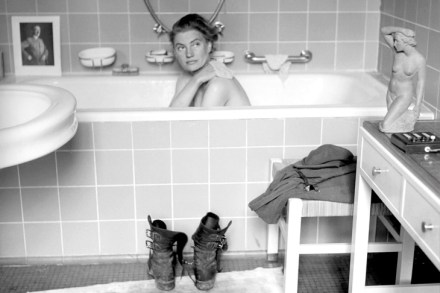
Tick, tock. Tick, tock. Stay too long in the Lee Miller exhibition at the Hepworth Wakefield and the metronome might drive you mad. Considerate curators will only set it swinging in stints to spare the gallery guards. Man Ray, who made the metronome ‘Object of Destruction’ (1923), meant it to infuriate. His assembled sculpture came with instructions. ‘Cut the eye from a photograph of one who has been loved but is seen no more. Attach the eye to the pendulum of a metronome and regulate the weight to suit the tempo desired. Keep going to the limit of endurance. With a hammer well-aimed, try to destroy the whole at a single blow.’ Tick, tock. Tick, tock. Smash. The eye on Man Ray’s metronome was Lee Miller’s, beautiful, blue, bewitching.

Too much information | 12 July 2018

From our UK edition

When Kasper Holten’s production of Don Giovanni was first staged at the Royal Opera in 2014, I disliked it intensely, even more than I have disliked most of his other productions, or for that matter most productions of Don Giovanni. I missed the first revival, but when I saw it this time round my reactions were more complex, though I still think there is a lot wrong with it. In the meantime, I have watched the 2014 production on Blu-ray. Holten and Es Devlin the set designer give a commentary throughout, which at least helped me to understand what was intended, even if it didn’t convince me that most of the producer’s ideas are helpful or even realisable.