Australia

Are the Australian election results a bad sign for the Tories?

From our UK edition

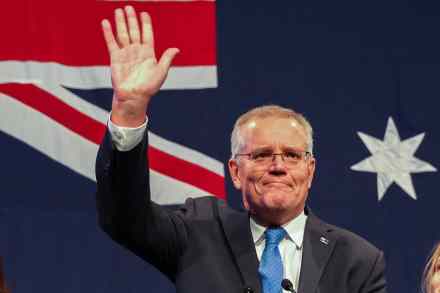
Scott Morrison’s Liberals were absolutely thrashed in the Australian elections this weekend. The party’s vote collapsed, and there were big-name defeats, with the man touted as Morrison’s successor – Josh Frydenberg – ousted in Kooyong, a suburb which had been in the party’s hands for 121 years. Whatever went wrong for the Morrison government, Saturday’s results might have relevance closer to home, even if teasing out domestic lessons from elections on the other side of the world is problematic. Australia is a different country, with a different political culture and a different electoral system. Scott Morrison was also an unloveable figure — stolid, gaffe-prone and not outwardly empathetic.

How Scott Morrison was defeated in Australia

From our UK edition

‘Scott Morrison is empathetic – without the “em”.’ Those words, spoken on Friday by the Labor party frontbencher Jason Clare, on a national breakfast programme, perfectly encapsulated how Scott Morrison was defeated in the Australian election on Saturday. Morrison wasn’t saved by his economic management (this Friday Australia’s unemployment rate was confirmed as 3.9 per cent, the lowest in 50 years). Nor by the fact that Australia’s post-Covid economic bounce-back was one of the biggest and quickest in the OECD.

It’s only a culture war when the right does it

Having recently botched South African history, the New York Times is now turning its sights to Australia. Our friends Down Under are holding an election this week in which the Australian Labor Party is expected to beat the Liberal-National coalition for the first time since 2013. (For Americans in need of a guide, the capital-L Liberals in Canada stand for the left, in Australia for the right, and in the UK for nothing whatsoever.) It's the issue of trans rights in the Australian campaign that has the Times's unisex knickers in a twist. They're worried in particular about one candidate, Katherine Deves, a Liberal running for a seat in parliament. Deves has said that trans youths who undergo gender-transition surgeries are being "mutilated.

times

New Aussie rules: Conservative values have fallen out of fashion

From our UK edition

The election campaign is under way in Australia, barbs are being exchanged, candidates denigrated and abused, and promises – many of which are just fantastic in the literal sense of the word – are being made. The Prime Minister, Scott Morrison, who is the leader of the Liberal party, is being challenged by the Labor leader, Anthony Albanese. Although Morrison has the edge over Albanese as preferred prime minister, neither is much loved. The leaders are unlikely to be a decisive issue in the election. What is the deeper mood of the country? That needs to be put into its historical context. Ever since the mid-1970s, Australians have expected political parties to be economically responsible.

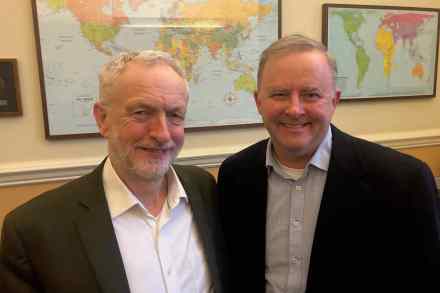
Could Australia’s answer to Corbyn become PM?

From our UK edition

While the main electoral attraction of the moment is the French presidential showdown between Emmanuel Macron and Marine Le Pen, it is not the only significant election underway in the western world. On 21 May, Australia goes to the polls. The contest is between the nominally centre-right coalition of the Liberal and National parties led by prime minister Scott Morrison, and the Australian Labor party led by a long-term, socialist left-wing MP, Anthony Albanese. On the face of it, Morrison should be re-elected on his record. In his three-year term, he has seen Australia through natural disasters, including the massive bushfires affecting the south-east of the country in 2019 and early 2020, and just now floods inundating large parts of New South Wales and Queensland.

Rest in peace, Shane Warne

From our UK edition

Headingly, July 22nd 1993 and the opening day of the fourth test that summer between England and Australia. This, as it happens, was my first time attending a test match. And although we – my father, brother and I – had travelled from Scotland to Leeds hoping to see England prevail against their oldest, greatest, rival, expectations were prudently low. Australia were, after all, already 2-0 ahead in the series and there was little sign England were capable – or even believed themselves capable – of hauling themselves back into contention. There was the excitement of seeing test cricket in person. And, secondly, and more importantly, there was the prospect of seeing Shane Warne bowl. The 22 year-old Victorian was already a sensation.

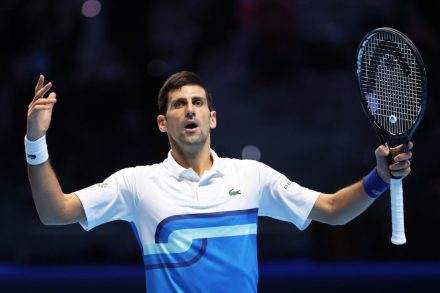
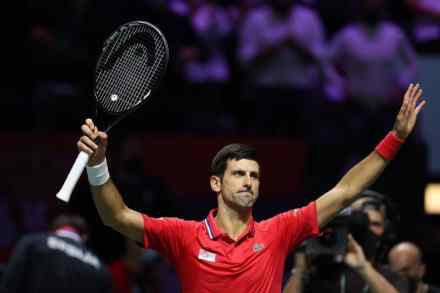
Release Novak Djokovic

The left has finally decided they can stomach deportations, so long as they involve high-profile unvaccinated sports stars. Novak Djokovic, the number one ranked player in men's professional tennis, is currently being detained by Australian authorities and is at risk of expulsion due to the country's strict vaccine mandates. The Covid-obsessed are cheering. Djokovic entered Australia this week to compete in the Australian Open, which he has won a record nine times. The event requires all players and staff to be vaccinated; however, players are offered exemptions for medical reasons or if they have tested positive for Covid in the past six months.

Novak Djokovic (Julian Finney/Getty Images)

Novak Djokovic is treating Australians like mugs

From our UK edition

Just minutes from the heart of Victoria’s capital, Melbourne Park is one of the great tennis complexes. For a fortnight in January, it will be the centre of the tennis world as the home of the year’s first Grand Slam tournament, the Australian Open. For Melburnians the Open is more than just a tennis tournament. The grounds throb with life and with the relaxed summer holiday vibe that comes between Christmas and Australia Day on 26 January; night matches pause as celebratory fireworks light the skies over the city. This year will be no different, except for one thing. To enter Melbourne Park, patrons, staff, media and almost all players will have to be double-vaccinated against Covid-19.

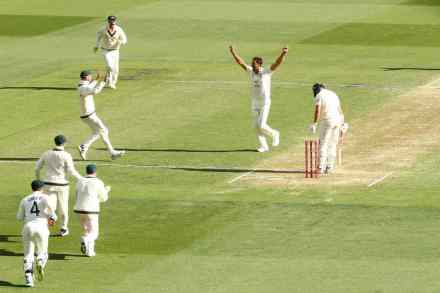
Why England lost the Ashes

From our UK edition

England’s wretched performance in the Ashes – which saw the side lose three tests and so the series to Australia last week – has been more abject than even the most inspired pessimist could have imagined. No sane observer expected England to win against Australia, but to lose the five match series little more than two days into the third test was a pitiful show. Inevitably, even as England continue to play the fourth test this week, there have been calls for a cricketing inquest. The standard of the domestic game, the structure of the English season and England’s pivot towards the one day and T20 formats are all expected to be blamed for the woeful performance.

China has begun its campaign to take Taiwan

From our UK edition

Normally, if the response to a speech of mine was that it had been a ‘despicable and insane performance’ from a ‘failed and pitiful politician’, I’d question what went wrong. But since the comments came from Chinese communists about an address I’d made in Taiwan, it’s hard not to feel some pride. Two years ago, I’d been asked to speak at the Yushan Forum, the Taiwanese government’s annual showcase for their international links. Then, I was worried about the optics of calling out Beijing’s behaviour from Taipei so I pleaded diary difficulties. I didn’t want to be accused of complicating Australia’s relations with our prickly largest customer.

How 19th-century gold rushes led to a distrust of China

From our UK edition

For a brief moment three summers ago it seemed that the clear Idaho air wafting through the Sun Valley Literary Festival had become tainted with the smoke and soot of Nuremberg. Here was Thomas Friedman, bloviator-in-chief to America’s chattering classes, standing before a rally of thousands, delivering a powerful philippic about the ascent of the Asiatic East. As he warmed to his theme, he decided for some messianic reason to demand that his audience chant the phrase that he suggested now dominated the American economic landscape. Come on, he urged like a latter-day Elmer Gantry, yell out with me the words: ‘Everything. Is. Made. In. CHINA!

The foreign policy amateur

Since Joe Biden was elected in part as a salve for Donald Trump's perceived foreign policy blunders, it seems reasonable nine months in to go searching for the Biden Doctrine, to assess his initial foreign policy moves, to see what paths he has sketched out for the next three years. ...is that a tumbleweed? Well, OK, there was Afghanistan, Biden's most significant foreign policy action. Biden won election in November and took office in January. There was ample time for replanning and renegotiating anything that had been left behind by Trump, especially since Biden and his team had muddled in Afghanistan during the Obama era and knew well the mess they'd helped create. The rush for the last plane out was a fully expected unexpected event.

biden foreign policy

The EU should keep out of France’s spat with Australia

From our UK edition

Ursula von der Leyen has demanded a full investigation. EU officials are considering pulling out of technology talks with the US. And negotiations over a trade deal with Australia have been put in doubt.  Over the last 24 hours, the full might of the European Union has been deployed on the side of France in the row over a cancelled submarine contract and the creation of the Australian-US-UK defence pact.  But hold on. Why exactly is the EU getting behind what is, after all, just an export order for a French arms manufacturer?

Ticking off the French was strategic genius

In December 2020, in the aftermath of the presidential election, Jake Sullivan, President-elect Joe Biden’s national security adviser, urged European officials to delay a European Union vote on a proposed economic agreement with China, called the Comprehensive Agreement on Investment. Sullivan, communicating with French and German officials, explained that the incoming Biden administration wanted to have 'early consultation' with the Europeans on China, and urged them to hold off until Biden took office to devise a common approach toward Beijing. Resisting the pressure from Biden, the European Commission announced that the agreement was concluded in principle, pending approval by the European Parliament.

french

Biden is losing Nato

From our UK edition

The forming of the Australia-UK-US (Aukus) military alliance in the Pacific shows how everything Trump can say, Biden can do. The problem is, Biden isn’t doing it very well. Biden’s administration, like Trump’s, is committed to building its Pacific alliances while sustaining Nato. Yet on Australia as in Afghanistan, the Biden team are doing exactly what they accused Trump of: unpicking the frayed bonds of Nato without a clear idea of what might replace it. The government has three tasks: to keep American workers at work, win contracts for American exports, and secure America’s interests overseas. Two cheers for Biden for getting the Trump memo on the first two points.

Aukus is a disaster for the EU

From our UK edition

It is hard to overstate the importance of the so-called Aukus alliance between the US, the UK and Australia — and the implicit geopolitical disaster for the EU. The alliance is the culmination of multiple European failures: naivety at the highest level of the EU about US foreign policy; Brussels’s political misjudgements of Joe Biden and his China strategy; compulsive obsession with Donald Trump; and the attempt to corner Theresa May during the Brexit talks. If you treat the UK as a strategic adversary, don’t be surprised when the UK exploits the areas where it enjoys a competitive advantage. The EU has outmanoeuvred itself through lazy group-think.

Australia and the new special relationship

From our UK edition

The awkwardly-named AUKUS agreement reflects Washington’s escalating concern about China’s dominance in the Indo-Pacific. It signals London’s determination to be more, not less, involved in the global community after Brexit and the retreat from Afghanistan. Ultimately, however, this deal is about Australia. Few countries are as pivotal to regional security yet so poorly understood as such, at home and abroad, among commentators, politicians and policymakers. Australia’s standing in security terms is intimately linked to its alliance with the United States, but this relationship is not as one directional as some Australian critics believe.

Macron’s ambitions have been torpedoed by Aukus

From our UK edition

Today France is outraged. First, explicitly because Australia has broken a large contract to have a French company design their submarines and for that contract to be switched to a US-UK substitute. Secondly, sotto voce, because Emmanuel Macron’s Indo-Pacific strategy has been shaken by an Australian, American and British strategic agreement entitled Aukus, to which France has not been invited. What are the facts of the matter? In 2016 Australia signed a contract with France to buy 12 conventional French-designed diesel-electric submarines for the Australian navy. The contract worth €35 billion was badged by the French as ‘the contract of the century’. In reality, only €8 billion was to go to the 60 per cent state-owned French company Naval Group.

What the Aukus pact says about Britain’s foreign policy

From our UK edition

While the foreign secretary changed in the last 24 hours, the most important announcement regarding the direction of UK foreign policy yesterday came outside of the reshuffle. Overnight, the UK, US and Australia announced a new defence arrangement – known as the Aukus pact – in the Asia pacific, which will see Australia build nuclear-powered submarines using US technology as well as collaborate on other technologies.  The Chinese government has been quick to criticise the move The purpose of this new arrangement? While the respective governments have not specifically said it, it's viewed as a counter to China that will see the three countries team up against Chinese aggression in the Indo-Pacific.

Letters: The agony of the forgotten Australians

From our UK edition

A glimmer of hope Sir: After the debacle of the West’s shambolic withdrawal from Afghanistan, it was comforting to read two of the articles in last week’s Spectator (28 August). The first was Rod Liddle’s explanation as to how we got there in the first place (‘I blame Tony Blair’) and the second was John Casey’s piece about Ahmad Massoud and the mention of his late father, the messianic Ahmad Shah Massoud (‘Fatherland’). Very often out of a dire situation something positive can appear. It may be that the arrival of Ahmad Massoud as the leader of the National Resistance Front, the potential he has of being the head of the Tajiks, along with his understanding of Afghani divisions, will give Afghanistan the hope of a settled future.