Atonal music

When atonal music was original and exciting

In the 1960s and 1970s, British music was transfixed by the Manchester School. Led by the composers Harrison Birtwistle, Alexander Goehr and Peter Maxwell Davies, this northern powerhouse of art music also included the brilliant pianist John Ogden and the conductor Elgar Howarth. All five had studied in the city in the early 1950s. Yet what united them wasn’t geographical happenstance but the embrace of what Robert Hughes famously called, writing on modern art, ‘the shock of the new’. It is a mark of the effectiveness of an artistic revolution when young radicals become the creative establishment Far from quaint regionalists, the Manchester School were radically anti-parochial. All enjoyed stellar international careers.
How Arvo Pärt can help us through Lent

From our US edition

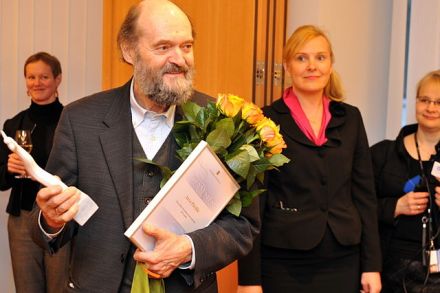
This year marks the forty-fifth anniversary of Arvo Pärt’s Fratres — one of a series of groundbreaking compositions that Pärt wrote between 1976 and 1978 using his tintinnabuli style. Most of Pärt’s works in this compositional style, which means “little bells,” are in two voices — usually one a triad and the other a melody — which are played in such a way as to create an underlying drone. This creates a piece of music that is both concrete (single notes ring out clearly) and ephemeral. We see this in pieces like Für Alina (1976), Fratres (1977) and Spiegel im Spiegel (1978). Pärt was born in Estonia and grew up in the Soviet Union, but was influenced by twelve-tone serialists like Pierre Boulez and Karlheinz Stockhausen.

arvo part