Atheism

Church teaching on homosexuality can be revised

Studies of Christianity’s problems and prospects often entail a distinction between the singer and the song. At an institutional level, the world’s largest faith is in deep trouble throughout much of western Europe – and increasingly in North America, too. Widely rehearsed elsewhere, the reasons for this steep decline include the spread of individualism along with an allied flouting of deference, mistrust of agencies said to lie beyond the tangible, and self-inflicted wounds such as the abuse crisis. Yet many who mourn the spread of secularisation remind us that for all its flaws, the Church has a good story to tell overall. How so? Two answers stand out. First, Christian outreach still forms the largest single source of social capital on Earth.

The problem with Pascal’s wager

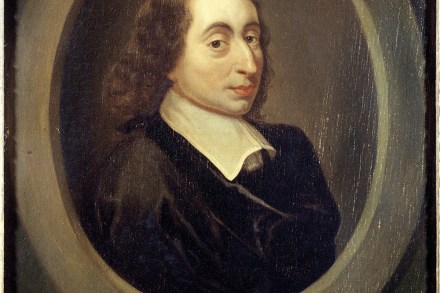
Blaise Pascal resists definition. During a short life (he died in 1662, aged 39) he invented the calculator, laid the foundations for probability theory and created the first public transport system. He was also an austere Catholic, whose call for a return to strict Augustinian doctrines put him outside the religious mainstream. As a philosopher, he is remembered today for his ‘wager’ argument – a challenge to atheists, framed as a cosmic gamble. As Graham Tomlin shows in this lively, conversational biography, Pascal worked in threes, often steering a course between extremes.

The report of Christianity’s death has been an exaggeration

George Orwell began his beautiful, nostalgic pre-war novel Coming up for Air with an epigraph from a popular song. ‘He’s dead, but he won’t lie down.’ It’s tempting to borrow the line when writing about Christianity in the West today. The chronicle of its death has been long foretold, its obituary repeatedly rewritten. Numbers, particularly in older denominations, have been heading south for decades, and churches (in Britain at least) have been shutting ever since over-enthusiastic Victorians opened far too many of them. Yet at the same time immigration is revivifying congregations everywhere. Many people show signs of spiritual openness, few speaking well of the kind of bare-knuckle rationalism that characterised New Atheism.

Is it time for Jordan Peterson to declare his spiritual allegiance?

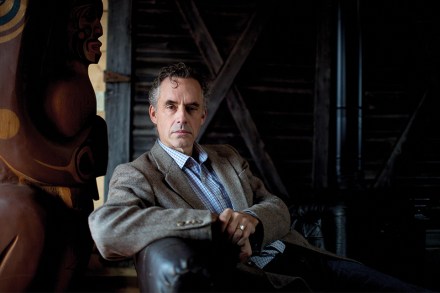
Alan Isler’s novel Clerical Errors (2001) features a troubled priest who mocks the faith he has largely abandoned. ‘How can any rational creature not see in the story of Christ the pattern of countless pagan myths, the universal romance of the sacrificial god, his apotheosis and his rebirth?’ Jordan Peterson’s new book stands this argument on its head. That core Old Testament and gospel narratives are echoed in other cultures, past or present, is hailed as a mark of biblical universality. What applies to the resurrection also covers themes including sibling rivalry (Cain and Abel), pride and overreach (Noah’s Flood), deliverance from slavery (the Exodus) and the Fall itself. These archetypes abide in our collective unconscious for good reason.

The atheist delusion

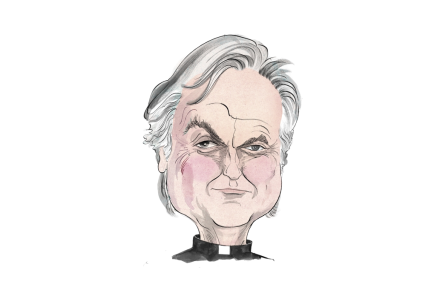
Dan Rhodes apparently had trouble finding a publisher for this short novel, and it’s possible to envisage a certain amount of sorrowful head-shaking in legal departments at its theme. In the dead of winter, accompanied by his long-suffering ‘male secretary’ Smee, a ‘thrice-married evolutionary biologist’ named Richard Dawkins gets stranded in rural England while en route to address the All Bottoms Women’s Institute on the topic of the non-existence of God.

Did Christianity create secular humanism?

33 min listen

Since the election of an overwhelmingly secular Labour government, people who describe themselves as humanists have a spring in their step: for example, there's a prospect that humanist weddings will be legally recognised in England and Wales (they already are in Scotland). But what exactly is a humanist? Definitions vary and there's a heated debate about to what extent the ethical but firmly atheist beliefs of the rather loosely organised modern humanist movement are descended from Christianity. In this episode of Holy Smoke we'll hear from Andrew Copson, CEO of Humanists UK since 2010 & President of Humanists International, and the theologian and Spectator contributor Theo Hobson, author of God created Humanism: the Christian Basis of Secular Values.

The afterlife of Christopher Hitchens

From our US edition

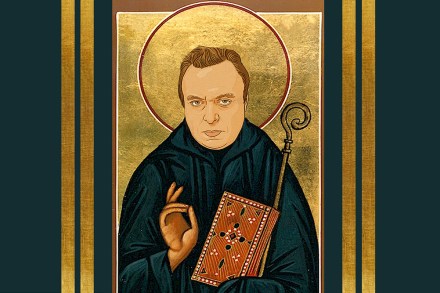
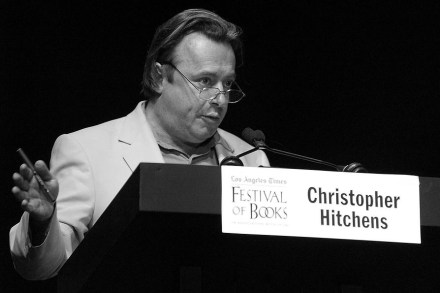
In 2011, a terminally ill Christopher Hitchens faced death with droll stoicism: “To the dumb question ‘Why me?’ the cosmos barely bothers to return the reply: ‘Why not?’” he wrote. As his health declined and the end drew nearer, the skeptical Hitchens stuck to his atheist guns, clear-eyed in his confidence that death was final. Hitchens died in 2011, but his work and reputation live on. No paradox there, of course, but just how large Hitchens looms twelve years after his death would surely have surprised even this immodest author. It’s certainly a surprise to me, a reformed Hitchens fanboy. The face of twenty-first-century atheism is having quite the afterlife.

Hitchens

Fall of the godless

From our US edition

No religious season passes without it being insulted by the kind of person who lives in fear that somewhere some believer is not having his faith offended by someone to whom faith itself is offensive. This Eastertide was no exception. On Good Friday, which coincided with the first night of Passover, the New York Times printed an essay by a former yeshiva student proposing that in this year of violence and suffering it would be best to “pass over” God, adding, “Killing gods is an idea I can get behind.” This sort of village-atheist raspberry — which largely disappeared during the twentieth century along with American villages themselves — has enjoyed something of a revival early in the twenty-first century with the appearance of the so-called New Atheists.

atheists

Richard Dawkins is an ally to the oppressed

Richard Dawkins is no longer a humanist. At least, not one that deserves to be honoured as such, according to the American Humanist Association (AHA), which excommunicated him from the Humanist of the Year award last week. The fatwa issued by the AHA, which generously includes ‘critical thinking’ in a list of its own Ten Commitments, accused the evolutionary biologist of ‘demean[ing] marginalized groups’ when he asked his Twitter followers to ‘discuss’ the vilification of critics of transgender theory. Proponents of the new blasphemy codes have seemingly forgotten the decades of humanist work in favour of free speech.

Something woke this way comes

From our US edition

Man’s refusal to accept reality can take entertainingly paradoxical form. One of the more enjoyable is the New Atheists’ crusade (I use the term advisedly) against God — a battle with human nature which, like most battles with human nature, can never be won. God may never have appeared in a burning bush, but, he, she or they came to life in the brains of some ancient hominids, probably as a bug in a new pattern-recognition app. It was a bug with benefits, and as evolution is an opportunist, God has never gone away since. Tara Isabella Burton, who has a doctorate in theology, does not deal with the sources of religious belief in Strange Rites, Instead, she focuses ‘primarily on what a religion does’.

rites

When atheists stole the moral high ground

In 1585, Jacques du Perron presented to the court of the French king Henry III, as a kind of after-dinner entertainment, a formal logical argument for the existence of God. Du Perron, formerly a Protestant, was now well on his way to becoming a cardinal. He was a highly intelligent and rhetorically gifted man and he performed his task well, to the great pleasure of the assembled nobility. Flushed with success, he then turned to his audience and announced that, if they wanted, he could prove the opposite case too. The king was not amused. Most of us like to believe that we believe what we believe because rigorous reasoning and reliable evidence have led us there. Most of us are wrong.

Can giving voice to the horrors of the past re-traumatise?

It is 50 years since Ronald Blythe published Akenfield, his melancholy portrait of a Suffolk village on the cusp of dramatic change. Akenfield was actually a composite of two real villages, Charsfield and Debach, and Blythe’s oral history was a patchwork created from about 50 conversations — with figures including a pig-farming colonel, the over-stretched blacksmith and a rural dean who reported residents being ‘blunted and crushed by toil’. It was an unsparing vision of rural poverty, yet also a homage to disappearing ways of life and the virtues of small communities. Last Saturday’s Akenfield Now, on Radio 4, followed local sixth-former Anna Davies as she surveyed the landscape afresh.

The beauty of Soviet anti-religious propaganda

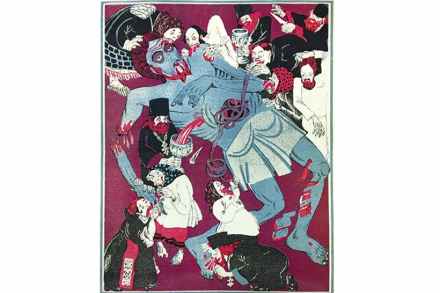
Deep in the guts of Russian library stacks exists what remains — little acknowledged or discussed — of a dead and buried atheist dream. The dream first took shape among Russian radicals of the mid-19th century, to whom the prospect of mass atheism seemed the key to Russia’s salvation. When Lenin seized power in 1917, the Bolsheviks integrated it into their vision of heaven on earth. To the extent that people in the West have heard of this atheist dream, it has come to them mainly through the voices of its enemies. In 1983, Ronald Reagan put Lenin’s rejection of religion at the heart of Soviet unfreedom in his ‘Evil Empire’ speech.

Losing our religion | 8 August 2019

There is no faster way to get yourself classed as dim than by admitting that you hold religious belief, especially Christian belief. Anti-Catholicism used to be the anti-Semitism of intellectuals; now Catholics get no special attention. All believing Christians are regarded as stupid, eccentric or malevolent. Some conservatives will make the case for the social usefulness of Christian values. The conservative asks: if society prospered with these traditions and customs, is it really wise to throw them away without a moment’s hesitation? That is just what the West is doing, especially the Anglophone West. Britain, Australia and even the God-fearing United States are becoming atheist societies.

The uneasy legacy of Christopher Hitchens

From our US edition

Winston Churchill looked forward to an expansive lunch. He was in his late seventies, prime minister for a second time, and this cabinet meeting was dragging on. It was nearly one o’clock and they were down to the eleventh item on the agenda, a memorandum on town planning. Wearily, Churchill said: ‘Ah yes, I know town planning, densities, broad vistas, open spaces...give me the romance of the 18th-century alley with its dark corners, where footpads lurk.’ It is possible to have this exact feeling watching cable news today. Somehow, you’re watching CNN or MSNBC, and some bloviating no-mark like Don Lemon or Chris Hayes or Ezra Klein is grimacing through air time.

christopher hitchens

More secrets and symbols

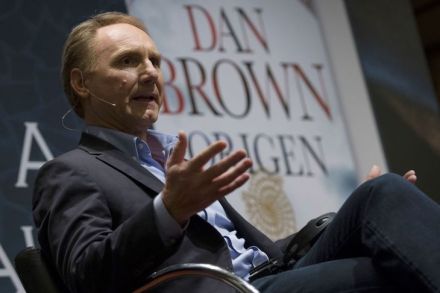
Being reflexively snotty about Dan Brown’s writing is like slagging off Donald Trump’s spelling: it just entrenches everyone’s position. In a world where a quarter of people read literally no books in any given year, can we give each other a break on this kind of thing? If you found Angels and Demons good fun, thoroughly enjoyed The Da Vinci Code (as I unironically did), but despised Inferno for the worthless piece of rat doodah that it was, then the good news is that Brown is back on form here. Origin is brisk, fun and filled with adorably pointless Wikipedia paragraphs; and what’s at stake is endearingly grandiose. Here, the premise is atheism vs religion.

Letters | 4 May 2017

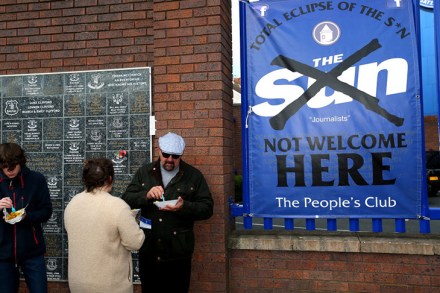
Liverpudlian censorship Sir: I enjoyed Kelvin MacKenzie’s Diary (29 April). The obloquy thrown at him after his criticism of Everton footballer Ross Barkley would be laughable if it were not for the unpleasant undercurrent on Merseyside now. His remark was football banter, not a racist slur as the mayor of Liverpool, Joe Anderson, has alleged. What the mayor (or ‘Fat Joe’, as he is known) has failed to do is speak up for free speech. It is — and I deeply regret to say this about my home town — a scandal that newsagents in Liverpool are threatened by violent thugs if they stock the Sun. There was a ‘Ban the Sun’ campaign in Liverpool before Hillsborough, run by trade unions which opposed Wapping. For a long time the campaign was in decline.

Do do God

This election was won two days before it was announced, on Easter Sunday. Theresa May put out an Easter message in which she suggested that British values had a Christian basis. It was her version of David Cameron’s message two years before, in which he said that Britain is a Christian country. She was rather more convincing. I don’t know whether Cameron is sincerely religious, but he didn’t seem it. He didn’t even seem to try very hard to seem it, as if fearing that his metropolitan support might weaken, and perhaps that George Osborne would make a snarky jibe about it at cabinet. But it still did him good to make those pro-religious noises. St Theresa should keep her piety out of politics, said a few pundits.

War on Mount Olympus

It is a curious fact that the modern Hebrew for ‘atheist’, Tim Whitmarsh notes in passing, is apikoros. The word derives from Epicurus, who set up shop as a philosopher in Athens around 306 BC, but it became so domesticated in Hebrew that the medieval thinker Moses Maimonides, till he found out better, thought it was of home-grown Aramaic origin. In ancient Jewish usage, however, I think apikoros meant someone who denied that God takes care of the world, which was indeed the claim of Epicurus. Though Whitmarsh sets out to show that atheism was quite normal in ancient (Greek) history, atheism turns out to be a slippery notion. Epicurus declared that the whole boundless world was made up of an infinite number of indestructible atoms in unpredictable motion.

We need Christianity more than ever in this Age of Atheists

Have we ever needed Christianity more than we do today? It’s a rhetorical question, for sure, because the loss of our faith and the inability to confront Islam have never been greater. When I was a little boy during the war, my mother assured me that if I believed in Jesus everything would be OK. This was during the Allied bombing on Tatoi, the military airfield near our country house where the Germans concentrated their anti-aircraft guns. My Fräulein, the Prussian lady who brought me up, was more practical. She handed me a beautiful carved knife that made me feel safer than my prayers ever did. Today, of course, 74 years later, my prayers are far more likely to give me peace of mind than a knife in my pocket. That’s the difference between being five and 79 years of age.