Assisted dying

What the Two Fat Ladies taught us about Britain

‘Grab that crab, Clarissa!/ Eat that meat, Jennifer!’ It was with these words – the start of their self-sung theme tune – that Two Fat Ladies first burst on to our screens 30 years ago. Jennifer Paterson and Clarissa Dickson Wright were exceptionally unlikely stars. Both heavy drinkers and smokers, they had slightly fallen into cooking careers on the edge of the British Establishment. Jennifer used to be the cook at The Spectator, creating cream-laden dishes for staff while necking wine. Clarissa developed quinine poisoning from consuming around six pints of gin and tonic a day. Jennifer died in 1999; Clarissa in 2014. Clarissa was sober by the time Two Fat Ladies was filmed, but she had been seriously affected by her love of booze.

The ‘sensible’ class is losing control of the House of Lords

The House of Lords is often described as ‘the best private members’ club in London’. Certainly, it has an appearance more impressive than White’s, a menu more subsidised than Boodle’s and a membership more aristocratic – in the modern sense – than Pratt’s. The most recent vandalism of ejecting the actual hereditary peers has been the final act in making the House of Lords the bastion of our new aristocracy: the same people who run our Oxbridge colleges and sit on councils of this or that and who occupy the same comfortable thought-world as many of our bishops and academics and judges.

Portrait of the week: Growth slows to zero, Scotland rejects assisted dying and Trump sends Marines to the Gulf 

Home Sir Keir Starmer, the Prime Minister, spoke to President Donald Trump of America about the importance of reopening the Strait of Hormuz, but resisted his call for Britain’s ships to be sent there. The government considered sending British-made Octopus drone-interceptors to the Middle East. Sir Keir said £53 million would help a million households reliant on heating oil – £53 a household; ‘It’s moments like this that tell you what a government is about,’ he said. The economy showed zero growth in January, according to the Office for National Statistics. The ONS added alcohol-free beer to the basket of goods used to calculate inflation. John Lewis awarded staff a bonus for the first time in four years.

Letters: AI won’t save the army

Brute force Sir: General Sir Nick Carter is correct to point out the fragility of the UK’s armed forces today (‘Empty shell’, 7 February). He is also right to highlight the level of expenditure which will be necessary to overcome 25 years of structural under-investment in defence if the UK and its allies are to deter or win any future war. However, the suggestion that the British armed forces might be saved – relatively cheaply – by the institution of AI-automated kill chains alone is questionable. Indeed, it may be just another mirage of the type which has contributed to the current predicament. Autonomous weapons systems have existed for many years. With AI, they will proliferate and may become more important.

What Catholics get wrong about assisted dying

The Catholic Church has always been remarkably relaxed about sin. It becomes distinctly jumpy, however, when it encounters any challenge to the Church’s designation of what is sinful. Human beings (it suspects) are and always will be sinners. The Church has no problem in dealing with sinners: they should confess. Absolution may be available, dispensed by a priesthood who have privileged access to the Almighty, and can intercede. It isn’t really the commission of a sin that worries the Church. It’s the rejection of a doctrine ‘We will tell you what’s unclean in the eyes of God. We also offer a laundry service to which we hold the monopoly.’ To a cynic it might occur that this a shrewd way of drumming up trade.

The House of Lords’ Valkyries fighting for assisted suicide

It seems counter-intuitive to say that the House of Lords is more representative than the House of Commons. Yet in the extended reading of the assisted suicide bill, it is clear the Upper House is surprisingly reflective of the reality of the nation. Nominally, the bill is being piloted by Lord Falconer, the formerly cuddly ex-housemate of Tony Blair. Falconer has consistently sought to water down amendments and concessions secured during the Commons debate. During last week’s Lords debate, he cited ‘somebody called Sarah Cox’ – who just happens to be the former president of the Association for Palliative Medicine (APM) and gave evidence to the bill committee last year. This didn’t prevent Lord Falconer from misrepresenting her testimony, prompting a complaint from the APM.

The ancient case for a referendum on assisted dying

One rather hopes the assisted dying bill will be talked out in the House of Lords. We have no say on matters of government policy, sovereignty, international law (and much else). But this bill is far too controversial, and personally significant, for MPs alone to adjudge. We need a touch of democratic Athens, whose citizens determined all political and legal outcomes. Citizen arbitration was used to settle most cases. Take Neaira. Not an Athenian, she had been trafficked from birth, but saving what money she earned, she eventually bought her freedom, with help from a large sum donated by the Athenian Phrynion. But she tired of him touting her around high-class orgies, took what she reckoned she was entitled to, and walked out.

Why Danny Kruger’s defection changes everything & could Boris Johnson be next?

54 min listen

This week Michael and Madeline unpick the shock defection of Danny Kruger to Reform UK’s ‘pirate ship’ – as described by Michael – and ask whether this coup could mark the beginning of the end for the Conservative party. They also dive into Westminster’s most charged moral debates: the assisted dying bill in the Lords and the quiet decriminalisation of abortion up to birth. What do these changes say about parliament’s ‘intoxicated liberal hubris’ – and the protections given to the vulnerable? Also, Donald Trump lands in Britain this week – but why is it that the Prime Minister acts ‘like Carson the butler’ in his presence, and who exactly is the ‘diplomatic secret weapon’ that the Palace deploys to manage ‘the Donald’?

Will assisted dying become a cover for abuse?

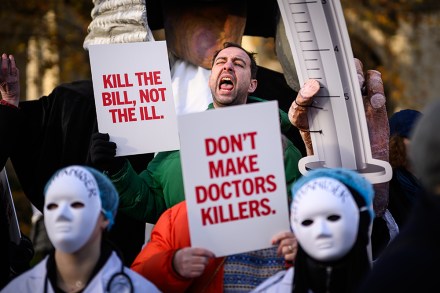
Every year, thousands of stories of abuse pour into Compassion in Care, a charity that supports whistleblowers in the care sector. Volunteers manning the charity’s helpline hear of old people dismissed as ‘end of life’, deprived of food and water, abandoned in corners with neglected bedsores, needlessly sedated to make them less time-consuming. And now, says the charity’s founder and director Eileen Chubb, a former care whistleblower herself, they are bracing for ‘a massive increase in abusive cases’. That’s if the assisted suicide bill, which begins its journey through the Lords this week, becomes law. ‘We can foresee whistleblowers contacting us,’ Chubb tells me, ‘saying people died who didn’t want to die but were pushed into it, and the system failed them.

Should Chris Coghlan be denied Holy Communion?

It is not, it’s fair to say, a universal view among Catholic priests that MPs who vote the wrong way on assisted dying and the decriminalisation of abortion up to birth should be punished by excluding them from communion. But so it has turned out with Chris Coghlan, the Lib Dem MP for Dorking and Horley. He voted for assisted suicide and didn’t vote at all on the Antoniazzi amendment allowing women to abort up to birth. Now he’s complaining that his parish priest is intent on denying him communion at mass. Or as he put it on X: My Catholic Priest publicly announced at every mass he was denying me Holy Communion following the assisted dying vote. Children who are friends of my children were there. This followed a direct threat in writing to do this four days before the vote.

MPs back assisted dying: what next?

13 min listen

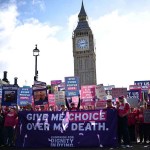
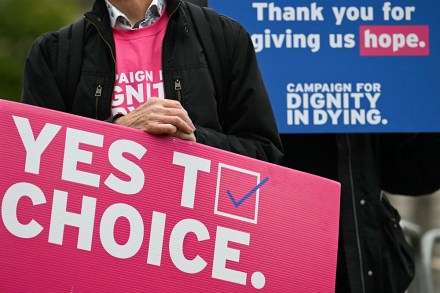
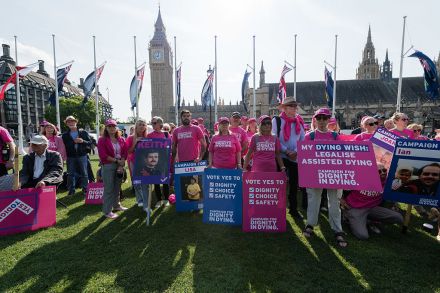
MPs have voted – by a narrow 23-vote margin – in favour of legalising assisted dying. Bizarrely, the 51.9 to 48.1 per cent breakdown is the exact same as the 2016 referendum result, although hopefully this issue doesn't divide the Labour party in the same way that Brexit did for the Tories. The whole process is far from ‘Parliament at its best’, as it has often been claimed. Despite hours of passionate and emotional debate, key concerns about the drafting of the bill forced some who would naturally back assisted dying to oppose it. The overwhelming feeling is that a private member’s bill was not the right forum for this kind of legislation. So what comes next? The bill will now pass to the House of Lords, after which comes the business of putting the measures into practice.

What you need to know ahead of the assisted dying vote

14 min listen

It’s a historic day in Westminster, where MPs will vote on the assisted dying bill – the outcome of which could have huge repercussions for healthcare, politics and the courts. It’s such a significant day, in fact, that we’ll be recording another podcast just after the result is announced at around 2.30 p.m. Kim Leadbeater’s camp remains confident that the bill will pass, although many anticipate a much closer vote than at the second reading. This is in no small part due to high-profile members of the party being opposed to the legislation, and Keir Starmer remaining characteristically evasive on the issue. The backdrop, of course, is the resignation of a government whip, Vicky Foxcroft – though over a separate issue: Liz Kendall's plan to cut personal independence payments.

What Seneca would have made of the assisted dying bill

Kim Leadbeater’s assisted dying bill has generated much talk about the ethics of suicide. As far as the ancients were concerned, it was only in life that you could make your mark. The Christian passion for embracing, even rejoicing at, death made no sense to them. Ancient thinkers generally did not fear an afterlife. Although there were no received views on the matter (unless you were a member of a cult of some sort), many ancients reckoned that, if the gods were displeased with you, they would demonstrate their hostility in this life rather than the next. But when death was inevitable, they wanted to be in control, because the way one died revealed the true stature of the person, which could do much for one’s posthumous reputation.

Britain needs reform

This week’s spending review confirms that where there should be conviction, there is only confusion; where there should be vision, only a vacuum. The country is on the road to higher taxes, poorer services and a decaying public realm, with the bandits of the bond market lying in wait to extract their growing take from our declining share of global wealth. When every warning light is flashing red, the government is driving further and faster towards danger The Chancellor approached this spending review with her credibility already undermined. Promises not to raise taxes on working people translated into a tax on work itself which has driven up unemployment.

Letters: How ‘Nick’ could save the Tories

Dying wish Sir: As a 99-year-old with, presently, no intention of requesting assistance to die, I am struck by the articles of Dan Hitchens and Tom Tugendhat (‘Bitter end’ and ‘Killing me softly’, 7 June), which base their strong opposition on the opinions of everyone other than the person supposed to be requesting such assistance. He or she, poor soul, is expected to just lie there and listen to whether they are to be allowed to have any opinion at all on the matter. It’s my life they are writing about. At present I have the ability to end it whenever I might wish. What Messers Hitchens and Tugendhat are arguing is that, if I change my mind, no one is to be allowed to help me at a moment of my choosing. That’s wrong.

Can the assisted dying bill survive?

16 min listen

Labour MP Kim Leadbeater’s assisted dying bill is back in the Commons for the report stage today – returning to parliament for the first time since major changes were made to the legislation. While Leadbeater has insisted the bill is coming back ‘even stronger’ than before, support among MPs appears to be fading. The mood in parliament was different to the second reading – which listeners will remember as a self-congratulatory affair, hailed as a ‘historic’ day by Leadbeater – but today’s debate was notably more ill-tempered. The majority of speeches seemed to oppose the bill rather than support it, and a late intervention by Esther Rantzen did not help.

Easter special: assisted dying, ‘bunny ebola’ & how do you eat your creme egg?

34 min listen

This week: should the assisted dying bill be killed off?Six months after Kim Leadbeater MP launched the Terminally Ill Adults (End of Life) Bill, a group of Labour MPs have pronounced it ‘irredeemably flawed and not fit to become law’. They say the most basic aspects of the bill – having gone through its committee stage – do not hold up to scrutiny. Dan Hitchens agrees, writing in the magazine this week that ‘it’s hard to summarise the committee’s proceedings except with a kind of Homeric catalogue of rejected amendments’ accompanied by a ‘series of disconcerting public statements’.  With a third reading vote approaching, what could it tell us about the country we live in?

The assisted suicide bill should not survive

Until about six months ago, it would have been hard to find a more inoffensive politician than the Labour backbencher Kim Leadbeater. A well-liked, upbeat, down-to-earth Yorkshirewoman, she entered politics because of a personal tragedy, the murder of her sister, the MP Jo Cox, in 2016. When asked on a Spectator podcast what was the worst piece of advice she had ever received, Leadbeater half-joked: ‘Have you thought about being an MP?’ Visibly a normal, friendly person plunked down in SW1, she won many admirers and attracted little controversy. Then in September Leadbeater came top of the private members’ ballot and chose to take up the cause of assisted suicide. The current law, she argued, is cruel to those dying in terrible pain.

The Kim Leadbeater Edition

35 min listen

Kim Leadbeater has been an MP since winning the Batley & Spen by-election for Labour in 2021. She was elected to the constituency that her sister, Jo Cox, had served until she was murdered during the 2016 Brexit referendum campaign. Having pursued a career in health and fitness, Kim hadn’t initially intended on a life in politics, but she went on to champion social and political cohesion through the Jo Cox Foundation and the More in Common initiative. More recently, she has led the campaign to legalise Assisted Dying. The Bill is currently making its way through Parliament and has been described as the biggest social reform in a generation.

Has the Assisted Dying Bill been killed off?

The reported decision to postpone the implementation of the Assisted Dying Bill until 2029 might, one must pray, turn out to be a form of legislative euthanasia. MPs, looking at the process, began to resemble a patient who, having first of all declared his wish to end it all, then begins to worry that it will not be as simple or painless as he had been led to expect. It is one thing to express a fervent wish to release people from unbearable suffering and quite another to frame safe procedures which involve the state, the judiciary and the medical profession in helping people kill themselves. It was a bad mistake, too, for Labour, under Keir Starmer’s leadership, to indicate that although MPs would have a free vote, assisted suicide was a modern, cool, Labour idea.