Artists

The optimism of a suicide

A postal strike would have been a disaster for Van Gogh. Letters were his lifeline and consolation. Not only did he receive through the mail his regular allowance from his brother Theo but, in letter after letter in return, he poured out his thoughts and feelings, recorded his work in progress and conveyed his impressions of books, people and places. In his often solitary existence, he was an avid recipient and kept in touch with a variety of correspondents, especially when he was in the South of France during the last two years of his life. The glory must be shared, however, with Theo, in that he kept Vincent’s letters, many of which contained drawings, either appended or on the sheet itself, surrounded by his tumble of words.

Repeat that, repeat

When the Louvre invited me to organise for the whole of November 2009 a series of conferences, exhibitions, public readings, concerts, film projections and the like on the subject of my choice, I did not hesitate for a second and proposed the list. Thus Umberto Eco on the genesis of this book, published simultaneously in Italian, French and English. Considering those parallel manifestations of the project, it was perhaps to be expected that this, its sole printed version, would be situated at the more ingratiatingly ludic end of the Eco spectrum. The Infinity of Lists is a work less of theory than of taxonomy.

Fiery genius

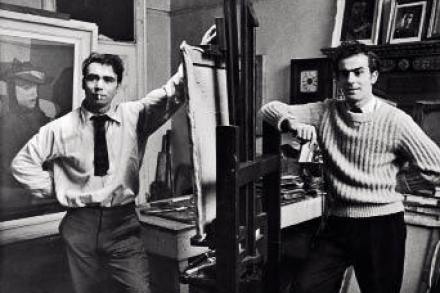
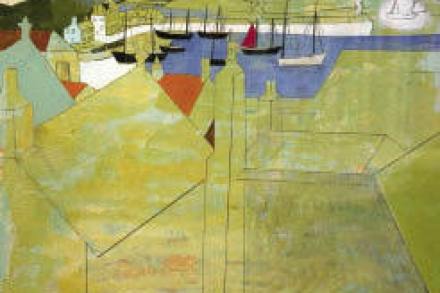
In July 1967, a young artist named John Nankivell, living in Wantage, plucked up the courage to knock on John Betjeman’s front door, in the same town, to show the poet (whom he had never met) some of his architectural drawings. In July 1967, a young artist named John Nankivell, living in Wantage, plucked up the courage to knock on John Betjeman’s front door, in the same town, to show the poet (whom he had never met) some of his architectural drawings. Betjeman was impressed by the work. Though the buildings were depicted with careful detail, there was something about the perspective — a hardly perceptible distortion — that saved the drawings from being drily academic; it was as if the buildings were reflected in a lake with a slight shiver across its surface.

Not so serene

Is there anything original left to say about Venice? Probably not, but that doesn’t stop the books from coming, tied in, as they mostly now are, with a television series. Is there anything original left to say about Venice? Probably not, but that doesn’t stop the books from coming, tied in, as they mostly now are, with a television series. In this context I dream of programme-makers courageous enough to eschew tacky carnival masks or mood-shots of gondola beaks reflected in muddy ripples, with Vivaldi mandolins wittering cosily over the soundtrack, but it aint gonna happen, alas. How about the areas of La Bella Dominante most visitors are too rushed or incurious to explore?

Ukraine’s Got Talent

Perhaps you've already seen Kseniya Simonova's performance on Ukraine's Got Talent. But if you haven't, watch how she recounts the horrors of Ukraine's experiences during the Second World War. With sand. It's one of the most remarkable, moving, beautiful pieces I've seen in ages. Since the video has already been seen 900,000 times  I suppose she counts as a "Youtube sensation" but that term seems absurd and cheap when applied to this sort of thing. So too does any comparison with our own Susan Boyle. Take eight minutes from your day and watch this. You won't regret it. The final words mean, I gather, something like "You are always with us". You can see another of her pieces here. [Thanks to Mr Eugenides for brining this to my attention.

Damien Hirst & Art for Toddlers

There's an "Artist Rooms" exhibition at the Scottish National Gallery of Modern Art that features some of Damien Hirst's work. Cue much excitement. Especially from his target audience: two year olds. Specifically, my niece: My companion Florence (aged two and a half), was really into it all. She is famous for her total disregard for art galleries, so is perhaps fitting that she admire Hirst. And she did, having sprinted (literally) past all the fabulous Auerbach, Kokoshka and Soutine paintings upstairs she stopped and stared at Dots and Pickles. She was fascinated by the sheep but her fascination incurred the wrath of eager guards who scolded her for touching the exhibit. "There's formaldehyde in there". Behind about four inches of reinforced glass there is.

Can the Artists Transform Our High Streets?

It can't have escaped people's notice that shops in our high streets are being boarded up at quite an alarming rate. I've noticed it in central London, but also in north Wales last week and in Sussex and Surrey this week. Lewes was looking particularly down-at-heel as I passed through: like it was bracing itself for something even more awful. I felt mixed emotions at the Guardian's piece on the re-use of shops by artists. For all sorts of reasons, I am cheered by the fact that creative people are thinking their way out of the recession. But at the same time this really does confirm just how bad things have become.