Armenia

Russia won’t give up Armenia without a fight

From our UK edition

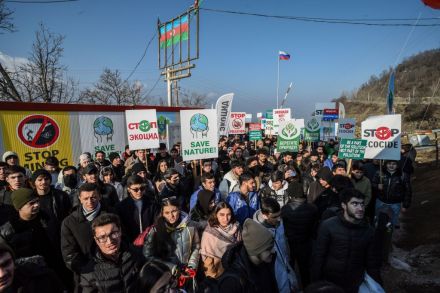
Since January, Karapetyan, leader of the Strong Armenia party, has been unable to leave his hilltop mansion to campaign ahead of Armenia’s parliamentary elections on Sunday. Last year, he waded into a fight between the Armenian Apostolic Church and the country’s prime minister, Nikol Pashinyan, leader of the Civil Contract party. His call for Pashinyan to stop pursuing clergymen critical of Pashinyan’s efforts to establish peace with neighbouring Azerbaijan was interpreted as a call to overthrow the government. Karapetyan was arrested, interrogated and spent six months in pre-trial detention before his sentence was commuted to house arrest. He denies the charge. How do you fight an election if you’re under house arrest?

The unfathomable depths of blue-state fraud

“The Somali pirates who ransacked Minnesota remind us that there are large parts of the world where bribery, corruption and lawlessness are the norm, not the exception,” said Donald Trump in his State of the Union address last night, as the Democrats booed and heckled him. Media commentators scoffed at Trump’s inflammatory rhetoric. But the President, who estimated that $19 billion had been lost to fraud in Minnesota alone, is if anything underplaying the scale of the problem. The extent of fraud across blue state (that is, Democrat-led) America is truly monstrous, and each week brings fresh revelations of swindling on a truly epic scale.

fraud

Wizard of Oz

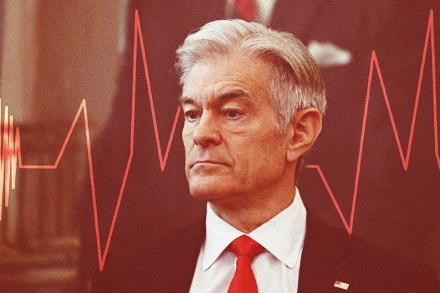
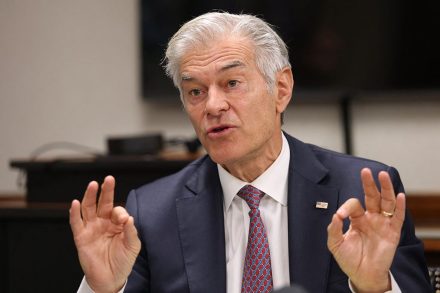
Early last November, during a White House press event to announce a Trump administration deal with pharmaceutical companies to cut the prices of weight-loss shots, a drug company executive fainted in the Oval Office. Fortunately, there was a doctor in the house. Doctor Mehmet Oz, whom Donald Trump had appointed to run Medicare and Medicaid, rushed to help the man, supporting him and lowering his head to the floor. It wasn’t the first such incident. Dr. Oz’s own granddaughter fainted during his swearing-in ceremony in April last year. Again, he knew just what to do. Oz is a rare public figure in that he both is a doctor and he plays one on TV. He fits squarely into an administration run by a former reality TV star. In Trump’s wider political sphere, Dr.

Dr. Oz’s war on Armenian medical fraud

As Gangs of New York showed us, those who’ve settled in America have a tendency to bring Old World grudges over with them. Judging by a recent video put out by Dr. Mehmet Oz – now serving as Administrator of the Centers for Medicare & Medicaid Services – one of these ancient feuds may now be playing out at the highest levels. American politics has been rocked by evidence of medical fraud to the tune of billions being committed by, inter alia, Somalis in Minneapolis. Naturally, the good doctor was sent to investigate. Then he made a second stop. Oz and his staff descended on the Van Nuys neighborhood of Los Angeles to investigate a similar fraud allegedly being perpetrated by Armenian gangsters. L.A.

mehmet oz

A Trump-branded peace deal

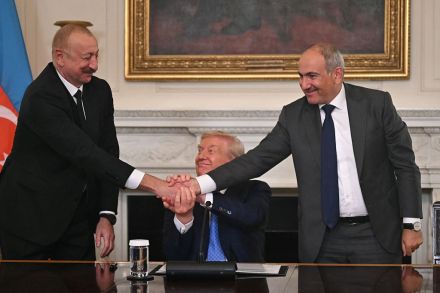
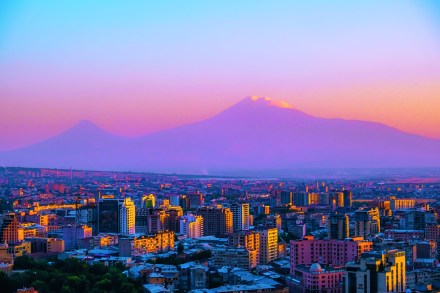
Mount Ararat rises over Armenia’s capital, Yerevan, its peak often lost in clouds. It is the country’s national symbol, yet it stands across the border in Turkey. That border has been closed since the early 1990s, when Turkey sided with Azerbaijan against Armenia – cutting Armenia off from its largest western neighbor and leaving it dependent on narrow trade corridors through Georgia and Iran. For three decades, the conflict shaped the politics of the South Caucasus, drawing in Russia, Turkey and Iran. The peace agreement between Armenia and Azerbaijan, signed today in Washington, represents more than the end of a long-standing territorial dispute.

Trump peace

The pleasure of reliving foreign travel through food

From our UK edition

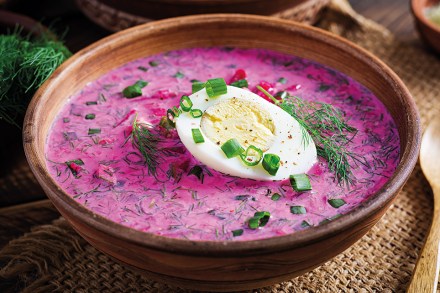
The idea of the kitchen as a space for transformation and transportation is not a new one. Many writers have explored the room’s ability to offer both domesticity and alchemy at the same time – how it allows cooks to travel vicariously through the food they make. This is the subject of Cold Kitchen, Caroline Eden’s memoir of her time spent in her kitchen in Scotland and of her travels to Eastern European and Central Asian cities – and somehow she makes it fresh and compelling. She is an author and critic who has written extensively about the food and culture of the countries of the former Soviet Union. Black Sea, in which she explored Odessa, Istanbul and Trabzon, received a clutch of prizes, and Red Sands, about Central Asia, won the prestigious André Simon food book award.

Russia’s military disaster could lead to famine in the Caucasus

From our UK edition

Two years ago, 13-year-old singer Maléna was rehearsing for Eurovision Junior when war broke out. While her rivals battled in Warsaw on stage, she stayed home in Armenia. Young men picked up AK-47s to fight against their Azerbaijani neighbours in the disputed region of Nagorno-Karabakh. More than 4,000 never returned. A year later, Maléna re-entered Eurovision Junior and won, giving her country the right to host Eurovision Junior in December 2022. Armenian authorities staged celebrations in the capital, Yerevan. Crowds huddled around outdoor televisions in the central square to watch the show. A group of young musicians from Nagorno-Karabakh joined the party in Yerevan, coming into the capital on the only road that links the capital to the breakaway region.

Russia isn’t just losing influence in Ukraine

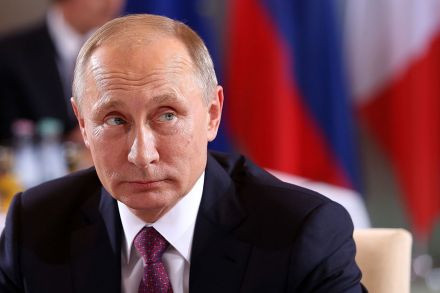
If Vladimir Putin’s goal is to reestablish Russian influence, his ambitions are on track for another major setback. Far less high-profile than the war in Ukraine, a slow and quiet revolution has been brewing south of Russia’s borders in Central Asia and the Caucasus. These nations, members of the former Soviet Union, have traditionally been in Russia’s sphere of influence. That, however, is now changing. At the start of the year, it looked like Russia was ascendant. Putin had over 150,000 troops waiting to invade Ukraine, and was receiving a steady stream of Western visitors pleading with him to step back. When Kazakhstan was engulfed in popular protests, Putin stepped in and deployed about 2,500 Russian troops after an appeal by the Kazakh president to help quell the unrest.

On the front lines of Europe’s newest war

From our UK edition

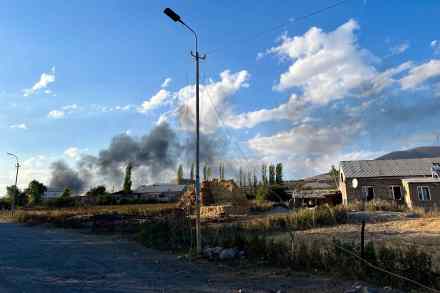
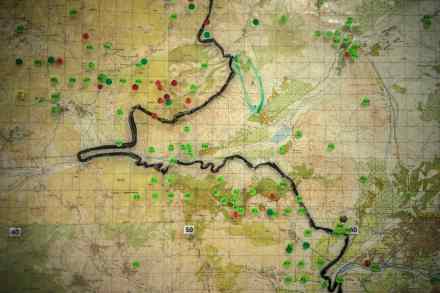
Sotk, Armenia A group of Armenian soldiers stand guard on the road towards the village. ‘It’s not safe to go ahead,’ one says, slinging his Kalashnikov across his shoulder and motioning for our van to pull over. ‘They were shelling the highway just 15 minutes ago.’ In the distance, there’s the unmistakable thunder of artillery and smoke rising from the side of the mountains. Beyond them is the border with Azerbaijan from where, in the early hours of Tuesday morning, a massive barrage was unleashed on towns and cities across Armenia. The offensive is the most dramatic escalation since the two former Soviet republics fought a brutal and bloody war two years ago, leaving more than 5,000 dead on both sides.

yerevan

Say yes to Yerevan

The Iranians, here for the booze and the vaccine, are impossible to miss. But Armenians reminisce that, only a few years ago, you couldn’t throw a stone in Yerevan, their zestful, rhubarb-hued capital, without injuring a Californian or a New Yorker. Americans, they say, used to be ubiquitous in Armenia. This is a claim animated more by nostalgia than fact. The truth is, even prior to the pandemic and last autumn’s horrific war with Azerbaijan and Turkey, Americans accounted for only a fraction of the tourists who flocked to Armenia: in 2019, only 63,000 among the nearly two million foreign tourists, and a majority of those members of the Armenian diaspora. I mention this to say that Americans really are missing out.

The downfall of Niagara Falls

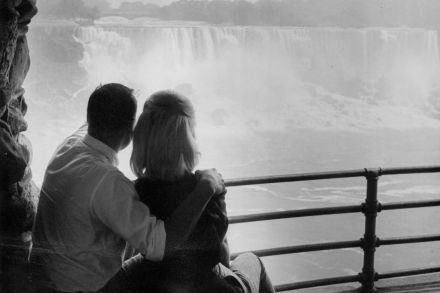
If ever I pee on the grave of an American it will be that of Robert Moses, the highwayman whose roadbuilding and neighborhood-obliterating projects in New York City and New York State threw half a million people out of their homes, as Robert Caro estimated in his biographical masterpiece The Power Broker. To those who had the temerity to object to their ejection, the monster Moses hissed, “When you operate in an overbuilt metropolis, you have to hack your way with a meat ax. I’m just going to keep right on building. You do the best you can to stop it.” So it was with teeth gnashing that I drove down Robert Moses Parkway in the city of Niagara Falls, New York, en route to the annual Armenian festival at St. Hagop Armenian Apostolic Church.

niagara

An existential war: even wealthy émigrés are prepared to fight for Russia

From our UK edition

If you’re wondering where all those urbane, clever, westernised Russian travellers have gone since the onset of the Ukrainian war – a war which has largely barred them from the West – I can tell you that at least two of them will be found in the tiny Armenian hamlet of Gnishik, high in the summery peaks of the Caucasus. I know this because I met them there last week. And what they told me – about Russia, the war, their lives since the war – was illuminating. This meeting wasn’t planned.

Is Putin’s war spreading?

From our UK edition

Yerevan, Armenia ‘This is our land,’ Anna says, looking out over her roadside flower shop. ‘Lenin promised it to us.’ Her father was born across the mountains in Russia, one of around 100,000 displaced Armenians only able to return home after world war two. ‘But thanks to Lenin, we have our own country. A free country – at least for now.’ As the fighting in Ukraine stretches into its first month, another conflict between two former Soviet states might not be far away. Last year, a brief but bloody war broke out between Armenia and Azerbaijan over the breakaway region of Nagorno-Karabakh, which had been autonomously governed by ethnic Armenians over the past three decades.

Will Armen Sarkissian save Armenia?

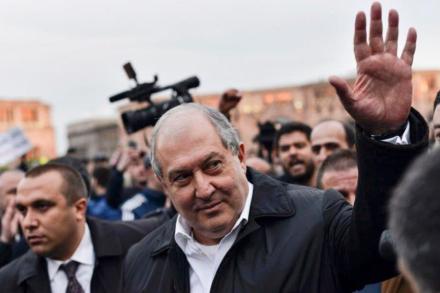
Yerevan, Armenia Armen Sarkissian, the president of Armenia, is incandescent with rage. “Five thousand brave and selfless Armenian soldiers were killed in this war,” he tells me at his office, referring to last year’s conflict with Azerbaijan and Turkey. “There must be accountability for their deaths.” Sarkissian strikes me as the only Armenian politician whose anger comes with a constructive program of national revival. The man once described by Zbigniew Brzezinski as the “Vaclav Havel of the Caucasus” radiates no grievances against foreign powers.

Most people who call themselves Caucasian know nothing about the Caucasus

From our UK edition

The Caucasus, a popular saying goes, is a ‘mountain of tongues’. Describing this region requires a strong constitution, determination and brilliance because, as Christoph Baumer writes in this magnificent book, ‘in many ways, the Caucasus region is a puzzle’. That is something of an understatement. For one thing, the mountains usually referred to as the Caucasus are in fact part of two geologically distinct ranges: the Greater Caucasus that is around 100 kilometres wide and ten times the length, spans the land between the Black and Caspian Seas and acts as a climatic valve, blocking off like a plug cold Arctic air from passing south; and the Lesser Caucasus, that is considerably lower, easier to pass and about half the length of the range to the north.

A defeated Armenia descends into turmoil

From our UK edition

Ever since its disastrous military defeat at the hands of Azerbaijan last year, Armenia has suffered from a wave of political unrest, with rallies and protests continuing sporadically. The principal demand of the protestors has been the resignation of the incumbent Prime Minister, Nikol Pashinyan, whose agreement to a ceasefire favourable to Azerbaijan following his country’s defeat in Nagorno-Karabakh was viewed as a national betrayal. However, the most serious declaration of opposition to the Prime Minister came on Thursday, when the general staff of the armed forces, Onik Gasparyan, joined in the calls for Pashinyan to resign.

The West has left Armenia to fend for itself

From our UK edition

Bomb shelters have come a long way since the Blitz. As missiles from Azerbaijan rained down on Nagorno-Karabakh a few weeks ago, Hayk Harutyunyan and his family took refuge in a basement with wifi, an ensuite toilet and a makeshift mini-bar. There were 12 people crammed in there every night, he told me, ‘but we Armenians are very close as family, so we get on well’. Indeed, sipping brandy with them in their shelter, I was reminded of that other Armenian clan, the Kardashians, who spend their time sitting around and chatting. Keeping up with the Harutyunyans, however, makes for more challenging viewing. Armenia, a Christian democracy in a neighbourhood dominated by Islamists and strongmen, has been left to fend for itself by the West.

Enes Kanter, Kim Kardashian and Turkish crimes against humanity

The Hitler of our century, Boston Celtics basketball player Enes Kanter has said, is the president of his native Turkey. In response to Lebron James playing interference for China following Rockets general manager Daryl Morey tweeting support for Hong Kong’s protesters and their struggle for liberty, Kanter responded with his experience: his outspoken criticism of Turkish president Recep Tayyip Erdogan’s human rights abuses has cost him his family and his safety. 'FREEDOM IS NOT FREE,' Kanter wrote on Twitter, also listing the consequences for his disobedience, including his father being jailed, Kanter’s attempted kidnapping, and having not seen or spoken to his family in five years. Him and his family became pariahs.

enes kanter