Armed forces

What happened to Britain’s fighting spirit?

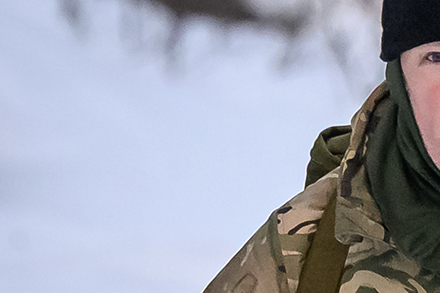
When war is in the air, young men traditionally sign up – and they traditionally sign up, disproportionately, from the north-east of England, where I grew up. The country must be prepared for war, says Air Chief Marshal Sir Richard Knighton, head of our armed forces. But what use is all this puffed-up talk of a battle-ready Britain if we have no soldiers? In the north-east, the supply of soldiers has slowed not just to a trickle but to a drip. Sunderland, for instance, home to nearly11,000 veterans, sent just ten men into the army last year. A reporter called Fred Scul-thorp went to Sunderland for Dispatch magazine last month, to work out what had happened to the north-east’s fighting spirit, but all Fred found was apathy: why sign up when you can sign on?

What explains the weird military hype around Al Carns?

If Keir Starmer resigned tomorrow, the Labour party would be thrown into confusion. None of its factions has an obvious candidate to replace him. Yet some Labour MPs and commentators think they have found a solution. Why not send for Al Carns, minister for the armed forces, a former Royal Marines colonel, and MP for Birmingham Selly Oak since 2024? Carns, 45, who was briefly a candidate for the party’s deputy leadership last year, has built up a modest social media profile, posting videos of himself hiking, working out at the gym and training with reservists. One video saw him challenge a fireman to an impromptu pull-up contest, which Carns won 30 to 18. With Westminster in disarray, many think that these stern military virtues are just what the country needs. Carns is not the first.

Letters: AI won’t save the army

Brute force Sir: General Sir Nick Carter is correct to point out the fragility of the UK’s armed forces today (‘Empty shell’, 7 February). He is also right to highlight the level of expenditure which will be necessary to overcome 25 years of structural under-investment in defence if the UK and its allies are to deter or win any future war. However, the suggestion that the British armed forces might be saved – relatively cheaply – by the institution of AI-automated kill chains alone is questionable. Indeed, it may be just another mirage of the type which has contributed to the current predicament. Autonomous weapons systems have existed for many years. With AI, they will proliferate and may become more important.

Tea with a twist: the army’s curious Christmas drink

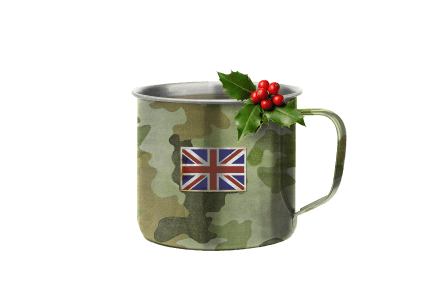
On Christmas morning, as you make your first tea or begin mixing your eggnog, spare a thought for our armed forces. Since the 1890s, they have been starting Christmas Day with a drink that sounds more like a bizarre hangover cure than a festive pick-me-up.  Known as ‘Gunfire’, the drink is made of one part rum to three parts black tea. By tradition, the beverage is taken hot and is served by senior officers to junior soldiers, making it one of the few occasions in which the ordinarily inflexible roles of the military are reversed.  Although no one is quite sure how Gunfire got its name, the most compelling theory, according to the Royal Norfolk Regimental Museum, comes from an encyclopaedia compiled by Major R.D. Ambrose.

Letters: can you ever come back from Siberia?

Cross channel Sir: As a supporter of the BBC, it pains me to say that Rod Liddle and Lara Brown both made excellent points in their articles (‘Agony Auntie’ and ‘Pushing it’, 15 November). It strikes me that the BBC could help itself by appointing journalists to the key BBC News roles who are not also seen as being campaigners. Contrast the consummate professionalism of Hugh Pym, the health editor, with the hyperbole of Justin Rowlatt, the climate editor, who gleefully predicts doom every time there’s a storm. It would be interesting to see what would happen if they swapped roles.

The false economy of cutting the Combined Cadet Force

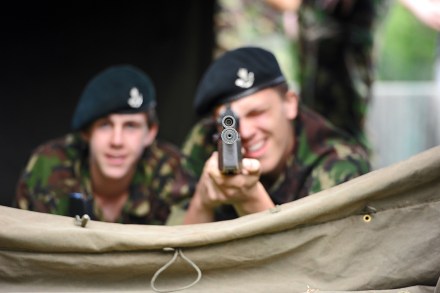
What could be more fun for a 14-year-old boy than messing about in the woods with a gun? My school’s Combined Cadet Force offered precisely that, marching us through the Brecon Beacons and organising mock skirmishes with SA80 rifles (albeit using blanks). When we weren’t trying to shoot each other, we were fighting over OS maps and compasses, trying to find which bit of woodland we were supposed to be sleeping in. One group found a dead body on the side of a Welsh mountain. Another spent an evening drinking vodka and smoking cigarettes with a strange man in a caravan. At some point in the small hours, he got a little too handsy and they all ran back to their bivvies. I was hugely envious when they told us this as we ate powdered eggs, cooked in a mess tin over burning hexamine tablets.

Is David Williams the MoD’s fall guy?

Yesterday the Ministry of Defence (MoD) confirmed that its permanent secretary, David Williams, will be stepping down in a matter of weeks. He has served for just over four years, almost exactly the average tenure of his predecessors since the department was created in 1964, but it is difficult to regard the timing as a coincidence. It is still not yet three weeks since the catastrophic loss of data on Afghan nationals and others, and the MoD’s use of a super-injunction, were disclosed to parliament by defence secretary John Healey. This is not a failing individual. This is an ingrained, systemic, cultural malaise. And it has to be fixed. Williams is not explicitly being sacked: permanent secretaries very rarely are.

The hypocrisy of Britain’s military elite

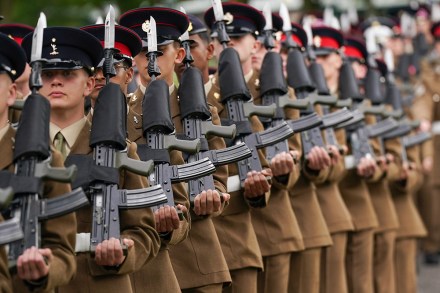
Commemorations begin today to mark the eightieth anniversary of Victory in Europe Day. A military procession will leave Parliament Square and head to Buckingham Palace – the start of four days of events that culminate on Thursday, actual VE Day, with a service of thanksgiving from Westminster Abbey. Britain’s military top brass will be out in force, laying wreaths at memorials and talking in grave tones about the courage and sacrifice of the Second World War generation. This generation was ethnically diverse, as highlighted in the set of commemorative stamps released by Royal Mail to mark VE Day. A recent poll found that 86% of the British public agree that the nation should ‘commemorate all those who fought for Britain in the World Wars, regardless of where they came from’.

Who uses Grindr? 

Meet market Who uses the gay dating app Grindr?  – The site claims 27m users worldwide, 80.5% of whom identify as gay. – 13m users are active on a monthly basis. Some 923,000 are paid users. – 80% are younger than 35. – 39% are single. – 48% are in the US. – The average user is on the site for 60 minutes per day. – The ‘explore’ feature – which allows users to see who on the app lives in a particular town or city – is accessed more in London than any other city in the world. – Grindr accounts for 3% of global use of dating apps. The most popular is Tinder, which accounts for 27% of global use. Source: grindr/businessofapps.

What was banned this week?

For the love of dog XL Bully dogs were banned in England from this week, although there is an exemption for animals which are neutered, registered, insured and kept on leads and muzzled in public. Some other things that have been banned this week: – Parking on the pavement in Edinburgh. – Importing disposable vapes in Australia. – Selling new homes with gas boilers in the Australian state of Victoria. – Displaying toys in Californian shops under male and female sections. A gender neutral section must now be included. – English councils trying to charge for disposing of waste from DIY projects. – Withdrawals in dollars from banks in Iraq. – Imports of Russian diamonds to G7 countries.