Angels

Blitz spirits: Nonesuch, by Francis Spufford, reviewed

If you read books for a living, the calling probably started with a moment of utter entrancement: a novel you couldn’t bear to set down; a few unforgettable days, as Bleak House, Earthly Powers, The Woman in White or Titus Groan worked its unsuspected magic on its millionth reader. Such books are rarer these days, but they do still happen, and Francis Spufford’s Nonesuch is an absolute corker. Randall Jarrell once wistfully imagined a novel that would ‘bear up under the weight of hundreds of thousands of readers a plot that higher critics could call crude and that bewitched families could pad over in house slippers’. Nonesuch does the trick, and I won’t be the only reader whom it keeps up until 3 a.m. It’s a novel of immense confidence.
Why is the modern Church embarrassed by angels?

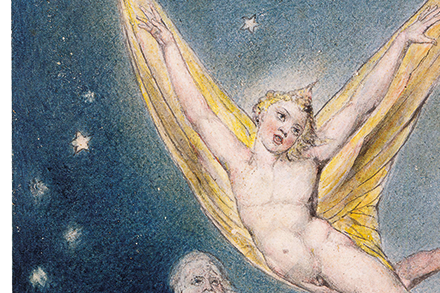
One day while walking in Peckham Rye Park, William Blake saw angels sitting in the trees: ‘bright angelic wings bespangled every bough like stars’. He was eight years old. His fascination – some have called it obsession – with angels lasted for the rest of his life. When he sat to have his portrait painted by Thomas Phillips, the two men began to argue about who painted a better angel, Michelangelo or Raphael. Phillips, not unreasonably, suggested that since Blake had never seen even an engraving by Michelangelo, he was not qualified to give an opinion on the matter. ‘But I speak from the opinion of a friend who could not be mistaken,’ replied Blake. ‘And who may he be, I pray?’ asked Phillips. ‘The Archangel Gabriel, sir.

We need to learn to pray again

In The Spectator’s basement kitchen a few weeks ago, I cornered a young colleague, Angus Colwell, and asked him what he made of Rod Dreher’s new book Living in Wonder. The thrust of it is that we are not in an age of enlightenment so much as ‘endarkenment’ (Dreher’s term) and that, having turned our backs on God, we have become easy pickings for demonic forces. ‘Oh Lord’, said Angus, turning wearily away, ‘I’m so sick of demons.’ This delighted me then and still delights me, both because it’s so surreal and also because it rings so true. If you’d told me ten years ago that young political types in 2024 would be talking knowingly about the ancient devil-gods of the Mesopotamian region – Moloch, Ishtar and Baal – I’d have said your vape was spiked.

Fleeing paradise: eden, by Jim Crace, reviewed

Since announcing his retirement in 2013, Jim Crace has had more comebacks than Kanye West, something for which we should all be thankful. Craceland is a compelling place to visit, full of hazy yet broadly recognisable locations (Tudoresque England in the IMPAC award winning Harvest; a vaguely Mediterranean town in Melody) and spanning indeterminate times (the post-apocalyptic future in The Pesthouse; the end of the Stone Age in The Gift of Stones). The specific non-specificity of his fiction reflects Crace’s view of himself as more of a storyteller than a novelist, and his sense of history as a largely unwritten – and therefore often forgotten – phenomenon. In this, eden is typical Cracian fare.