Angela merkel

Europe will suffer as Germany drifts

From our UK edition

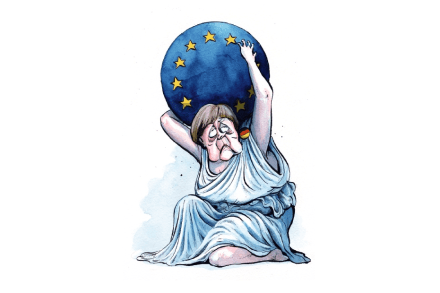
Over the last 15 years Germany has come to be seen by many in Europe as a paragon of political stability. Whereas other countries have suffered rising unemployment, unmanageable levels of public debt or a rising wave of far-right support, Germany’s perennial chancellor Merkel demonstrated that her talents as a political fixer were superior to any challenge. Never very keen on taking the long term view of politics, she cultivated the most essential art of politics: survival. There were certainly moments of real danger for her. The Euro and migrant crises triggered discontent both in her party and the electorate at large. But she never lost her nerve and in the end she was always able to sit the challenges out. Of course a price had to be paid for such triumphs.
Merkelism is here to stay – and that’s bad news for German politics

From our UK edition

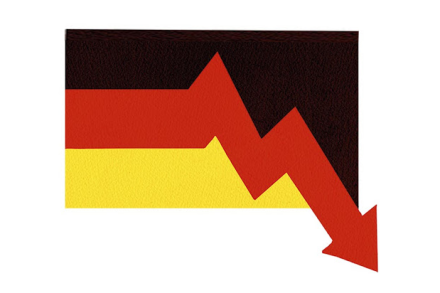
When Angela Merkel leaves office after Bundestag elections next month, she will have forever changed the course of German history. Merkel has steered Germany through a recession, the Eurozone and migration crises and the Covid-19 pandemic. During the Trump presidency, Germany's chancellor became an icon for liberals around the world. Yet her legacy in terms of Germany’s domestic politics leaves much to be desired. And her Christian Democratic Union (CDU) party has been left searching for meaning, with many voters now left wondering what the point of the Union is after Mutti. On the face of it, Merkel's insistence on reaching for consensus in German politics appears to be something to celebrate.

How will Merkel cope with retirement?

From our UK edition

Retirement sounds pretty nice. The ONS says that pensioners spend an average of seven hours and ten minutes a day on leisure activities. Over seven hours. That’s a lot of time for nice things. Yet the prospect of retirement can bring a certain dread. According to a YouGov survey, only around half of people about to retire look forward to it. The reality of having nothing to do is as terrifying as it is thrilling. So how do you feel when you have not held any old job, but one that kept you busy 24/7, one that let you meet hundreds of people every day and one that gave you an enormous sense of purpose? Angela Merkel faces that prospect. She has been the German chancellor for 16 years. No time for hobbies, no time for idle thoughts, no time for herself.

What Merkel’s visit means for Brexit Britain

From our UK edition

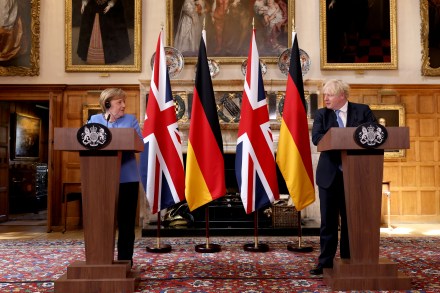
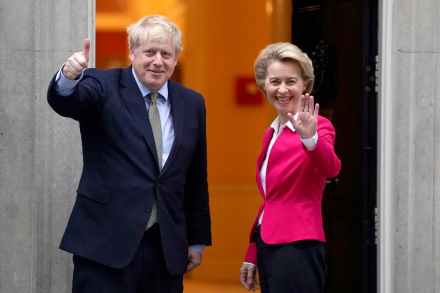
Angela Merkel visited the UK yesterday for the last time as German chancellor – the 22nd visit she has paid in her 16 years at the helm of German politics. Such an auspicious occasion however did not stop Boris Johnson from starting their joint press statement with a humorous jibe. A wry smile on his face, he told Merkel: ‘it was certainly a tradition, Angela, for England to lose to Germany in international football tournaments and I’m obviously grateful to you for breaking with that tradition, just for once.’ Good-natured, football-themed exchanges between the two nations were also in play elsewhere.

Boris bids to reset Anglo-German relations

From our UK edition

Boris Johnson and Angela Merkel have just held a joint press conference following their meeting at Chequers. The usual contrast in styles was on display; Merkel picked her words very cautiously while Johnson made sausages jokes—quipping that the ‘wurst was behind us’ when it came to chilled meats and the Northern Ireland protocol.  On a more substantive level, Merkel expressed concerns about the size of the crowds at the Euro 2020 games; and remember they’ll be even bigger for the semi-final and final at Wembley. But Johnson argued that the vaccines and pre-match testing made these pretty safe events. The Johnson-Merkel relationship has been defined by Brexit.

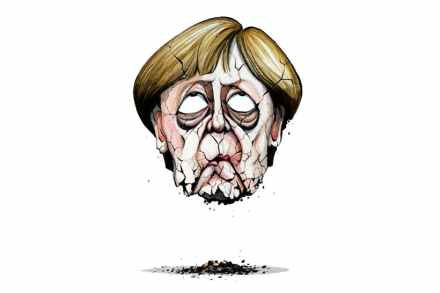
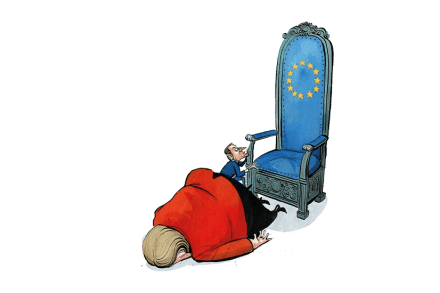
Angela’s ashes: Merkel is leaving the EU in chaos

From our UK edition

Perhaps the most absurd thing ever said about Angela Merkel is that she was the de facto leader of the western world. She has certainly been one of Europe’s most successful politicians, if you define success as political survival. But as she comes to the end of her 16 years in office, her luck is deserting her and the mess she has created is becoming horribly apparent. She leaves behind a split EU that is not just unled but might now be unleadable. Humiliating reminders of Merkel’s imploded authority come regularly. Take her latest idea to keep British tourists out of the EU this summer. Germany is imposing a mandatory 14-day quarantine for UK arrivals, whether they are vaccinated or not, and Merkel wanted other EU states to do the same.

Why an EU-Russia summit was always going to fail

From our UK edition

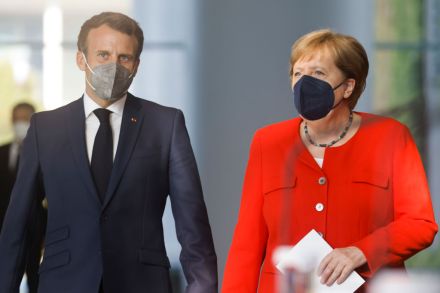
When Emmanuel Macron and Angela Merkel unilaterally proposed a European Union summit with Vladimir Putin, they managed to open deep fault lines in the continent over the EU’s Russia policy. Soon afterwards, Macron and Merkel were forced into an embarrassing reversal, largely by the countries of Central Europe, and had to cancel the proposed summit. In the process the two world leaders highlighted that this was not the right time for a summit, that the EU is divided over Russia, and that this kind of initiative plays into Russia’s misunderstanding of the Union. The suspicion must be that Macron and Merkel wanted to emulate the success of Joseph Biden’s recent meeting with Putin. It certainly did not seem like they had a specific and sensible agenda in mind.

Germany’s growing extremism problem

From our UK edition

On 2 June 2019, a German politician was found lying in a pool of blood outside his home in Hesse. He had been shot in the head at close range with a .38 Rossi revolver. Walter Lübcke, the 65-year-old leader of Kassel city council, who had been a vocal supporter of Germany's immigration policy, had been assassinated by a German member of the British neo-Nazi group Combat 18. On Tuesday, his killer was sentenced to life in prison. Lübcke’s murder is the most extreme example of Germany’s increasingly alarming relationship with immigration, anti-Semitism, and fanatical politics.

To waive or not to waive

Biden’s new-found support for a temporary waiver of COVID vaccine patents raises another fascinating set of questions. World Health Organization chief Tedros Adhanom Ghebreyesus makes the case for a waiver in terms of overwhelming priorities and the inequitable distribution of doses to date — 80 percent to the richest countries. Economic pragmatists add that the faster the whole world is vaccinated, the sooner global trade, including demand for exports from the rich West, will also recover.

waive

Merkel is right to reject Biden’s vaccine patent plan

From our UK edition

She handed the vaccine procurement process over to the European Union. She didn’t invest much in new production. And she allowed an American multinational to take control of a brilliant discovery by a small German biotech company. Angela Merkel, the out-going German Chancellor, has not had much success battling the Covid-19 crisis, and her handling of vaccines has been a catastrophe from start to finish. But she has finally got one thing right: she is defending the patents that protect the pharmaceutical industry. In the last week, president Biden has signalled that the United States is ready to back suspending patents on Covid vaccines.

Merkel’s vaccine nationalism threatens India

From our UK edition

You might have thought that Europe's leaders would be wary of handing Brussels greater powers, given the various mishaps of the EU's vaccine procurement and roll out scheme since January. But for German Chancellor Angela Merkel the sorry episode has served less a chastening warning about the dangers of Euro integration than a justification for a more centralised state. Speaking earlier this week in a video conversation with European People's party group leader Manfred Weber, Merkel aligned herself with European Commission president Ursula von der Leyen whose handling of the pandemic has been widely criticised.

Is Germany about to go Green?

From our UK edition

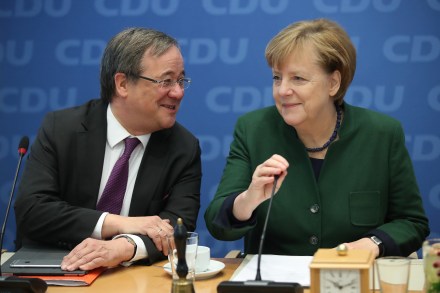
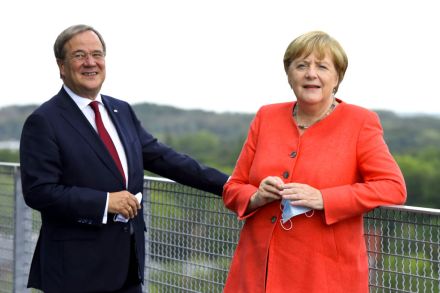
Angela Merkel never quite managed to appoint a successor. Her 16 years at the helm of Europe’s largest democracy has seen every potential challenger either annihilated or neutered. For all her motherly charms, Mutti Merkel is a merciless political operator. The Christian Democratic Union and its Bavarian sister, the Christian Social Union, seem to have settled on a political incompetent to lead them into September’s federal elections. Armin Laschet is, at least for now, set to become the bland, monotone heir to Merkelism — the result of a stitch-up that may yet unravel. Pandemic-stricken Germans are growing tired of the CDU: roughly a quarter of its voters have melted away since the start of the year. Meanwhile, the country’s Green party is surging.

Why Merkel’s successor could be a disaster for Germany

From our UK edition

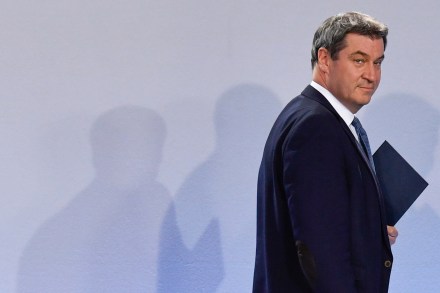
‘The die is cast,’ said Markus Söder in a press conference yesterday as he stepped back to allow his rival Armin Laschet to run as the chancellor candidate for the conservatives in Germany’s upcoming election. This ominous phrase was carefully chosen by a man who thought a disastrously wrong decision had been made by the CDU elite. Söder was by far the most popular chancellor candidate, and had a 20 point lead over his conservative competitor in the polls. Söder, the minister-president of Bavaria, won his own state and the wider German public over with his straight-talking and decisive action during the pandemic.

France’s growing German scepticism

From our UK edition

Britain's favourite Frenchman, Michel Barnier, is in the Calais region today where he will address a conference about his part in Brexit and perhaps give a further indication as to his presidential aspirations. The EU's chief Brexit negotiator was described in yesterday's Le Figaro as the man who can 'unite the right' and in doing so present a credible alternative to Emmanuel Macron and Marine Le Pen in 2022. Barnier presides over a political initiative called Patriotes et européens and he explained its concept to Le Figaro: 'Patriot and European, this means that I believe in the force of the nations, the respect of national identities and France as a country of influence at the head of the European nations.

Why Merkel’s party is backing a political lightweight to replace her

From our UK edition

The run-up to the German federal elections in September was supposed to be dull and predictable. Merkel would name a successor and the German public would grudgingly vote for the chosen one as there was nowhere else to go. If this predictable drudge meant disaffecting voters further and losing another couple of percentage points here or there, so be it. The German conservatives would still come out as the strongest party and select its partners for a coalition, just as Merkel has done for the last four terms in office. But things have changed. The gravity of Merkel’s own personality was what held many votes tied to a party that has been haemorrhaging support for a long time.

Berlin has been bounced into accepting Sputnik

From our UK edition

Munich has had enough of the vaccine chaos in Berlin and Brussels. In a surprise announcement on Wednesday, Bavaria’s minister president Markus Söder stated that he would sign a preliminary purchase agreement for the Russian Sputnik vaccine. The leader of the Bavarian Free State explained that he would pre-order two and a half million doses of Sputnik V in the hope of receiving these by July. Söder, who is a potential candidate to replace Merkel, was keen to stress that this was dependent on regulatory approval by the European Medicines Agency.

Merkel and Macron’s Sputnik U-turn

From our UK edition

The last three months have seen a litany of humiliations for Brussels as its leaders try to procure and roll out much needed vaccines across the continent. Whether it's been Ursula von der Leyen almost erecting a hard border in Ireland or Handelsblatt being briefed misinformation from a misread excel table, impounded meningitis jabs in Italy or doctors forced to destroy unwanted vaccines in Germany, every week seems to bring fresh ignominy and embarrassment. But now a new low appears to have been reached with today's news that France and Germany are in negotiations to buy Russia's Sputnik V vaccine from their implacable opponent Vladimir Putin.

Merkel’s blundering lockdown U-turn

From our UK edition

During her 16 years in office, Angela Merkel has produced a couple of memorable sentences that will be imprinted into her legacy. She added a few more on Wednesday, when she announced that the government rescinds plans of a radical Easter shutdown, saying: ‘This mistake is my mistake alone.’ Merkel’s CDU is rapidly losing the support of voters — their approval rating has dropped 9 per cent to just 26 within a week It is quite remarkable to see a leader taking the full blame for what has been perceived as a hasty and impetuous decision. Merkel and Germany’s 16 state premiers had agreed on a radical lockdown over the Easter holidays in yet another attempt to curb the rise of coronavirus infections.

Boris tries to avoid a vaccine war

From our UK edition

After France's Europe Minister became the latest politician to threaten a vaccine export ban on the UK, Boris Johnson used today's press conference to try to diffuse the row ahead of Thursday's summit of EU leaders. When asked in the Q&A session whether such an export ban could derail the UK roadmap for ending lockdown and if the UK would retaliate, the Prime Minister stressed the need for cooperation from all sides. No. 10 fear retaliatory measures in the event of a vaccine export ban could make the situation go from bad to worse Johnson said the UK would continue to work with European partners to deliver the vaccine rollout – suggesting that the pandemic wouldn't be over for anyone until it was over for everyone.

Could the Green party revive Germany’s fortunes?

From our UK edition

The BMWs and Mercs will be banned from the autobahns. People will only have electricity when there is enough of a breeze to keep the windmills turning. And the factories will be on a three-day week, while the airports will be converted into organic farms. Most businesses, and of course conservatives of any sort, will be nervous at the increasingly likely prospect of the Greens taking charge in Berlin later this year. But they shouldn't be. In fact, they would be a huge improvement on Angela Merkel’s chaotic twilight years. As she heads towards retirements, Merkel’s legacy is looking very tarnished. The CDU is slumping in the polls. It has made a mess of Covid-19, imposing a botched vaccine procurement programme on the whole of Europe that has come badly unstuck.