Angela merkel

Angela Merkel is already making life difficult for her successor

From our UK edition

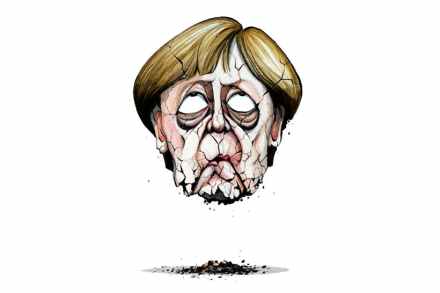
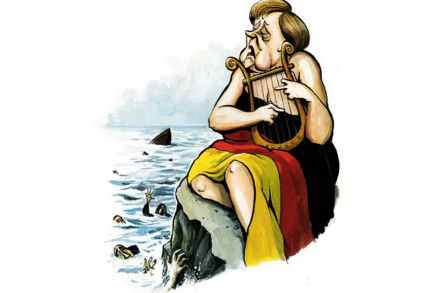
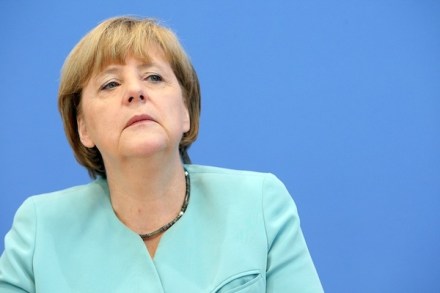
“May Day, May Day. We are sinking.” “This is the German Coast Guard. What are you thinking?” This advert for Berlitz, the language school, is a good metaphor for German politics and the decline of Angela Merkel. After this weekend’s election blow in Hesse, where support for her Christian Democratic Union (CDU) party fell by 11 points, she is now standing down as the leader of her party. Merkel also announced that she will quit as chancellor in 2021. This isn’t surprising. In the past few months, Merkel has defended her position as party leader and repeatedly said that she should stay in that job as long as she leads the country.
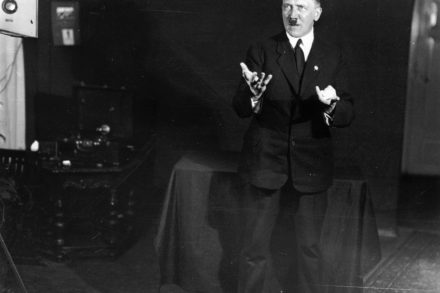
Hitler’s descendants think Trump is doing a bad job

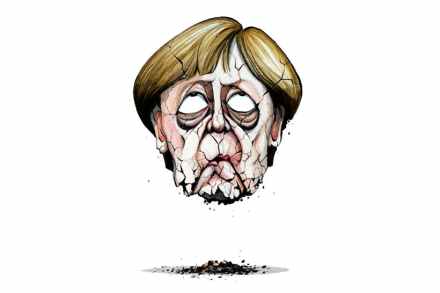
Donald Trump has been dogged by Nazi associations, whether it’s his reluctance to condemn David Duke during the campaign — after temporising, he finally said ‘I disavow,’ though what, exactly, he was disavowing he left unclear — or the Charlottesville rally, which he said in August 2017 had ‘some very fine people on both sides.’ Now comes Germany’s popular tabloid Bild newspaper to sound out Hitler’s surviving great-nephews — Brian, Louis, and Alexander Stuart-Houston — about their views of Trump. They represent the last paternal bloodline of the family and live on Long Island. Their father William Patrick was born in 1911 in Liverpool, the descendant of Alois Hitler, a half-brother of the Führer.

adolf Hitler’s descendants

Ich bin ein Frankfurter

From our UK edition

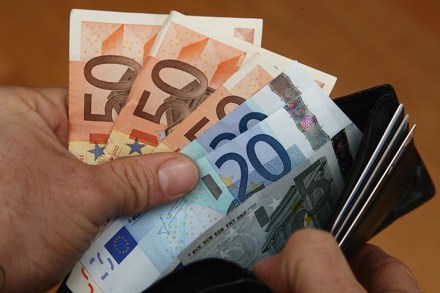
Things I learned about the Germans after a fortnight living as a non--tourist in Frankfurt:   1. Germans, and Germany generally, are among the world’s most underrated things. True they are not so adept at wit, snark, banter, jocularity or general frivolity. But they are kind, welcoming, generous and unlike, say, the French, charmingly grateful when you attempt to speak their quaint, guttural, impossibly inflected language even though — stimmt! — they speak yours so much better.   2. Here’s what happened when I lost my wallet. I got back to my hotel — cursing each step of the way the hours I would have to spend cancelling and re-ordering my cards — to find a message from the front desk.

Angela Merkel sacrifices her principles to make a migration deal

From our UK edition

There was a time not too long ago - less than three years to be exact - when German Chancellor Angela Merkel was at the very top of her game. She dominated German and European politics for over a decade with her clear, effective, but cautious leadership, watching as the German economy solidified its place as Europe’s economic engine. When Merkel decided to open Germany’s doors in August 2015 to hundreds of thousands of refugees fleeing war and persecution in Syria, she became much more than the steward of Berlin’s economic power - she transformed overnight into the moral beacon of the European continent.

Why is Theresa May so dependent on Angela Merkel?

From our UK edition

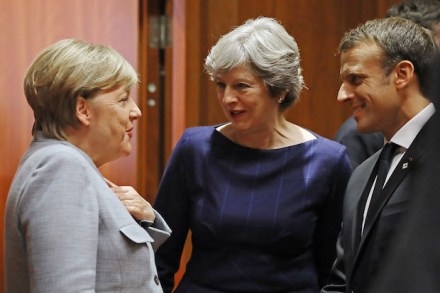
Why do the British turn to the Germans in their moments of European trouble? It never works. When Jacques Delors conceived his single currency plans, Mrs Thatcher over-relied on Karl Otto Pöhl at the Bundesbank to squash them. Dr Pöhl preferred to side with Helmut Kohl. When Britain was struggling to stay in the ERM in the late summer of 1992, the Major government put faith in what they thought were German promises to help them out. These failed to materialise. When David Cameron sought a new EU deal which would win him the 2016 referendum, he placed his greatest hopes in Angela Merkel, who offered him concessions so feeble that even he quickly gave up trying to sell them. Last week, Mrs May flew to Berlin.

The Spectator Podcast: Angela’s ashes

From our UK edition

As anti-migrant sentiment sweeps across Europe, is the continent turning against Angela Merkel for her open-door policy, and is this the end of Merkel? Meanwhile, Donald Trump announced his new mission – to establish a sixth branch of the US military, the Space Force. Is this such a bad idea? And last, while it may be greedy and corrupt, should Fifa be celebrated for making the World Cup truly global? Angela Merkel is struggling. On the continent, anti-migrant sentiment is being whipped up by leaders like Austria’s Sebastian Kurz and Italy’s Matteo Salvini. At home, her re-election results were less than ideal and her coalition partner has pushed for a firmer stance on migration. Is this the end of the Merkel project?

Angela Merkel is back in office but not back in power

From our UK edition

How did she do it? How has Angela Merkel hung on for a fourth term as German Chancellor after being written off so many times? When she's sworn in as Bundeskanzlerin today it'll be nearly thirteen years since she became leader of the Bundesrepublik. She's been read the last rites so often, yet after almost six months of backroom talks she's back in office. But is she really back in power? Merkel has promised Germany 'a grand coalition for the little people.' It's a catchy catchphrase but can she deliver? Yet another cosy alliance between her centre right CDU and the soft left SPD hardly feels like a new beginning for the millions of voters who deserted the two big parties at last September's election.

The new German grand coalition will be dull and dreary

From our UK edition

There’s no success like failure, as Bob Dylan once observed. Nearly six months after Germans went to the polls and gave the country’s coalition government a bloody nose, the same two parties are back in government in another ‘grand coalition’ – yet another unholy alliance of Christian Democrats and Social Democrats, with Angela Merkel at the helm again. Haven’t we been here several times before? Well, yes and no. Merkel’s centre-right CDU agreed a coalition deal with the soft-left SPD last month, but SPD protocol demanded they put this deal to their 464,000 members, and after an all-night count the result of that postal vote was announced this morning.

Merkel’s left-right coalition has given the AfD exactly what it wanted

From our UK edition

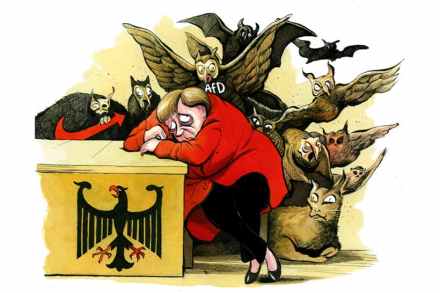
Angela Merkel will get her fourth term as Germany’s chancellor. Members of the Social Democratic Party, the SPD, voted to get into government with her again. Yet neither the SPD nor Merkel’s Christian Democratic Union are cheering the idea of four more years in power. Merkel may not be a ‘dead woman walking’, but she’s reaching the end of her remarkable career. Barely a year ago, she was being talked about as the leader of the free world. Now she is blamed by her own party for upending German politics and, in the process, allowing the far-right to become a real political force for the first time since the 1940s. Germany will now get a majority government, but the country’s politics are in a state of crisis.

Portrait of the week | 1 March 2018

From our UK edition

Home Crisis loomed over Brexit negotiations as Theresa May, the Prime Minister, travelled to the north-east to explain ‘this Government’s vision of what our future economic partnership with the European Union should look like’. Jeremy Corbyn, the leader of the Labour Party, had announced that its Brexit policy was now ‘to negotiate a new comprehensive UK-EU customs union’ that would still (somehow) ‘ensure the UK has a say in future trade deals’. Sir Keir Starmer, Labour’s Brexit spokesman, had said earlier that the party would back an amendment to the Government’s delayed Trade Bill hatched by the Conservative Remainer Anna Soubry, to keep Britain in a customs union.

Germany’s diesel ban is a victory for the Green party

From our UK edition

So much for Germany’s mighty automobile lobby. Today Germany’s Federal Administrative Court ruled that Stuttgart, home of Mercedes-Benz and Porsche, has the right to ban diesel vehicles from its city centre. This sets an important precedent. If Germany’s motor city can outlaw diesel, other cities will surely follow their example (indeed, the ruling also applies to Düsseldorf, which brought a similar case). Naturally the German car industry opposes this ban, and so do the German government, but their chances of overturning this ruling seem slender. The Federal Administrative Court (or Bundesverwaltungsgericht, if you want to brush up on your knowledge of tongue-twisting German compound nouns) is the highest court in the land.

The Spectator Podcast: Germany’s nightmare

From our UK edition

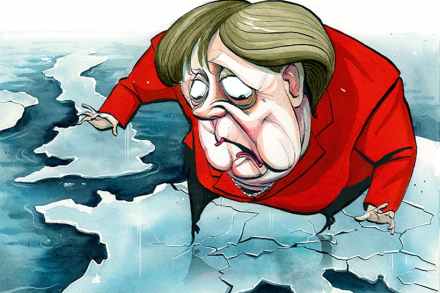
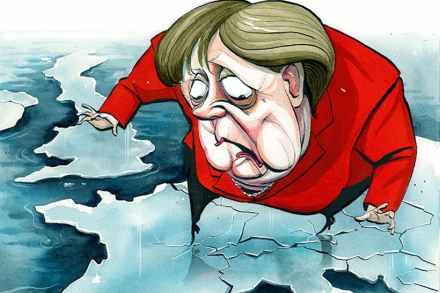
On this week’s episode, we look at Germany’s political nightmare, speak to one of the world’s most eminent psychologists, and get excited by the Winter Olympics. First up, since last year’s election, Angela Merkel’s chancellorship has seemed to be on thin ice. Her party, the Christian Democrats, have a coalition offer pending with the SPD, which would, at best, see the far right AfD become the main opposition. What is fuelling this unrest? And how long can Merkel continue in the current climate? Thomas Kielinger writes on the future of Germany’s leadership in the magazine and he joins the podcast along with Anne McElvoy, head of Economist Radio. As Thomas writes: "On Monday, Angela Merkel did something quite extraordinary.

Angela Merkel’s new coalition is united by fear of AfD

From our UK edition

Here we go again. More than four months after Germans went to the polls and gave both main parties the thumbs down, Germany’s Christian Democrats and Social Democrats have finally agreed the terms of yet another Grand Coalition. True, the CDU and the SPD are still Germany’s two biggest parties. Between them they still command (just) over 50 percent of the national vote. But it’s a bitter irony that these two centrist parties are back in power together, after both recorded their worst election results since the war. Barring a catastrophe or a miracle (depending on your point of view) Angela Merkel will be Chancellor again, for a fourth term, but her centre-right CDU has made some big concessions. The SPD has retained control of the Foreign Affairs and Labour Ministries.

Angela Merkel’s Theresa May jibe

From our UK edition

Theresa May's not having a good few weeks. With Tories scrambling to either criticise their leader or covertly campaign to be the next leader, May's premiership appears to be on shaky ground once more. Add to this a backlash from Conservative Brexiteers and a government Brexit forecast leak and it's safe to conclude things aren't about to get better anytime soon. Now it seems she can't even rely on her European allies for support. ITV's Robert Peston reports that May was the punchline to a joke Angela Merkel told hacks at Davos. He says that the German chancellor had journalists in stitched when she told a story about May's negotiating position: 'Merkel said that when she asks Mrs May what she wants the shape of the UK's relationship with the EU to be, Mrs May says "make me an offer".

Germany’s ‘grand coalition’ looks set to return

From our UK edition

Oh dear. More than three months since Germans went to the polls, and gave the CDU-SPD government a bloody nose, its politicians have finally emerged from the latest coalition talks - and the result is yet another cosy alliance between the CDU and the SPD. You’ve got to feel for German voters. In the Fatherland it seems no matter who you vote for, the so-called ‘grand coalition’ of Christian Democrats and Social Democrats almost always wins. It wasn’t meant to be this way. In September’s election the CDU and SPD both recorded their worst result since the Second World War – 33 percent for the CDU (down nearly 9 percent) and 20.5 percent for the SPD (down by more than 5 percent).

Germany’s political system is starting to unravel

From our UK edition

A spectre is haunting Europe – the spectre of populism. Last week in Berlin, Christian Lindner, leader of the Free Democrats, walked out of Germany’s coalition talks, plunging the Bundesrepublik into an unprecedented crisis. Meanwhile in Trier, the ancient Rhineland city where Marx was born and raised, locals were busy preparing for next year’s Karl Marx bicentenary. What on earth would Marx have made of Germany – and Europe - today? Sure enough, the proletariat are rising up against the bourgeoisie, but not in the manner he predicted. Marx assumed that nationalism, like the state itself, would wither away. Instead, those pesky proles are embracing nationalism like never before, and the results are shaking Europe to the core.

The Spectator’s Notes | 23 November 2017

From our UK edition

Windsor Castle on Monday night sounds like a children’s party magnified. The rooms were filled with golden-leaved trees. A giant block of ice carved with the initials of the Queen on one side and the Duke of Edinburgh on the other dominated the reception room. Her sons wore their Windsor coats. A magician made a table levitate and move unsupported round the room. As with a children’s party, there were no speeches, and everyone was pleased and excited. After 70 years married, the two nonagenarians involved presumably felt, among family and friends, that they had earned the right to be unserious. The occasion must have been sweet for Prince Philip. All those years ago, he was patronised.

The Spectator Podcast: Merkel’s crack-up

From our UK edition

On this week’s episode, we look at the situation in Germany, and whether Angela Merkel can hold things together. We also speak to Norway’s immigration minister, and discuss the dying art of cottaging. After 12 years as Germany’s chancellor, Angela Merkel is this week facing the worst crisis of her premiership. Coalition talks collapsed after the Free Democrats walked away from negotiations with Merkel’s Christian Democrats. So where does this leave Germany? In the magazine this week, William Cook calls the situation ‘uniquely damaging’, whilst James Forsyth outlines the implications for Brexit. James joined the podcast, along with Thomas Kielinger, London correspondent for Die Welt.

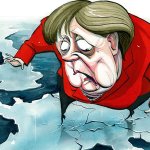
Merkel’s thin ice

From our UK edition

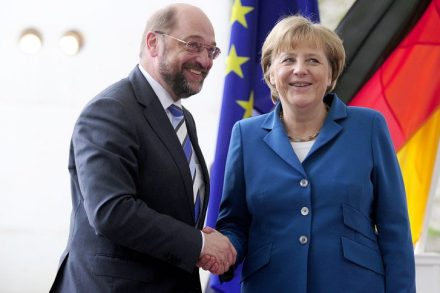
 Trier, Rhineland Was it really just a few months ago that Angela Merkel was being hailed as the leader of the western world? A few months since she was lauded as the only politician who could stand up to Trump? How quickly her power has ebbed away. Today she looks defeated, as if she knows her days are numbered. Whenever she goes, however she goes, this is surely the beginning of the end. One German commentator has likened it to Götterdämmerung — the twilight of the gods. Six months ago, here in the Rhineland, Merkel staged an amazing comeback, beating Martin Schulz’s Social Democrats in his own backyard. Going into that regional election, in North Rhine Westphalia, her Christian Democrats were trailing Schulz’s SPD by 13 per cent.

What fresh German elections would mean for Brexit and Europe

From our UK edition

Angela Merkel’s declaration that new elections would be better than a minority government suggests Germany will be heading back to the polls soon. Though, it should be noted that the decision on whether to call fresh election is technically the German president’s, not Merkel’s. The so-called Jamaica coalition, bringing together Merkel’s CDU, the CSU, the Greens and the economically liberal Free Democrats, can’t be made to work as the collapse of the talks last night showed. The other alternative that would produce a majority government, another grand coalition between the CDU and the SPD, remains highly unlikely. The current consensus in the SPD is that the party needs a spell in opposition to recover; in September, it garnered only 20.