Angela merkel

Trump’s war on Europe should not surprise anyone

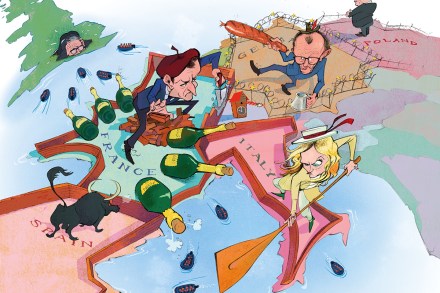
Has there been a more cataclysmic year for US-Europe relations than 2025? It began with J.D. Vance’s “sermon” to EU leaders at the Munich Security Conference last month, in which he berated Western Europe for its policies on immigration and free speech. This year has also seen the growing threat of NATO falling apart after 76 years of peace in Western Europe, with the White House seemingly tilting toward Russia and Trump demanding that alliance members such as Germany, France, and the U.K. dramatically increase their defense spending. This week, as the Trump administration imposes tariffs on Europe and Europe retaliates, there are even signs of a full-scale trade war.

Europe

The end of the Orbán era

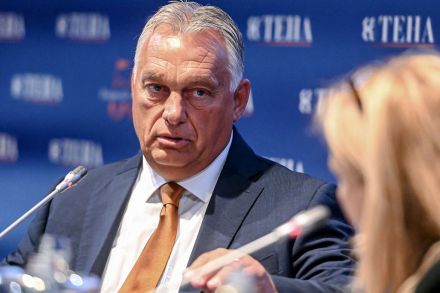
Over the headline “Peace Mission,” a recent cover from the conservative Hungarian periodical Mandiner shows an awkwardly photoshopped Viktor Orbán mediating between a bemused-looking Vladimir Putin and a grim Volodymyr Zelensky. Behind Orbán, a map of the world connects Kyiv, Moscow, Beijing, Washington and Budapest. One of these capitals, as they say, is not like the others. Even before Ukraine’s Kursk offensive, the chances of Orbán’s July trips to Kyiv and Moscow producing a peace settlement were slim. The Mandiner cover, however, is a revealing window into the mindset of Orbán’s conservative fans. The idea of a Hungarian prime minister mediating between squabbling great powers is both attractive and plausible to many of Orbán’s fervent supporters.

Orbán

Is Europe ready for Trump 2.0?

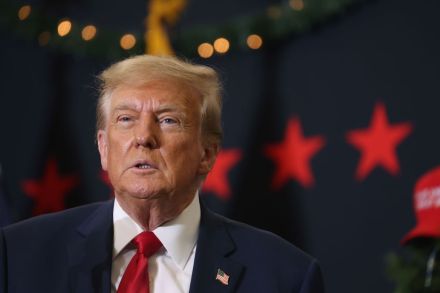
The 2024 presidential race between Joe Biden and Donald Trump is a dead heat. At most, a few percentage points separate them in the polls. Thousands of miles away, however, European leaders are operating as if Trump has already won, not wanting to be caught flat-footed yet again. When Trump defeated Hillary Clinton in 2016, European officials scrambled to establish contacts with the incoming administration. This time, the same wonks are proactively reaching out to Trump-friendly lawmakers and think-tankers, not only to understand what Trump’s foreign policy would look like in a second term but to press their own priorities. The Europeans, of course, are right to be worried.

Trump

Germany’s folly: Berlin has miscalculated on Russia and China

The notion that closer trade connections with the West will necessarily set less enlightened nations on a course toward prosperity and liberty is nonsense, but convenient nonsense. Germans have a phrase for it — Wandel durch Handel, change through trade — often given as a justification for their business dealings with Russia and China. Unfortunately, the change they triggered was in Germany. In one case it has been for the worse; in the other it appears to be headed that way. To start with Russia, it’s true that Germany’s ultimately disastrous dependency on natural gas from the east has its origins in the Ostpolitik years: by 1989 the Soviets were supplying West Germany with around a third of its gas.

germany

Angela Merkel’s legacy crumbles

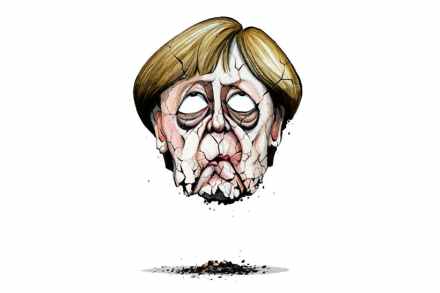
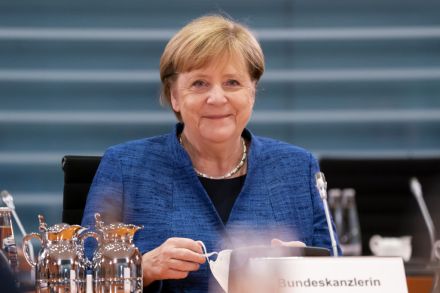
Angela Merkel is one of the most recognizable names in modern politics and probably the only German chancellor since post-war leader Konrad Adenauer that Americans will remember. Merkel was the leader of the center-right CDU party and head of the German government for a full 16 years, making her one of the longest-serving chancellors in German history as well as the first woman to hold the post. Now the full scale of her disastrous reign is becoming clear. Following the nuclear power plant incident at Fukushima in 2011, Merkel began Germany's "Energiewende" (energy shift), intending to phase out of all of Germany's nuclear plants in favor of renewables.

merkel retirement

Europeans are still free-riding off American security

Remember how Washington’s foreign policy establishment and their media echo chamber bashed the “isolationist” President Donald Trump for abusing, humiliating and making life miserable for our close European allies, in the process obliterating the “liberal international order”? Remember how some of the Europeans responded? Germany’s Angela Merkel declared “a new chapter” in US-European relations, saying that Europe “really must take our fate into our own hands.” France’s Emanuel Macron stated that Europeans need to stop “being naïve,” and assert their strategic independence from the US. What happened? Nothing. Here we are, three decades after the end of the Cold War, and it is déjà vu all over again between Washington and Moscow.

angela merkel

The dictator behind Europe’s next migrant crisis

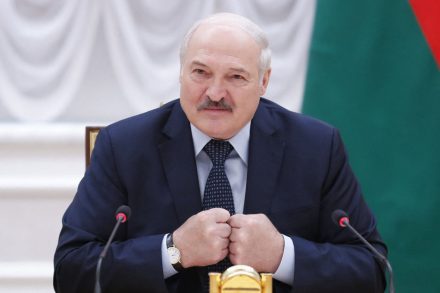
Belarus, the former Soviet satellite state, isn’t exactly a global heavyweight. Alexander Lukashenko, the country’s authoritarian president, is an international pariah who is better at concocting conspiracy theories than he is at running a country. At $60 billion, the Belarusian economy is about the size of Rhode Island’s. Other than petroleum, cheese and dump trucks, Belarus doesn’t offer much in the way of exports. A once promising information technology sector is now gutted, as Lukashenko’s crackdown on dissent forces highly educated talent to flee the country for the Baltics. Lukashenko, however, is smarter than he looks.

lukashenko

To waive or not to waive

Biden’s new-found support for a temporary waiver of COVID vaccine patents raises another fascinating set of questions. World Health Organization chief Tedros Adhanom Ghebreyesus makes the case for a waiver in terms of overwhelming priorities and the inequitable distribution of doses to date — 80 percent to the richest countries. Economic pragmatists add that the faster the whole world is vaccinated, the sooner global trade, including demand for exports from the rich West, will also recover.

waive

Will coronavirus kill the eurozone?

The familiar should be a consolation amid the terrible novelties of COVID-19, but the pandemic’s effects on the European Union threaten to turn familiar fiasco into dangerous novelty. As a weakened Angela Merkel faces Germany’s crisis of economic responsibility, and France floats the idea of issuing its own ‘corona bond’, the EU and its currency face what Emmanuel Macron would probably not want to call its Waterloo.Henry Kissinger’s remark — ‘Who do I call if I want to speak to Europe?’ — has never seemed more true. Britain is leaving.

eurozone

Frightened people love their leaders

‘The Trump presidency is over’, said Peter Wehner, in the Atlantic. The great wizards of liberal punditry stroked their beards and agreed. These are suddenly serious times and the president is a joke. He cannot survive, surely.‘The coronavirus is quite likely to be the Trump presidency’s inflection point,' wrote Wehner, 'when everything changed, when the bluster and ignorance and shallowness of America’s 45th president became undeniable, an empirical reality, as indisputable as the laws of science or a mathematical equation.’Run that paragraph back through the journalistic ego-filter and it translates as: ‘I told you so! Why didn’t everyone listen to me?’The trouble is, Peter, the public still won’t listen.

g7 leaders

Merkel’s immigrant boom wreaks havoc in Germany’s prisons

Angela Merkel’s decision to allow more than one million migrants into Germany has caused a crisis in Germany’s prison system. About half the prisoners in Berlin and Hamburg are now foreign-born, according to the latest figures in the German press, and in prisons across the country, German is becoming a foreign language. This surge in outsiders on the inside coincides neatly with the 2015 decision to allow in migrants from the Middle East, Africa and Asia. All regions of Germany report a ‘very strong increase’ in the number of foreign and stateless prisoners, according to data from the past three to five years. Prisons throughout Germany are overcrowded and struggling to handle the influx in population.

germany prisons

Hitler’s descendants think Trump is doing a bad job

Donald Trump has been dogged by Nazi associations, whether it’s his reluctance to condemn David Duke during the campaign — after temporising, he finally said ‘I disavow,’ though what, exactly, he was disavowing he left unclear — or the Charlottesville rally, which he said in August 2017 had ‘some very fine people on both sides.’ Now comes Germany’s popular tabloid Bild newspaper to sound out Hitler’s surviving great-nephews — Brian, Louis, and Alexander Stuart-Houston — about their views of Trump. They represent the last paternal bloodline of the family and live on Long Island. Their father William Patrick was born in 1911 in Liverpool, the descendant of Alois Hitler, a half-brother of the Führer.

adolf Hitler’s descendants