Andy haldane

I’ll dare to say what Andy Haldane doesn’t 

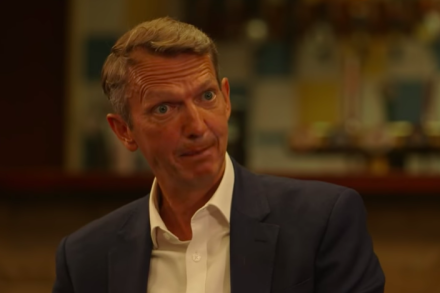
A sandwich with Andy Haldane, the former Bank of England economist, now president of British Chambers of Commerce, is the intellectual equivalent of a lunchtime workout with an ultra-fit personal trainer – or so I imagine, having never submitted to the latter experience. When his BCC role was announced in February, Haldane spoke of ‘a fighting chance’ that UK growth would beat expectations for the coming year. But that was before the closure of the Strait and the resurgence of global demons. The purpose of the sandwich was to find out if he had tempered his upbeat tone. The Iran conflict is ‘the last thing anyone needed, least of all the UK’, he began.

Could Haldane have helped save us from inflation?

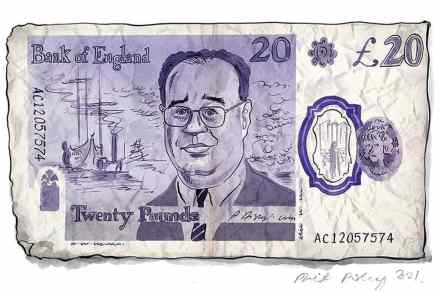
Would Andy Haldane, the economist who left the Bank of England to run the Royal Society of Arts, have made a better governor than Andrew Bailey? You might be thinking that Daffy Duck would have made a better fist than Bailey of combatting the cost of living crisis. But seriously, Haldane was an outsider (backed by this column) in the race won by Mark Carney in 2012, and Dominic Cummings reportedly wanted him to follow Carney in 2020. He’s a brilliant real-world observer and it’s poignant to know that, though he warned Monetary Policy Committee colleagues early last year to brace for inflation, it has ‘surpassed my worst expectations’.

What do Michael Gove and Andy Haldane really mean by ‘Levelling Up’?

Levelling up is central to the Government’s policy agenda. But it has become an umbrella term for everything and anything – which while part of its success electorally, raises challenges in terms of tangible policy. To address this, last week the Government announced that Michael Gove is to be appointed as Secretary of State for Levelling Up and that former Bank of England Chief Economist Andy Haldane will head up a task force for the next six months to look at this area. The good news is that much analysis has already been carried out. In a presentation at Policy Exchange in June, for example, Haldane outlined how to make levelling up a success.

The Bank of England’s new monetary hawk

Andy Haldane’s departure from the Bank of England opened up one of the most influential roles in guiding UK monetary policy — and that role has now been filled. Huw Pill has been announced as the BoE’s new chief economist, taking up the post from next Monday. Some of the snap reaction is focusing on Pill’s similarities to those who came before him. Despite resources being poured into diversity teams to recruit a mix of applicants, it was Pill who was selected, a former Goldman Sachs economist and most recently a senior lecturer at Harvard Business School. Pill won't take kindly to ideas about reneging the Bank of England's independence But his ideology may prove very different from the other eight members of the Bank’s Monetary Policy Committee.

Two reasons why Andy Haldane is right to worry about inflation

Companies are facing critical shortages of staff. Commodity prices keep spiking upwards. Central banks are printing money on an unprecedented scale, and governments are running deficits of a size that haven’t been seen in peacetime before. What could possibly go wrong?  Well, quite a bit, as it happens. And the departing chief economist of the Bank of England Andy Haldane is completely right to warn that the real risk we face over the next couple of years is not a prolonged slump, but a re-run of the spiralling prices of the 1970s.  To his credit, Haldane was seldom afraid of challenging orthodox views during his time at the Bank. Now that he is leaving, he has become increasingly off-message.

The Blackburn brothers who are bringing Asda home

What a triumph of entrepreneurial empire-building — if that’s still an acceptable phrase — is the £6.8 billion acquisition of the Asda supermarket chain by Blackburn-born self-made billionaires Mohsin and Zuber Issa. Sons of Gujarati immigrants, these brothers have advanced from a single petrol station in Bury to a chain of almost 6,000 in ten countries with convenience stores and coffee shops attached. Now their company EG Group has brought Asda back into British ownership after two decades as part of Walmart, the big-box monster of American shopping.