Andy burnham

Team Yvette: We are setting the agenda in the leadership contest

Now that the three main candidates in the Labour leadership contest have established themselves, they are vying to be the ones who set the agenda and the terms of debate. This suggests, they hope, that others, including rival candidates, respect them so much that they cannot help but following their lead. So Yvette Cooper’s campaign believe that Liz Kendall and Andy Burnham have been following in the Shadow Home Secretary’s wake, pointing to interventions she has made on business, tax, the benefit cap, the party’s response to the election and the possibility of a break clause for the party to dump or renew its support for a leader. All of these, they claim, have been followed by one or both of the other two candidates agreeing.

Team Burnham (finally) distance themselves from Dr Éoin Clarke

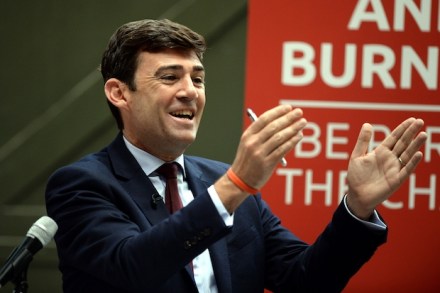
Oh dear. The love in between Dr Éoin Clarke and aspiring Labour leader Andy Burnham appears to be over. Mr S's colleague Sebastian Payne noted last week that Burnham has attracted 'an online army of fans' which includes Dr Eoin Clarke: 'Part of [Burnham's] nascent leadership campaign is an online army of fans who are promoting his cause and attacking his opponents. Twitter and Facebook are going to be key battlegrounds for each of the contenders — offering an easy way to spread a message without the filter of the media.' These e-cheerleaders have subsequently been christened 'Fandies'. Queen bee among the 'Fandies' remains Clarke - a man armed with nothing more than a PhD in Irish feminism and Microsoft Paint.

Labour leadership race touches a sore spot for Andy Burnham

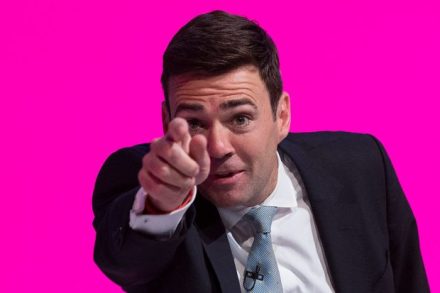
Andy Burnham may be the odds-on favourite for the Labour leadership but that doesn't mean it's all plain sailing for the politician. Mr S notes that Burnham has been sporting a bruised lip of late. When a hack spied him in the Strangers bar recently, they asked him whether the Labour leadership race had become physical with a punch-up. Happily, it appears that, despite Burnham having a barmy online army behind him, punches are yet to be thrown. Instead it's a cold sore which Burnham put down to 'stress'. Still Mr S can't help but wonder how he will cope if elected leader if he is this stressed already. Is Andy Burnham's upper lip tough enough? Hell no. Latest odds for next Labour leader — via Ladbrokes: Andy Burnham: 10/11. Liz Kendall: 13/8. Yvette Cooper: 9/2.

Yvette Cooper makes coded attack on Liz Kendall for ‘swallowing’ the Tory manifesto

Yvette Cooper may lack some of Andy Burnham and Liz Kendall's momentum but she remains a formidable opponent in the Labour leadership contest. On the Andrew Marr Show this morning, Cooper was quizzed on how enthusiastic she is for the job, given her late entry to the contest: ‘I want to make sure that Labour leads and wins again and I think I’m the right person to do that because I think I can be the strongest in terms of taking on David Cameron. I also think I will set out ideas for the future that don’t just involve swallowing the Tory manifesto and set out a Labour vision for the future.

Andy Burnham’s barmy online army

Andy Burnham's campaign has ensured he remains the current favourite to be the next Labour leader. Part of his nascent leadership campaign is an online army of fans who are promoting his cause and attacking his opponents. Twitter and Facebook are going to be key battlegrounds for each of the contenders — offering an easy way to spread a message without the filter of the media. Naturally, Burnham’s campaign has an official Twitter account: @Andy4Leader. As far as I can see, this is the only official account associated with Burnham’s campaign. The account has 1,421 and mostly retweets favourable news from others about Burnham. On May 13, it posted this video of Burnham announcing he was running: https://twitter.

The real Yvette Cooper is standing up

In many ways, Yvette Cooper has a perfect CV for Labour leader: a wealth of experience in government, not factional, respected by colleagues (except those who had a habit of moaning that she was, er, working on her leadership bid when in Ed Miliband’s shadow cabinet), well-known in the party membership, capable of delivering a jolly good speech that cheers up a grumpy conference and capable of using her long experience to trip up Theresa May when the Home Secretary is trying to get up to some funny business in the Commons. But the leadership candidate’s covering letter for her CV is a bit less exciting, because no-one really knows what she stands for.

Portrait of the week | 21 May 2015

Home The annual rate of inflation turned negative in April, for the first time since 1960, with deflation of 0.1 per cent as measured by the Consumer Prices Index, so that a basket of goods and services that cost £100 in April 2014 would have cost £99.90 in April 2015. But, measured by the Retail Prices Index, inflation continued at a rate of 0.9 per cent. Marks & Spencer reported its first rise in annual profits for four years. Police trying to find the gang that broke into safe-deposit boxes in Hatton Garden last month arrested nine men. A botanist claimed unconvincingly that Shakespeare was depicted in the frontispiece of Gerard’s Herball dated 1597. Greggs, the baker’s, stopped selling loaves in many of its shops.

Kendall is a hard act to follow for Cooper and Burnham

Liz Kendall is the great unknown Labour leadership candidate. She is the only one who hasn’t been in government or Shadow Cabinet, and as I blogged earlier, she needs to show that she has got qualities that make up for this lack of experience. She made a pretty good start on this at the press gallery lunch today, as the first candidate to speak to, and take questions from, journalists. Yvette Cooper and Andy Burnham will presumably agree to the same event at some stage - and they now have a hard act to follow. In her opening speech, Kendall painted a rather brutal picture of where her party had ended up and why it had lost. She said: ‘This defeat was epic. We lost by a magnitude few predicted or imagined. The election demands a new era for the Labour party.

Kendall, Cooper and Burnham all have perceived weaknesses to overcome

Now that Liz Kendall has enough MPs backing her to make it on to the ballot paper for the Labour Party leadership contest, the three main candidates are all starting to think about how to appeal to those party supporters who will vote for the leader. This involves contacting constituency Labour parties, trade union branches and so on in order to canvass. Each of the three main candidates also needs to overcome a key perceived weakness. For Andy Burnham, it is that he is the trade union candidate and just a populist figure of the Left. For Yvette Cooper, it is that her experience which her supporters see as a strength is also an unpalatable link to Labour's past, and also that she needs to set out in greater detail what she believes in.

Podcast: Gove’s battle for justice, the perils of a small majority and the Labour leadership contest

Repealing the Human Rights Act is one of the most difficult tasks the government faces. On this week’s View from 22 podcast, the Conservative MEP Daniel Hannan and barrister Greg Callus discuss how and why Michael Gove intends to break Britain’s link with the European Court of Human Rights. Is it a purely symbolic gesture to repeal the HRA or should ordinary people care about this? Is the legal community generally supportive or against the move? And how does Gove’s personality help this battle? James Forsyth and Isabel Hardman also discuss the perils of a small majority government and how the Tory rebels intend to make life difficult for David Cameron.

The Labour leadership checklist

There seems to be a checklist for Labour leadership hopefuls which all of them are very keen to tick off. When launching a campaign, a candidate must say that their party has just suffered a terrible defeat from which a number of profound lessons must be learned. These lessons all seem to be rather similar, and have led the candidates to say the following things: ‘We didn’t speak enough to aspirational voters’ Mary Creagh: ‘People felt that Labour didn't understand their aspiration to earn money and provide a better life for their family.’ Chuka Umunna (when he was standing): ‘We need to… focus on what is the new agenda that is going to get a Labour government elected in 2020.

What should Jeremy Hunt do next to the NHS?

The Tories barely talked about the NHS during the election campaign. It was an area of Labour strength, and one Ed Miliband and Andy Burnham were keen to talk about as much as possible. But now they’re back in with a majority, the Conservatives are keen to start talking about the health service again, and to start trying to erode that Labour poll lead on the issue. David Cameron and Jeremy Hunt yesterday announced their plans for a seven day NHS, but though announcements are always very handy for getting attention, the Tories need to strike a balance between lots of new initiatives and too much meddling that upsets people again. For however many years he has as Health Secretary, Hunt must work out how to fill his time, and how to improve the way voters view the Tories on the NHS.

Liz Kendall’s campaign still confident of getting 35 MPs

Despite her early entry, Liz Kendall’s leadership campaign is failing to keep up with rivals when it comes to noise and backers. Yvette Cooper and Andy Burnham have emerged as the early favourites, while some are wondering if Kendall can persuade the necessary 35 MPs to back her — particularly if Tristram Hunt runs and splits the moderate vote. But I understand her campaign remains confident they will make the cut. ‘The current direction of travel is that the final ballot will be Burnham, Kendall and Cooper,’ says a Labour source. ‘But, in the PLP nothing is set in stone — not even Ed stone’. The official nominating process does not begin until June 9, so there is plenty of time for people to change their minds.

Dan Jarvis backs Andy Burnham in Labour leadership contest

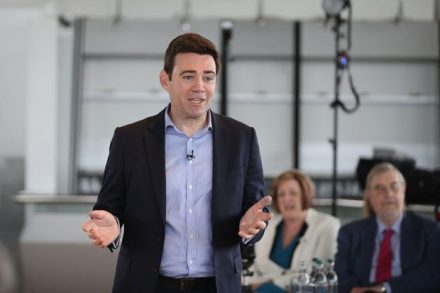
As far as endorsements go, Andy Burnham is winning the Labour leadership contest hands down. He has managed to recruit Dan Jarvis - someone who has gained huge respect and admiration despite the fact no-one knows very much about him - as his latest backer. Jarvis tells the Mirror that Burnham ‘has the strength, experience and character needed to bring our party together and restore Labour’s connection with the British people’. Now, firstly this is a bit of a clue as to where Jarvis’s own politics lie: he’s a little more left wing than someone people who are caught up in his compelling back story may have noted.

Ed Miliband’s fate shows that how you win a leadership contest matters almost as much as winning it in the first place

Any new party leader needs legitimacy, an acceptance that they won the contest fair and square. Ed Miliband didn’t have this because he lost in two of three sections of Labour’s electoral-college and that meant he couldn’t act decisively in his first 100 days, that crucial period in which the public tend to decide whether a party leader is much cop or not. The worry for Labour is that the next leader might not be seen by some in the party as legitimate either. There are two reasons for this. First of all there is already unease about the tactics that the frontrunners are using to try and keep challengers off the ballot paper, see this story from Patrick Wintour of the Guardian.

Andy Burnham isn’t just the unions’ candidate, he’s the Tory candidate too

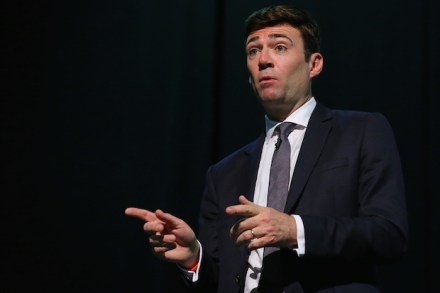
“I’m the change candidate,” said Andy Burnham, settling down to the consolidation phase of his leadership bid. Chuka Umunna is out, so he is now the bookies’ favourite. He faces a conundrum: the brains of Labour want to tack to the centre, the money (ie, the unions) want to keep it to the left. So how can he keep both happy? Andrew Marr this morning asked Burnham if he was happy to be the union candidate. “I’m the unifying candidate,” he said. He admitted that he has spoken to Unite’s Len McClusky – the union Godfather - but only as part of his attempt to “build support from all parts of the Labour Party.” And Charlie Falconer, Blair’s ex-flatmate, is backing him – so surely that’s enough?

The three groups of voters that Labour needs to win back

Labour is in a more difficult position now than it was after its defeat in 1992. In ’92, the electorate had sent Labour a clear message: move to the centre, don’t say you’ll put up taxes and get a better leader. But this time round, the message Labour has been sent is more complicated. There are three groups of voters that Labour failed with at this election, I argue in the magazine this week. Aspirational voters who went Tory, the left behind working class who went Ukip in England and SNP in Scotland and Nationalist-minded ones north of the border. What the Labour leadership candidates have to explain is how they would win these voters over.

Making Labour work

[audioplayer src="http://rss.acast.com/viewfrom22/thelastdaysofmiliband/media.mp3" title="Dan Hodges and Andrew Harrop discuss the final days of Miliband" startat=34] Listen [/audioplayer]The Labour party is in a worse position today than after its defeat in 1992. Then, the electorate sent Labour a clear and simple message: move to the centre, don’t say you’ll put taxes up and select a more prime ministerial leader. This time, the voters have sent the party a series of messages, several of which are contradictory. The reasons Labour failed to win Swindon South are very different from why it lost Morley and Outwood and the reasons for that defeat are different again in Scotland, where almost all seats fell to the nationalists.