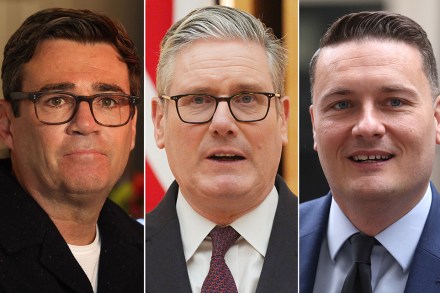
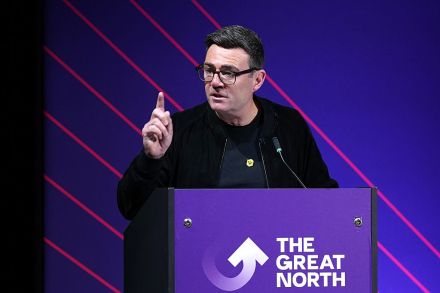
Andy burnham

How Burnham can avoid Starmer’s fate

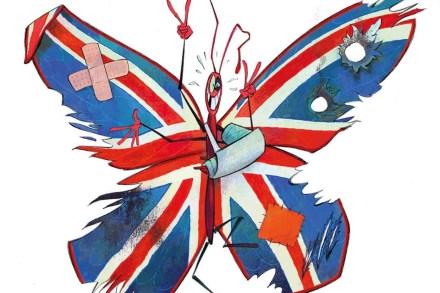
Welcome to the cabaret, Andy Burnham. Last year, the editor of this magazine wrote about ‘Weimar Britain’: the fear that political instability, economic turmoil and rising anti-Semitism was making our country as decadent and dangerous as inter-war Germany. As our sixth prime minister of the post-Brexit decade departs, and our seventh looms into view, we have developed a national addiction to perma-crisis, seemingly trapped in a game of ‘Topple the PM’. We are far from a January 1933 moment. But the joke isn’t funny any more. This turbulence is not inescapable, though. What is needed is a premier able to stay the course, to set out how they want to change Britain and to discover the drive and charisma to bring their party and the country with them.
Can I save Britain from war with Russia?

I t won’t be much of a consolation to Keir Starmer but I too was overwhelmed by the responsibilities of being prime minister. Fortunately for the country, I was only playing the role in a fictional coalition cabinet assembled by Sky TV to wargame the consequences of a Russian attack on the UK. My turn as make-believe premier began with unwarranted overconfidence, moved to fumbling crisis after crisis and ended with me almost alone in a bunker wondering how disaster had come so quickly. So very different from the real world. My cabinet colleagues – Nicola Sturgeon, Penny Mordaunt, Harriet Harman, Jim Murphy and Sayeeda Warsi – all gave a good account of themselves.

The death of two-party politics has been greatly exaggerated

Every twist in the winding road of our politics brings a latest thing to say. These wisdoms usually survive a season or two before succumbing to the new thing to say, which often asserts the opposite. This summer we have ‘Britain is moving into an era of multi-party politics’. Allow me, therefore, to leap ahead with my candidate for its successor: ‘Reports of the death of two-party politics are greatly exaggerated.’ I don’t say our current governing party and principal opposition must always be the two parties in question. Labour may be dying. The Tories may be showing signs of life. In both cases I fervently hope so. But whether or not these remain our two options in elections to come, the tendency will always be for the choice to boil down to two.

The truth about Keir Starmer’s legacy

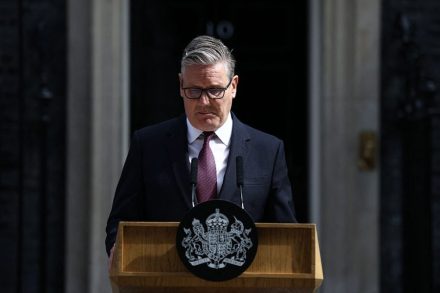
It was when Keir Starmer claimed never to have had a dream that I knew we were dealing with potentially one of the funniest prime ministers Britain had ever seen. Sure, some people would have been amused by the magnetism for calamity exhibited by Theresa May, the almost comedically unbelievable mendacity of Boris Johnson or the downright absurdism of Liz Truss, but a really funny prime minister is the one who demands to be taken seriously, and particularly one who is convinced that he has forced the British people to do so.

keir starmer

Was Brexit worth it – and can Burnham save Britain?

55 min listen

For this week’s Edition, William Moore is joined by the Spectator’s assistant editor Isabel Hardman and the editor of The New Statesman Tom McTague. Plus, in a special episode this week, the Spectator’s economics editor Michael Simmons joins for the first half of the episode, before political editor Tim Shipman jumps in later on. This week: was Brexit worth it? As we approach the tenth anniversary of the vote to leave the European Union, the Spectator’s editor – and former prominent Vote Leave campaigner – Michael Gove makes the case that not only was Britain right to leave, but it has benefitted from leaving. The past decade however has been marked by domestic political chaos, so to what extent was Brexit a symptom or a cause of Britain’s structural problems?

Was Brexit worth it – and can Burnham save Britain?

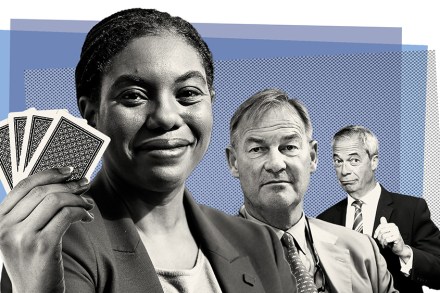
‘I identify with Daenerys Targaryen before she went mad’: an interview with Kemi Badenoch

There was a moment backstage, before I interviewed Kemi Badenoch for a Spectator event, when I felt like John Sergeant with Margaret Thatcher bearing down on him as he pronounced her leadership in difficulty. I suggested to Badenoch that she was a rare example of a politician I had changed my mind about. “You mean you were very negative before?” she said, fixing me with the full alpha female glare. I muttered something placatory, but the truth is that a year ago I thought she was rubbish – and that was the mainstream view in her own party. She was arrogant, flat-footed, absenting herself from a stage that was being dominated by Nigel Farage, resistant to advice, convinced she was great at PMQs when even Keir Starmer was wiping the floor with her.

kemi badenoch
War in Ukraine: 'we're only months away from the first political assassination by drone'

‘We’re only months away from the first political assassination by drone’

51 min listen

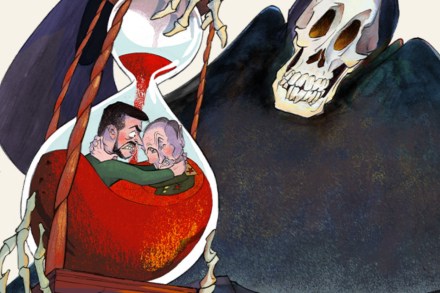
For this week’s Edition, William Moore is joined by the Spectator's commissioning editor Lara Brown, the columnist for the Wall Street Journal’s Free Expression newsletter Louise Perry and the Telegraph journalist and presenter of Ukraine: The Latest Francis Dearnley. This week: Russia’s full-scale invasion of Ukraine has now gone on longer than the first world war and it shares much of the horrors of that war, from attrition warfare to substantial losses on both sides. So, with over half a million Russians estimated to be killed, could Putin and Zelensky be brought to an exhausted peace?

Revealed: Andy Burnham’s reassuringly bland Cambridge years

There appears to be a missing chapter in the story of Andy Burnham. Depending on the whims of voters in Makerfield, Britain could soon have its first prime minister with a degree in English literature and its first Cambridge-educated premier since Stanley Baldwin. And while we have been treated to countless long reads on the so-called King of the North – his political philosophy, his years in Manchester and his apprenticeship in New Labour – his undergraduate years have barely been scrutinised. Burnham is tight-lipped about his Cambridge days (1988-1991). His comments over the years have been mostly limited to saying he had ‘imposter syndrome’ as he struggled to fit in at a university that was dominated, he felt, by private school students.

The battle for Makerfield

9 min listen

James Heale is in Makerfield ahead of one of the most consequential by-elections of all time, where Andy Burnham is hoping to return to Westminster and stop Reform’s Robert Kenyon – the local plumber backed by Nigel Farage. On the ground, James hears from voters split between Labour and Reform, with some hoping Burnham can hold the line and others asking what he has really done for the area. He also sits down with Nigel Farage to discuss Reform’s chances, the party’s NHS policy, Rupert Lowe’s Restore Britain challenge, and why Farage thinks Burnham would be even worse than Starmer in No. 10.

True neoliberalism has never been tried

Friedrich Hayek once argued that if you put the word ‘social’ in front of a noun, the meaning was negated. Social justice wasn’t about due process; social democracies didn’t safeguard freedom. For those on the left, who can never have enough social-isms, there is a more toxic prefix. If you want to damn something, stick a ‘neo’ in front. Nothing is quite as wicked as a neoconservative, but coming dangerously close is a neoliberal. Liberals were once generally supposed to be the squishiest of centrists. But listen to the men and women making the weather in British politics now, and you’d imagine that neoliberals were the horsemen of the apocalypse. Andy Burnham has blamed ‘40 years of neoliberalism’ for the problems faced by workers in Makerfield, and indeed beyond.

Is Andy Burnham up to the job of prime minister?

When the Labour party football team played a group of journalists at Loftus Road two years ago the hacks won 4-1. The politicians’ solitary goal came from a late penalty. When the referee pointed to the spot, the center-forward stepped up, elbowing well-known politicians such as Ed Balls, David Miliband and Sadiq Khan out of the way in his bid for glory. There was a notable absence that day. “Keir [Starmer] had been due to play, but he didn’t turn up,” a witness recalls. “If he had been there, he’d probably have grabbed the ball and there might have been a tussle.” Instead, Andy Burnham said: “This is mine,” and calmly slotted it into the corner. “It was a perfect penalty,” says the witness.

Andy Burnham

When does a drama become a psychodrama?

When Labour blocked Andy Burnham from standing as its candidate last time around, Douglas Alexander, the Scottish Secretary, rejoiced at avoiding "three months of psychodrama – who’s up, who’s down, who’s getting on with who…" But as Gareth Roberts remarked in The Spectator’s Coffee House, "I’m not quite sure what the difference is between psychodrama and good old-fashioned plain original-flavor drama." Indeed, Mr. Alexander’s characterization of psychodrama sounds like the essential lineaments of pure politics: "Who loses and who wins; who’s in, who’s out," as King Lear puts it. King Lear itself might be a classic psychodrama, if madness is the defining feature.

psychodrama

We need to demand more from our politicians

The first mention of Westminster came in a charter of 785, attributed to King Offa, granting land in ‘that terrible place’. The document was a forgery though, drawn up by 12th-century monks to make Westminster Abbey seem a site of holy terror. Even so, ‘that terrible place’ would strike most people today as a good description of SW1. Parliament has failed to cover itself in glory in recent years: the financial crisis, the expenses scandal, the Brexit wars, the prime ministerial merry-go-round, the unfair if unshakeable perception that our politicians are fiddling – with their finances, and possibly their staffers – while Britain suffers. No wonder, then, that politicians of all stripes have tried to boost their popularity by railing against Westminster.

Can Andy Burnham really do it?

30 min listen

Andy Burnham is the man on everyone’s lips in Westminster. As he campaigns to return to parliament in the Makerfield by-election, Tim and James bring you the definitive guide to Burnham – and what could happen next. They’re joined by Joshi Herrmann, founder and editor of Mill Media, whose profile of Burnham had Westminster buzzing over the weekend. He shares his view of the Greater Manchester mayor’s ‘unusual gifts and glaring weaknesses’, whether ‘Burnhamism’ really exists, and if Burnham’s emotional style of politics could survive the brutality of No. 10.

Pity Andy Burnham

There is something infinitely melancholy in hearing what political ambition does to perfectly nice people. I awoke on Monday to hear Danny Kruger (an MP, formerly Conservative, now defected to Reform) defending his party’s candidate in the Makerfield by-election, one of whose past social media posts was simply too disgusting for me to repeat here. True, Mr Kruger was not defending the post itself, but the candidate’s right to a ‘private’ (protested Kruger) history of such social media comments. Well, maybe. But I seem to remember Kruger’s past speeches have been especially admired for their high moral tone – he is a strong Christian – and so his being forced to defend a candidate’s right to a history of filthy misogyny in a public forum will have hurt him.

A lot can happen in Makerfield this weekend

It’s been another bizarre week in Westminster, with Sir Keir Starmer going about business as if everything is completely normal while a shadow leadership race to replace him ramps up in the background. But the absurdity of left-wing turmoil hit its peak yesterday when Andy Burnham officially launched his campaign to win the Makerfield by-election and take over as PM. In the car park of a sports and social club in Ashton-in-Makerfield, the Greater Manchester mayor was flanked by a cadre of MPs from Labour’s more left-leaning flank, including the Corbynista Rebecca Long-Bailey, Barry Gardiner and Charlotte Nichols. Liverpool City Region mayor Steve Rotheram was there. And so, too, was Jonathan Reynolds, the chief whip and man in charge of upholding loyalty to the Prime Minister.

Why Labour’s fate will be decided in the Strait of Hormuz

36 min listen

For this week’s Edition, Lara Prendergast is joined by The Spectator's John Power, feminist campaigner Julie Bindel and former adviser to Boris Johnson – and co-host of the In The Room podcast, Cleo Watson. They explore the idea that the Strait of Hormuz, not Makerfield, will determine the fate of the current Labour government. Starmer may be facing a challenge to his authority from mayoral shapeshifter Andy Burnham, but neither the PM or the wannabe MP will be rewarded if grocery and energy prices continue to soar. How much can be done to insulate Britain from future pain? And do they trust Labour to do so? Also this week: is Wes Streeting a better option than Burnham?

‘Being a Labour mayor in Manchester is playing politics on easy mode’: Is Andy Burnham up to the job of PM?

When the Labour party football team played a group of journalists at Loftus Road two years ago the hacks won 4-1. The politicians’ solitary goal came from a late penalty. When the referee pointed to the spot, the centre-forward stepped up, elbowing well-known names like Ed Balls, David Miliband and Sadiq Khan out of the way in his rush to grab the glory. There was a notable absentee that day. ‘Keir [Starmer] had been due to play, but he didn’t turn up,’ a witness recalls. ‘If he had been there, he’d probably have grabbed the ball and there might have been a tussle.’ Instead, Andy Burnham said: ‘This is mine,’ and calmly slotted it into the corner. ‘It was a perfect penalty.

Labour must be honest with voters about the coming crisis

So far, Labour has staged a contested leadership election in government only once – 50 years ago, in 1976. The New Economics Foundation once declared 1976 to be post-war Britain’s happiest year, judging by income equality and public spending. Cosseted by memories of a hot summer of space hoppers and Swap Shop, the left-wing thinktank brushed over strikes, stagflation and Britain going – to use the obligatory phrase – cap in hand to the International Monetary Fund (IMF). Compared with Labour’s current phoney war, that election was enviably swift. Harold Wilson resigned on 16 March; three rounds of voting by Labour MPs later, and James Callaghan entered Downing Street on 5 April.

Will the bond markets undo Burnham?

13 min listen

Andy Burnham’s campaign for Makerfield is already gathering pace, complete with Oasis soundtrack to a new campaign video. But as Labour’s would-be challenger tries to pitch himself as the man to replace Keir Starmer, questions remain over his economic credibility. Michael Simmons and Tim Shipman join Noa Hoffman to Burnham, the bond markets, and if Starmer can really dig in if Burnham wins the by-election.