Andy burnham

Britain’s sanctions against Israel will backfire

The historian Niall Ferguson, sometimes of this parish, said: “The law of unintended consequences is the only real law of history.” The new British Prime Minister Andy Burnham’s government is getting a lesson in that with its new sanctions on goods from Israeli settlements. The sanctions are meant to help the cause of a Palestinian state but may have the opposite effect. As an added bonus, they could hit British exports to the US. Ben-Gvir demanded international sanctions against Britain as long as we remain in possession of territory ‘violently stolen from the Argentine people’ The “comprehensive reset” of British policy towards Israel comes in the middle of a rancorous Israeli general election campaign.

Britain Israel

Why Britain’s West Bank sanctions are savvy politics

British PM Andy Burnham’s move to impose sanctions on West Bank settlements is politically savvy – but not because it will achieve his purported aim of advancing a two-state solution. For one thing, the impact in Israel will be minimal. Ed Miliband was clear that the new sanctions regime will target those “providing services such as construction or financing for Israeli settlements,” while trade within the Green Line will continue. Yet the principal providers of such services to the settlements are Israeli banks, major companies and the Israeli government itself. Short of Miliband sanctioning them, the policy is unlikely to achieve much. The economies of the West Bank and Green Line Israel are completely intertwined.

west bank sanctions

Why is there so little protest about Russia’s brutality toward Ukraine?

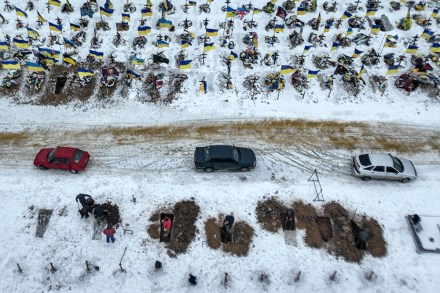
Reporting of the war in Ukraine suffers from the tendency of journalism to exaggerate a trend. The most recent one has been Ukraine’s success in drone attacks on key energy and strategic sites deep inside Russia. These are indeed innovative and prodigious. The Russian summer offensive has also failed to break through. This leaves too little room, however, to cover fully the dramatically worsening plight of Ukrainian civilians. Olga Rudenko, editor-in-chief of the Kyiv Independent, said this week: “Even if you think you’re used to everything, you are not.” Russia has switched tactics from big, one-off aerial bombardments to almost continuous drones. In Kyiv one day last week, the air-raid sirens signaled 13 different attacks.

ukraine

Mark Carney is the true King of the North

From our UK edition

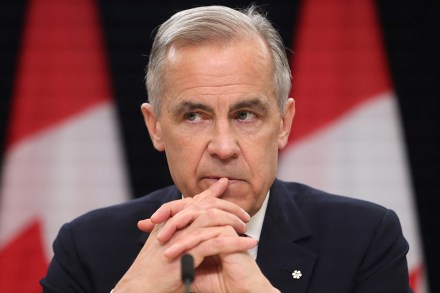
Mark Carney never much liked Brexit. As the Bank of England’s governor during the 2016 referendum, Carney was limited in how political he could be but he still managed to brand a Leave vote the ‘biggest domestic risk to financial stability’ Britain faced, one that would leave us relying on the ‘kindness of strangers’. Since returning to Canada as its Prime Minister, he has not become more complimentary. The referendum, he said in May, had been a ‘dangerous bluff’; the UK was still trying to undo what people didn’t think they were voting for, but which they ended up having. Yet for someone so antipathetic, Carney is performing a remarkable Brexiteer tribute act.

Augustus’s plans for poverty

From our UK edition

A Mr A.M. Burnham has introduced a clear blueprint and legislative goals intended to lift hundreds of thousands of children out of hardship. One can hardly wait – but for the record, in ad 101 the emperor Trajan reintroduced a system invented by Augustus, of alimenta (‘maintenance, means of livelihood’) for poor children. Perhaps this could hold the fort while Burnham’s legislation for the blueprint, or vice versa, is clarified. Alimenta worked as follows. The imperial treasury offered loans to farmers against the security of a proportion of their land. These loans were not repayable, but interest on them was charged, though at a lower than usual rate. That interest was diverted into the local community to support poor children.

Time’s up for Burnham’s happy thoughts

From our UK edition

Kemi Badenoch, headlines my newspaper, ‘prepares Tories for early general election’ with her big reshuffle this week. I do not myself think an early election is the probability. It would be hugely risky. Labour would certainly lose scores of seats to Reform; and the requirement for Andy Burnham to produce an actual manifesto rather than – as at present – a distracting sprinkle of happy thoughts would make his government an easy target for a dangerous Conservative ‘They’re coming for your money’ campaign. Reform are still strong. Better, perhaps, to wait until (as I expect) Nigel Farage loses his mojo, the Greens fail to recover theirs, and Britain begins a slow return to something like the two-party system that first-past-the-post tends to encourage.

Now we need to see your economic plans, Prime Minister

From our UK edition

Keir Starmer once promised to ‘tread more lightly’ on voters’ lives. Yet he presided over a government that raised taxes faster than at any point since 1970. The bill has risen by £74.6 billion since the 2024 general election and there are still three years left of this parliament. Upon entering Downing Street, Andy Burnham promised to do politics differently and ‘bring back hope’. Yet no amount of social media spin can wish away the constraints of the market. The new prime minister has so far avoided Liz Truss’s fate of a bond market panic but parliament has been in recess and Burnham’s plans remain vague. When MPs return on 1 September, he will face scrutiny; the countdown to John Healey’s first Budget, on 28 October, has begun.

Is Andy Burnham ready for the world stage?

From our UK edition

If Andy Burnham has a golden rule, it seems to be this: do the opposite of Keir Starmer. The new Prime Minister has made a habit of differentiating himself from his predecessor. He has backed away from assisted dying and changes to the jury system, purged Starmer loyalists and swapped Eeyoreish despair for Tiggerish hope. Burnham’s visit to Ukraine this week offered yet another example. While it took Starmer four days to make his first overseas visit as prime minister, Burnham waited four weeks. Both men are keen supporters of Kyiv – yet the new Labour leader clearly wants to do foreign policy differently. ‘I’d rather do my trips with a real reason behind them,’ he said. ‘I’m here for a reason.

Portrait of the week: Burnham heads to Kyiv, energy bills rise and Meghan and Harry return

From our UK edition

Home Andy Burnham made his first foreign trip as Prime Minister, to Kyiv. ‘Despite Russia’s outrageous threats to my country,’ he said, ‘we will continue our support for Ukraine.’ He said he would supply information about British-made components of the Anglo-French Storm Shadow missiles to help Ukraine build its own version. Ukraine gave Britain a trove of secret battlefield intelligence. Andrey Kelin, the Russian ambassador to Britain, had, it was found, left in July and not been replaced. Iranian hackers shut down a British power station for four days. New 10p coins went into circulation, with the King’s head and a capercaillie as tails.

Middle England is finally waking up to the migrant crisis

I don’t know how familiar readers are with the term ‘accelerationism’. It is generally used to describe a tendency on the left, though is increasingly heard on the right too. The basic idea of accelerationism is that there are certain flaws in the societal structure which if pushed could bring things to their inevitable conclusion more quickly. It is why there are so many people on the left of politics who say that sustainable government spending should be discouraged. It is not just because they are economically illiterate. What they really hope is that a speeded-up financial disaster will expose the ‘underlying contradictions of capitalism’, and we’ll all realise that Karl Marx was right and promptly vote for Zack Polanski or similar at the next election.

Portrait of the week: barbecues are banned, Burnham is fooled and Farage wins Clacton

From our UK edition

Home The temperature reached 38.1ºC at Kew Gardens, Surrey. In the West Midlands a wildfire at Stourbridge burnt down 19 houses and damaged 18. The government sent out a loud siren sound and a message to all mobiles in England and Wales warning of a ‘very high risk of wildfires’. So-called Statutory Guidelines temporarily banned the sale of disposable barbecues. More than 8,000 South East Water customers in Kent found supplies disrupted. A burst water main cut off travel by road between Heathrow’s terminals. Two passengers were seriously injured when three carriages of a train from London Victoria to Eastbourne were derailed and fell onto their sides near Lewes. A train from Southend to London Liverpool Street was derailed at Wickford.

The budding bromance between Trump and Burnham

From our UK edition

As seen in the New Statesman I t’s a quarter to midnight on a hot July evening when the text from Andy Burnham comes through: ‘Guess who just messaged me. Susie Wiles. Trump’s chief of fookin’ staff. Get over here right now, Connyboy.’ I murmur an apology to Aditi, asleep beside me, and slip off. I had been advising Burnham on comms in an informal capacity since last year, and this looked to be my biggest assignment yet. In an age of fracturing global order, geopolitics can hinge on a single WhatsApp. I arrive at ‘Camp Burnham’, the suite in the Heathrow Radisson Blu where Andy is preparing for government.

Does Yogi Bear have a connection to yoga?

‘Well, we all have areas of ignorance,’ said my husband with a little too much relish, I thought. He was responding to my admission that I had reached a ripe old age without realising that the words yoga and yoke had the same origin. Yoke has been used in English for more than 1,000 years and yoga only since about 1785, but it had been in use in Sanskrit since the first millennium bc. The meaning of yoga was held to be either the yoking and reining in of the senses, or the yoking and joining oneself to the Prana (life force), the Om (absolute) and the Universe.

wood yoga

Pop and politics just don’t mix

From our UK edition

Like a lot of things, it started with Harold Wilson. This deceptively homely politician was the Queen’s first Labour leader and not reckoned to be quite her speed. Yet she developed a relationship with him which was notable for its warmth, to the extent that they had been known to natter while sharing the washing up after Balmoral barbecues.   But it was Wilson’s lust for taxing the highest earning – ‘squeeze them until the pips squeak’ gloated his chancellor Denis Healey – which brought him into conflict with The Beatles.

My top tips for Andy Burnham

I am cautiously optimistic about our new leader. For one thing, the fact that Mr Burnham went to Cambridge not Oxford, did not study PPE, is not a lawyer and did not grow up in Surrey makes him something of a diversity hire among our more recent UK prime ministers. This gives us hope. It is a near-universal law of problem-solving that you cannot think your way out of problems using the same mindset that created them in the first place. Occasional catastrophes cause much less annoyance than frequent peeves One tip. Government needs a marketing function. Rather than explaining itself to the public, it has endlessly sought to cadge publicity by ingratiating itself with the news media.

Portrait of the week: No. 10 North, Burnham meets Zelensky and European wildfires  

From our UK edition

Home Andy Burnham, the Prime Minister, summoned cabinet ministers for a day at No. 10 North – Heron House in central Manchester, shared with intelligence agencies – which he reached by private jet to Glasgow, where he had an appointment, and another private jet south to Manchester. President Volodymyr Zelensky of Ukraine became the first international visitor to Mr Burnham, who told him: ‘You can count on the UK for as long as it takes.’ He decided to speed up the independent review of adult social care being undertaken by Baroness Casey of Blackstock. He said that he wanted schools to offer technical courses to children aged 14 and over.

No election? Don’t bet on it

From our UK edition

When Dwight D. Eisenhower had to decide whether to launch the D-Day armada he kept a close eye on the weather. Pick the wrong moment and the entire cause of winning the war would have been set back and the lives of 135,000 soldiers imperilled. The supreme allied commander, head of a fractious coalition riven by egos and infighting (you see where I’m going here), had plenty of expert advice, as is made clear in David Haig’s play Pressure. The British meteorologist, James Stagg, warned that the original date for D-Day, 5 June 1944, would be storm-ridden, but saw a window of opportunity the next day. The American meteorologist Irving P. Krick was more gung-ho and urged Eisenhower not to postpone. Ultimately, the decision was Eisenhower’s alone.

I wish more people had imposter syndrome

From our UK edition

I have spent part of the past week thinking about imposter syndrome, and how we might be able to give it to more people. In an interview this week, Andy Burnham’s best friend Steve Rotheram, who happens to be the Mayor of Liverpool, said that our latest Prime Minister had struggled with imposter syndrome ‘for many years, like most people from working-class backgrounds’. All of which leaves me slightly baffled. Surely, whatever your origins, if you have made it to Cambridge University in your late teens, got a job in Westminster in your early twenties, become a Member of Parliament in your thirties, have become a mayor, are best friends with a mayor and are now Prime Minister, it might be time to stop with the feeling of ‘imposter syndrome’?

There’s a world beyond Manchester, Andy

From our UK edition

‘Things are just completely coming full circle here. For me to be here with you all in the heart of Manchester this Friday morning, at the end of a fairly big week, is just everything to me,’ said a Mr A.M. Burnham MA (Cantab.) after he had sent all his advisers up the hill to Manchester only to send them back down again. Seneca would have had something to say about that. Addressing his friend Lucilius, Seneca points out that it is no surprise that his travels have done nothing for his state of mind and goes on to quote Socrates: ‘Why do you wonder that globe-trotting does not help you, seeing that you always take yourself with you? You cannot shake off the reason that sent you on your travels.’ So what was that reason? Mr Burnham knows about Manchester already.