Ancient greece

The ancient Greeks are to blame for the Oscars

The Oscars mark the end of the awards season, with their annual rituals of self-applause to which actors are so addicted, as Oscar nominees are to the $350,000 gift bags. The ancient Greeks are to blame. Greek luvvies and athletes formed the world’s first trade unions to wring from their sponsors privileges and guarantees which make the Olympic Committee look like beginners.  The luvvies’ worldwide union, founded in the 3rd century bc, lasted 600 years. It came to be called the ‘Artists [some said ‘Toadies’] of Dionysus’. They negotiated freedom of travel and immunity from military service, taxation and arrest, and came from all over the Greek-speaking world to perform.

How Greece carried the arts to rustic Rome

‘Cultural cringe’, that lovely Aussie coinage, perfectly describes the Roman attitude towards Greece. The curators don’t say so, but it is the theme of this inspired exhibition. By the time the Romans finally took control of mainland Greece in 146 BC with the Battle of Corinth, they had long admired everything Greek. That date marks roughly the middle of the Hellenistic period, during which Greek culture and language dominated the Mediterranean and the Middle East. In comparison with Greeks, Romans were oafs – and knew it. In comparison with Greeks, Romans were oafs – and knew it After the battle, Corinth was flattened – quite an oafish thing to do

Only divine intervention can save Labour

A party that can foretell the future stands a very good chance of success. Given Labour’s record of U-turns, they cannot even foretell the present. A state’s success in the ancient world depended on its mastery of natural resources: the more land and people you controlled, the more powerful you were. So states were frequently at war and naturally sought the favour of the gods – by consulting oracles, entrails and flights of birds, or striking lucky by means of dreams, omens, sneezes, odd events and suchlike. However, there were no guarantees. ‘A prophecy is the guess of a sensible man’ (Euripides), ‘No good has ever come from prophecy’ (Aeschylus).

How the ancients anticipated the apocalypse

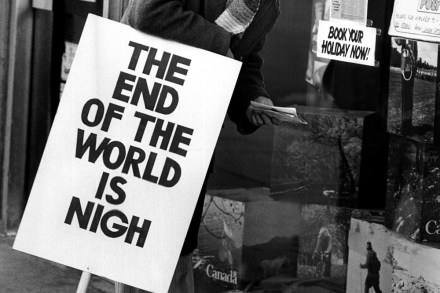
What with the threat of global warming and nuclear war, the new year might start with a big bang. The Greeks were preoccupied with this possibility as well and called it the apocalypse (apokalupsis), meaning ‘uncovering’ or ‘revelation’. It has a long history behind it. The Greek farmer-poet Hesiod (c. 700 BC) introduced the idea of a sequence of five ages – golden, silver, bronze, heroic, iron, each worse than the other – repeated five times and ending in total destruction. In his magnificent On the Nature of the Universe, the Roman poet Lucretius (d. c. 55 BC), who was an atomist, described how a world made of atoms would

How I bonded with Tom Stoppard over the classics

Many years ago, and well retired, I was working in my study when the phone rang and a voice said: ‘This is Tom Stoppard. David West put me on to you.’ West was professor of Latin at Newcastle University and Tom called him when he had queries about Latin. But he had a question about the ancient Greeks which David could not answer, so he suggested Tom try me. I have no memory of what the question was, but my answer must at least have satisfied him because he continued to throw the odd leg-break my way. To give some idea of his range of interests, on one occasion he

Keir Starmer and the ancient question of word vs deed

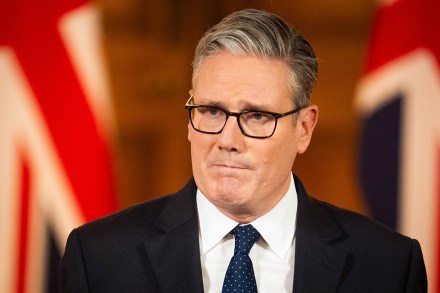
Sir Keir Starmer said that Britain had come to a fork in the road. As usual, he took it – the fork between his words and his actions. Athenians of the 5th C bc were fascinated by the implications of logos (‘speech, reason, argument’, cf. ‘logic’) and ergon (‘action/results’, cf. ‘erg’). While Homeric heroes (8th C bc) were ordered to excel as ‘speakers of words’ and ‘doers of deeds’ because that made them winners in both the political and military arenas, the statesman Pericles emphasised the high importance of the interaction between word and deed: ‘We do not think logos is an obstacle to action; no, the issue is the

Angela Rayner and the ancient question of ‘good judgment’

Angela Rayner has returned to the back benches because, as housing secretary, she failed to follow the rules relating to stamp duty on a flat she had bought. Athenians were extremely proud of their citizen-led Assembly and did not take kindly to sub-standard officials. Plato constructed a dialogue (c. 430 bc) between Socrates and the controversial sophist Protagoras, who claimed that anyone taught by him would be a success in public and private life. Socrates challenged this claim. He pointed out that, when the democratic assembly of male citizens met to discuss technical matters (e.g. ship-building), they listened to those who actually had experience of building ships and shouted down

Andrew Bayliss: Sparta – The Rise and Fall of An Ancient Superpower

43 min listen

Sam Leith’s guest in this week’s Book Club podcast is Andrew Bayliss, author of Sparta: The Rise and Fall of an Ancient Superpower. Andrew tells Sam what we know — and don’t know – about these much-mythologised figures from the Ancient world and tells the story of how a tiny city-state punched above its weight, until it didn’t. This is Sparta. Produced by Patrick Gibbons.

The ancient Greek take on human rights

While Greek and Roman thinkers were influential in developing ideas such as citizenship, justice and equality, the notion of universal ‘human rights’ (1948), especially those involving one’s ‘identity’, would have struck them as absurd. ‘Identity’ derives from the Latin idem, ‘the same, unchanged’, via the French identité (14th century). The term has been colonised by many different groups who feel that their specific identity – e.g. colour, sexual preferences, personal beliefs – bestows ‘rights’ upon them to behave or be treated in specific ways, whatever anyone else thinks about it, let alone the law of the land. But as the great Greek historian Herodotus pointed out after spending a lifetime

The enigma of C.P. Cavafy

C.P. Cavafy, who had a very high opinion of his own work, would no doubt be gratified to learn that he is now one of the most admired poets of the 20th century. This is all the more remarkable because during his lifetime (1863-1933) he did not allow a single volume of his poetry to be published, preferring to circulate privately printed sheets and pamphlets among his admirers. He was also disinclined to co-operate with those who wanted to translate the poems from their original Greek into other languages; but in English alone there have now been more than 30 different volumes of his complete or selected poems. Even so,

How the Spartans got fighting fit

Donald Trump has brought back the Presidential Fitness Test for American children, once used in state schools to gauge young people’s health and athleticism with one-mile runs, sit-ups and stretching exercises. He could usefully add elements of the early training invented by the Spartan lawgiver Lycurgus to create disciplined, physically and mentally resilient soldiers and citizens. Every baby was examined for fitness. They were trained not to fuss about food, or be frightened of the dark when left alone, or to get angry or cry. At seven, they joined bands in which they grew up together while their elders registered their progress in obedience and courage. They were also taught

Who could persuade you to fight for Britain today?

This week we celebrated VE Day. When Pericles remembered the dead from the war against Sparta in his famous Funeral Speech of 431 bc, he was not celebrating victory – the war would end in 404 bc with Athens’s surrender – but doing something quite new: he was reflecting on what Athens stood for and why it was worth dying for. Pericles began by ticking off a number of important features of dêmokratia, ‘people-power’: the system ran in the interests of the many, not the few; men of distinction were given scope to win promotion on the grounds of merit (‘people-power’ was always thought to deny them that opportunity); but

A fabulously entertaining new podcast about ancient Greece

How did a myth about the consequences of poor judgment become a parable for aspiration? The question is posed by the Greek writer-actor Alex Andreou in his fabulously entertaining new podcast. His topic is the ancient myth of Midas, king of Phrygia, who was granted his wish to have everything he touched turn to gold. Midas’s new world was brilliant for all of five minutes. What is a man to do with piles of metal when every person he comes into contact with is reduced to the same? The Midas myth has been mangled many times; Andreou recalls that Donald Trump co-authored a book in 2011 entitled Midas Touch in

Dry retelling of the Odyssey – but Fiennes is ripped: The Return reviewed

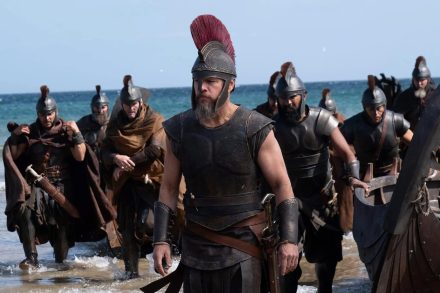
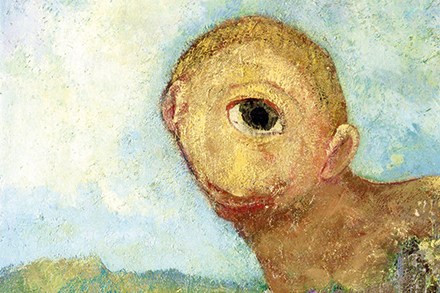
Uberto Pasolini’s The Return stars Ralph Fiennes and Juliette Binoche in a retelling of the last section of Homer’s Odyssey. He is Odysseus and she is Penelope in a stripped-back tale that presents the pair as psychologically plausible human beings rather than characters from Greek myth. Fiennes and Binoche are, of course, spellbinding. I could look at their faces all day. But the narrative is so parched and meditative it’s ultimately enervating and seems as depressed as the hero himself. I ended up longing for a Cyclops or at least a six-headed monster. Written by John Collee, Edward Bond and also Pasolini, the film throws no Gods or monsters in

How the ancient Greeks tackled treaties

Israel and Hamas signed a ceasefire agreement. Though the ancients would have employed oaths, the practical ancient Greeks often ensured there was a flexibility about them: the real world might intervene. For example, treaties between city-states were agreed between opposing generals. Hostages were exchanged, oaths sworn and the terms of the treaty widely inscribed on stone and bronze pillars, but it was citizens who oversaw the treaty’s maintenance. In a Greek democracy, however, there was no saying how, under the influence of different leaders, policy might change and annul a treaty at a stroke. Then again, though treaties could be sworn to last forever, ‘circumstances’ were very unlikely to remain

Boris Johnson is no Pericles

Boris Johnson’s Unleashed imagines him, like Cincinnatus, leaving his plough, saving Rome, and returning to it. But given that Boris is among the international elite, perhaps Alcibiades (c. 451-404 bc) would fit him better. Athenian elites had long had connections with the other power-brokers of the classical Greek world, Sparta and Persia. Born into such a family, the young Alcibiades, at the death of his father in 447 bc, was placed in the care of the great Athenian statesman Pericles, who chose Socrates as his mentor (we are told he tried to seduce Socrates but failed). A charismatic and handsome young man, he led a life of ‘lawless self-indulgence’ but,

Will Rachel Reeves’s Iron Age morph into a Golden Age?

Rachel Reeves seems to be promising us an initial Iron Age of misery which will mutate into a glorious Golden Age. How very classical of her. It is true that some ancient Greeks saw it the other way round. They argued that it was early civilisation that was the Golden Age, inhabited by men who lived ageless and free from hardship, while Nature poured forth its fruits, harvested by men at leisure (comic poets greatly enjoyed imagining a world in which it rained wine and pease porridge, hot sausage slices rolled down rivers and inanimate objects jumped to obey orders: ‘Table, come here! Cup, go wash yourself! Fish, turn over

The first Olympian: what was there to celebrate about Heracles?

However great the achievements of athletes at the Olympic Games – and even more so the Paralympics – there will always be those who have their doubts about their real value. Some ancient Greeks certainly felt like that about their Olympics. Complaints were made that an athlete’s physical fitness did nothing for the public health. No boxer would order the city better or stock her granaries, and surely it was valour in war that counted. A satirist pointed out that naked wrestlers covered in olive oil would not be much use in the front line of battle. Others expressed concern about the character of the Games’ founder, Heracles, the greatest

How Ancient Greece handled riots

Riots are difficult enough for us to deal with, let alone for the ancients, who had neither police nor prisons; and only late on housed troops in cities. Since Athenian citizens – the poor – made all political decisions, and the state and the rich funded them, there was little for them to riot about. The two riots organised by oligarchs to destroy democracy failed. But in republican Rome, political tensions between the rich and the poor could produce serious rioting, often designed to disrupt the voting. Tiberius Gracchus’ Bill (132 bc) forbade anyone from owning more than 120 hectares of public land (50 soccer pitches), the excess being distributed

The Greek guide to swearing an oath

A lawyer who wished to serve on a jury but was no Christian was given permission to swear his oath in the name of a local river. He saw it as ‘his god’, as people did in the past, when the association between nature and divinity was widely taken for granted. Consider, for example, the ancient Greek understanding of the natural world. The farmer poet Hesiod (c. 700 bc), often drawing on Hittite and Babylonian myths, provided the West with its first account of how the world was made. First there was khaos, he said (that meant, ‘emptiness, void’, cf. ‘chasm’). Then there appeared Earth, Underworld and Eros (without which