American literature

The great, underestimated Richard Yates

When the novelist Richard Yates, who was born in February 1926, was interviewed by the magazine Ploughshares in 1972, the conversation turned to the neglected writers of his generation. Yates, a man of remarkable acuity and taste, was typically incisive about the likes of Evan S. Connell, Brian Moore and Edward Lewis Wallant – and, just to show that he was no misogynist, he saluted Gina Berriault, saying that she was “an absolutely first-class talent who has somehow been left almost entirely out of the mainstream. She hasn’t quit writing yet, either, and I hope she never will.” If these words struck something of a cautionary note, then Yates’s conclusion was even more concerning.

A lack of national identity has killed off the Great American Novel

Is there hope for literature in America this century? The forecast looks grim. One walk through the literary fiction section at a bookstore is a testament to the art form’s cultural bankruptcy. Just about every other book on the new release table is a treatise on your racism masquerading as a tale of collective uplift. Fine, if you want to expiate your sins of privilege – but all in all, a snoozefest. Novels held a central place in America as a vital cultural force; novelists were worshipped as electrifying sages Same goes for most of the books on the New York Times list of the 100 best books of the century so far. The subjects of race, gender and oppression generally dominate.

The passage of Ragtime

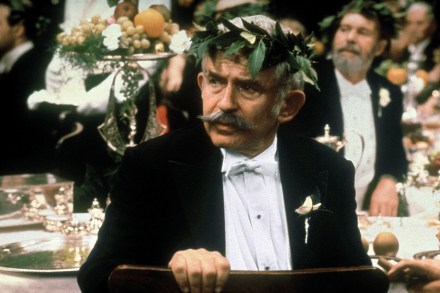
Back in the winter of 1980, a young Martin Amis found himself on the London set of Miloš Forman’s movie Ragtime. The plan was to inspect what Norman Mailer, whom Amis was profiling for the Observer newspaper, was doing with the part of Stanford White, the real-life architect murdered by the deranged husband of New York chorus girl Evelyn Nesbit. Impressed by the lavish million-dollar backdrop, Amis looked on as the nattily dressed and neatly bewigged author of The Executioner’s Song, accompanied by his sixth wife, Norris, made his way into a reconstruction of Madison Square Garden.

Ragtime

The final act of Thomas Pynchon

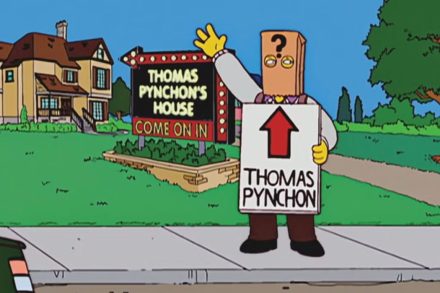
Whisper it, very quietly, but the now 87-year-old author Thomas Pynchon is having something of a moment in 2025. Not only has his 1990 novel Vineland supposedly served as the loose inspiration for the eagerly awaited new Paul Thomas Anderson-Leonardo DiCaprio collaboration One Battle After Another, but the near-impossible has been announced: Pynchon will publish a new novel, entitled Shadow Ticket, around the time of the movie’s release. It will be his first book in more than a decade, his ninth novel and his third consecutive noir-influenced story.

thomas pynchon

The talented Evan S. Connell

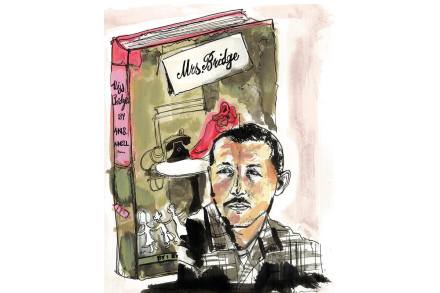
When the journalist Steve Paul began his biography of the writer Evan S. Connell, a young librarian was helping him access research material. She happened across a photograph, and remarked, “What a suave-looking dude.” Connell had movie-star good looks. Of his eight novels, two are now packaged as classics of American literature. This on top of a biography of Goya; a 2009 Man Booker International nomination for lifetime achievement; and a bestselling history of a battle in the Great Sioux War of 1876. Acolytes recommend his greatest book, Mrs. Bridge, with the confident smile that looks forward to welcoming another member to the exclusive band of Connellites.

Connell

Blake Butler: ‘I don’t want this story to end as “Molly killed herself”’

A recent controversy rocked the literary world when coverage of author Blake Butler’s memoir, Molly, about his late wife, notable poet Molly Brodak, hit tabloids and spun for the worst. The coverage sparked debate over the ethics of writing about relationships, as online attackers made accusations that the widower weaponized Brodak’s private life and exploited her death for fame or revenge.   Claims gained ground that it was a “shameless cash grab,” “literary revenge porn,” or that it shouldn’t have been published due to privacy concerns, since the memoir reveals Butler’s discovery of his late wife’s affairs after her passing.

blake butler

Oppenheimer’s passenger

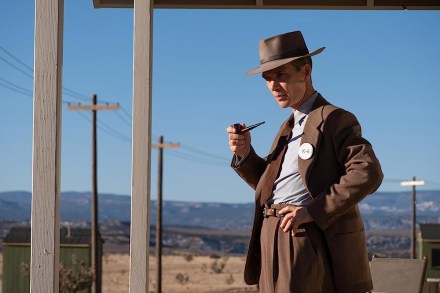
Ripples appear in courtyard puddle outside the Cavendish Laboratory at the University of Cambridge; a tornadic funnel erupts from the black atmosphere toward Earth. Between these images — the small one of intimate life and the colossal one of planetary death — a haunted young man looks on in curiosity and horror.  The man is Robert Oppenheimer, played to perfection by Cillian Murphy, a theoretical physicist “troubled by visions of a hidden universe.” This visionary, capable of conjuring apocalypse from the particles stowed inside atoms, spends the first fifteen minutes of the film looking bewildered — a gaunt, gray sliver of a man wandering through his life like a ghost.

oppenheimer

What makes a novel funny?

What makes a novel funny? As well as being too enormous a question to tackle properly here, such an enterprise would, I suspect, require so clinical an approach to reading comic fiction as to remove entirely any possible joy or amusement. As the old saying goes, deconstructing a joke is like dissecting a frog: nobody laughs, and the frog dies. However, the question came to me again recently, as I reread John Kennedy Toole’s A Confederacy of Dunces. I howled with laughter from the initial farcical scene outside a department store, through Ignatius J.

funny novel

Literary journal in flames after interview with Spectator writer

All is not well at the literary journal Hobart Pulp, Cockburn has learned — and it's all down to one of our mischievous Spectator contributors. His words have caused violence, apparently, as nearly the entire staff of the journal have resigned in protest. Last month, Alex Perez sat down with Hobart Pulp's top editor, Elizabeth Ellen, to discuss the state of the literary and publishing scene — ranging from MFAs to woke writers to how he got his start in writing. Perez, a Latino writer who graduated from the prestigious Iowa Writers Workshop, had some choice words about the cowardice of writers and editors today. The interview, originally posted to the Hobart Pulp website last month, didn't make much of a stir until this week, when its editors and contributors began to take notice.

university alex perez hobart pulp

Has the American novel abandoned God?

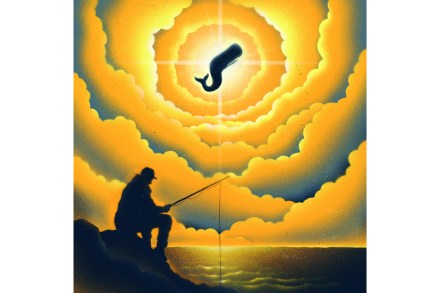
I have always thought “Call me Ishmael” to be a rather camp introduction to a novel. Given the line’s conspiratorial intimacy, I have long imagined it whispered by a drag queen in a dive bar at 3 a.m. This, however, is the fault of my own unseriousness. The resonance of the name Ishmael — Abraham’s illegitimate son by Hagar who is destined to wander the desert — remains the opening example of one of the clearest, cleverest and most consistent of themes in Herman Melville’s magnum opus Moby-Dick, namely, the quest for God. Religion runs through Moby-Dick. We might almost say that the Bible haunts it. There are the names, mostly of Biblical characters, and even the direct invocation of prophets: Ezekiel, Elijah and, of course, the ur-whale wrestler, Jonah.

God

The Optimist’s Daughter at fifty

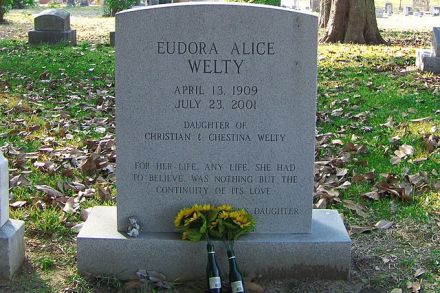
By her own account, Eudora Welty had an idyllic childhood. Born in 1909 on Congress Street, two blocks from the state capitol in Jackson, Mississippi, Welty spent her early years playing with friends from school, reading voraciously and riding her bicycle to the local store to pick up some flour or eggs for her mother and, of course, a treat for herself. Her father, who was devoted to his wife and children, advanced from a cashier to vice president at Lamar Life Insurance before his daughter had finished high school. He had, as Welty put it, a love for “all instruments that would instruct and fascinate,” including a toy train set, a telescope and a folding Kodak, with which he would teach the young Eudora the pleasures of photography.

eudora welty

Falling in line with Sinclair Lewis

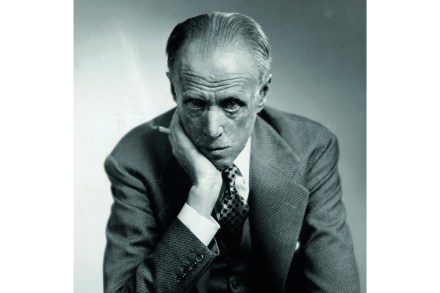
In 1920 Warren G. Harding was elected president of the United States, after campaigning on a promise to the American electorate to return the country to what he called “normalcy.” Exactly one hundred years later, Joe Biden assumed the same office having offered the same thing, in different language. In July 1922 Sinclair Lewis published Babbitt, a bestselling novel about a normal middle-class American businessman living in a normal small-sized Midwestern city: the quintessential personification of “normalcy.” Around the middle of the same decade, H.L. Mencken, a good (if necessarily patient) friend of Lewis’s, predicted that America would “blow up” in a hundred years. 2022 is Babbitt’s centennial year.

babbitt

Fifty years of Fear and Loathing

God bless Hunter S. Thompson’s editors. Imagine paying someone a handsome amount of money to cover an off-road race and getting thousands of words of rambling prose that have a great deal more to do with drugs than with cars. It was a good time to be a writer, I suppose. The manuscript that became Fear and Loathing in Las Vegas appeared in two installments in Rolling Stone in November 1971. (Sports Illustrated passed.) Somehow, this rabid work of “gonzo journalism” spawned a book, a film, a graphic novel and a host of imitators, catapulting Thompson to the higher realms of fame. He never recovered from his own success. Fear and Loathing is easily summarized. Raoul Duke (Thompson) and his friend Dr.

thompson

P.J. O’Rourke mastered the art of teasing

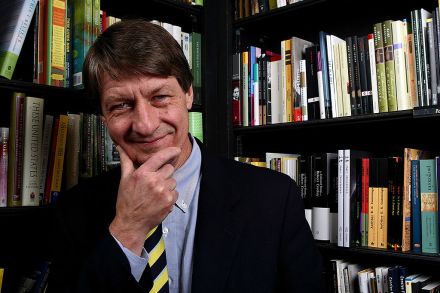
I first encountered P.J. O’Rourke’s writings as a teenager in a copy of Modern Manners my father encouraged me to buy while we were browsing the secondhand offerings of an offbeat little bookstore (looking back, I can’t imagine who in their right mind would part with such a book). “You should get that, he’s funny,” dad said. That evening, I read some G-rated excerpts to my traditionalist parents, who laughed out loud. For me, it was love at first quip. I finished the rest of Modern Manners in one sitting, completely taken by a style of writing I found blended the best qualities of a person. It was smart, perceptive, clever, sensitive and, of course, good-humored. Reading P.J. O’Rourke inspired me to want to write in a way that informs and entertains.

p.j. o’rourke

Books you shouldn’t read in public

Headed to the hospital recently for a rather unpleasant surgical procedure, I figured I’d bring a book to pass the down time. I was about to grab Ron Hansen’s Mariette in Ecstasy, the novel I’d been reading about a nearly 20th-century Catholic postulant who may or may not have seen a vision of Christ and suffered stigmata on her hands and feet. But the thought of nurses and order-lies glancing at the title, thinking ‘pervert’ and perhaps surmising that my demise really wouldn’t be all that great a loss for human-kind dissuaded me. Instead I brought along the Buffalo News sports section. I told a Kentucky woman about this titular discretion.

books
twain

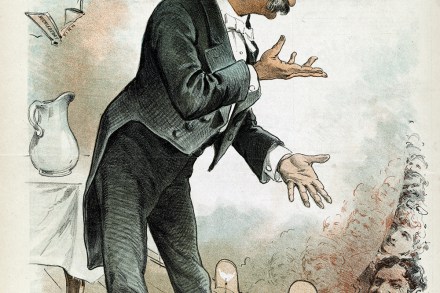
Ever the Twain

Mark Twain’s work contains in itself pretty much all of 19th-century America. This is America as she was when still, geographically and socially, more a frontier society than not; before she became heavily industrialized, urbanized and suburbanized: increasingly convergent upon the European societies from which she was descended. Twain’s America is, in short, America when she remained a unique place; even as she was evolving with lightning speed from her earlier self into something approaching her present one. Mark Twain made an international reputation for himself with the publication in 1869 of The Innocents Abroad, a travelogue that recounts a trip of many months through Europe and the Middle East.