American foreign policy

The China reckoning

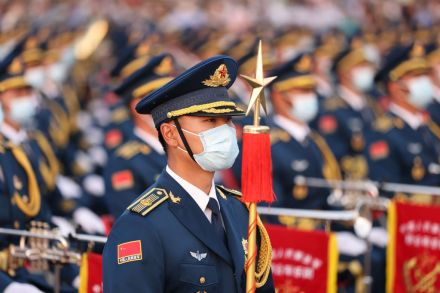
Fifteen years ago, I remarked to an acquaintance over lunch that it looked like China might eat America’s lunch in naval power. My interlocutor, a person well-known in leadership positions in the China studies community, scoffed at my comment. Over the next few years, he never missed an opportunity to ridicule my wild-eyed prediction. I often wonder what he thought in February 2021 when, less than a month after becoming president, Joe Biden warned US senators that if America didn’t “get moving, [China is] going to eat our lunch.” I claim no credit for prescience, just a historian’s sensitivity to trends over time. The fiftieth anniversary of President Richard Nixon’s visit to China falls in February 2022.

china
foreign policy

The next chapter in American foreign policy

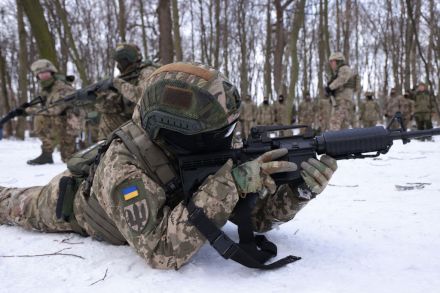
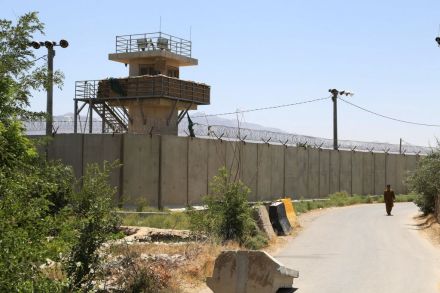
The new year begins a new chapter in American foreign policy. For the first time since 2001, we are not at war in Afghanistan. More than that, we no longer have an architectonic strategy for our role in world affairs. We had one during the Cold War: to win it. And we had one afterward, too: a decade before 9/11, our policy elite had already committed to the idea that we must police the world for the good of the liberal international order. The lead-up to the first Gulf War was the opening paragraph of that chapter, the ignominious retreat from Afghanistan its last line. Our policy mandarins have not changed their minds, but the world has changed too much for their grand design to have any meaning in 2022.

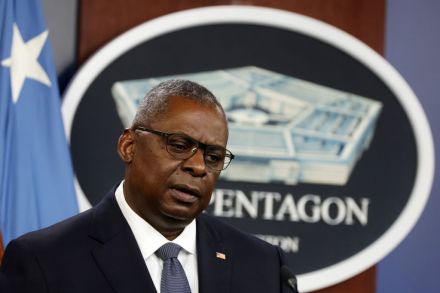
Biden’s Pentagon wants to keep the military overstretched

Nearly ten months after President Biden ordered defense secretary Lloyd Austin to undertake a comprehensive, across-the-board review of America's military overseas, the Pentagon finally concluded the study this week. And it landed with a loud thud of disappointment. So far as we can tell (the entire product won’t be released to the public), the results of the Global Posture Review (GPR) range from unimaginative to pitiful. Or, in the words of one congressional aide familiar with the findings, "No decisions, no changes, no sense of urgency, no creative thinking. Lots of word salad.” Of course, the GPR is hardly the first government report to be classified this way.

military

America needs more than ‘guardrails’ with China

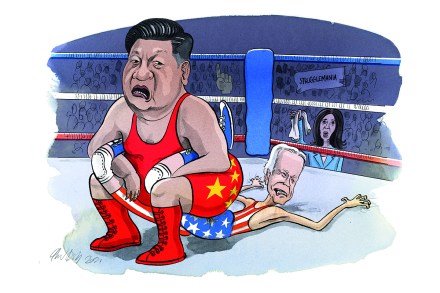
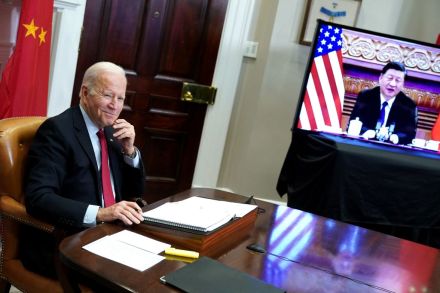
As recently as a week ago, there was talk that Monday night’s virtual summit between President Joe Biden and Chinese Communist Party general secretary Xi Jinping was an opportunity to “reset” the US-China relationship. By the time the two leaders sat down in front of their video screens, the summit had been downgraded to a “meeting” and the White House made clear that little concrete agreement, and no breakthrough, was to be expected. The meeting lived down to expectations, uneasily combining a more sober and realistic US assessment of the parlous state of bilateral ties with what seems a return to a pre-2017 model of surface bonhomie and references to the “the long-term work that we need to do together,” according to a senior US official.

xi

Kamala in Paris

Ah, the French. Is there any other people Americans so love to antagonize? Recall that after France (rightly) decided to abstain from the Iraq war in 2003, we didn't just express our discontent; we introduced the term "cheese-eating surrender monkeys" into the Kissingerian lexicon. We then canceled French fries, which are Belgian. Call it a sibling rivalry between children of the Enlightenment; call it a clash between social democracy and rugged individualism. Whatever you call it, just don't go canceling a submarine agreement at the last minute for the love of God. That's what Joe Biden did last month when Australia suddenly nixed a plan to purchase subs from the French in favor of American and British vessels. And stop the presses! A conspiracy of the Anglophones was afoot!

Can America avoid the next crisis in Iran?

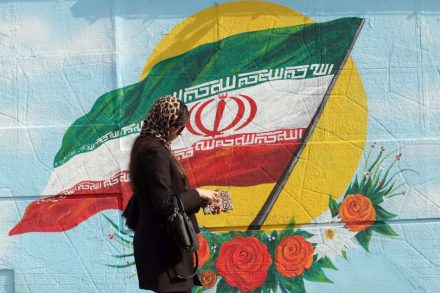
After meeting with his Israeli and Emirati counterparts on October 13, Antony Blinken emerged from behind closed doors with a message for Iran: you are running out of time to negotiate a return to the 2015 nuclear deal. “We are prepared to turn to other options if Iran doesn't change course,” the secretary of state told reporters. US envoy to Iran Robert Malley exhibited similar frustration on October 25, saying US officials, in coordination with its partners in the Middle East and Europe, have “given a lot of thought to what we will do if Iran doesn’t go back to the table.” The Iranian government appears to have gotten the message, at least to a degree. Ali Bagheri Kani, Iran’s chief nuclear negotiator, has said talks will resume on November 29.

iran

America isn’t leading the fight against climate change

President Joe Biden is set for his rendezvous with climate destiny at the Scottish Event Campus in Glasgow on Monday. The president left Washington on Thursday empty-handed after congressional Democrats abandoned an attempt to put his infrastructure and climate package to a vote. “I need you to help me. I need your votes,” Biden implored them. “I don’t think it’s hyperbole to say that the House and Senate majorities and my presidency will be determined by what happens in the next week.” At least he wasn’t invoking anything as serious as the future of the planet to get their backing. Nancy Pelosi weighed in, according to Politico’s Laura Barrón-López, telling her colleagues that overseas parliamentary leaders had asked whether American democracy can survive.

climate change

Joe Biden takes his failures on tour

How’s the ice cream in Rome? Joe Biden is about to find out. Word is he is excited about the gelato, which is A-OK, since it may distract him from the fact that he has nothing to report when he gets there. The president — I mean, Joe Biden — was supposed to reestablish “normality” to an office so badly bruised by the mad tweeter — no, make that “ex-tweeter” — who came before. “Normality” was one big selling point. The other was Biden’s vaunted foreign policy experience. Reality check one: was Joe Biden’s performance at that town hall with Anderson Cooper last week an exhibition of “normality”? Or was it yet another disagreeable instance of elder abuse, parading a man suffering from senile dementia before the cameras?

failures g20 cop26 biden
syria

Why is the US still in Syria?

A week ago, US troops camped out in the small, dusty Syrian outpost of al-Tanf suddenly found themselves under a “deliberate and coordinated attack", as multiple explosive-laden drones barreled toward their positions. According to US officials who spoke to the AP on background, Iran “resourced and encouraged” the latest drone attack targeting US forces. The five drones were also reportedly Iranian-manufactured, leading to speculation that Tehran is testing the Biden administration at a time when nuclear negotiations between the US and Iran remain in limbo. Fortunately, US troops managed to defuse the drone attack without suffering any casualties.

Biden’s State Department is a laughingstock

Last week, the State Department learned that twice this summer China had tested a new hypersonic missile weapon with nuclear capabilities. According to the Financial Times, the rocket employed a “fractional orbital bombardment” that also had the guidance ability to “glide” around the earth in orbit. The test reportedly stunned the Biden administration, and comes on the heels of a string of embarrassing global events for the US, including the fall of Afghanistan and Russia opting not to raise natural gas supplies to Europe after the completion of the Nord Stream 2 pipeline. Secretary of State Tony Blinken reacted with a series of “deeply concerned” letters. The State Department had once again been caught flat-footed. But fear not: Blinken has his priorities straight.

state department

Taiwan could spark a war between America and China

Some time between now and the next 10 years war between the United States and Communist China is certain. The only questions are when and how it will start — and how many millions of people will die. Why would I dare make such a bold prediction? Simple. History has conspired to create the perfect mix: trillions of dollars in trade up for grabs, a geopolitical rivalry, military tensions, bad blood, competing national egos and a quest for tech dominance. Washington and Beijing seem on the way to a world war the likes of which mankind has never before seen. And the most likely spark for this war is Taiwan.

taiwan china
foreign policy

Biden stole Trump’s foreign policy

When President Donald Trump in 2020 signed a trade deal with China after years of escalatory tariffs, then-presidential candidate Joe Biden blasted the agreement. 'China is the big winner of Trump’s "phase-one" trade deal with Beijing,' Biden said after the agreement was finalized. He wasn’t alone. Many trade experts at the time believed the purchasing targets Beijing was required to meet were highly unrealistic. Sure enough, China’s compliance has been less than ideal. According to the Peterson Institute for International Economics, China is roughly 70 percent of the way there with two months left to go. Yet despite Biden’s past comments about the accord, not to mention the tariffs that set the stage for the deal, the White House isn’t fully breaking with the pact.

The foreign policy amateur

Since Joe Biden was elected in part as a salve for Donald Trump's perceived foreign policy blunders, it seems reasonable nine months in to go searching for the Biden Doctrine, to assess his initial foreign policy moves, to see what paths he has sketched out for the next three years. ...is that a tumbleweed? Well, OK, there was Afghanistan, Biden's most significant foreign policy action. Biden won election in November and took office in January. There was ample time for replanning and renegotiating anything that had been left behind by Trump, especially since Biden and his team had muddled in Afghanistan during the Obama era and knew well the mess they'd helped create. The rush for the last plane out was a fully expected unexpected event.

biden foreign policy

Will Biden deal with the Taliban?

When President Joe Biden tapped longtime aide Antony Blinken to be his secretary of state last November, Blinken landed his dream job. Here he was, a man widely respected in foreign policy circles, continuing the family business (his father and uncle were both ambassadors and his stepfather was an adviser to John F. Kennedy). What Blinken could have lived without, however, was the grandstanding, bravado and livid speeches from lawmakers responsible for overseeing his work. Unfortunately, fielding self-righteous questions is a part of the job description.

taliban

The disconnect

President Biden’s impromptu remarks on 9/11 spoke volumes. His erratic and frequently irritated presence in recent weeks — when, that is, he has been present at all — reflects a presidency that is struggling to maintain its focus and its sense of reality. Biden was promoted in 2020 as the candidate of restoration. Despite nearly five decades of successful operation in Capitol Hill, one of the least normal places on Earth, Biden, we were told, represented normalcy, common sense and empathy. Candidate Biden did his best to deliver all three, when his handlers let him. President Biden has delivered none of them — when, that is, he has delivered at all, for no modern president has dodged the cameras and questions so assiduously.

disconnect

Why can’t we fire the Blob?

Let’s say that two decades ago you were wondering where to invest your savings for retirement and the money that was supposed to pay for your kids’ college years, and decided to consult with your financial adviser known to be a market wizard. Let’s call him Tom Friedman. 'Don’t pay attention to all the bullish talk about Steve Jobs and Apple', Friedman said. 'I would bet all my money on two of the market’s crown jewels, Alta Vista and Enron'. Well, to make a very long story short, you are now spending your retirement years in a trailer park in Nevada, while your son is dealing drugs and your daughter works for an escort service to pay for their college studies.

blob friedman

Joe Biden’s victory lap around Afghan defeat

President Biden walked to the White House podium on Tuesday and proclaimed the US withdrawal from Afghanistan an ‘extraordinary success’. He relied on the unanimous advice of military leaders and strategic advisers for these wise decisions. If there were any failures, they were due to Donald Trump. Never in history, he said, had there been such a successful airlift. Of the Americans who wanted to leave, we got out an amazing 90 percent. Surely that’s a success all around, despite the collapse of the Afghan army, which nobody expected. Of course, as a far-sighted leader, Biden said he had ordered plans for that, too.

biden

Who lost Afghanistan?

America's longest war draws to a bloody end. As the pullout deadline approaches, the probability of more atrocities like the suicide bombing last Thursday that killed 13 of our troops, and more than 90 Afghans, remains nauseatingly high. The American public was ready for us to leave Afghanistan. It was not prepared for just how ugly leaving could be. President Biden bears responsibility for the lives lost, just as he bears responsibility for those lost throughout the course of this conflict and the similarly ill-premised Iraq War — both of which he helped to launch while he was in the United States Senate. He has made grave mistakes. One mistake he has not made, however, is to waver from the decision to withdraw. He has not let terrorists change our timetable.

press

President Ice Cream’s Afghan meltdown

You have to hand it to the Taliban (or, if you are Joe Biden, the ‘Tally-bahn’): they are both a persistent and an infernally clever lot. As to their persistence, recall that George W. Bush assured us that, ‘thanks to our military, our allies, and the brave fighters of Afghanistan...the Taliban regime is coming to an end.’ That was in December 2001. As of August 2021, they control the country and are as I write issuing ultimatums to the President of the United States: everybody out by September 11, no, make that August 31 — otherwise, there will be ‘consequences’. Oh, and by ‘everybody out’, we don’t mean Afghans who may have worked for the US: they have to stay. There does seem to be a communications breakdown about radical elements in Afghanistan.

biden ice cream

Is Afghanistan to blame for Biden’s sinking popularity — or is COVID?

‘How many more generations of America’s daughters and sons would you have me send to fight Afghanistan’s civil war when Afghan troops will not?’ Biden asked last week. ‘How many more lives, American lives, is it worth, how many endless rows of headstones at Arlington National Cemetery? I’m clear on my answer: I will not repeat the mistakes we’ve made in the past.’ They were the words of a man who knew from what he spoke and knew to whom he was speaking. It was not to the national news media, an elite that has abandoned its working-class roots and audience, and have nothing but censure and contempt for Biden’s brave decision.

joe biden popularity