American foreign policy

What happened to Tough Guy Joe Biden?

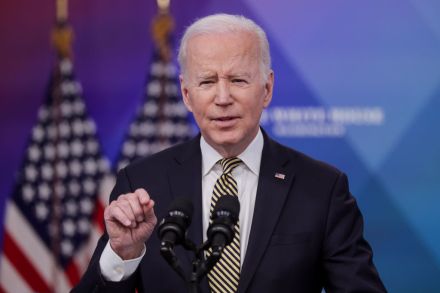
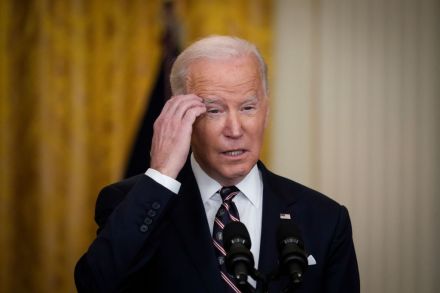
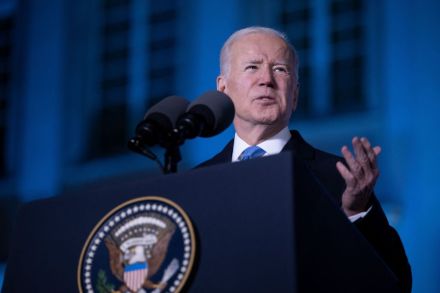
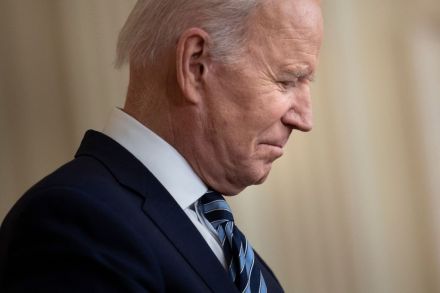
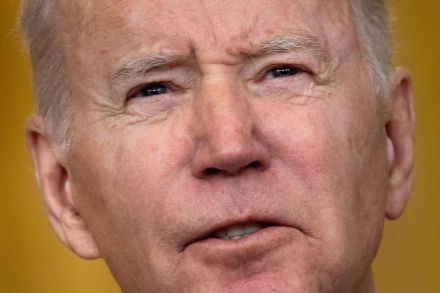
If you watched President Joe Biden’s press conference on Thursday afternoon, you wouldn’t know you were looking at the same man who allegedly looked Vladimir Putin in the eyes and told him he had no soul. Hell, based on Biden’s weak performance you might start to question whether or not he actually confronted and defeated a straight-razor-carrying bad dude named Corn Pop outside of a Delaware swimming pool in 1962. The president seemed to want to follow the theme of his last press conference: “Saying the Quiet Part Loud.” Who can forget the recent two-hour presser in which Biden essentially green-lit a “minor incursion” by Russia into Ukraine.

biden
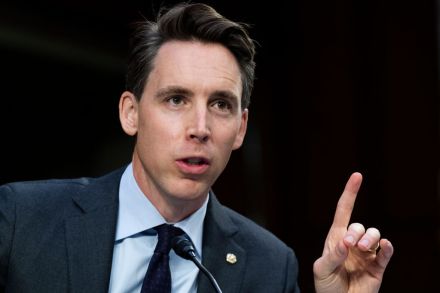
Sen. Josh Hawley (Getty Images)

Where is the neocon war cry over Russia?

A foreign policy debate is raging in the United States as Russia escalates its attacks on Ukraine — chiefly over what America should do in response. What is oddly absent is the unmistakable neoconservative war cry to send in the troops. Sure, some talking heads haven't been shy about where they'd like the conflict to lead. But most of it is implied. Establishment media outlets have hinted at getting involved militarily, asking Biden what he'll do next if sanctions do not work and if the US will have to use force if Putin expands beyond Ukraine. The old hawkish right has used similar softened rhetoric to imply support for a military response. Jonah Goldberg hit at the nationalist right, claiming they "don't care very much when an imperial power tries to erase a nation.

The Ukraine debacle showcases Joe Biden’s many failures

Snap quiz: who was president when Vladimir Putin gobbled up Crimea? If you said Barack Obama, go to the head of the class. What countries did Putin invade while Donald Trump was president? If you said “None,” you get to stay at the head of the class. This is a harder one: who was president when Putin once again violated Ukraine’s borders, sending in Russian troops to two breakaway regions in Eastern Ukraine? I say that this is harder because the obvious answer — “Joe Biden” — is not really, or not wholly, correct. Joe Biden is an empty shell. On good days, he looks like a mannequin. Really, though, he is a puppet, a creature controlled by others. I have called those others “The Committee.

biden ukraine

The US and India in a new world

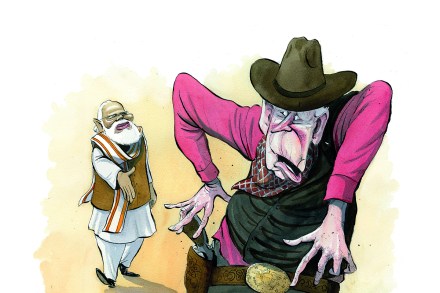
The world’s center of gravity is shifting to the Indo-Pacific. The new global order will be shaped by developments in a sprawling region where interstate rivalries and tensions are sharpening geopolitical risks. Building a stable balance of power in the Indo-Pacific has become more important than ever, but China’s territorial and maritime revisionism, and its heavy-handed use of economic and military power, are causing instability and undercutting international norms. Against this background, the expanding strategic partnership between the world’s most powerful and most populous democracies — the United States and India — has become pivotal to equilibrium in the Indo-Pacific.

india
india

Can the India-US relationship last?

India and the United States have rediscovered each other after the cordial hostility of the Cold War. Those years of isolation have made India’s political and financial elites susceptible to flattery. America’s courtship of India, lubricated by the economics of globalization and the post-9/11 zeal to spread democracy, is now being consummated in the American search for a democratic counterweight to China. But India is a chaotic democracy in a volatile neighborhood. Can it hitch itself to America without forfeiting its autonomy? Foreign strategic experts exhort India, which is non-interventionist to its marrow, to act like a global power.

Greenwald

Why Glenn Greenwald backs Putin

Few things are sure in life: death, taxes and Glenn Greenwald advocating whatever position happens to be in the interests of Vladimir Putin. The self-styled civil libertarian rose to prominence during the George W. Bush administration for his withering attacks on American counterterrorism policies. Later, he won a Pulitzer Prize for his role in facilitating Edward Snowden’s leak of government documents. Always a rancorous figure who bristled at attempts to place him in a partisan box, Greenwald started to upset his confederates on the left and develop a fan base on the right during the Trump years. Greenwald was one of the most vocal critics of the narrative positing that the new American president was a pawn of the Russian one.

Biden’s looming energy crunch

Oil and gas prices have soared since Joe Biden took office and skyrocketed further as Russian troops surround Ukraine. Prices will get worse — much worse — if Putin invades. President Biden has promised “swift, sharp sanctions” on Russia and an end to the Nord Stream II pipeline, which will supply Germany with much-needed Russian natural gas when it’s completed. The German chancellor has said little about ending the pipeline but has not publicly contradicted Biden’s threat to stop it. European analysts are confident Germany will go along with American energy sanctions, including those on Nord Stream II. In any case, the US can stop the pipeline, if it chooses.

energy

Is this Biden’s Munich moment?

When it is 1938 in Washington, it is already past midnight in Moscow. The clock is ticking and the map of Europe is being redrawn, but this is not a Munich moment. We are now past that, and past the time when the leader of a Western democracy might have the honesty to admit to his public, as Neville Chamberlain did in 1938, that he doesn’t want to fight a war over “a quarrel in a faraway country between people of which we know little.” The shadow of Munich shames and intimidates the leaders of the Western democracies, and not without reason. But if there is a Munich moment in the latest Ukraine crisis, then it happened nearly seven years ago — in 2015, when the Obama administration backed the Minsk II accords and the dismemberment of Ukraine.

energy munich

Don’t go to war with Russia over Ukraine

With shocking speed, talk in Washington has shifted from disunity among the Democrats and Joe Biden’s unhappy first year to possible war in Europe. The Putin government is reinforcing units poised to invade Ukraine. Washington is sending weapons to Kyiv. The United States and United Kingdom have begun to evacuate embassy personnel. President Biden is considering sending additional troops to garrison NATO member states. But for what? Why is the United States so thoroughly entangled in a conflict not its own? Not for reasons of history Throughout most of America’s relatively short existence, Ukraine was part of either the Russian Empire or Soviet Union.

ukraine

What does Russia hope to achieve in Ukraine?

President Biden said this week that a “minor incursion” of Russian troops into Ukrainian territory would not bring about the severe economic sanctions the White House threatened in response to a “significant invasion.” His counterpart in the Kremlin can probably hardly believe his luck. Effectively, Vladimir Putin has been given carte blanche by the West to launch military operations against Ukraine. Of course, the fact that there is no definition of what constitutes a “minor incursion” gifts the White House a preemptive get-out clause from having to truly confront Moscow.

ukraine

Can Putin ever be stopped?

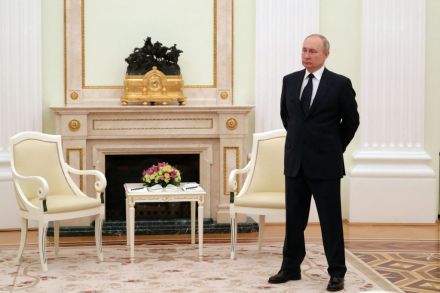
Vladimir Putin has been the most effective practitioner of Realpolitik for the past two decades. With an economy about the size of Italy’s, and just as corrupt, he has accomplished his most ambitious goal: returning Russia to the status of a Great Power. Now he’s thrown his chips on the table once more, launching a massive troop build-up on the border with Ukraine and sending still more into Belarus (for “joint exercises”), positioning them just north of Ukraine’s capital of Kyiv. Although the numbers don’t appear large enough to conquer all his neighbor’s territory, they are large enough to push through the eastern region (the one bordering Russia) and form a land bridge to Crimea, which Russia conquered in February 2014.

putin

Why we keep getting North Korea wrong

Kim Jong-un is focused first and foremost on managing his country’s lingering food crisis. But that doesn’t mean the thirty-seven-year-old dictator has any intention of siphoning off resources from North Korea’s weapons programs. He made that abundantly obvious this week, when Pyongyang conducted its second ballistic missile test using hypersonic technology in four months. According to North Korean media, the missile traveled 435 miles to the east, hitting the designated target. The response to the latest test was predictable. South Korea called an emergency meeting to discuss the launch. The US State Department quickly issued a statement to reporters reminding them that the tests are a violation of multiple UN Security Council Resolutions (as if North Korea cared).

north korea

The China reckoning

Fifteen years ago, I remarked to an acquaintance over lunch that it looked like China might eat America’s lunch in naval power. My interlocutor, a person well-known in leadership positions in the China studies community, scoffed at my comment. Over the next few years, he never missed an opportunity to ridicule my wild-eyed prediction. I often wonder what he thought in February 2021 when, less than a month after becoming president, Joe Biden warned US senators that if America didn’t “get moving, [China is] going to eat our lunch.” I claim no credit for prescience, just a historian’s sensitivity to trends over time. The fiftieth anniversary of President Richard Nixon’s visit to China falls in February 2022.

china
foreign policy

The next chapter in American foreign policy

The new year begins a new chapter in American foreign policy. For the first time since 2001, we are not at war in Afghanistan. More than that, we no longer have an architectonic strategy for our role in world affairs. We had one during the Cold War: to win it. And we had one afterward, too: a decade before 9/11, our policy elite had already committed to the idea that we must police the world for the good of the liberal international order. The lead-up to the first Gulf War was the opening paragraph of that chapter, the ignominious retreat from Afghanistan its last line. Our policy mandarins have not changed their minds, but the world has changed too much for their grand design to have any meaning in 2022.

Biden’s Pentagon wants to keep the military overstretched

Nearly ten months after President Biden ordered defense secretary Lloyd Austin to undertake a comprehensive, across-the-board review of America's military overseas, the Pentagon finally concluded the study this week. And it landed with a loud thud of disappointment. So far as we can tell (the entire product won’t be released to the public), the results of the Global Posture Review (GPR) range from unimaginative to pitiful. Or, in the words of one congressional aide familiar with the findings, "No decisions, no changes, no sense of urgency, no creative thinking. Lots of word salad.” Of course, the GPR is hardly the first government report to be classified this way.

military

America needs more than ‘guardrails’ with China

As recently as a week ago, there was talk that Monday night’s virtual summit between President Joe Biden and Chinese Communist Party general secretary Xi Jinping was an opportunity to “reset” the US-China relationship. By the time the two leaders sat down in front of their video screens, the summit had been downgraded to a “meeting” and the White House made clear that little concrete agreement, and no breakthrough, was to be expected. The meeting lived down to expectations, uneasily combining a more sober and realistic US assessment of the parlous state of bilateral ties with what seems a return to a pre-2017 model of surface bonhomie and references to the “the long-term work that we need to do together,” according to a senior US official.

xi

Kamala in Paris

Ah, the French. Is there any other people Americans so love to antagonize? Recall that after France (rightly) decided to abstain from the Iraq war in 2003, we didn't just express our discontent; we introduced the term "cheese-eating surrender monkeys" into the Kissingerian lexicon. We then canceled French fries, which are Belgian. Call it a sibling rivalry between children of the Enlightenment; call it a clash between social democracy and rugged individualism. Whatever you call it, just don't go canceling a submarine agreement at the last minute for the love of God. That's what Joe Biden did last month when Australia suddenly nixed a plan to purchase subs from the French in favor of American and British vessels. And stop the presses! A conspiracy of the Anglophones was afoot!

Can America avoid the next crisis in Iran?

After meeting with his Israeli and Emirati counterparts on October 13, Antony Blinken emerged from behind closed doors with a message for Iran: you are running out of time to negotiate a return to the 2015 nuclear deal. “We are prepared to turn to other options if Iran doesn't change course,” the secretary of state told reporters. US envoy to Iran Robert Malley exhibited similar frustration on October 25, saying US officials, in coordination with its partners in the Middle East and Europe, have “given a lot of thought to what we will do if Iran doesn’t go back to the table.” The Iranian government appears to have gotten the message, at least to a degree. Ali Bagheri Kani, Iran’s chief nuclear negotiator, has said talks will resume on November 29.

iran

America isn’t leading the fight against climate change

President Joe Biden is set for his rendezvous with climate destiny at the Scottish Event Campus in Glasgow on Monday. The president left Washington on Thursday empty-handed after congressional Democrats abandoned an attempt to put his infrastructure and climate package to a vote. “I need you to help me. I need your votes,” Biden implored them. “I don’t think it’s hyperbole to say that the House and Senate majorities and my presidency will be determined by what happens in the next week.” At least he wasn’t invoking anything as serious as the future of the planet to get their backing. Nancy Pelosi weighed in, according to Politico’s Laura Barrón-López, telling her colleagues that overseas parliamentary leaders had asked whether American democracy can survive.

climate change

Joe Biden takes his failures on tour

How’s the ice cream in Rome? Joe Biden is about to find out. Word is he is excited about the gelato, which is A-OK, since it may distract him from the fact that he has nothing to report when he gets there. The president — I mean, Joe Biden — was supposed to reestablish “normality” to an office so badly bruised by the mad tweeter — no, make that “ex-tweeter” — who came before. “Normality” was one big selling point. The other was Biden’s vaunted foreign policy experience. Reality check one: was Joe Biden’s performance at that town hall with Anderson Cooper last week an exhibition of “normality”? Or was it yet another disagreeable instance of elder abuse, parading a man suffering from senile dementia before the cameras?

failures g20 cop26 biden