American foreign policy

In search of a Biden doctrine

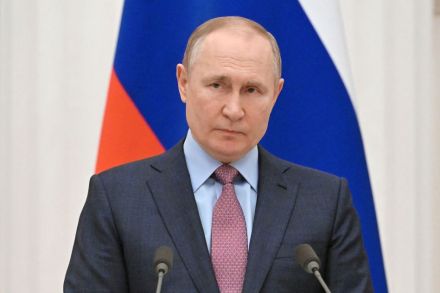
Considering how likely we all are to be blown to pieces by it within the next five years, the atomic bomb has not roused so much discussion as might have been expected,” wrote George Orwell in 1945. The public conversation soon caught up with the lethal realities of the nuclear age. The possibility of annihilation loomed over politics, domestic and foreign, for much of the second half of the twentieth century. Then, with the fall of the Berlin Wall, it faded into the background. Thanks to Vladimir Putin, the threat has returned to the fore. The isolated and unpredictable strongman in the Kremlin is not shy when it comes to reminding the world of Russia’s nuclear arsenal.

biden
Putin

Why Putin won’t save NATO

Vladimir Putin’s invasion of Ukraine is the best thing to happen to NATO since 1989. No amount of cajoling by American presidents could get the Germans to increase their defense spending to 2 percent of GDP, as the alliance asks. The Russian president found a way to persuade them. Putin has also persuaded Finns and Swedes that joining NATO is a good idea. Not for the first time, a war is having the opposite of the effect its instigator intended. Putin may yet get what he demanded from Ukraine and the West right before his invasion. NATO membership may be on the table for everyone else but not for Ukraine. Russia wants its possession of Crimea to be acknowledged by Kyiv, and that too is within Putin’s reach.

presidents

How to avoid World War Three

The Russian assault on Ukraine has awakened the West to the fact that we may be back in a Cold War — or worse. After a few decades’ respite in which the United States did not find itself in conflict with any nuclear powers, presidents must consider a world in which nuclear-armed Russia and China actively oppose US interests and deliberately test American resolve. This reality will become even more complicated if a hostile Iran gets its hands nuclear weapons too. The return of Cold War-style geopolitics means the return of Cold War-style statecraft. Presidents will once again face the difficult task of calibrating their actions to advance US goals while avoiding escalation toward possible nuclear confrontation.

Has Biden lost his mind on Ukraine?

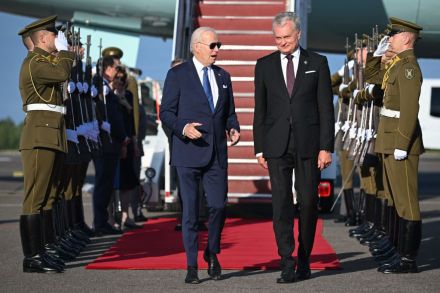
Has Joe Biden gone loco over Ukraine? In Warsaw, Biden proclaimed of Russian president Vladimir Putin, “For God’s sake, this man cannot remain in power.” Biden also called Putin a "butcher." Then, in a meeting with the Polish president, Biden said the US regards NATO’s Article 5 as a “sacred commitment.” Biden called Warsaw a “sacred place” in the history of Europe and in “humankind’s unending search for freedom.” Biden went on to describe the conflict in Ukraine as "a battle between democracy and autocracy, between liberty and repression, between a rules-based order and one governed by brute force.

biden ukraine
regime change

Why Biden’s slip-up is so revealing

The White House might have issued the fastest correction of a sitting US president’s remarks in history this weekend. But it doesn’t matter one bit. The bottom line is Joe Biden — and most of the civilized world — wants to see Vladimir Putin out of power in Russia. More to the point: they want to see his regime changed and him most likely Gaddafi'd for his sins. And, to be frank, who can blame them? There is just one problem: getting rid of Vlad means World War Three. And I can tell you from gaming out such a conflict countless times in simulators, such a conflict leaves tens of millions of people dead. But let’s step back for a moment. I'm going to cut the president a little bit slack for saying out loud what we are all thinking.

Biden’s Warsaw speech was both baffling and moving

Poland “Biden fell asleep.” Perhaps a thousand jokesters posted this and similar jibes in the livestream comments as we waited for the president to speak from Warsaw. Thousands of Poles, and doubtless many Ukrainian refugees, were gathered around the Royal Castle in the center of the Polish capital to wait. Biden trotted out — old but amiable and very much awake. In fact, after spending two days meeting refugees, Ukrainian representatives and Polish politicians, he looked surprisingly sprightly. God help me for saying this but I have a soft spot for the president.

warsaw

Madeleine Albright was an idealist overpowered by cynics

People die at random, of course, but it seems poignant that Madeleine Albright has died at the very moment the liberal post-Soviet world has met its own, more violent, end. Her term as Bill Clinton’s secretary of state coincided with the moment America, the most powerful nation in the history of the world, sat, unknowingly, at its own apogee. The Soviet Union was newly gone. America stood peerless and unchallenged. The attacks of September 11, 2001, and the twenty years of War on Terror that followed, were still unthinkable. China’s GDP rivaled Italy’s, not America’s. Even offhand, Albright could describe America as the “indispensable nation.” Charles Krauthammer had called it early — this was the “unipolar moment.

What’s the difference between Yemen and Ukraine?

Millions of innocent civilians uprooted from their homes. Residential areas turned into dust, rubble and wire. Thousands of people killed in errant airstrikes. Store shelves emptied of basic staples. A humanitarian crisis dominating the everyday lives of a large swath of the population, who just want to escape the shelling and the fighting. This is the scene the world now equates with Ukraine, which has been subjected to a barbaric war of choice courtesy of Russian president Vladimir Putin. Yet for one poverty-stricken nation more than 2,400 miles to the south, this has been the grim reality for years.

yemen

Did the realists underestimate Putin?

Liberal internationalists, neoconservatives and NeverTrumpers are having the time of their lives these days, ridiculing anyone on the political right who has ever said a good thing about Vladimir Putin. Those “Putin groupies” as a Wall Street Journal columnist described them, include former Italian prime minister Silvio Berlusconi, far-right French presidential candidate Marine Le Pen, Hungarian prime minister Viktor Orbán and, of course, Trump himself. Trump described Putin as a “genius” and said he was a better president than Barack Obama — and he isn’t the only American president to compliment the Russian leader. President George W. Bush said about Putin, “I looked the man in the eye. I found him to be very straightforward and trustworthy.

putin
zelensky

Zelensky basks in the world’s spotlight

Ukrainian president Volodymyr Zelensky is flying high. The contrast between Zelensky, who virtually addressed Congress this morning, and Russian president Vladimir Putin, who rarely appears publicly, becomes starker almost by the day. Putin believed that he could launch a Blitzkrieg attack that would topple Zelensky but the very opposite has occurred. It is Putin who is cornered while Zelensky basks in the world’s spotlight. In his address, it was shrewd of Zelensky to fold Ukraine’s struggle for independence into the American saga. Essentially, he appealed to the New World to redress the balance of the Old World.

Yes, Putin could use biochemical weapons in Ukraine

The Russian Defense Ministry held a briefing last week claiming that they have discovered US-led biological laboratories in Ukraine. Moscow stated that a rapid halt was brought to the facilities’ activities, adding that Kyiv and Washington had violated the Convention on the Prohibition of Biological and Toxin Weapons. The Kremlin did not feel the need to provide evidence of its claims, par for the course in Putin’s Russia.

biochemical weapons

Ukraine and the war for your mind

Deterrence works. Russia's nukes are the only thing keeping the US from full-out war in Ukraine just six months after retreating from Afghanistan. The unprecedented propaganda effort by Ukraine and its helpers in the American mass media to drag the US and NATO directly into the fight has failed — so far. But the struggle — the one for your mind space — is not over. To understand what follows, you have to wipe away a lot of bull being slung your way. Insanity is not the only explanation for Putin’s actions of the past few weeks.

ukraine

What happened to Tough Guy Joe Biden?

If you watched President Joe Biden’s press conference on Thursday afternoon, you wouldn’t know you were looking at the same man who allegedly looked Vladimir Putin in the eyes and told him he had no soul. Hell, based on Biden’s weak performance you might start to question whether or not he actually confronted and defeated a straight-razor-carrying bad dude named Corn Pop outside of a Delaware swimming pool in 1962. The president seemed to want to follow the theme of his last press conference: “Saying the Quiet Part Loud.” Who can forget the recent two-hour presser in which Biden essentially green-lit a “minor incursion” by Russia into Ukraine.

biden
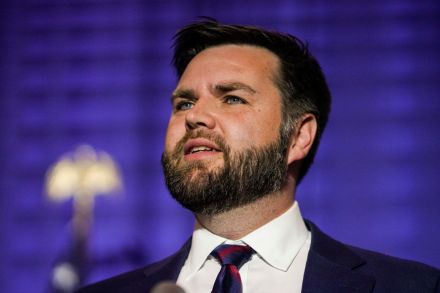
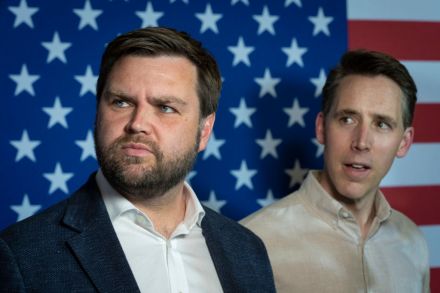
Sen. Josh Hawley (Getty Images)

Where is the neocon war cry over Russia?

A foreign policy debate is raging in the United States as Russia escalates its attacks on Ukraine — chiefly over what America should do in response. What is oddly absent is the unmistakable neoconservative war cry to send in the troops. Sure, some talking heads haven't been shy about where they'd like the conflict to lead. But most of it is implied. Establishment media outlets have hinted at getting involved militarily, asking Biden what he'll do next if sanctions do not work and if the US will have to use force if Putin expands beyond Ukraine. The old hawkish right has used similar softened rhetoric to imply support for a military response. Jonah Goldberg hit at the nationalist right, claiming they "don't care very much when an imperial power tries to erase a nation.

The Ukraine debacle showcases Joe Biden’s many failures

Snap quiz: who was president when Vladimir Putin gobbled up Crimea? If you said Barack Obama, go to the head of the class. What countries did Putin invade while Donald Trump was president? If you said “None,” you get to stay at the head of the class. This is a harder one: who was president when Putin once again violated Ukraine’s borders, sending in Russian troops to two breakaway regions in Eastern Ukraine? I say that this is harder because the obvious answer — “Joe Biden” — is not really, or not wholly, correct. Joe Biden is an empty shell. On good days, he looks like a mannequin. Really, though, he is a puppet, a creature controlled by others. I have called those others “The Committee.

biden ukraine

The US and India in a new world

The world’s center of gravity is shifting to the Indo-Pacific. The new global order will be shaped by developments in a sprawling region where interstate rivalries and tensions are sharpening geopolitical risks. Building a stable balance of power in the Indo-Pacific has become more important than ever, but China’s territorial and maritime revisionism, and its heavy-handed use of economic and military power, are causing instability and undercutting international norms. Against this background, the expanding strategic partnership between the world’s most powerful and most populous democracies — the United States and India — has become pivotal to equilibrium in the Indo-Pacific.

india
india

Can the India-US relationship last?

India and the United States have rediscovered each other after the cordial hostility of the Cold War. Those years of isolation have made India’s political and financial elites susceptible to flattery. America’s courtship of India, lubricated by the economics of globalization and the post-9/11 zeal to spread democracy, is now being consummated in the American search for a democratic counterweight to China. But India is a chaotic democracy in a volatile neighborhood. Can it hitch itself to America without forfeiting its autonomy? Foreign strategic experts exhort India, which is non-interventionist to its marrow, to act like a global power.

Greenwald

Why Glenn Greenwald backs Putin

Few things are sure in life: death, taxes and Glenn Greenwald advocating whatever position happens to be in the interests of Vladimir Putin. The self-styled civil libertarian rose to prominence during the George W. Bush administration for his withering attacks on American counterterrorism policies. Later, he won a Pulitzer Prize for his role in facilitating Edward Snowden’s leak of government documents. Always a rancorous figure who bristled at attempts to place him in a partisan box, Greenwald started to upset his confederates on the left and develop a fan base on the right during the Trump years. Greenwald was one of the most vocal critics of the narrative positing that the new American president was a pawn of the Russian one.

Biden’s looming energy crunch

Oil and gas prices have soared since Joe Biden took office and skyrocketed further as Russian troops surround Ukraine. Prices will get worse — much worse — if Putin invades. President Biden has promised “swift, sharp sanctions” on Russia and an end to the Nord Stream II pipeline, which will supply Germany with much-needed Russian natural gas when it’s completed. The German chancellor has said little about ending the pipeline but has not publicly contradicted Biden’s threat to stop it. European analysts are confident Germany will go along with American energy sanctions, including those on Nord Stream II. In any case, the US can stop the pipeline, if it chooses.

energy

Is this Biden’s Munich moment?

When it is 1938 in Washington, it is already past midnight in Moscow. The clock is ticking and the map of Europe is being redrawn, but this is not a Munich moment. We are now past that, and past the time when the leader of a Western democracy might have the honesty to admit to his public, as Neville Chamberlain did in 1938, that he doesn’t want to fight a war over “a quarrel in a faraway country between people of which we know little.” The shadow of Munich shames and intimidates the leaders of the Western democracies, and not without reason. But if there is a Munich moment in the latest Ukraine crisis, then it happened nearly seven years ago — in 2015, when the Obama administration backed the Minsk II accords and the dismemberment of Ukraine.

energy munich