Africa

Celebrations of song and humanity

From our UK edition

‘All my life, always and in every way, I shall have one objective: the good of Hungary and the Hungarian nation.’ Ask any musician for a one-sentence summary of Béla Bartók (1881–1945) and they will probably tell you that he is Hungary’s national composer — a musical modernist who passionately championed his nation’s folk music tradition. David Cooper’s new biography seeks both to enrich and complicate that statement, questioning the definition of musical ‘nationalism’ in a country of such pronounced ethnic heterogeneity, at a time when borders were being drawn and redrawn, peoples created and destroyed, across Europe.

Football’s elite deserve the foulness of Fifa

From our UK edition

My favourite moment in the crisis engulfing football’s governing body, Fifa, came with the intervention of a man called Manuel Nascimento Lopes. Manuel is the Fifa delegate from Guinea-Bissau, an African country which occupies 130th place in the Fifa world rankings but which, far more importantly in this context, punches well above its weight when it comes to institutionalised corruption. Thirteenth in the world, according to the organisation Transparency International — not a bad showing for a smallish sub-Saharan rathole which has been almost permanently engulfed in civil war since the Portuguese got the hell out.

Comics’ trip

From our UK edition

Who says British television lacks imagination? You might have thought, for example, that every possible combination of comedian and travel programme had been exhausted long ago. After all, it’s now 26 years since Michael Palin set the trend by following in Phileas Fogg’s footsteps (sort of). In more recent times, we’ve had Stephen Fry going round America in a London taxi, Billy Connolly going round Australia on a Harley-Davidson trike and — perhaps drawing the short straw — Ade Edmondson going round Britain in a caravan. There’s also been Paul Merton in India, Sue Perkins in China, Sean Lock and Jon Richardson in the Deep South and... well, you get the idea.

Things fall apart in Denis Johnson’s latest novel of madness and anarchy in Sierra Leone

From our UK edition

‘I’ve come back because I love the mess. Anarchy. Madness. Things falling apart.’ The lines belong to Roland Nair, one of the morally bankrupt spies who careers around Africa in Denis Johnson’s tenth novel, but they might equally well describe Johnson himself, a writer always happiest in his work when the wheels come off and the world breaks down. His novels vary in setting (Prohibition America in Train Dreams, the Vietnam war in Tree of Smoke, a future post-apocalypse in Fiskadoro) but they share a mixture of gravitas and derangement, sarcasm and lyricism, comic danger and dangerous comedy that makes them reliably fascinating — and reliably peculiar. You certainly wouldn’t confuse Johnson’s dialogue with anyone else’s.

Alexandra’s Fuller’s parents are the stars even when their daughter is divorcing, in this sequel to the bestselling Don’t Let’s Go to the Dogs Tonight

From our UK edition

‘Double ouzo, hold the Coke,’ Mum ordered at the Mkushi Country Club bar, during spanikopita night. ‘My daughter’s a lesbian.’ The Greek farmers blinked at her uncomprehendingly. ‘Oh, don’t pretend you don’t know what I’m talking about. You bloody people invented it.’ Alexandra Fuller’s wild parents make good copy, as was clear in Don’t Let’s Go to the Dogs Tonight, her bestselling 2002 memoir about her chaotic, often tragic, childhood in Zimbabwe (then Rhodesia).

Having oozed optimism for a decade, I am a bit down about the Hopeful Continent

From our UK edition

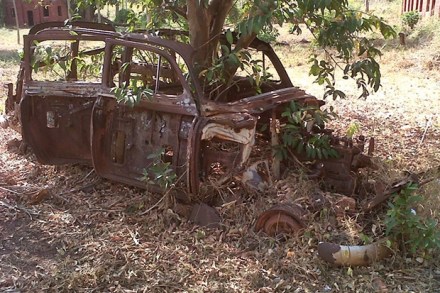
Juba I discovered a 1954 Morris Minor parked outside the Catholic mission station in Mopoi, South Sudan. The car had been there for so long that a guava tree was growing up through the gearbox. To me it was a tragic memorial to Daniel Comboni, the canonised 19th-century missionary who set out to ‘save Africa’ and whose followers built Mopoi. Just a year after that Morris Minor came off the production line, civil war erupted. Millions of deaths later, Mopoi was half-ruined, strangled by figs — though inside the church I found the votive candles still burning and the Blessed Virgin with a resigned expression, raising her hand as if she was about to say ‘nobody knows the trouble I’ve seen...’.

A walk through Fez is the closest thing to visiting ancient Rome

From our UK edition

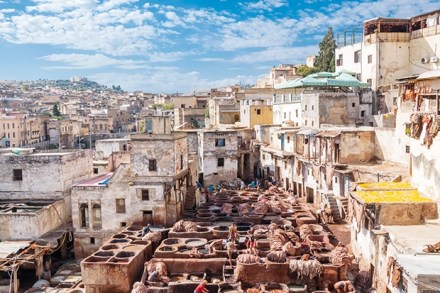
Fez is one of the seven medieval wonders of the world. An intact Islamic city defined by its circuit of battlemented walls, it is riven by alleyways. You pass doorways that look into a 10th-century mosque, then a workshop courtyard, before coming through a teeming covered market and twisting past the high walls of a reclusive garden palace. The aesthetic highlight of any visit will be the teaching colleges built in the 14th century by the Merenid Sultans, and nothing can quite prepare you for the colours and odours of the open-air tanneries or the drama of listening to the dusk call to prayer from the ruins of the Merenid tombs. To the north of the city rise the slopes of Jebel Zalagh, dotted with olive orchards.

Do I really care about Ebola? Do you? Does Oxfam?

From our UK edition

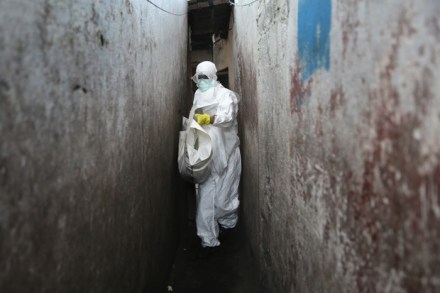
It’s strange how quickly we all forgot about Ebola. Speak for yourself, you might say — and I will. Until a friend sent me a report this week on the progress of the epidemic, Ebola had, I’m sorry to say, almost faded from my mind. The report contains good news: where the outbreak was worst, in Liberia, there are now just five cases left. Ebola treatment centres are shutting down, unneeded — and I was delighted but also ashamed. I have been to Liberia and written about it and I had thought last year that I cared tremendously about its fate, more than others, perhaps. My heart bled even as my mind ran rat-like to my kitchen to make an inventory of canned goods. I thought I cared — but did I?

Only capitalism can save Nigeria

From our UK edition

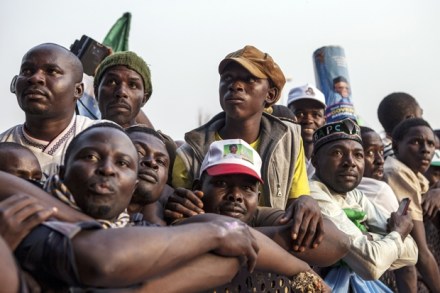
Abuja was eerily quiet when I arrived. The capital of Nigeria is normally bustling, but that morning the wide boulevards were empty. The red dust was undisturbed; the call to prayer echoed through the city like the sad lament of the lonely. There is an election approaching, and a lot of people take that as their cue to leave the country. You’ll find much of Nigeria’s ruling class in the Harrods food hall at this time. Although Abuja is far wealthier and more stable than most of Nigeria, its problems are representative of a country on the brink of disaster. Construction of the capital began in the 1970s, its layout heavily influenced by Milton Keynes. Today it is a mix of grand designs and organisational failure: my tour of the Ministry of Power was complicated by a power cut.

It’s all kicking off in the Islamic world. Nothing at all to do with Islam, of course

From our UK edition

They have been burning churches and murdering Christians again in Niger. You’d think that they’d have more immediately pressing concerns than worrying about a cartoon, Niger regularly winning the award for being the worst country anywhere on God’s earth, and the poorest. But nope, it’s kill-a-kuffar time once more. Some 45 churches set alight and at least five people killed and 50 injured. Adherents of the Religion of Peace (© all UK politicians) included in their pyromania a Christian orphanage, which was thoughtful of them. There have also been massed rallies and protests and the usual effigy-burning business in the vast and dusty Islamic desert rat-holes next door, Mali and Algeria.

I want to do for field rations what Jamie Oliver did for school dinners

From our UK edition

Hell’s Kitchen My ambition to open a fish and chip shop in Mogadishu has not happened yet, though I remain optimistic. Food, I’ve decided, is the thing to go for on my next entrepreneurial adventure. For a while I dreamed of going into the chicken trade, importing refrigerated containers full of wings and drumsticks from Brazil for sale up the furthest reaches of the Congo. Fortunes have been made in brokering African chicken deals. But so far my forays into the food business have not gone very well. I tried, for example, to sell pots of honey with my friend Tom at various local fêtes.

If you want a real safari, head to Botswana

From our UK edition

As a boy camping with my father on safaris deep in the African bush, there were no tents involved; we just slept by the fire like cowboys in the open under the constellations. Supper was sweet tea and biltong and we used a tin bucket for a shower. When it rained we simply moved underneath our parked Land Rover. One morning we woke to find tracks circling us, where a big lion had come close enough to blow on our toes as we slept. That old Africa rubbed off on me and I still like safaris to be the real thing — under canvas, by the campfire, gin, tall tales, fresh air, and carpet-creeping between tents. Safari is an art and it’s for real people, not celebrities climbing Kilimanjaro.

I cannot imagine living in a world without lions

From our UK edition

Laikipia We are privileged to live with lions on the farm. We hear them most nights. We encounter them frequently. Out walking last month, I sensed four lions the instant before I saw them. Adrenaline raised a mane of goose bumps from my skull to my thighs. I should have shouted and advanced on them and certainly not run away. Instead I became rooted to the spot, hypnotised by their great yellow eyes. After seconds they timidly slunk off — in Kenya’s recorded history honey bees have killed more people than lions have — leaving me to feel neither scared, nor relieved, but thrilled. Sixty years ago Elspeth Huxley wrote that all the lions in Laikipia, the ranching plateau I call home north of Mount Kenya, had been shot out.

Actually, Bob, they do know it’s Christmas (we checked)

From our UK edition

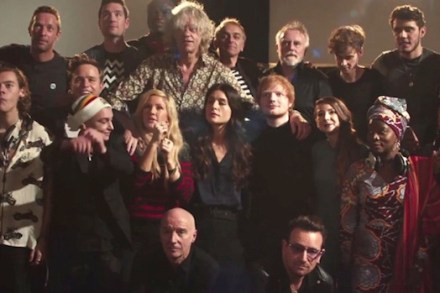
Yeah, Bob, they know The answer to the rhetorical question posed by the Band Aid single, ‘Do they know it’s Christmas?’, is broadly yes. Christmas Day is a public holiday everywhere in Africa except Mauritania, Western Sahara, Morocco, Algeria, Tunisia, Libya and Somalia, although countries have widely differing customs associated with the event. — In Liberia, one of the Ebola-affected countries, it more resembles Halloween, where children go from door to door dressed as demons and begging for presents. — The two countries where Bob Geldof’s line might be appropriate are Ethiopia, the target of the first record in 1984, and Egypt.

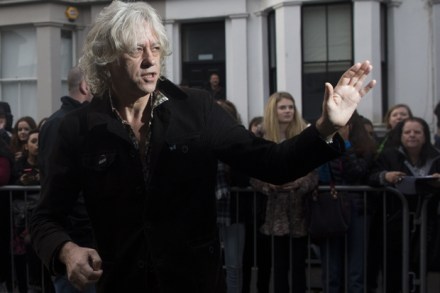
Like everyone else, I want to think Bob Geldof’s awful – but I can’t

From our UK edition

Band Aid 30 is officially the fastest selling single of 2014. Yet this attempt by successful musicians to heal Africa through song has not met with universal cheer. Instead, a fickle and febrile debate has raged over whether this is something to be approved of. Unless you subscribe to the 'primacy of celebrity-hating' school of foreign policy, approval should be bestowed. As soon as news broke that Band Aid was reforming to raise funds for ebola victims, the instinct was to deride. The Guardian posted a comment piece slamming it as a condescending and reductive portrayal of Africa. Nick Dearden, director of the World Development movement, feared that Band Aid would neglect the more complex and deep-seated problems of the ebola-stricken regions of the continent.

Yes, Bob Geldof, Africans know it’s Christmas. Do you know it’s time to pack Band Aid in?

From our UK edition

In this week's Spectator, out tomorrow, our leading article looks at the Band Aid 30 single and why it's time for Bob Geldof to pack Band Aid in. Pickup a copy tomorrow or subscribe from just £1 here.  Anyone listening to the BBC this week could be forgiven for thinking that the musician Bob ­Geldof had just emerged from Africa, like a ­latter-day Dr Livingstone, the first westerner with news of a deadly new virus. He and his makeshift band of celebrities have adopted Ebola, their song blazing from the radio while Geldof himself has been in every studio exhorting people, with his usual stream of expletives, to buy it.

What happened when I tried to buy back my father’s farm

From our UK edition

 Kenya I perused the brochure produced by Tanzania’s state corporation for livestock ranching, aimed at attracting foreign investors. Under ‘beef production’ was a photo of an American bison. Tanzania’s state bureaucrats might not know what cows look like — but they still know how to eat them. My father Brian Hartley had 3,500 cattle when socialist president Julius Nyerere nationalised our ranch on Kilimanjaro’s slopes. In the 1960s, Nyerere seized farms in ways Mugabe never dared emulate. I still have the note Nyerere scrawled in biro, taking my father’s business partner’s property within seconds of arriving there. Eating began immediately.

Keep calm and address Ebola: a brief history of pandemics at The Spectator

From our UK edition

Ebola clinics in many parts of West Africa are full, so more and more people are being told to stay at home and take Paracetamol and fluids if they become infected. It means if someone in your family gets Ebola, you all have to stay in the house, which is effectively a death sentence. At the moment, the disease is killing 70 per cent of the people it infects, but that’s likely to go up. People who need other medical treatment can’t get it, and in Sierra Leone 40 per cent of farmland has been abandoned. Western governments are building secure military encampments for health workers, fearing civil unrest and angry mobs. In 1898, there were plague riots in India after authorities brought in sanitary measures, including quarantine camps.

Happy ‘anti-slavery day’ to Clapham Christians, et al

From our UK edition

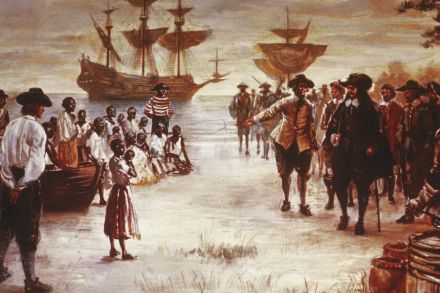
October 18 is 'anti human-trafficking' day by 2007 Act of European Parliament; along with 'anti-slavery day' by 2010 Act of UK Parliament. So there's that, for the 29.8 million people worldwide estimated to live in forced servitude. Over at SlaveryFootprint.org, your correspondent learns that I personally make use of 37 slaves in my London routine, mostly through my consumer electronics and my larger-than-average appetite. The survey, laden with factoids about the coerced labour behind shrimp cocktail and mascara, is macro-analysis at its mushiest - and a far more worthwhile use of 15 minutes online than all the 'carbon-footprint' calculators put together.

The Rwandan genocide story that the BBC didn’t tell

From our UK edition

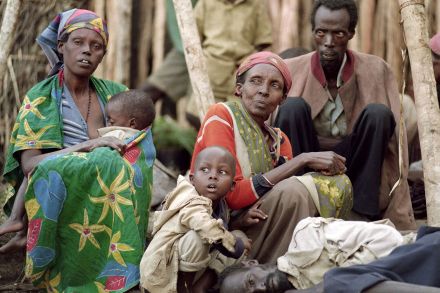
On Saturday 200 UK-based Rwandans, including many genocide survivors, protested outside the BBC offices in response to the documentary ‘Rwanda’s Untold Story’, which aired earlier in October. The demonstration followed a letter of complaint sent to the BBC's director general, written by the survivors’ organisation Ibuka. They point out that despite the BBC’s commitment to upholding truth and objectivity, the programme contained factual inaccuracies and seemed intent on reopening wounds in Rwanda. They expressed disbelief and disappointment that: '[A] few people who have their differences with the current government or the country were given a platform to politicise the Genocide and deny the planned and systematic killing of over one million people.