Africa

When the music changes

From our UK edition

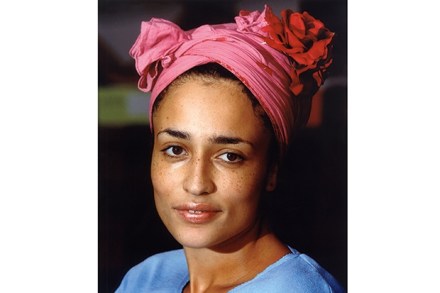
In 2011 the New York Times’s chief dance critic, Alastair Macaulay, asked: How should we react today to ‘Bojangles of Harlem’, the extended solo in the 1936 film Swing Time in which Fred Astaire, then at the height of his fame, wears blackface to evoke the African-American dancer Bill Robinson? No pat answer occurs. Zadie Smith’s fifth novel is a brilliant address to that question. In the prologue the unnamed narrator, who has recently lost her job as assistant to a Madonna-like star, goes to the Royal Festival Hall to hear an Australian director ‘in conversation’ and sees a clip from Swing Time — ‘a film I know very well, I watched it over and over as a child’.

Wild life | 20 October 2016

From our UK edition

Kenya A woman’s bottom cheered me up recently. The lady was walking ahead of me in a Kenya street and she was wearing a kanga — a local garment worn like a bath towel and printed with colourful geometric designs. A kanga is traditionally emblazoned with a Swahili proverb or scrap of esoteric advice, making it a bit like a wearable fortune cookie. This one had written neatly across it: Huwezi kula n’gombe mzima halafu ukasema mkia umekushinda — which roughly means, ‘Don’t eat a whole cow and then say you’re defeated by the tail...’ Persevere! Never give up! That was the message I took home to the farm. I became a farmer in Kenya almost by mistake.

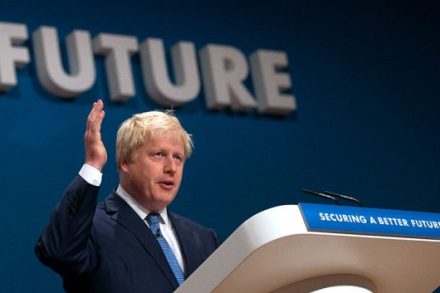
How Boris and Britain can help Africa to thrive again

From our UK edition

It’s almost 60 years since Ghana became independent from Britain. The world celebrated as the sun began to set on the age of European imperialism. ‘African Nationalism’, in the form of Ghana’s Kwame Nkrumah, entered the stage and all cheered the breaking of a golden dawn as the colonial shackles were broken and ‘liberation’ belatedly arrived. Since then, some 200 coups or attempted coups have taken place, 25 heads of state have been assassinated and roughly 50 wars have been fought in Africa. Despite multiple interventions, Africa remains the most crooked continent with illicit transfers out far exceeding the total value of all foreign aid to the continent (currently estimated at over $50bn a year).

Mugabe’s last gasp

From our UK edition

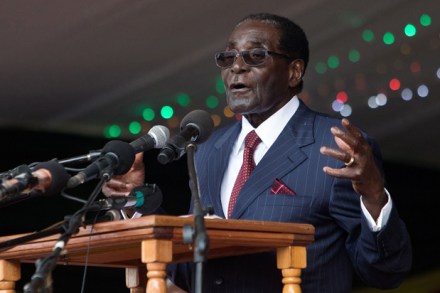
Last week rumours swirled round Zimbabwe that Robert Mugabe, the 92-year-old president, had either died or been incapacitated. The government banned demonstrations after Mugabe’s-presidential aircraft had been diverted in mid-air to Dubai during a scheduled journey to Singapore. Then the man himself turned up alive (though far from well) at Harare-airport, where he made a reasonably good joke about his ‘resurrection’. The president, who has ruled his country throughout its 36-year history, is nevertheless mortally wounded. We are entering the last few months of the Mugabe era. His health is not the real problem.

First aid

From our UK edition

In the 1980s, supermarkets stocked a fruit juice named ‘Um Bongo’ with the strapline ‘They drink it in the Congo!’. This is the starting point for Adam Brace’s examination of Britain’s relationship with the Congolese (whose word ‘mbongo’ means money). A group of do-gooding Londoners host a festival to celebrate the Congo’s culture and history but they rapidly become mired in controversies about age-old injustices and white-to-black ratios on steering committees. The Congolese party includes a few rogue terrorists whose death threats the British publicists find rather glamorous and titillating. The characters rarely reach beyond the obvious. The Londoners are bloodless yuppie go-getters.

Our golden age

From our UK edition

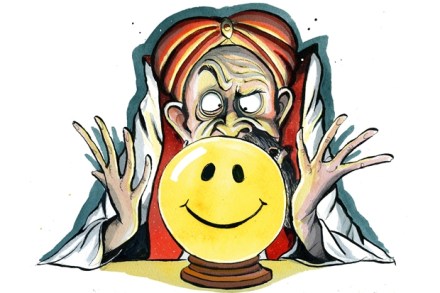
‘We have fallen upon evil times, politics is corrupt and the social fabric is fraying.’ Who said that? Donald Trump or Bernie Sanders? Nigel Farage or Marine Le Pen? It’s difficult to keep track. They sound so alike, the populists of the left and the right. Everything is awful, so bring on the scapegoats and the knights on white horses. Pessimism resonates. A YouGov poll found that just 5 per cent of Britons think that the world, all things considered, is getting better. You would think that the chronically cheerful Americans might be more optimistic — well, yes, 6 per cent of them think that the world is improving. More Americans believe in astrology and reincarnation than in progress.

Don’t grouse about grouse

From our UK edition

The vast Bubye Valley Conservancy in southern Zimbabwe is slightly larger than County Durham, as well as much hotter and drier. Yet both contain abundant wildlife thanks almost entirely to the hunting of game. In Bubye Valley, it’s lions and buffalo that are the targets; in the Durham dales, it’s grouse. But the effect is the same — a spectacular boost to other wildlife, privately funded. Bubye Valley was a cattle ranch, owned by Unilever, until 1994 when it was turned over to wildlife. A double electric fence was put round the entire 850,000-acre reserve. Gradually the buffalo, giraffe, wildebeest, zebra and antelope numbers grew.

The horrors of French colonialism

From our UK edition

We can all share the anguish in the downfall of a simple soul — for movie-goers Brando’s despairing ‘I coulda’ been a contender!’ in On the Waterfront still resonates — but I have a problem with heroic thickos: Othello, so easily duped; purblind Lear… So I’m ambivalent about the leading character in the new novel by the French-Algerian writer Yasmina Khadra — his wife’s name, adopted by Mohammed Moulessehoul to evade the military censors when he was an officer in the Algerian army. The award-winning author of more than 20 novels, most notably The Swallows of Kabul, he now lives in France but retains the pseudonym.

Flawed genius

From our UK edition

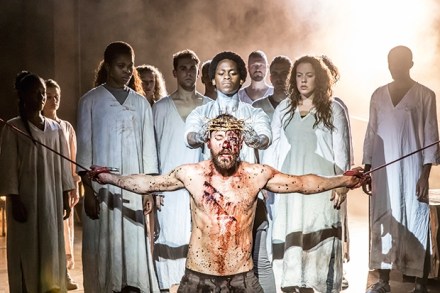
An inspired decision to stage Jesus Christ Superstar in a summer theatre in Regent’s Park. The action takes place outdoors, in balmy climes, so the atmosphere is ideal for Rice and Lloyd Webber’s finest show. The songbook bursts with melodic inventiveness, and the score blithely rips apart the conventions of musical theatre and remakes them afresh. Lloyd Webber finds two contemporary registers and switches between them constantly: first the eerie, unhinged menace of late-1960s heavy rock, and secondly the sweet, escapist loveliness of 1970s pop. The transitions from blunt savagery to pure sugar sometimes occur with gunshot abruptness, on a single note.

High life | 14 July 2016

From our UK edition

The Spectator readers’ party was as always a swell affair, with long-time subscribers politely mingling with ne’er-do-wells like myself, the former having cakes and drinking tea, the latter desperately raiding the sainted editor’s office for Lagavulin whisky. But for once I was on my best behaviour, first out of respect for our readers, secondly because of the man I had personally invited to the party, Hannes Wessels, a Rhodesian-born 14th-generation African, whose book A Handful of Hard Men has me shaking with fury at our double standards where whites are concerned, and at the gauzy mythology of PC that has painted white Rhodesians as oppressors.

Wild life | 16 June 2016

From our UK edition

Kenya As soon as I pulled out of town, I knew I had made a mistake taking on the new Chinese road through the badlands after dark. The route into northern Kenya was still under construction, making it an assault course of bumps, diversions and zigzags between mounds of murram. I made what speed I could in the Cruiser but on a lonely stretch of track I saw the flicker of brake lights up ahead and slowed to a dawdle behind a black city car. I was two minutes into Tannhäuser ’s rousing ‘Pilgrims’ Chorus’ on the stereo up loud and wanted badly to overtake when to my right I saw red sparks and heard the report of a rifle. A bandit ambush! I floored the accelerator and out of the corner of my eye I saw the flash of a second shot.

Elephant in the room | 2 June 2016

From our UK edition

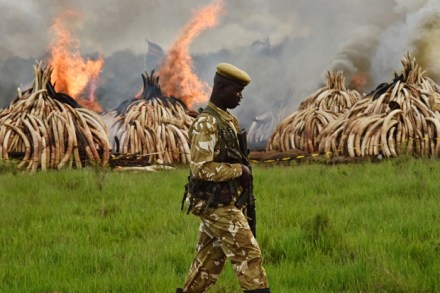
To mark World Environment Day this Sunday, Angola will celebrate its zero-tolerance approach to the illegal wildlife trade — the third biggest illegal trade after drugs and arms. Angolans are seeking to rebuild their shattered elephant population in the face of the relentless trade in ivory. But the debate is marked by sharply opposing views, which tend to be centred on such spectacular stunts as the burning of government stockpiles of elephant tusks. Last month saw the greatest sacrifice of ivory there has ever been. Uhuru Kenyatta, president of Kenya, ignited a pyre 10 ft high and weighing more than 100 tons. Its assembly required the deaths of 6,700 elephants. That’s a lot of money going up in flames, smouldering for a good week until it’s destroyed.

Wild life | 19 May 2016

From our UK edition

   Nairobi The gangsters hadn’t heard of Brexit. ‘What is this “Breaks it”?’ they asked my friend hours after kidnapping him at gunpoint. At dusk my mate had been driving in Nairobi, with the Wings song ‘Band on the Run’ playing. He pulled over to answer his mobile when a man appeared at his side with a pistol. After letting him and two others get in, my friend was directed to an insalubrious Nairobi postcode, frogmarched up five floors and then beaten on the arms and knees with a golf putter. Big Gangster emptied his pockets and went carefully through his iPhone emails, messages and contacts list. ‘They got to know where I worked, where I lived, everything.

Bard goes to Bollywood

From our UK edition

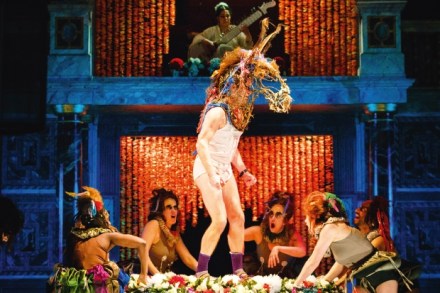
The Globe’s new chatelaine, Emma Rice, has certainly shaken the old place up. It’s almost unrecognisable. Huge white plastic orbs dangle overhead amid plunging green chutes like rainforest vines. The back wall is smothered in a blinding rampart of explosively coloured saffron petals. Up top, partially concealed by pillars, lurks a rock band togged up in a blend of Elizabethan casuals and modern gear. Presiding over everything is an Indian matriarch, seated in cross-legged solemnity, playing an electric sitar whose headstock (the bit with the tuning pegs) resembles a Fender bass. What are we supposed to make of this weird, druggy, space-age Bollywood mash-up? Nothing much. Except that Shakespeare belongs now, and then, and here and there, and everywhere.

Wild life | 21 April 2016

From our UK edition

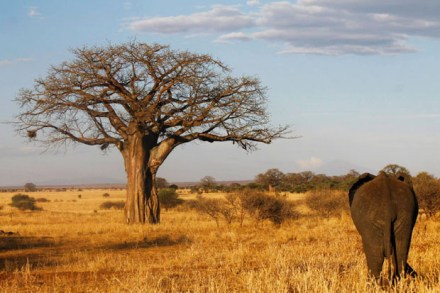
   Laikipia I sip my Tusker beer on the veranda, staring at the elephant. He’s not the elephant in the room. He’s the elephant on what should be my croquet lawn. I thought he might go away, but he hasn’t. Instead he’s brought his friends — more and more of them as time goes by. They say the elephant will become extinct within a few years. Across Africa, poachers are decimating elephants — just not here, where they apparently feel safe enough to crap on my sward. Today, the fashionable argument promoted on Twitter, and followed by princes and prime ministers, is to burn all stockpiles of seized ivory in the world. This, they argue, will help shut down the illegal trade in ivory.

Deluded continent

From our UK edition

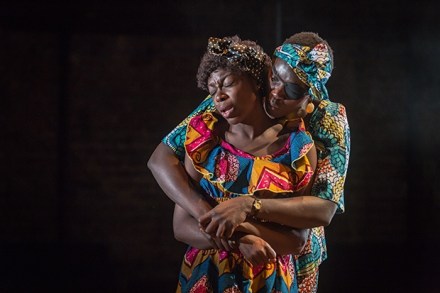
Les Blancs had a troubled birth. In 1965 several unfinished drafts of the play were entrusted by its dying author, Lorraine Hansberry, to her ex-husband, Robert Nemiroff, who mounted a debut production in New York in 1970. Nemiroff has created a fresh version with the help of a ‘dramaturg’ (or ‘colleague’, in English) named Drew Lichtenberg who believes not only that this ramshackle script is a masterpiece but also that Hansberry belongs in the first rank of dramatists alongside Ibsen, Sophocles and Aeschylus. This does not bode well. But the result is surprisingly good. Or good-ish.

Letters | 7 April 2016

From our UK edition

Gene genies Sir: ‘The return of eugenics’ (2 April) links a new technology of gene modification to historic dreams of genetic purification. But we are of course more than our DNA; each of us is a unique person, each mortal, and each worth the attention of science and medicine to alleviate our suffering. This means we must not totally ban the technology of crispr-CAS9, which allows specific editing of even a single letter within our 3 billion-letter human genomes, because it opens many doors to medicine. The single distinction that would allow this technology to serve medicine without also bringing down the curse of rational eugenics would be a ban on all manipulation of cells that make sperm or egg cells; that is, the human germ line.

Better that the Americans take over the London Stock Exchange

From our UK edition

The London Stock Exchange is no longer the red-hot crucible it once was, given the multifarious ways by which shares, bonds and derivatives now change hands. But the prospect of the LSE passing into the control of Deutsche Börse — in what was announced as a ‘merger of equals’, but with the Germans holding the larger stake and the top job — is a mighty provocation to Brexit campaigners. The Express claims it would reduce the London market ‘to an insignificant regional afterthought’. Brexit or not, there’s logic to a pan-European trading platform with shared technologies and harmonised listing rules: but who can doubt that the German agenda must be to hoover as much business as possible from London to Frankfurt?

Why are children in Guernsey extolling Islam to their parents?

From our UK edition

I have never been to the island of Guernsey. This is a large world and we have a finite amount of time on it and must make our decisions about where we visit based on necessarily limited information. We cannot know everything. I have never been to Japan, for example, because I do not wish to be crushed to death by a mass of jabbering humanity, nor take part in unpleasant sadomasochistic sex acts, nor watch people disembowelling themselves in order to affirm their masculinity. I realise that this is not all that Japan has to offer. There is also sushi, for example, and buttock-clenched politeness. I could get both of those things in Harrogate. So that’s Japan off my itinerary.

Not so happy valley

From our UK edition

Simon Barnes opens with a presumably true idea, that we are all in search of our own versions of paradise — a special place presented here as the sacred ‘combe’ of the title, being a word with Celtic origins that describes a steep hollow or hidden valley. These paradises might be real or imagined, exist only in memory, or live in fiction like Narnia or Robin Hood’s forest; they can be unattainable, beyond reach, or ruined, like Eden. His point, frequently stated, is that we are always on a quest for them, and need them. The particular combe of this book is not on the edge of Dartmoor but in the national parklands of Zambia’s Luangwa river valley.