Africa

I salute the Queen’s neo-colonial stance against the persecution of homosexuals in Africa.

From our UK edition

Is her Majesty the Queen really at the forefront in the struggle for gay and lesbian equality? Or does she, deep down, harbour misgivings about poofs? I suppose we will never know for sure. In putting her name to the new Commonwealth Charter she will be supporting the following statement: ‘We are implacably opposed to all forms of discrimination, whether rooted in gender, race, colour, creed, political belief or other grounds.’ According to the press over the weekend, this meant she was implicitly signed up to fight for gay rights, despite the fact that she has never seemed terribly exercised about the issue before.

Hasty exit strategy

From our UK edition

For years after the rug was pulled from under it, the British Empire — with a quarter of the globe, the largest the world has known — seemed an unfashionable subject for historians. Did they fear political incorrectness, or was it simply that they had to wait for sufficient archival material to emerge? Whichever, there is now some very welcome sprouting in this part of the historical garden, already well-watered by the Cambridge historian Ronald Hyam, and few shoots could be more welcome than Calder Walton’s important contribution. Walton draws on recently released MI5 files to reveal the role of intelligence in the transitions from colony to independent state.

There is nothing new about Islamism in Africa

From our UK edition

The Algerian hostage crisis is over and the Prime Minister has warned that the focus of the al-Qaeda’s franchise has shifted westwards. In his statement on the situation, he was channelling Tony Blair, which at least makes a change from channelling the Foreign Office. But the initial reaction from Downing Street was deeply unimpressive. The BBC’s Nick Robinson quoted a nameless, sneering voice, apparently exasperated at the Algerian response to the crisis. It would be interesting to know whether this patronising individual had ever spent any time working outside SW1 or had any idea that the Algerian people have lived on the frontline of the struggle with violent Islamists for more than 20 years.

Mali could be the gamble that defines Hollande’s presidency

From our UK edition

The crisis in Mali is yet another unintended consequence of the Arab Spring. Specifically, they are a result of the revolution in Libya, where Tuareg rebels who supported Gaddafi were forced to flee after his downfall. Heavily armed and regrouping in Mali, they created the National Movement for the Liberation of Azawad (MNLA) which effectively ended the government’s control over the north. Jihadist groups aligned with al-Qaeda then swooped in and established a semi-autonomous Islamic state in the north. As they pushed south it looked as if they might capture all of Mali, prompting interim President Dioncounda Traore to ask for French assistance. Francois Hollande responded by launching Operation Serval with overwhelming public support both at home and abroad.

Wole Soyinka: Boko Haram must be destroyed | 18 November 2012

From our UK edition

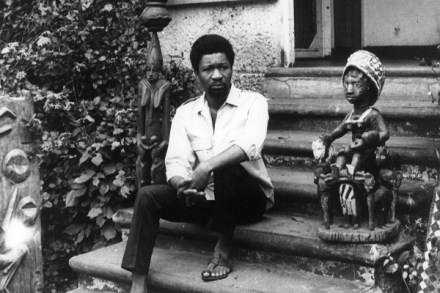
The Books Blog has an interview with Wole Soyinka, the Nigerian author who won the Nobel Prize for Literature in 1986. Soyinka is worth listening to for his ambivalence towards nationalism, his tolerant secularism and his recollection of solitary confinement during Nigeria’s civil war in the 1960s. But his comments on Boko Haram, the radical Islamist group that is terrorising northern and central Nigeria, are worth quoting here on a weekend of bloodshed in the Middle East. ‘I look at Boko Haram not just as a terrorist group, but also as a criminal gang, and a bunch of psychopaths. You don’t enter into dialogue with drug lords and criminals.

Wole Soyinka: Boko Haram must be destroyed

From our UK edition

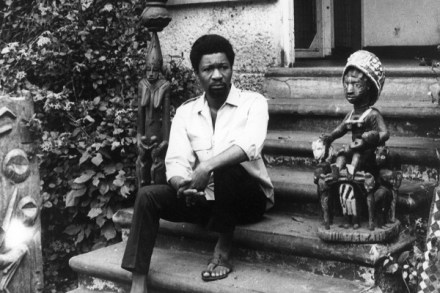
Born in 1934 in Nigeria, Wole Soyinka is the author of more than twenty plays, ten volumes of poetry, two novels, seven collections of essays and five autobiographical works. He won the Nobel Prize for Literature in 1986. He was the first black African man to win the prestigious prize His latest book, Of Africa, is a 200-page polemic that attempts to understand the contradictory nature of African politics. Two important questions that arise from Soyinka’s book are: what is Africa? And what do we understand of its history? Soyinka expends considerable effort in his book discussing how the nihilist nature of fundamentalist Islam is destroying societies in certain African nations: particularly in Somali, Mali, and Nigeria.

Should literature be political?

From our UK edition

‘Should literature be political?’ Njabulo S Ndebele asked Open Book Cape Town the other day. Ndebele, a renowned academic in South Africa, has written a précis of his speech for the Guardian. He draws a distinction between political novels, which dramatise activism, and other forms of literature that ‘politicise’ by deepening awareness. His point is often sunk by his own loquacity (‘These two books [The African Child and God’s Bits of Wood] reveal the continuations between political literature and literary politics. Both achieve transcendence through art that politicises and depoliticises all at once.

Africa’s growth spurt

From our UK edition

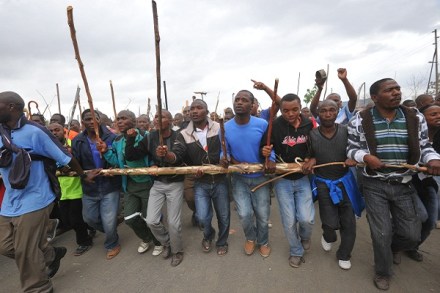
When South African police opened fire on striking miners at Lonmin’s Marikana platinum mine, it had all of the hallmarks of the bad old days of the continent - the tangled and violent business of pulling metal from the ground in the “Dark Continent”. The events at Marikana were symptomatic of the fractious politics of labour in South Africa, the uncomfortable alliances forged in the anti-apartheid struggle that have not resolved themselves in peacetime. However, at their root they have the simmering tension caused by the unequal distribution of economic opportunity that is not restricted to South Africa. The mining sector there, and elsewhere in the developing world, is nearly always a lightning rod for criticism and unrest.

South Africa: Mired in corruption?

From our UK edition

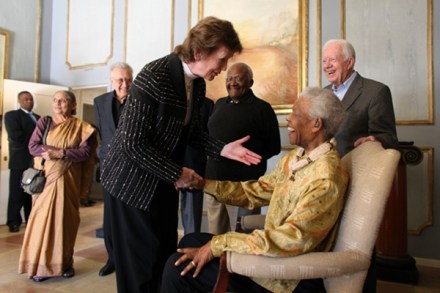
On the 5th of August Mary Robinson delivered the annual Nelson Mandela lecture in Cape Town. It should have been an occasion when the former Irish President and UN Human Rights Commissioner looked back on South Africa’s achievements since the end of apartheid. Yet her speech will probably be remembered for just one sentence: ‘…the ANC’s moral authority has been eroded, tainted by allegations of corruption; a temporary betrayal of its history.’ From an old friend of the ruling party this was damning indeed, but is she right to refer to corruption as a ‘temporary betrayal?’ The ANC’s history is more complex and more difficult than supporters like Mrs Robinson are prepared to acknowledge.

Happy birthday V.S. Naipaul

From our UK edition

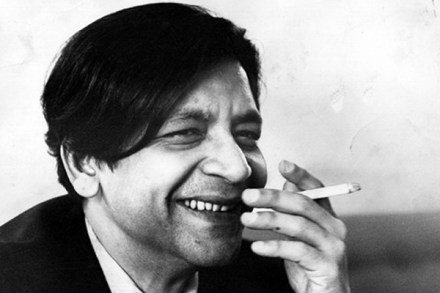
Given it's V.S. Naipaul's birthday today, we've dug out from the archives a 1979 Spectator review by Richard West of A Bend In The River. Don't forget that the Shiva Naipaul Memorial Prize, named after his younger brother, is currently open for entries. One of the dark places The protagonist and narrator of this book is a young man named Salim from the east coast of Africa; a Muslim Indian by origin but not from one of the families of the men who came to build the railways. Like the Arabs of old Zanzibar and what is now Tanzania, Salim's ancestors had once traded in ivory and slaves from the interior of the continent: 'I remember hearing from my grandfather that he had once shipped a boatful of slaves as a cargo of rubber.

Interview: Nick Makoha’s shame

From our UK edition

“My shame was my father wasn’t there,” says Nick Makoha, the London poet who represented Uganda at the recent Poetry Parnassus. This frank vulnerability is at the core of his first collection of poetry and his new theatre performance, ‘My Father and other Superheroes.’ Uganda is a source of tension for Makoha as both the place of his birth but also a place he fled, a place from which he feels distant. “Most people are from somewhere else,” he says. “So the story of the exile isn’t the minority, we’re the majority. Look at T.S. Eliot, by all rights and purposes he belongs to America. He liked French poets, Italian poets.

Science or starvation | 6 May 2012

From our UK edition

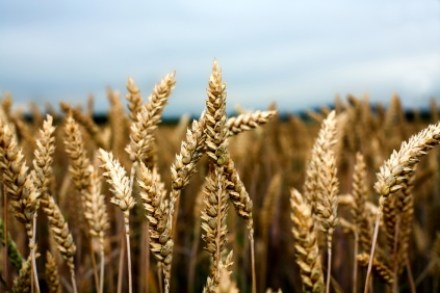
Here, for CoffeeHousers, is an extended version of the leader column in this week's magazine. It takes on the green fundamentalism which stupidly aims to put a stop to genetically modified foods: At the end of the month, a group of shrieking protestors are planning to descend upon a field in Hertfordshire and, in their words, ‘decontaminate’ (i.e. destroy) a field of genetically modified wheat. The activists, from an organisation called Take the Flour Back, claim to be saving Britain from a deadly environmental menace.

Africa’s excesses

From our UK edition

There are an awful lot of prostitutes in Africa and most of them seem to pass through the pages of Richard Grant’s book at one time or another. All this puts him in a terrible lather — ‘I had been so long without a woman’, he moans at one point, this while weighing up the attractions of a woman called Felicia ‘with extraordinary skin’ in the Rwandan capital, Kigali. But Grant also has a girlfriend back home who he’s determined to remain faithful to, and a mind set on higher things. He wants to become the first person to navigate the second longest river in Tanzania, the Malagarasi.

Sentamu for Canterbury!

From our UK edition

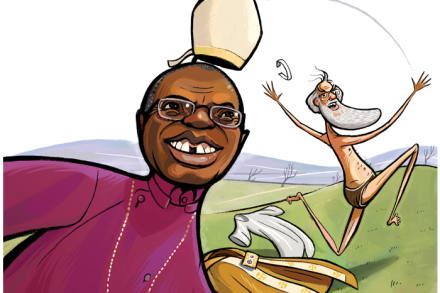
John Sentamu, the Archbishop of York, is our cover boy this week. It's the Church of England Synod next week, word is that Rowan Williams will be standing down soon, and Rod Liddle is backing Sentamu as his successor. When planning the headline, I thought about calling him the 'British Obama'. We didn't use this, as it's not a compliment — but if Britain is to have a figure who epitomises our country's inherent tolerance and open-mindedness I'd pick Sentamu above anyone else in public life. If he was made Archbishop, I really don't think there would be an uproar about the fact that he's black, or even that he came here as an Ugandan asylum seeker and still speaks with an accent.

The evil being perpetrated against Christians in Nigeria

From our UK edition

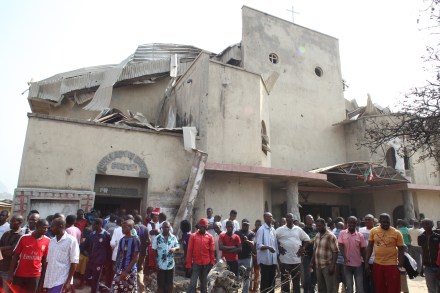
The religious cleansing against Christians is intensifying in Nigeria, where Christians have been told they have until Friday to leave the country or face attacks by Islamic extremists. As I wrote recently in the Daily Telegraph, this is a trend sweeping the Middle East. Thousands are fleeing Iraq and Egypt, but Nigeria is the scene of the most ferocious attacks. Its government condemns the attacks, but seems unable to respond to the Boko Haram menace. This from the National Review: ‘Catholic archbishop John Onaiyekan, of Abuja, Nigeria’s capital city, appealed for help. “It’s a national tragedy. We are all unsecured. It’s not only Catholic. Today it’s us. Tomorrow we don’t know who it will be,” he said.

The Difficult Matter of Praising George W Bush

From our UK edition

Will Inboden is frustrated that Barack Obama so rarely has anything nice to say about President George W Bush even when his administration has benefitted from US policies Obama inherited from his predecessor or when he has found it convenient to adopt and sometimes even take further Bush-era views on a given subject (such as a wide swathe of civil liberties issues or medical marijuana). In part this frustration reflects a Beltway preference for civility (or, rather, the appearance of civility) and the time-honoured pleasures of bipartisanship. There remain plenty of people who regret the increasingly parliamentary style of Washington politics and many more who have yet to grasp its implications.

Campaign Adventures: Congo Edition

From our UK edition

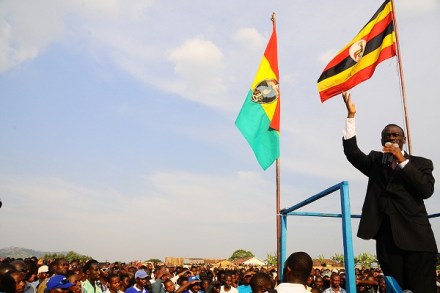
I've not been paying much attention to the elections in the Congo. Nor, I suspect, have you. But politicians everywhere can learn from Etienne Tshisekedi, the man hoping to knock President Laurent Kabila off his perch. His method seems admirably simple: declare victory three weeks before the polls open for business: Those who say that Kabila prevented my plane from landing do not understand the situation. Kabila no longer represents anyone but his wife. People like Boshab [president of the national assembly] and Mende [minister of information], who started elsewhere and talk with both sides of the mouth, say one thing during the day and another at night, have now abandoned him. He is alone with his wife, as you can see. So I say we need not wait for the elections.

Cocktail Hour Under the Tree of Forgetfulness by Alexandra Fuller

From our UK edition

There is always a special risk, says Alexandra Fuller, when putting real-life people into books. Not all those who recognised themselves in her terrific memoir of 1960s and 1970s white-ruled Africa, Don’t Let’s Go to the Dogs Tonight, had appreciated their transformation. The author’s own mother, Nicola Fuller, was disquieted to find herself as a character in that ‘awful book’ (as she refers to it today). Was she really that flaky and drunk? Or was that how others perceived her? Most writers make life more interesting than it is; I suspect that Alexandra Fuller is among them. In Cocktail Hour Under the Tree of Forgetfulness she returns to the Africa of her childhood and to her eccentric farmer family.

Right to reply: Aid is one of the government’s greatest endeavours

From our UK edition

Peter Kellner recently explained that the BBC licence fee becomes less popular if you describe it as an annual cost rather than as a daily cost. When people are told it costs £145.50 a year 27 per cent more people disapprove than approve. When they are told that’s only the equivalent of 40p a day there's a striking turnaround: 8 per cent more people approve than disapprove. You see a similar thing with Britain’s development budget. When the aid budget is expressed in terms of billions of pounds, people object and they object strongly. When it’s presented in more human-sized ways it is much more popular.

Should most orphanages be shut down?

From our UK edition

The Spectator's deputy editor, Mary Wakefield, recently visited Rwanda to investigate the work a charity called Hope and Homes for Children. Her article on the subject appeared in last week's issue of the magazine, but we thought we'd publish it here on Coffee House too, along with the short film that she recorded during her visit. It contains one or two lessons for DfID and our government: Kigali, Rwanda Madame B has dressed up for our visit. She’s sitting on a bench with her back to the orphanage wall, talking about just how much she loves each child, but it’s her get-up that’s most impressive: black silk dress, hair done, make-up just so; finger and toenails painted hot pink, each with an elegant white scalloped edge.