Africa

The sin of neutrality

From our UK edition

Yet again, millions of civilians across the Horn of Africa are starving. The world blames the crisis on drought and climate change, which nowadays is the way we excuse these countries for environmental mismanagement. But as ever, war is really the single greatest reason why people are killed year after year in this region. And while western countries pour billions of dollars of food aid into Ethiopia, Somalia and South Sudan, the weapons flooding those states originate mainly from Russia, China, Belarus – and Ukraine. In response to an article I recently wrote in The Spectator about why I think so few African governments condemn Russia’s invasion of Ukraine, I have had the usual deluge of ad hominem attacks so familiar to anybody who dares to criticise African governments.

Letters: The hard truth about soft power

From our UK edition

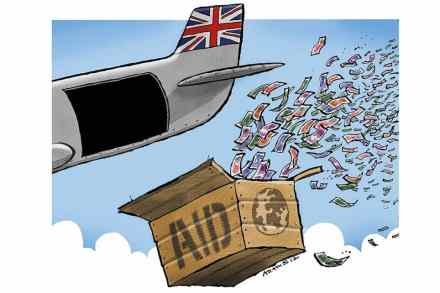
Soft ground Sir: We have heard much over the years from the overseas aid lobby about the value of soft power. Now the chips are down, we see how empty those claims were. Aidan Hartley (‘Russia’s special relationship’, 16 April) outlined how African nations have lined up to support Russia rather than Ukraine or the West, exposing how wasted the UK’s investment in soft power has been. The same applies to aid given to Pakistan and India. The absurdity of an overseas aid target of 0.7 per cent (of GDP) must be abandoned and replaced by an 0.5 per cent spending ceiling, at or below which the UK’s aid objectives in the third world must be seen to bring results.

Why so many African leaders support Putin

From our UK edition

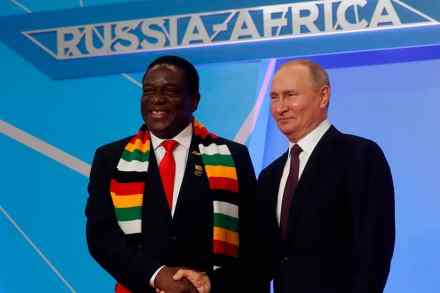
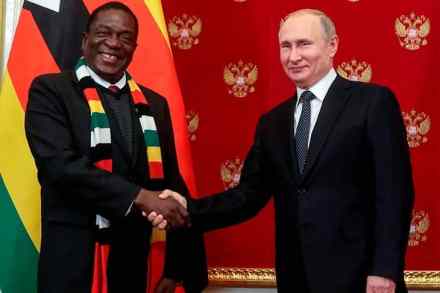
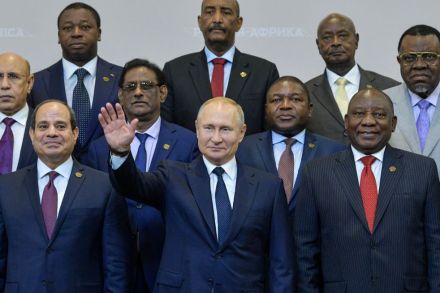
The Russian atrocities against civilians in Ukraine have been met with silence from Dar es Salaam, Harare and Juba. Not a word from Addis Ababa, Maputo or Khartoum. On Russia’s invasion of Ukraine the Ugandan President’s son, lieutenant general Muhoozi Kainerugaba, is clear: ‘Putin is absolutely right!’ Nearly half of Africa’s 54 nations refused to vote against Russia at the United Nations last month. Not only African governments but multitudes of Africans, even in countries that opposed Russia, such as Kenya, enthusiastically support Vladimir Putin. And the curious thing is that it’s the very countries that have historically received the most western aid that seem most in favour of him. In fact, they support him because he is the West’s enemy.

Putin’s imperialism in Africa

Last week, at roughly the time that photographs and stories began to filter out of liberated Bucha in Ukraine, the NGO Human Rights Watch published a report of similar massacres which took place contemporaneously in rural Mali. What linked the two was the identity of the perpetrators. In Ukraine and across Africa, these atrocities are committed by Russians. In combination with the Malian military junta, foreign soldiers "summarily executed an estimated 300 civilian men," in the town of Moura in late March. These soldiers did not speak French.

Has Putin outplayed Macron in Africa?

From our UK edition

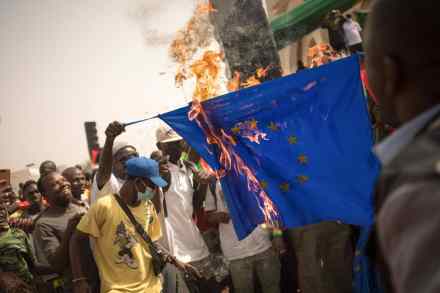
While the world is focused on Ukraine, Emmanuel Macron has withdrawn all French forces from Mali. Last weekend, thousands of soldiers were flown out of the former French colony after nine years of fighting Islamist insurgents in the Sahel. Malian protesters bid the French soldiers farewell by shouting ‘Shit to France’ at the departing planes. Following a military coup in May, Mali’s ‘interim President’ Colonel Assimi Goïta began to tire of the French and their calls for free elections. There were also lingering doubts over France’s motivation, stoked by a Russian disinformation campaign. So Goïta began looking for allies who could provide him with muscle to fight the Islamist insurgency without any lectures about democracy.

What’s to become of Africa’s teeming youth?

From our UK edition

Demographers are attached to their theories. The field’s most enduring is the ‘demographic transition’, whereby modernisation inexorably lowers a society’s once-high fertility to replacement rate. Unfortunately, reality is obstreperous and doesn’t always obey the rules. The United Nations Population Division bases population projections on the assumption that all countries will eventually follow the pattern of plummeting birth rates first observed across the West. Edward Paice’s Youthquake addresses the exception so far: Africa. The continent is hardly a minor asterisk.

My ocean voyage from hell

From our UK edition

Kenya Wondering what this year will bring, at dawn this morning I stood in the waves in front of our beach house and watched two Swahili sailing dhows battling through monsoon surf, heading out to the fishing grounds. For 1,500 years mariners off our East African coast have voyaged in these lovely boats and now, just in the past couple of years, fibreglass hulls have started to replace teak planking, and outboard motors instead of lateen sails propel men across the ocean. I was looking at the end of a long history. In my life I’ve enjoyed wonderful sea safaris on dhows, hunting for tuna and ambergris and waves to surf — and I wonder what’s ahead.

The universal appeal of the African savanna

From our UK edition

My wife and I were lucky to escape for a long-delayed birdwatching holiday in Kenya over Christmas. To have been warm, sunlit and free while so many in Britain were not won’t endear me to most readers, I realise. Nairobi was rife with Covid and Christmas cancellations devastated the tourism industry. So we had the extraordinary Elephant Watch Camp run by Saba Douglas-Hamilton in the Samburu National Reserve almost to ourselves. Baboons and vervet monkeys wandered freely through the camp, and in the night the river flash-flooded after a storm in the hills to the west, but the tents were safe. Elephants were everywhere, feasting on fresh vegetation after a long drought.

The problem with ‘vaccine equity’

From our UK edition

'A stain on our soul'. That was how Gordon Brown, in his latest missive on the subject, described the failure of the west to ensure that the whole world is vaccinated. In a previous attack on western policy — at the end of November, just as Omicron was emerging — he wrote of “hoarding” and 'vaccine nationalism'. Take Africa: it is certainly true that vaccination rates in many countries are very low. While the UK has managed to deliver 195 doses per 100 people, Nigeria has only managed seven, Ethiopia and Somalia nine, and Chad and South Sudan two. Can all this be blamed on the failure of western nations to donate vaccines?

The hidden victims of the South African shutdown

I sit in a National Park in South Africa, looking at an empty restaurant in which a robust staff, hired on for the peak international travel season, stand idle and bored. Many will likely be let go next week as the tourism declines yet again. Many were out of work for a year and only just hired back. The ripple effect of the latest travel shutdown is felt immediately here. Many parks in Southern Africa lost 80 percent of funding through the last shutdown, which in South Africa was one of the most severe. We work here with the Rangers, tasked with protecting the last great population of rhino and elephant, and they cannot afford boots, let alone salaries to pay the staff who work without pause.

south africa shutdown

The Omicron variant: what we know so far

From our UK edition

Will the Omicron variant of SARS-CoV-2, the virus which causes Covid-19, be the black swan that pulls the world back — just when the pandemic seemed to be fading? Global markets certainly seem to think so, with sharp falls on Asian and European trading this morning. But what do we know about the new variant? The variant — otherwise known as B.1.1.529 — was only identified in Botswana on Tuesday. We have had numerous variants emerge this year, few of which have succeeded in establishing themselves as a real concern. But what is worrying virologists about Omicron is that it has an unusually high number of mutations — 50, according to South Africa’s Centre for Epidemic Response and Innovation.

When it comes to Africa, the media look away

From our UK edition

Kenya We were flown around the country, hovering low over mobs using machetes to hack each other up Each time I sit in St Bride’s on Fleet Street during the memorial of another friend, I look around at the crowds they’ve been able to pull in and feel terribly envious. Riffling through the order of service and then the church’s book of correspondents to find the faces of old comrades, I’m like a man wondering if any guests will bother turning up to one’s own hastily arranged bring-a-bottle party. Our 1990s generation of Nairobi hacks has been severely depleted. While we survivors are not a distillation of complete bastards, it’s natural to feel many of the best have gone before us. Too many were killed young on the story.

Sudan: coup, what coup?

From our UK edition

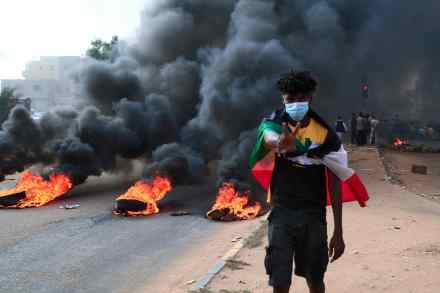
Sudan’s army has just dissolved the government, dismissed the prime minister and declared a state of emergency. That certainly sounds like a coup — but it’s not, unless you count the army taking over from itself as a coup. The two uniformed power brokers who effectively controlled Sudan last week (a regular soldier called General Burhan and an opportunistic warlord lieutenant general Hamdan) still control the country this week. My Oxford English Dictionary defines a coup as a ‘sudden and decisive stroke of state policy’ and also as ‘a finishing stroke.’ Sudan’s coup that is not a coup was neither sudden nor decisive.

Africa’s empty vastness has vanished under the concrete of the present day

From our UK edition

Kenya   When I was a child in Kenya, the road from the Indian Ocean up to Nairobi was still a dirt track, with the way frequently blocked by a rhino or large herds of elephant. A few decades later, the route has two railways and the road is an unbroken column of lorries heading all the way to the Congo. Africa is growing so fast that older people like me feel a kind of existential jetlag — or a sort of phantom limb syndrome, in which our eyes still see empty wilderness, plains and forests of a recent past that have vanished under the concrete of the present day. Whatever still survives is changing at tremendous speed. Twenty years ago two lonely stone pillars stood on the empty savannah west of where I write this on the farm we have built up.

Tough times for tenacious Tigray

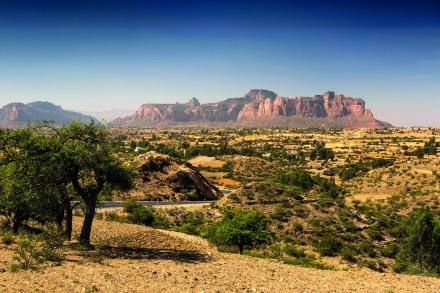
Tigray, Ethiopia’s most northerly region, makes its presence felt all the way down in Addis Ababa, about 430 miles to the south. Even before the current fighting, the prettiest beggars in the rambunctious and strangely endearing Ethiopian capital tended to be the Tigrayan single mothers. They made that daunting journey to escape a rural existence that struck me, during my trips around Tigray, as not dissimilar to European life during the Middle Ages. When I lived in Ethiopia, I reported from all over Tigray on humanitarian projects, tensions with Eritrea and the influx of Eritrean refugees, even on a brave British expat who was trying to establish a milk farm.

tigray

Wrapped up in satire, a serious lesson about the fine line between success and scandal

From our UK edition

Have you heard of champing? Neither had I. Turns out it’s camping in a field beside a deserted church. When it rains, you abandon your flimsy tent and instead bed down in the hushed aisles. At the beginning of Ferdinand Mount’s new novel, Making Nice, Dickie Pentecost and his wife Jane, together with their daughters Flo and Lucy, are doing just that. In the morning they meet fellow champer Ethel, short for Ethelbert, a bewitching man with stony eyes and sticking-up hair. ‘Ethel,’ says Dickie. ‘I suppose they could have shortened it to Bert instead.

Our farm is a haven for lost souls

From our UK edition

Laikipia He was turned out in a crisp bush ranger’s uniform and handled his assault rifle like a man hardened in the field for years to take on bandits and elephant poachers. ‘Ah Mario, what a pleasure it is to meet you again after all this time,’ I said. His severe military face collapsed into a beaming smile as he snapped to attention and slope-armed his weapon. He then relaxed and we chatted for a while on the roadside in our farming district, where I’ve been around so long now that I frequently encounter people whom I’ve known all their lives. Some, like Mario, even have a few wrinkles, greying hair, a couple of wives and several children. The farm has always been a refuge, remote from towns and the life outside.

The Nobel truth

From our UK edition

I suspect that there are no people in the world quite so right-on as the Nobel prize committee members. A bunch of affirmative-action hand-wringing Scandies, desperate to prove that they are woker than thou. This mindset brought the Nobel peace prize to Barack Obama before he had actually done anything, if you remember. He later brought peace to nowhere. The scarcely less risible award of the literature prize to Bob Dylan followed shortly after, presumably for lines such as: ‘Twas in another lifetime, one of toil and blood / When blackness was a virtue and the road was full of mud.’ Bob’s award reminded me of the BBC turning paroxysms in an effort to be ‘hip’ when Lou Reed shuffled off his mortal coil.

Brexit is good news for Africa

From our UK edition

Few who voted for Brexit were actually racists, much as those opposed to the project would like to have you believe. There were probably as many reasons as the 17.4 million people who voted to leave the EU. For example, I am an African-born British citizen who enthusiastically campaigned for Brexit, hoping that an independent United Kingdom would offer mother Africa a better future. Brexit should create an opportunity for Africa, not only to escape the crippling EU Common Agricultual Policy but also to trade itself out of the dehumanising poverty through equitable trade deals. Even the EU's supporters accept that the Common Agricultural Policy is a disaster for its southern neighbour.

What a comic treat: The Game of Love and Chance at the Arcola reviewed

From our UK edition

Lady Sylvia is a gorgeous aristocrat whose hand is sought by the charming Dorante whom she has never met. To avoid the stiff formalities of courtship, Lady Sylvia swaps places with her maid and observes Dorante from the safety of pretended servitude. But instead of falling for Dorante, she becomes enamoured of his manservant. However, there’s another wrinkle coming in Marivaux’s classic comedy. Deronte’s manservant, unbeknown to Lady Sylvia, is actually Dorante himself, who has pulled an identical switcheroo with his valet. The story is so hopelessly contrived that its sheer artificiality becomes part of the joke. This production of The Game of Love and Chance, directed by Jack Gamble, captures the fun-loving spirit of the original.