Africa

South Africa now has its answer to ICE

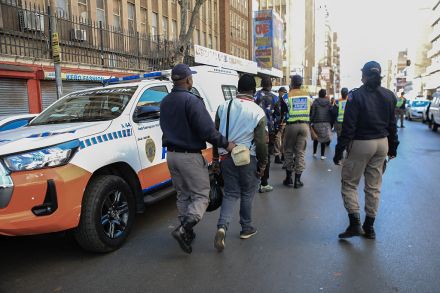
A force of 10,000 inspectors is being recruited to weed out foreigners: door-to-door across the nation, they will check mines, factories and shops, rounding up those without papers for deportation. Oh, and the target will be black people! Trump madness? Marine le Pen? No, this is South Africa and a project launched by President Cyril Ramaphosa to expel millions of black migrants from across the rest of Africa who have jumped the border or overstayed their visa.  It's Africa's answer to ICE, though you won't find many people protesting: quite the opposite.  Government and the police are desperate to demonstrate they're on top of the problem; to assuage the rising rage of native South Africans, and try to stop them taking matters into their own hands.

South Africa

Where to watch the World Cup in DC: Cockburn’s comprehensive guide

The World Cup begins this week, and Americans have been celebrating as only we know how: by fighting Europeans on social media about stadium size and atmosphere, and banning Africans and Middle Easterners from the country. Nonetheless, the next month offers a great opportunity to take advantage of DC’s status as a truly international city, and fraternize with foreigners while watching multimillionaires pass a ball around in 100-degree heat. For today’s special sports edition of Cockburn’s Diary, here’s your correspondent’s guide on where to watch each team in the District. Germany The Brig The Brig describes itself as a “secret beer garden.

The wonder of nature’s ability to heal itself

From our UK edition

A decade ago, I planted 12 acres of trees in a field that had proved unsuitable for productive grazing. The trees themselves are doing well but the most remarkable change has been the increase in birds, invertebrates and flora. Each year brings new species, new levels of abundance. It has been very satisfying and strangely quick. We’re encouraged to think that the planet’s natural processes work if not always at a geological pace, at least not in the instant reward timeframe that characterises our own brief lives. In Nature’s Echo, the leading ecologist Thomas Crowther takes this capacity for nature’s rapid recovery as one reason why we should temper pessimism about environmental catastrophe.

The joyful mayhem of meteorite hunting in Africa

From our UK edition

Nairobi Eastleigh, the Somali quarter in Nairobi, was a scene from Blade Runner but in African Islamic dress. Muezzin calls to prayer bounced off canyons of rickety concrete towers. My friends led me through the bazaar of smuggled electronics, perfumes, truck tyres, gold dealers and money changers. In this monsoon version of Harrods, I imagined you could buy whatever came to mind: Tehran’s uranium, a live Quagga, Ovid’s lost work Medea or an intact Spitfire. That great Arabist Tim Mackintosh-Smith, writing about the souks in Yemen, observed that he probably saw his old school blazers in among the piles of secondhand clothes there – and it was like that. One just has to ask in Eastleigh, the biggest market in Sub-Saharan Africa.

The cattle rustlers have returned

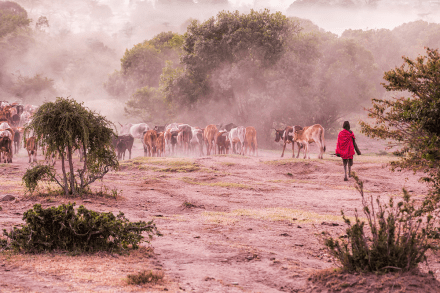
Kenya When a mob of Somali cattle I bought in Kenya’s far north arrived on the farm in February, we quarantined them in a remote corner. To protect them against lions they slept in a boma with high drystone walls topped with treacherous thorns, guarded by a fierce police-licenced guard named Joseph. The Somalis are great stockmen, though these beautiful beasts, known as Awai, are more long-legged and rangy than our traditional ranch Borans. My lorryload of cattle had survived a two-year drought on rocks and dust and they could walk hundreds of miles to water, yet they were randy and highly fertile. These are ancient cattle, of the sort that you see in petroglyphs and ochre painted on rock faces across Africa. I have fallen in love with them.

Ladies love an eye patch

From our UK edition

Kenya While we were loading two stud bulls and eight hoggets onto a lorry in my ranch’s yard in the African dawn this morning, the farmer buying them saw my bandaged right hand and asked with great concern: ‘Ooh my brother! Did you injure yourself handling your cattle?’ Kenyans are by nature warm and kind. ‘Don’t worry,’ I said standing in an honest expanse of cow shit. ‘It was no accident. Just an operation to straighten out my fingers.’ ‘Do you find it tiresome to drive?’ asked a ranching neighbour at an ebullient lunch overlooking the wilderness towards Mount Kenya this afternoon. ‘No, but it’s tricky if I try to shoot in the general direction of a monkey raiding the garden.

Smashing South Africa’s last relationship taboo

From our UK edition

Cape Town As a young FT stringer in Dar es Salaam in the 1980s, I used to hang out with South African guerrillas from rival factions who, instead of waging war against apartheid, spent their energies fighting each other over stolen cars and quaalude-smuggling, or party-ing hard. In our late-night drinking sessions, these Marxist cadres happily taught me, a white son of colonialism, a chant that went: ‘One Settler! One Bullet! SETTLER, SETTLER! BULLET, BULLET!’ It was so hot on those evenings in Dar that we used to take turns climbing into our flat’s chest freezer to cool off for a few minutes. It was quite a thing to see a Zulu bursting out of it like a jack-in-the-box, singing revolutionary anthems.

What’s wrong with the West?

It is 25 years since Theodore Dalrymple published Life at the Bottom: The Worldview that Makes the Underclass. In this now famous set of essays, Dalrymple, who worked as a psychiatrist in British prisons, describes the damage done to the poorest in society by the West’s progressive middle-classes, who encourage criminals to see themselves as victims and cheer on the destruction of the traditions and norms that once guided working-class life. On the other side of the Atlantic – and the other side of the middle-class divide – the writer Rob Henderson came to the same conclusions as Dalrymple.

Nothing gets rid of friends like the breakdown of a marriage

From our UK edition

Kenya An unexpected subplot in the ending of my marriage has been the loss of dear old friends. It came as no surprise that a hot flush of middle-aged women took sides, ensuring that certain west London postcodes felt like enemy territory. The end of a comradeship that had survived wars and the deaths of colleagues across 34 years, however, was a terrible blow. A friend of 30 years who decided to circulate secretly photographed images of me with my girlfriend enjoying sundowners at a bar came as a surprise. With another, a terminal chain reaction that began with a tiff over a cattle trough reminded me of Gogol’s story about the two friends called Ivan who have a lifelong falling out after one Ivan calls the other Ivan a goose.

Trump’s peace process pageantry

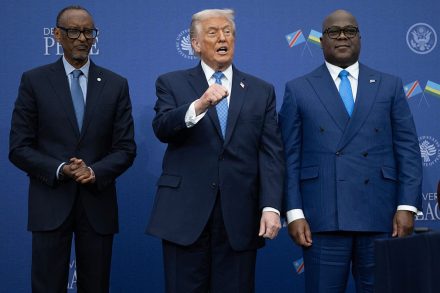
The US Institute of Peace was taken over by DoGE in January and now appears to have undergone a makeover both inside and out. Its new name is emblazoned on the front: “Donald J. Trump Institute of Peace.” The President loves deals and good branding, perhaps as much as he professes to love peace. On Thursday, in the high-ceilinged atrium of the building, he hosted a celebration of a peace agreement between the Democratic Republic of Congo and Rwanda. The actual peace agreement in question was signed over the summer with shaky results. Nevertheless, leaders from several East African nations, as well as the UAE and Qatar turned up to bear witness to the ceremonial acknowledgement of the agreement.

donald trump peace

The science of marriage

“Those whom God hath joined together, let no man put asunder.” With this stern admonition, the Church has long been a fervent defender of marriage. But as religion has faded as a social force, so too has marriage.  Does it much matter if people choose to shack up together instead of tying the knot? What is lost if some men want to be incels or some women decide a husband is a bothersome surplus to their needs? The problem is that all lifestyles alternative to marriage serve to undermine it. And like other major social institutions, marriage is not some arbitrary cultural construct like a federal holiday. Rather, it rests on genetically shaped behaviors that evolution has written into the human genome because of their survival value.

Marriage

Do black lives still matter?

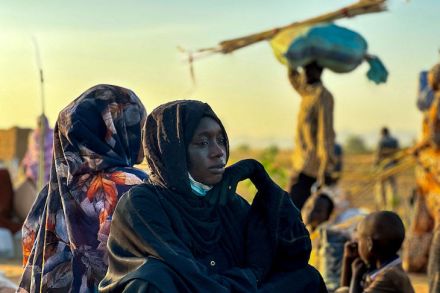
It was an ethnic massacre so bad that it could be seen from space. Satellites picked up bloodied patches of soil in North Darfur’s capital, El Fasher, after Sudan’s Rapid Support Forces (RSF) swept into the besieged city. Pools of blood and piles of bodies were identified. Thousands of people are feared to have died in the appalling violence. Many thousands more have fled for their lives. Others remain trapped in the city. The scenes of slaughter were so blatant that it should have brought marchers out onto the streets in passionate protest. But there wasn’t a peep from the usual suspects. Was this because the killings did not take place in Gaza or the West Bank, but in Sudan, one of Africa’s largest countries?

sudan darfur

James Heale, William Atkinson, David Shipley, Angus Colwell and Aidan Hartley

From our UK edition

25 min listen

On this week’s Spectator Out Loud: James Heale says that, for Labour, party conference was a ‘holiday from reality’; William Atkinson argues that the ‘cult of Thatcher’ needs to die; David Shipley examines the luxury of French prisons; Angus Colwell provides his notes on swan eating; and, Aidan Hartley takes listeners on a paleoanthropological tour from the Cradle of Mankind.  Produced and presented by Patrick Gibbons.

The Rockefeller Wing reopens

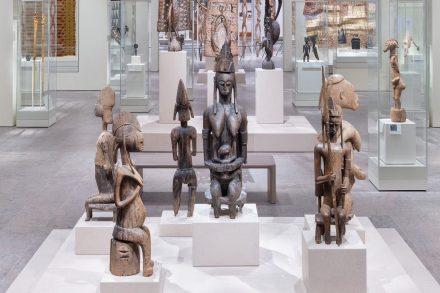
Of the 1,800 objects on display at the newly reopened Michael C. Rockefeller Wing at The Metropolitan Museum of Art, the funerary poles of the Asmat people stick out.  At 15 feet tall, they tower above the swarm of visitors and nearly touch the newly rendered, gorgeously curved ceilings. The poles, decorated with carvings of haunted-looking faces and bodies, were traditionally made to mark a violent death. Once that death was avenged, the poles were removed to the woods, where they were left to decay.  These particular poles have further meaning, though, beyond their eerie beauty and the symbolism they confer of the cycle of life. They were collected by Nelson Rockefeller’s son, Michael, on a trip to spend time with the Asmat in New Guinea in 1961.

How John Egan has stayed in the saddle

From our UK edition

Pop stars rock on nowadays into their seventies. And jockeys too – despite the physical dexterity and instant-decision-making required – are lasting longer. Jimmy Quinn and Franny Norton only quit the saddle in their mid-fifties; Joe Fanning is still going strong at 55. On a sweltering Ascot day recently I enjoyed a chat with John Egan, who was handling the heat better than much younger rivals and is still in demand at 56. Remembering past successes, including the Irish 2000 Guineas on Indian Haven, July Cups on Les Arcs and Passive Pursuit and an Ebor Handicap on 100-1 shot Mudawin, I asked if there was a particular race he still hankered after winning. Egan smiles easily but the answer was a pistol shot: ‘I want to win them all.

Labour is risking the future of racing

From our UK edition

The only political party with a serious chance of winning office I will ever vote for again is the one which acknowledges that in all probability and at least for a while it will increase taxes. Every party piles up promises that they will be the ones to get Britain working again. But building power stations, reservoirs and schools costs money. So does hiring doctors and nurses, filling potholes and getting trains to run on time. Some claim they will finance their plans by creating growth, some by taxing the rich. Then voters discover that the growth fairy remains elusive and the rich have been re-defined to include them: public regard for politicians takes another dive.

I Dream of Lamu

An hour after the propeller plane lifts away from Wilson, Nairobi’s regional airport, it is arching over the blues and greens of the Lamu archipelago; a pattern of islands that extend 130 kms to the Somali border. Views of Lamu, which is also the name of the island and the stone town, have the dreamlike quality of an acid trip; the candy-pink minaret of the main mosque rising over coralline houses in the oldest, continuously inhabited, settlement on Kenya’s Swahili coast. And beyond the hazy shoreline, confetti-scatterings of white are the dhows that powered the fortunes of this former hub and deep-sea port. These criss-crossed the Indian Ocean on seasonal monsoon trade winds swapping ivory and slaves from the African hinterland for silks and spices from India, Yemen and Oman.

Remembering the horror of Rwanda’s genocide 

From our UK edition

Rwanda It had been more than 30 years, yet I recognised the church and its surroundings instantly. Superimposed on the tidy green sward of today, I recalled the rags, shoes and corpses I saw here in May 1994. There are gaps in my memories of Rwanda. But the parts I do recall are explosively vivid, as if branded on my retina, like those people outside the church. They’d lost heads and limbs and every-body was dead, but the scene was alive. I could see and hear their last moments. A woman lay in my path, on her back with her gingham skirt hitched up around her thighs. Not much flesh left on her skeleton, her hair sloughing off, her face and frame frozen at the end of her rape, when her attacker shot her in the heart.

I’m losing the will to hunt

From our UK edition

Laikipia, Kenya When I was eight I used to go fishing in the Indian Ocean beyond Vasco da Gama’s pillar with Mohamed. Once we pulled out a fish with a domed forehead and a sailfin – a filusi. In Spanish it’s known as the dorado, referring to its iridescent golden flanks. As we watched the fish suffocate in the tropical air, its pigment, sheathed with a patina of stippled green, was transfigured for a brief instant like a beam of sunshine on a church mosaic. Then the dorado’s brilliance faded, and by the time Mohamed picked up his knife and sliced open her belly, removed the guts and tossed the body to the bottom of the canoe, it had turned to tarnished lead. As a boy, my hunter’s remorse was as strong as my urge to kill.

The elephants I’ll never forget

"No lions?” “No lions. It’s fast-flowing water, so there shouldn’t be any leeches. We do have slender-snouted crocodiles, but they’re quite shy.” “Hippos?” “One we see every now and again.” Swamp-walking hadn’t been on the year’s bingo card, but I’d found myself wading through clusters of floating dung and algae in the largest tropical rainforest on the African continent. Rubber slip-ons heavy with silt, sulfurous foam collecting in my shirt pockets, I felt strangely calm. As a day, this was turning out to be exceptional. It had been the invitation of a lifetime: to add my name to the list of a few hundred outsiders who have stamped a boot in the Congo Basin, one of the wildest and most remote places on Earth.

elephants