Adolf hitler

Why are we so obsessed with Hitler’s penis?

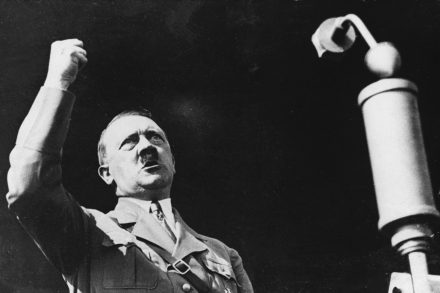
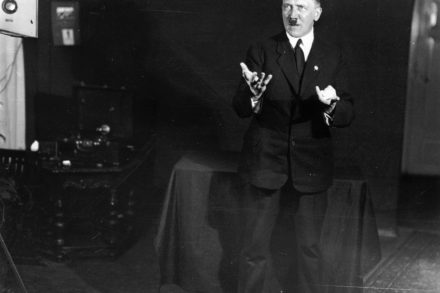
We care about Adolf Hitler’s penis, as a society. Quite a lot, it seems. A British documentary claims, finally, to have solved the mystery of the Nazi leader’s schwanz – was it big or was it small? – and to have proven, beyond a shadow of a doubt, that the famous chant of “Hitler’s only got one ball,” a favorite among British soldiers, wasn’t just an idle insult. The key evidence is genetic: a blood-stained piece of fabric from the Hitler bunker. The documentary filmmakers tested it against a sample from one of Hitler’s closest living relatives to make sure the blood was his. And it was. That meant his genome could be sequenced and then analyzed for genetic clues about his personality, health and, of course, his manhood.

Hitler

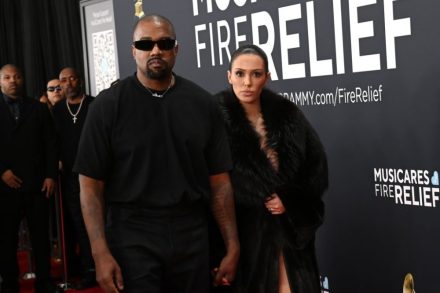
Is Kanye West more powerful than Donald Trump?

There are powerful men, and then there is Kanye West. Or Ye, as he now calls himself. While the world spends its energy analyzing the muscle of nation-states, few seem willing to grapple with a far more disturbing, modern form of power: cultural invincibility. In that particular department, Kanye West is in a class of his own.How, I ask, are we to define power in the 21st century? Is it the ability of world leaders like Donald Trump to impose tariffs, pass legislation, launch missiles, control borders? Or the ability to say the unspeakable, do the unacceptable, and still survive – but thrive? If the latter, then it’s time we admit something uncomfortable: Kanye West may be the most untouchable man on the planet.Let me be very clear. This is not a celebration; it’s a diagnosis.

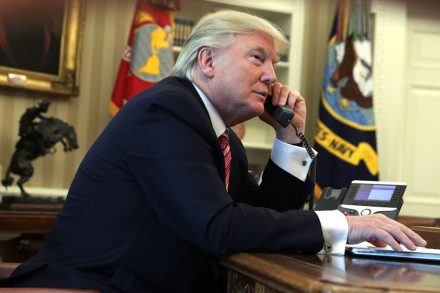
The utterly idiotic reaction to the Trump-Putin phone call

President Donald Trump called Russian president Vladimir Putin yesterday and discussed various topics, including the war in Ukraine, for an hour and a half. According to Trump, the two agreed to begin negotiations on ending the three year-long conflict immediately and even set up preliminary talks about traveling to one another’s capitals. Shortly after the call with Putin, Trump dialed Ukrainian president Volodymyr Zelensky for yet another conversation that reportedly went ”very well.” Trump’s call with Zelensky, of course, wasn’t the controversial part. Nobody had a problem with it. The dialogue with Putin, however, was apparently blasphemy, akin to violating all of the Ten Commandments on the same day.

call

Democrats ramp up efforts to tie Trump to Hitler

Democrats including presidential nominee Kamala Harris and 2016 candidate Hillary Clinton are accusing their Republican opponent of being a Hitler-esque fascist. Spurred by a curiously thin report from the Atlantic claiming that former president Donald Trump disrespected the memory of a fallen soldier and praised Adolf Hitler and his generals, Harris held a press conference on Wednesday in front of her Washington, DC residence in which she warned Trump is “increasingly unhinged and unstable.” During a CNN town hall later that evening, Harris answered in the affirmative when she was asked if she believes Trump is a fascist. Meanwhile, Clinton likened the upcoming Sunday Trump rally at Madison Square Garden to an event held by Nazis at the same venue in 1939.

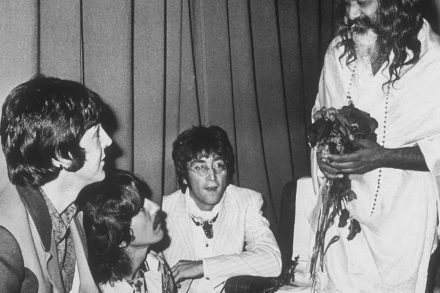
The problem with westerners seeking enlightenment in Asia

Call it a prejudice if you like. Living in Japan in the 1970s, I had a slight aversion to a particular type of westerner. He — for it was mostly a he — usually lived in Kyoto, sometimes wore a kimono and liked to sit in ancient temples chasing after that presumably blissful moment of enlightenment, awakening, satori, or whatever one wishes to call it. These seekers were less interested in Japan as a society of human beings. They wanted to float in higher spheres. As Christopher Harding explains in The Light of Asia, the Zen adepts, the Buddhist chanters, the rock-garden worshippers, the kimonoed fools (in my no doubt blinkered eyes) were part of a long western tradition.

Asia

A hundred years on from the Munich Putsch

There’s a school of thought that says the events in Washington, DC on January 6, 2021 were the great communal wound of Western democracy, an outrage seen around the world when a retired cowboy dared put his boots up on an aide to the speaker of the House’s desk (he later got four-and-a-half years for his trouble), and the commander-in-chief tried to grab the steering wheel from a Secret Service agent to turn his SUV around in the direction of the mob so he could join them. “I did not seek the fight brought to this Capitol, but I will not shrink from it either,” President Biden announced through clenched teeth in a speech delivered just outside the House chamber a year later. “I will stand in this breach. I will defend this nation.

munich putsch

Vladimir Putin is simply mad

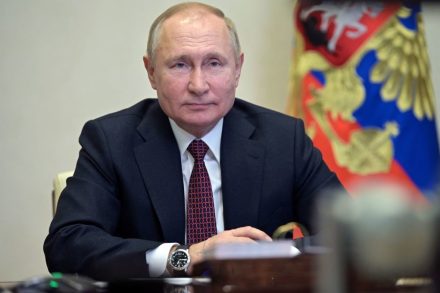
Vladimir Putin is mad: not in the cognitive but in the emotional sense of the word. He is an odd mixture of the cold, the plotting, the calculating, and the bloodless; the emotional, the impulsive, the hotblooded, and the sentimental. He is mad, in other words, in precisely the way that Adolf Hitler was mad. And like Hitler, Putin is disconnected from the world of fact but not of logic. This is a fundamental truth about the man that I think the West had never experienced before February. His condition became apparent in the diatribe against the West that he gave on Friday, which corresponded almost exactly to Hitler’s customary rants.

nuclear tactical putin war

Time to retire the ‘Munich’ analogy?

The Ukraine crisis signaled to Western officials and pundits to once again begin recycling the historical analogy of the 1938 Munich Agreement, which handed Nazi Germany parts of Czechoslovakia in a failed bid to head off major conflict in Europe. This was expected. Such comparisons are usually followed by the predictable warnings about the danger of Western “appeasement.” Hence British defense secretary Ben Wallace has recently compared Western diplomatic efforts to head off a Russian invasion of Ukraine to the appeasement of Nazi Germany ahead of World War Two, suggesting that unnamed Western countries were not being tough enough with Moscow.

The techniques of totalitarianism are still fully in play today

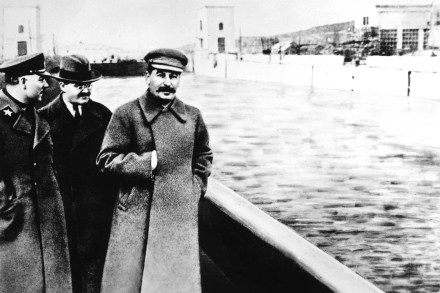
How to Become a Tyrant (Netflix) is ideal history TV for Generation No Attention Span. Presented in six bite-sized chunks by Peter Dinklage, aka the ‘Imp’ Tyrion Lannister from Game of Thrones, it tells you most of the things you need to know about Hitler, Stalin, Mao, Gaddafi, Kim Il-Sung, Idi Amin and Saddam Hussein, without obliging you to think or grapple with any tedious detail. Instead of examining the dictators individually, it explores their careers thematically, looking for the ingredients they have in common. It’s split into half-hour episodes — ‘Seize Power’, ‘Crush Your Rivals’, ‘Reign Through Terror’, ‘Control the Truth’, ‘Create a New Society’, ‘Rule Forever’ — which mix contemporary film footage with attractive animation.

tyrant

Kingdoms of the wicked

This article is in The Spectator’s January 2020 US edition. Subscribe here. Frank Dikötter has written a lively and concise analysis of the techniques and personalities of eight 20th-century dictators: Mussolini, Hitler, Stalin, Mao Zedong, Kim Il-sung (North Korea), François ‘Papa Doc’ Duvalier (Haiti), Nicolae Ceausescu (Romania) and Mengistu Haile Mariam (Ethiopia). As a comparative study of those individuals, it is enlightening and a good read. The title and parts of the foreword indicate that it aspires also to be a guidebook of dictator tactics. There are some weaknesses in this broader ambition. These eight men were not altogether uniform in their methods of obtaining, retaining or losing power, and certainly not in their abilities.

dictator

The hunt for the Führer

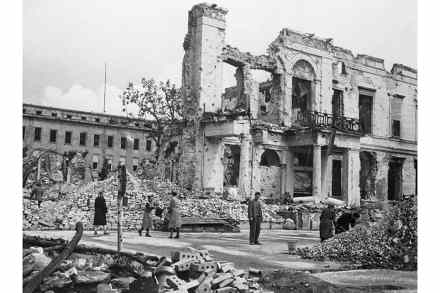
I cannot now remember when I first read Hugh Trevor-Roper’s The Last Days of Hitler (1947). My memory is confused by the fact that I knew the author in old age and was to become his biographer; Trevor-Roper himself told me about the extraordinary circumstances in which he had come to write the book. In September 1945 he had been awaiting discharge from the army so that he could resume his pre-war role as an Oxford don, when he was asked to undertake an urgent investigation into the fate of the Führer. This was then a mystery. In January, as the Allied armies invaded Germany, Hitler had retreated to an underground bunker below the Reich Chancellery in Berlin, to escape Allied bombing; his last months would be spent in these eighteen small and windowless rooms.

hunt führer

Candace Owens and the rise of the know-nothing public intellectual

Adolf Hitler ruined nationalism for everyone, says Candace Owens, which is something of a niche complaint. (She had nothing to say about the toothbrush mustache which, in the 1920s, was a sign of moral seriousness.) Owens is African-American, and a rising star in Trump circles in the way that if you are African-American, or gay, and a Trump supporter, you become a rising star, because the pool of talent is thin and the airwaves – I mean Twitter and Instagram - are fat. ‘Whenever we say “nationalism,”’ Owens said, like a woman reciting a wonky Wikipedia page from memory, ‘the first thing people think about, at least in America, is Hitler.

candace owens turning point usa

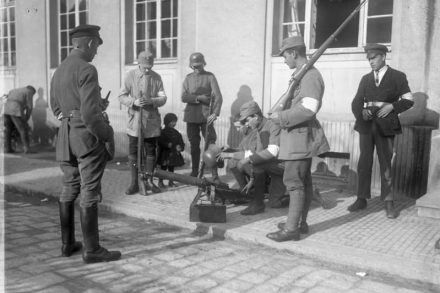
Hitler, a hundred years ago

When World War One ended at 11 in the morning of November 11, 1918, Winston Churchill was in his ministerial office near Trafalgar Square. At the first stroke of the chime, ‘from all sides men and women came scurrying into the street’ as the bells of London pealed. ‘Around me, in our very headquarters, disorder had broken out – doors banged; feet clattered down corridors; everyone rose from the desk; all bounds were broken. The tumult grew, it grew like a gale, but from all sides simultaneously. The street was now a seething mass of humanity. Flags appeared as if by magic, streams of men and women flowed from the embankment. They mingled with torrents pouring down the Strand.

adolf hitler world war one

Hitler’s descendants think Trump is doing a bad job

Donald Trump has been dogged by Nazi associations, whether it’s his reluctance to condemn David Duke during the campaign — after temporising, he finally said ‘I disavow,’ though what, exactly, he was disavowing he left unclear — or the Charlottesville rally, which he said in August 2017 had ‘some very fine people on both sides.’ Now comes Germany’s popular tabloid Bild newspaper to sound out Hitler’s surviving great-nephews — Brian, Louis, and Alexander Stuart-Houston — about their views of Trump. They represent the last paternal bloodline of the family and live on Long Island. Their father William Patrick was born in 1911 in Liverpool, the descendant of Alois Hitler, a half-brother of the Führer.

adolf Hitler’s descendants