Activism

The radical left will regret embracing political violence

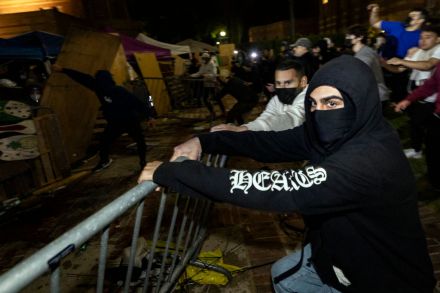
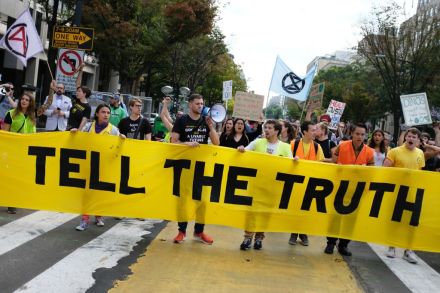
What are the circumstances in which it is right to smash up a building? When might one justifiably destroy an artwork? And what are the conditions under which one might splinter someone’s spine with a sledgehammer? Many on the left seem to have satisfied themselves on all these questions. But I wonder if they have even begun to reckon with the consequences. One can only hope that those who urge on ‘direct action’ have no idea how slippery a slope they are on Back in 2019 a group of activists from Extinction Rebellion took their views on fossil fuels to Belvedere Road in central London. There, at the site of the Shell building, they smashed windows, spray-painted walls and caused other criminal damage.

Rumpelstiltskin retold: Alive in the Merciful Country, by A.L. Kennedy, reviewed

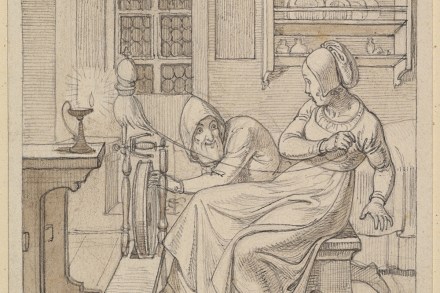
For Anna, wickedness istypified by the villain ofa fairy tale –Rumpelstiltskin The narrator of Alive in the Merciful Country is a woman weighed down by past trauma ‘like a bag full of broken kaleidoscopes’. Anna is a teacher steering her nine-year-old pupils through the 2020 lockdown while coping with life as the single mother of a troubled teenage boy, trying to rebuild trust after a shattering betrayal: ‘I didn’t ask to be in a spy scenario, or an action scenario, or a political thriller, but I recurringly have been.’ Damaged by life, she has learned to question misuse of power, personal and political: quis custodiet ipsos custodes indeed. Fans of A.L. Kennedy will love this book.

No laughing matter: accusations of transphobia wrecked Graham Linehan’s life

Graham Linehan is an unlikely political campaigner, but in 2018 the sit-com writer embarked on a second career in what is possibly the most contentious and vitriolic arena of our time. According to Linehan, he was fighting for women and children, but his advocacy has cost him dear. Accused by his opponents of transphobia, he has found himself out of work and out of his marriage. Jobs began falling away, and a tour to Australia to teach comedy was cancelled In Tough Crowd, he tells the story of how he ‘made and lost a career in comedy’. It’s a tough read – a man who once made so many people laugh saw his career come to a ‘screeching halt’. Love him or loathe him, he is undeniably forthright and unapologetic.

‘The truth will make us free’: students on the march in post-war Europe

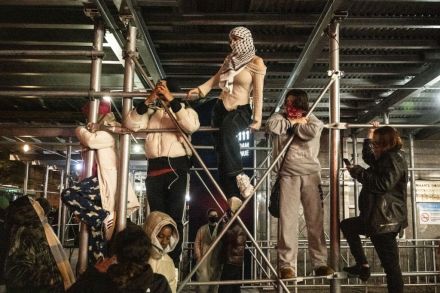
One night in early autumn 1982, two young men roamed the streets of Lodz in Poland. It was a dark period in the country’s history – one of many. A mass movement led by the Solidarnosc trade union had recently attempted to challenge the communist regime which had kept the country under a heavy Soviet yoke, with little to offer but food shortages, economic decline and the erosion of national identity. The authorities had responded with force to the widespread strikes, declaring martial law in December 1981 and rolling tanks into cities. Protests were silenced with guns. Thousands were arrested and dozens killed. When Waldemar Fydrych and Piotr Adamcio wandered through Lodz months later, the streets were eerily quiet.

The rise of the neo-Luddites

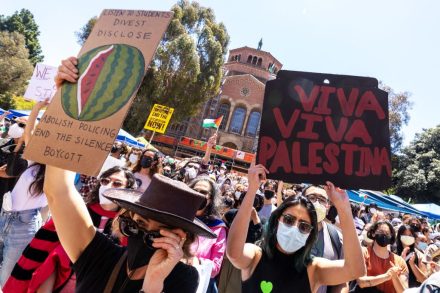
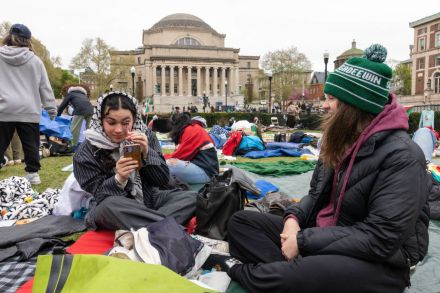
Yesterday, a pair of Just Stop Oil protesters glued themselves to a John Constable painting in the National Gallery, covering The Hay Wain with a printout of an alternative vision of England. The cart crossing the River Stour in Suffolk is perhaps Constable’s most famous painting. But instead of a bucolic, biscuit tin Albion, Just Stop Oil’s version shows the Stour tarmacked over, a belching power plant in the distance and a commercial jet overhead. The message is clear: our modern world is sick. I have some sympathy with these student activists, or at least I envy their certainty. Their view of the world is simple: bad things like fossil fuels, industrialisation, and consumerism can be stopped merely by taking a stand.

Watch Andrew Marr stare at places where stuff happened: New Elizabethans reviewed

Congratulations, everyone! It turns out we’re much better than those bigoted old Brits of the 1950s. After all, they were ‘class-obsessed, overwhelmingly white and Christian, and deeply conservative about the role of women’ — whereas we ‘accept difference and diversity in a way that would have been almost unthinkable in 1953’. This was the reassuring message in the first episode of New Elizabethans by Andrew Marr, where Marr surveyed Britain’s changing social attitudes since the Queen came to the throne, and liked what he saw. These days, needless to say, the ‘great man theory’ of history has rather fallen out of fashion — so instead Marr brought us a sort of ‘great activist’ version.

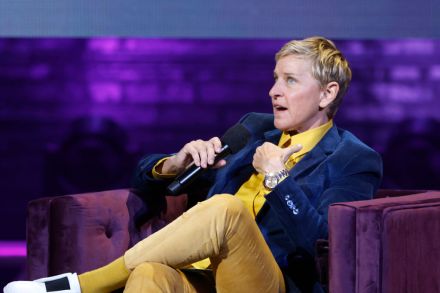
Titania McGrath: ‘I can’t forgive Florence Nightingale for her silence on non-binary rights’

How has Titania found lockdown? I conduct most of my activism through Twitter, so lockdown has not prevented me from spreading my important message of social justice. The trick to Twitter is always to include a rainbow flag and pronouns in your bio. That way, when you’re calling your opponents evil, lowlife scumbags, trying to get them fired, or gloating if they die, everyone will know that you’re actually incredibly compassionate. You cite the likes of Meghan Markle, Hillary Clinton and Joseph Stalin as key influencers for children growing up today. Who were your own role models growing up? I did used to look up to Florence Nightingale, but then I found out that she never said anything in support of non-binary rights, so I have to assume that she was transphobic.