5g

The Huawei decision does not make technological sense

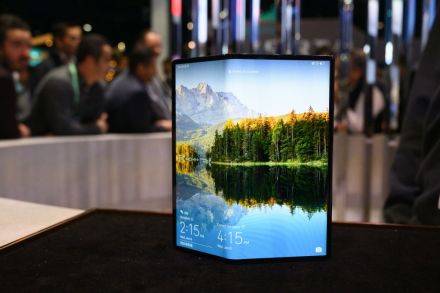
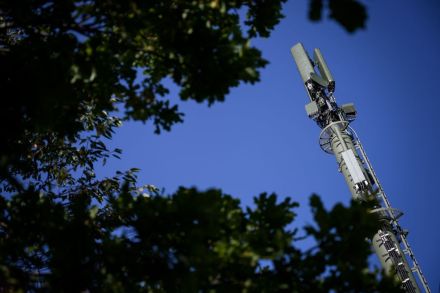
We’re fairly used to this government’s IT blunders now. Only recently there was the fiasco of the NHS coronavirus app – it was predicted here that it would be ‘dead-on-arrival’, weeks before the government was eventually forced to admit the same. Now with each passing month comes yet another poor decision by the UK. The latest of which is the plan to remove Huawei from UK 5G infrastructure over the next seven years. Politically, the justification is sensible. Technologically, it borders on farcical. To understand the Huawei issue, it’s best to think of a simple home network, involving a modem, a WiFi router and a smart TV. All three of these devices play some role in delivering the latest episode of your favourite Netflix series.
It’s not all good news on Huawei

From our US edition

As with any cell phone contract, the devil is in the small print – and that perhaps is the case with the UK government’s announcement today on Huawei. On the face it is, Tuesday’s ban is very good news. Huawei, the Chinese telecoms giants whose detractors claim is a front for the Chinese Communist party’s desire to dominate UK and global advanced telecoms, needs to be out of the UK’s 5G network by later this decade — 2027 — while no new Huawei kit will be sold into the 5G network after the end of this year. However, the small print is critical and there is a catch — or two. BT and other major vendors can still put Huawei kit bought this year into the network until 2026.

huawei

Why is Trump protecting a microchip company with close ties to China?

From our US edition

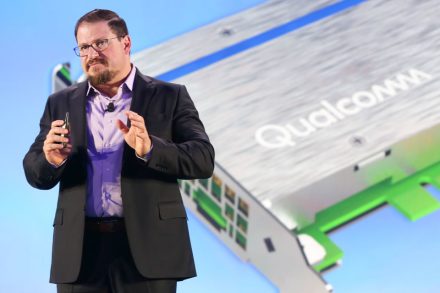
The United States and China are locked in a battle for technological superiority. President Trump has blacklisted tech giant Huawei over concerns the company will leverage its control of 5G networks to spy on behalf of the Chinese Communist party. The crackdown shows the administration is acutely aware of the national security implications of outsourcing network and chip technology. But the concerns don’t end with foreign-owned companies. Qualcomm, US-owned and the one of the world’s largest chip companies, has developed an intensely close relationship with China, potentially making it a trojan horse for communist influence. Qualcomm has been on Trump’s radar.

qualcomm

This pandemic has put politics on fast-forward

‘The normal grease of politics is not there,’ bemoans one sociable cabinet minister. Certainly, the whispered conversations in corridors that make up so much of Westminster life are in abeyance during this period of social distancing. The fact that the backbenches and the cabinet have deep reservations about the government’s approach matters far less than it would in normal times. In the Zoom parliament, there is no such thing as the mood of the House. One Tory grandee pushing for a significant easing of the lockdown complains that the current arrangements ‘make it easier for No. 10 to ignore parliament and cabinet’. But contrary to appearances, politics has actually sped up, rather than stopped, during the pandemic.

Fake news is spreading faster than the virus

Just over a decade ago, I published one of those books with an annoying subtitle beginning with the word ‘how’. It was called Counterknowledge: How We Surrendered to Conspiracy Theories, Quack Medicine, Bogus Science and Fake History. My targets included Michael Moore, Creationists and homeopaths. I concluded that we couldn’t stop anyone circulating their ‘counter-knowledge’ on the internet, but we could at least hold to account ‘lazy, greedy and politically correct academics’ who had abandoned scientific methodology in favour of postmodernism. Otherwise, I warned pompously, quoting the title of an etching by Goya, ‘the sleep of reason will bring forth monsters’.

I tried to warn the National Security Council about China — and was fired for it

From our US edition

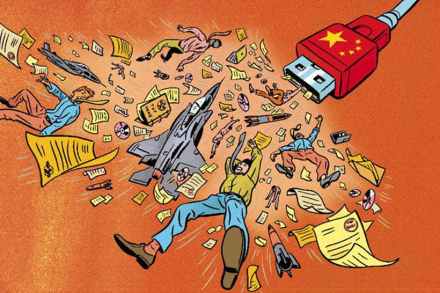
The societal implications of 5G — on how we live and how we work — are truly mind-boggling. And so is the capacity to abuse that power. Let’s be totally clear: anything connected to an unsecured 5G network will be a potential weapon that can be used to gain geopolitical influence and control. If China were to control a 5G network, it would be able to weaponize the technology within entire cities — or entire countries — served by that network and hold that city or state at its mercy.

5g national security council

Coronavirus is a metaphor for Britain’s vulnerability over Huawei

From our US edition

Monday night’s House of Commons rebellion over Huawei was on a surprisingly serious scale for a new government with a big mandate. The problem for the UK government is not just the actual danger of our security being breached by Huawei, real though that is. It is also strategic. The government is not treating the subject this way, but sees it as merely a matter for the Department for Digital, Culture, Media and Sport. This is a bad mistake. We have achieved Brexit. We are making our own way in the world. Our closest allies in terms of trust, language, cultural links, democratic values and shared interests are our four partner nations in the ‘Five Eyes’ deep intelligence partnership — the United States, Canada, Australia and New Zealand.

huawei

The simple trick that will hugely boost your phone coverage

In the recent debate over Britain’s 5G infrastructure, one dog didn’t bark in the night. At no point did anyone dare suggest that, regardless of the supplier, upgrading our mobile networks to 5G might be premature. In saner parts of the economy, an investment requires something called a ‘use case’ or a cost-benefit analysis. In other words, you need to provide some immediate benefits which will arise as a result of your investment. Anything that can be dressed up as next-generation technology is somehow spared that tedious level of scrutiny. All it takes is for the techno-consulting complex to claim that ‘without this we risk being left behind’ and next thing you know there’s a blank cheque.

The brave new world of 5G

From our US edition

To those who understand it, 5G is the next exciting piece of technology and it is coming to your neighborhood soon. For the rest of us, it is a number and letter that mean almost nothing, but we talk about it as if we really do understand our future and how great it's going to be.The theory goes that 5G is a game-changing new generation of wireless technology, a little like the iPhone of today compared with the old rotary telephone. The scientists behind 5G believe it will, at last, deliver very high data speeds to every connected device and do so with extraordinary reliability.Today, 5G has been deployed in 20 American cities from New York to Atlanta with a further 10 coming online before the end of the year.

5g