Place

On the spot along the Outer Banks

Most likely we experience it first as children, on summer vacation or a school trip: the sensation that something really important from a long time ago happened right here, on this very spot. Visits to our national monuments still stir the same old feeling, but, as I am long past childhood, a question arises that did not then. How is it that by stepping literally onto the spot, we step out of our own heads and into the past? The conventional wisdom for the past half-century or so has been that historic sites demand explanation or, in professional jargon, interpretation.

outer banks
Paris

Paris match

“If you wish to meet intellectual frauds in quantity,” V.S. Naipaul once said, “go to Paris.” After two years of pandemic-induced shutdowns and travel bans — some of them instituted, it seemed at times, with the sole purpose of harrying visitors from Britain — it was oddly satisfying, rather than irritating, to be assailed once again by the sciolistic outpourings of aspiring novelists. On mild spring evenings, the Left Bank echoed with the chatter of students and veterans of the creative writing mills of North America. Paris, finally, was emerging from the thickets of depression and terror occasioned by disease, ennui and patrols of gendarmes hunting for delinquents out for a walk.

The island that time forgot

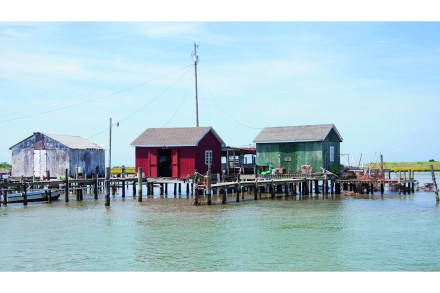
James Eskridge cuts a defiant figure as he rides around Tangier Island on his motorbike. The weathered, garrulous water man known to all as “Ooker” is the mayor, spokesman and public face of one of America’s most endangered communities. Buffeted by rising sea levels and relentless erosion, Tangier is not so slowly sinking into the shallow waters of the Chesapeake Bay, threatening its ancient community of crab-hunting, God-fearing, Cornish-sounding fishermen with extinction. The Chesapeake, site of the first British settlements in America, has some of the highest relative sea rise on the planet. If Tangier disappears beneath its waves, America will lose a living link to its pre-revolutionary past.

tangier
Lincoln

Lincoln’s hideaway

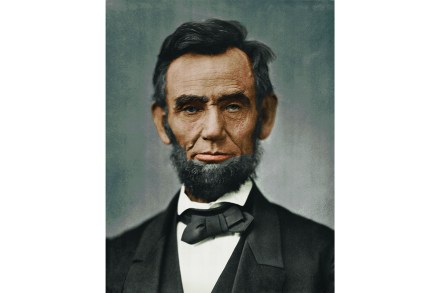
I hope Abraham Lincoln rests in peace. He got little of it as president. What solace he did find often came during stays in what today is known as President Lincoln’s Cottage, a thirty-four-room Gothic Revival home three miles north of the White House. This little-known site is where he, his wife Mary and son Tad lived for thirteen months during summers and falls from 1862 to 1864 — key periods when he wrote the Emancipation Proclamation, when the Battle of Gettysburg was fought, and when he was struggling to win reelection. Lincoln escaped to this 300-acre hideaway, the former home of a banker set on a wooded breezy plateau, to flee the heat — and the White House. His son Willie had died there of typhoid at just eleven, shortly before his first stay.

Who killed Dicky?

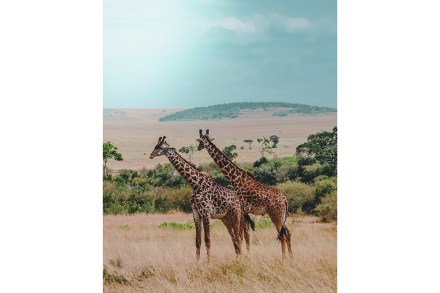
Local chief Panta wore a government-issue khaki uniform with epaulettes, beret and swagger stick. On a pleasant stroll to our farm springs, he observed how plenty of blood had been spilled over this water. We sat on the glassy-smooth black rocks around the water pools and the chief retold for me a story more infamous in its day than the Happy Valley tale of Lord Erroll’s murder, but now completely forgotten. Welshman Dicky Powys, from a family of authors and philosophers and cousin of our ranching neighbor Gilfrid, arrived in Kenya in 1931 to farm. Young Dicky learned the local Maasai vernacular fluently and got on with everybody. His employer had rented pasture in Laikipia around our springs for a vast flock of sheep and Dicky pitched camp here.

dicky
Athens

Souvlaki with graffiti

I’m drawn to sketchiness but even by my sketchy-drawn standards, the state of Athens is deflating. The cradle of Western civilization now appears to be the graffiti capital of the Western world. The luridly colored scrawls are everywhere; Greek grannies air their carpets over balconies marred by multicolored tags and swirls. The Parthenon temple still looks mighty grand atop the ancient Acropolis citadel, but down in the modern city a lot of people look hard-up and downtrodden: lined faces, permanent frowns, hastened aging, disheveled clothes. Wandering through central Athens, I passed two shuttered shops set back from the street. About twenty homeless people lounged in the alcove, amicably passing round substances to smoke and ingest.

Back to Bangalore

India’s fast-growing population now stands at 1.38 billion, just shy of China’s ginormous 1.4 billion. China’s population is rapidly aging, so it’s only a matter of time before a youthful India —average age twenty-nine to China’s thirty-seven — overtakes its communist neighbor and becomes the most populous nation on the planet. I left India as a child, and just spent two months in Bangalore, selling some ancestral property. Bangalore is India’s booming tech hub and Silicon Valley; most major American tech companies, including Facebook, Google, Amazon and Microsoft have opened large offices there to manage their back-end operations.

india

Return to Iraq

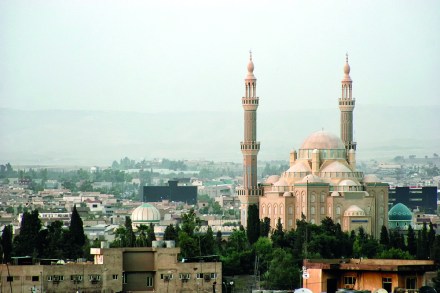
The land around Erbil, the capital city of the Kurdistan region of northern Iraq, is mostly beige, flat and seemingly endless. The mountain has seen a lot of action. The terror group ISIS remains dug in around it and the Kurdish peshmerga, with whom I recently spent time, continue to battle against them. Iraq. Two syllables, almost two decades of conflict. When people think of Iraq they think of several things: the disastrous 2003 war, oil (like all Arab countries in the popular imagination), ISIS and, if they’re a bit older, the mustachioed features of Saddam Hussein that stood, in the early years of this century, for the type of dictator painted as the West’s greatest threat. I think of all those things, too. But they’re leavened by something else: family.

iraq

In search of Sisi

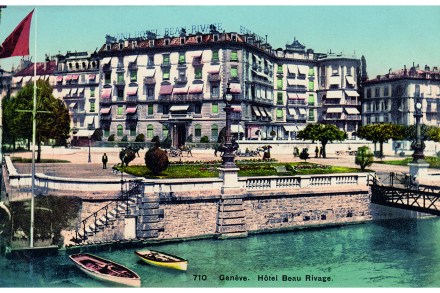
From my plush bedroom in the Beau Rivage, Geneva’s most historic grand hotel, I look down on the lakeside promenade where one of the most remarkable women of the nineteenth century met her dark, dramatic end. On September 10, 1898, Empress Elisabeth of Austria (commonly known as Sisi) was stabbed in the chest by an Italian anarchist as she was about to board a paddle steamer to Montreux. She was carried back into the Beau Rivage and up to the suite where she’d spent the previous night. Within half an hour she was dead. Today, the hotel’s palatial Sisi Suite still looks much as she would have found it.

sisi

Ice fishing in the Arctic

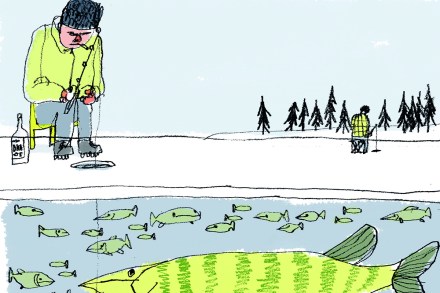
Like a rocket launch from the Cosmodrome, a Russian ice fishing trip must be timed just right. During my month in Archangel, a city in Russia’s far north on the edge of the Arctic Circle, the temperature swung between -30°F and a balmy 36°F. For ice fishing, the closer to the lower end of that range, the better. In fact, it’s a matter of life and death — the ice must have enough time below zero to freeze to a safe depth. I make it up to this chilly harbor town about once a year to visit my in-laws. It’s always a dramatic touchdown at the local airport as the runway, dusted with drifts of snow, appears at the last minute from out of a heavy fog.

ice
prague

Prague by design

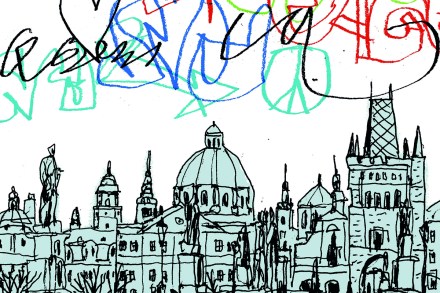
Prague has a graffiti problem. This becomes apparent as the train pulls towards the nineteenth-century Masarykovo Nadrazi station, through the old industrial east of the city. Huge derelict warehouses, some from the communist era, others much older, are covered top to bottom in scrawls and daubs amidst collapsed roofs and glassless windows. It’s unlikely to stay this way for long, though; Prague’s answer to gentrification is swiftly transforming previously rundown areas of the city, making it worth a venture off the beaten track. For all the genteel architecture at its heart, the graffiti is a sign of a city unafraid to show discontent. Trapped behind the Iron Curtain for so long, progress was, for decades, conducted at the whim of communist governments.

Tough times for tenacious Tigray

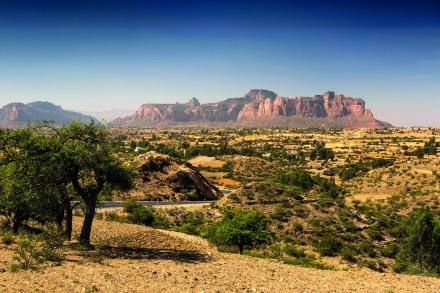
Tigray, Ethiopia’s most northerly region, makes its presence felt all the way down in Addis Ababa, about 430 miles to the south. Even before the current fighting, the prettiest beggars in the rambunctious and strangely endearing Ethiopian capital tended to be the Tigrayan single mothers. They made that daunting journey to escape a rural existence that struck me, during my trips around Tigray, as not dissimilar to European life during the Middle Ages. When I lived in Ethiopia, I reported from all over Tigray on humanitarian projects, tensions with Eritrea and the influx of Eritrean refugees, even on a brave British expat who was trying to establish a milk farm.

tigray

Say yes to Yerevan

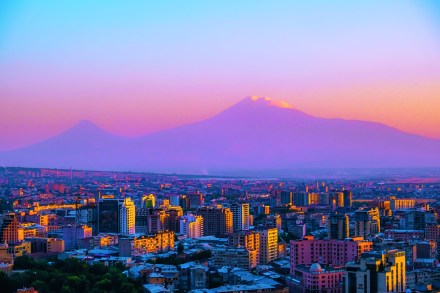
The Iranians, here for the booze and the vaccine, are impossible to miss. But Armenians reminisce that, only a few years ago, you couldn’t throw a stone in Yerevan, their zestful, rhubarb-hued capital, without injuring a Californian or a New Yorker. Americans, they say, used to be ubiquitous in Armenia. This is a claim animated more by nostalgia than fact. The truth is, even prior to the pandemic and last autumn’s horrific war with Azerbaijan and Turkey, Americans accounted for only a fraction of the tourists who flocked to Armenia: in 2019, only 63,000 among the nearly two million foreign tourists, and a majority of those members of the Armenian diaspora. I mention this to say that Americans really are missing out.

yerevan

In search of the Iliad

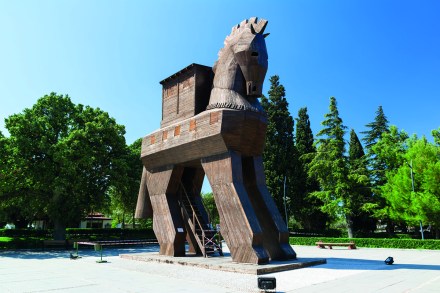
A wooden horse, a fallen hero and Helen, the most beautiful woman in the world. These three things transformed a hillock in Asia Minor into a legendary city. Few places can conjure up such stories of love and loss, homesickness and heroism, gallantry and grief as Troy. Over 3,000 years after Homer wrote in The Iliad of the 10-year siege of King Priam’s mighty citadel, I’m standing on an unremarkable patch of scrubland in northwestern Turkey. This unpromising site claims to be the real Troy — the very spot where Zeus’s daughter Helen fled to make love to Paris; where the mighty Hector, the Trojan general, fell at the hands of Greek warrior Achilles; and where the giant Trojan Horse entered the city concealing Greek warriors in its wooden belly.

troy

Samurai nights in Aizu

I started my visit to Japan’s north country deep in the mountains, in hot water in a bath the size of a swimming pool. Quietly simmering, I was intrigued to notice that the glass which formed the outside wall was not misted up, though the water was steaming. Through the darkness I could make out trees, bushes and the glint of the lake below. I waded over and reached out my hand, only to discover that there was no wall. One side of the bath was entirely open to the air. For the Japanese no journey, particularly to the north, is complete without soaking in as many hot springs as possible. The mineral-rich waters are the upside of the geological turbulence that brought about the devastating tsunami of March 2011. Today everyone knows the name ‘Fukushima’.

aizu

Paying the ferryman in Greece

It was not an auspicious start. Arriving at JFK the specified three hours before my departure to Athens I was met with a check-in line stretching out the door. The man behind me, in traditional dress and with a shocking amount of luggage for a single traveler, kept shouting ‘Senegal!’ Two hours later, check-in for my flight was closing. I was still at least half an hour away from the desk and so I shamelessly cut the line, earning myself a tongue-lashing from a dyspeptic German but also a boarding document one minute before the flight closed.

greece

Down Santiago way

Hiking toward the Spanish border on my second day after setting off from Bayonne, I set down my backpack on a grassy patch beside a beach. It was bloody hot — August in the southwest of France — and the sight of beachgoers taking a shower had a cooling appeal. I stripped to my underwear and enjoyed the bracing shower burst. Then I looked down. Water was cascading over what looked like leprosy, breaking out over the right side of my chest. Feeling self-conscious, I got dressed and plodded on. Twenty-five miles later, at the sparkling city of San Sebastián, the pain proved too much. I lifted my shirt to two Portuguese pharmacists — and they pointed me toward the nearest hospital. I had herpes zoster, commonly known as shingles.

Camino

The Isles of Scilly, a botanist’s paradise

'You can get away from everything,’ said Harold Wilson of the Isles of Scilly, ‘not only in distance but also in time’. During the parliamentary recess, Wilson would frequently catch the sleeper from Paddington to Penzance before making the notoriously choppy crossing to Britain’s most westerly archipelago. There he would unwind in his cottage on St Mary’s. This family of five islands 28 miles off the nose of Land’s End has always enjoyed a somewhat secretive coterie of admirers — Jude Law and Michael Morpurgo to name but two. Deserted beaches with a Caribbean palette are surely part of the draw, as are hedgerows festooned with wild garlic, pink bells and exotic aeoniums.

scilly

Memo from Montecito

'The Montecito real estate market has gone bonkers,’ says realtor Brian King of this leafy enclave which is often referred to as California’s last paradise. ‘It’s almost as though Montecito has been discovered for the umpteenth time.’ He’s referring to Meghan and Harry — the Sussexes, that modest young couple who in June 2020 chose Montecito, California as a quiet, safe and rarefied environment in which to raise their environmentally-friendly family and, they claimed, escape unflattering and mostly self-inflicted press coverage. That was before they confessed all to Montecito’s resident agony aunt, Oprah Winfrey. This village of 8,500 residents has been drawing the rich and famous from Los Angeles since the early 1900s.

montecito

Keem Bay, Ireland: the best beach in the world

It’s a nail-biting cliff-edge ride down switchback, stomach-churning, hairpin bends. When you finally reach sea level, the Atlantic wind may be so strong and the rain so sharp that you can barely stand on the crescent of sandy shore. The distant islands of Clew Bay — 365 of them to match the days in the year — are nothing more than blistery shapes in the sea mist and wave spray. Yet this nerve-wracking mountainous route is a journey worth making. Despite — or maybe because of — being far from the madding crowd on Achill Island, off the west coast of Ireland, Mayo’s Keem Bay has been voted one of the top 12 beaches in the world, beating contenders in Fiji, Hawaii and Bermuda.

Keem