Place

Why I’m ditching ‘authentic’ travel

I’ve always heard Americans describe the food in Rome as “authentic,” though maybe that’s only relative to our three square meals of Little Debbies, reconstituted meat and freeze-dried astronaut food. The things we eat are not authentic food. But abroad, authenticity means anything sourced locally and served by a very small old woman with limited English. If a nonna told me she’d fished anchovies out of the Trevi Fountain and plucked chicory from cracks in the sidewalk, I’d swoon and think: they really know how to do it right in Europe. Authenticity, to me, also means a little discomfort. Bones in your rabbit stew. Lugging a suitcase up a dirt road. Getting pickpocketed.


authentic

Why western Canada should join the US

I was born in Saskatchewan and have no intention of returning. It’s the Siberia of Canada, an area bigger than France – where I now live – with the population of Buffalo, New York. It’s sucked dry by Ottawa. Elon Musk was here, and left. And it has winter temperatures of -40 degrees. Alberta has slightly more going for it: skiing, bears. But Albertans aren’t gruntled, either. The last time I was in Calgary I had lunch at the elite Ranchmen’s Club and the chatter was seditious. The talk was of Wexit – the separation of western Canada from the bloodsucking east. Then there’s Plan B. While it’s possible that western Canada could go it alone – seceding from the dominion and declaring independence – it’s hardly the only option.

Canada
Edinburgh

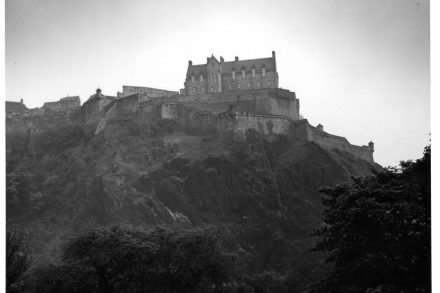
A journey through Edinburgh’s gothic past

When Guillermo del Toro’s new film adaptation of Frankenstein makes its bloody advent on Netflix later this year, the backdrop for 19th-century body snatching and resurrection may look familiar to many viewers. It was shot last year on Edinburgh’s Royal Mile and images from the set suggest that, as ever with del Toro, this will be a hallucinatory and haunting exercise in Gothic extravagance. If so, he has picked the perfect city on which to unleash Frankenstein’s monster. Edinburgh is a place that wears its long and often violent history like a velvet cloak.

Taking the fast train back to imperialism

I’m on a high-speed train. Forty years ago, such a statement would have been notable and specific: essentially, it meant you were in Japan or France. Nowadays, being on a high-speed train is barely a geographical indicator at all. Most of Europe has them, from Spain to Italy to Poland. Morocco has high-speed trains. Uzbekistan has high-speed trains. Even Egypt, Vietnam, Turkey, Thailand and the USA either have high-speed railways, or will have them in the next year or two. Just about the only country not powering ahead with high-speed rail is the birthplace of the railway — the United Kingdom — a fact that can either make you sob, or despair, or perform a kind of double sob etched with despair. What makes my experience unusual is that my high-speed journey is happening in Laos.

train
Swiss

Breakfasts, massages and reinvigorating Swiss thermal waters

Last January, one of the first things my son-in-law wanted to know was if I’d found a “boy toy” after spending a week at Lavey-les-Bains, following our Christmas holiday in Burgundy, where half of us now live. The other half lives in Australia. The renowned Swiss thermal waters lie under the Dents du Midi that rise above Lac Léman in the Swiss canton of Valais like four, glistening white, enamel incisors. Applicants for Swiss nationality must name Les Dents if applying for a Swiss passport in le Valais or le Vaud where we lived for sixteen years, from 1968 to l984. My answer was “no.

karoo

The Karoo has seen so much, but changed so little

It’s an incongruous name for a wilderness, “the Karoo.” The nursery-like sound belies the harshness of a vast, arid hinterland separating South Africa’s littoral from its grassland interior. For South Africans, the name is synonymous with bone-dry air, scented heathers, great rock formations, vast skies and even vaster sunsets. The scrubland here is so inhospitable that for centuries it insulated the southern tip of Africa from the rest of the continent. A single people — the Khoi bushmen — were adapted to its desicated conditions: Karoo is their word for “waterless land” that has come down to us as its modern name. In the nineteenth century, the pressures of the outside world began to weigh on this hardy time capsule.

An escape from Venice

Those who have visited Venice in the summertime will have witnessed the masses who descend into the heart of the labyrinthine islands, clogging their historic stone arteries and beautiful atria in a gormless and sclerotic trance. Meandering along the canals can always lead to some duomo or piazza that merits a standstill and an upward gawp. If you’re at all like me, after sweating through those tight streets with other tourists, one day certainly feels like enough. So it went on my recent visit. After popping my head in for as much of the Biennale that was still on display, a Bellini at Harry’s, lunch at Staffa and an inspiring visit to the Fondazione Querini Stampalia, I decided to get in the car and leave.

Venice
bimini

Bimini the beautiful

Give me a golf cart on an obscure small island and I am ecstatic. That’s how I felt on Christmas Eve rumbling around North Bimini, one of thirty inhabited islands in the Bahamas, with my wife and teenage sons on a balmy day full of benign clouds and serendipitous discoveries. I’m a traveler who is blessed and cursed with hyper-curiosity. Places with too much to see frustrate me because no matter how long I stay, I’m inevitably nagged by a sense that I missed something. I love cruises but port days are a particular tease because you’re always racing against the clock to get back to the ship. So for me, Bimini, with zero stop lights, no fast food and nearly as many golf carts as its 2,000 inhabitants is almost perfect.

elephants

The elephants I’ll never forget

"No lions?” “No lions. It’s fast-flowing water, so there shouldn’t be any leeches. We do have slender-snouted crocodiles, but they’re quite shy.” “Hippos?” “One we see every now and again.” Swamp-walking hadn’t been on the year’s bingo card, but I’d found myself wading through clusters of floating dung and algae in the largest tropical rainforest on the African continent. Rubber slip-ons heavy with silt, sulfurous foam collecting in my shirt pockets, I felt strangely calm. As a day, this was turning out to be exceptional. It had been the invitation of a lifetime: to add my name to the list of a few hundred outsiders who have stamped a boot in the Congo Basin, one of the wildest and most remote places on Earth.

Pure shores: a Scottish sea safari

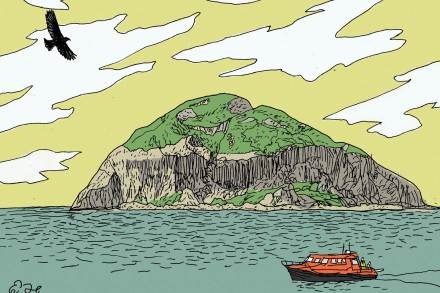
In the narrow strait between Jura and Scarba, the sea does strange things. Standing waves barrel over phantom surf breaks. Steely waters seethe and swirl, as if stirred by invisible hands. No wonder the gulf’s name, Corryvreckan, means “cauldron of the speckled seas” in Gaelic; this is the world’s third largest whirlpool, classified as “unnavigable” by the Royal Navy. Yet here I am, aboard a thirty-seven-foot rigid inflatable boat (RIB), riding the rapids. Skipper Sandy Campbell cuts the engine so we can try “boat surfing,” the swell dragging us apace past Scarba’s looming quartzite cliffs. Islanders of old dreamt up mystical explanations for this phenomenon.

Hebrides
balloon

In a balloon over Burgundy

I said I’d never go up in a hot air balloon again. But that was a terrified me forty-five years ago. And here I was, relaxed and enjoying the views of the French Côte d’Or with my family and a handful of French people at 1,500 meters, hovering over vineyards, pastures and fields. In 1979 I was contacted by Hans Büker, a thirty-nine-year-old German balloonist who was hoping for some free publicity in the International Herald Tribune, for which I was the Swiss correspondent. Büker was trying to launch a ballooning festival in Château d’Oex in the Bernese Oberland, known for its cheese and rolling pastures pierced by imposing alps.

Skiing Hokkaido’s powder triangle

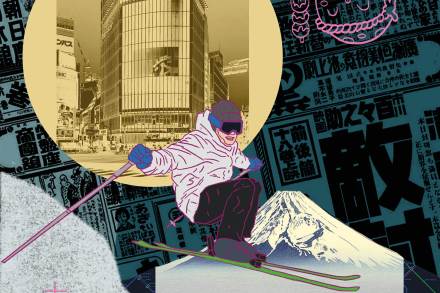
"Insane, isn’t it?!” Kyle yelled from thirty feet below, leaning back on his snowboard to watch me struggle. I summoned every ounce of strength in my jet-lagged body to prize my legs, still attached to skis, from several feet of fresh snow. Wedged sideways, I pulled myself up by a tree root, alternating between hysterical laughter and acute panic as little progress was made in five minutes. I’d come to Japan for the powder — and I’d sure found it on my first morning in Furano, Hokkaidō. Fighting to stand up, I steeled myself to tackle the impossibly light powder reaching my armpits, on the widest skis I’d ever clipped into. It really did feel different to snow in the US or Europe. This would take some getting used to. “You said you wanted ‘Japow’!

Hokkaido
Paris

Is Paris the world’s most bookish city?

After I ventured to New York in May 2024, bound for a discerning literary journey round the city’s bookshops, libraries and hotels, I received some lively and constructive feedback from Spectator readers. Many, thankfully, agreed with my arguments about its bookish charms, but a consistent theme in the comments I received was, “How can you claim that New York is the quintessential literary city? Have you forgotten Paris?” To which my reply was reasonably simple: “What about Oxford, London, Rome, Edinburgh, Dublin, Santiago or San Francisco?” All of them hugely distinguished citadels of the written word, both present and historic alike. Yet I felt uneasy at my response.

Eastern

How Eastern Europe is leaving Western Europe behind

I'm in the tiny riverside town of Virpazar, in the little Balkan country of Montenegro; and under the white geisha face of a late summer moon I am warily ordering the celebrated local delicacy. It is carp — caught from the nearby, slivovitz-clear waters of Lake Skadar (biggest lake in the Balkans!). But what makes me wary is the preparation. The carp is apparently marinated, and served cold, with boiled potatoes and greens. Cold slimy fish with hot spuds and spinach? It sounds like some nightmare culinary “specialty” from the old communist bloc (of which Montenegro was once a part, within Yugoslavia). I’m veteran enough to remember a few of these. “Famous” flatbreads that came with rancid lard.

Montauk

Off-season fun in Montauk

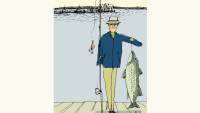
At the very end of Long Island you’ll find Montauk, the end of the line on the Long Island Rail Road; the train station might be familiar if you’re a fan of Eternal Sunshine of the Spotless Mind. In recent years, Montauk’s popularity has boomed, becoming an extension of the Hamptons in the summer. But in the off-season, it remains a secluded and mysterious town. I have come here every year for the last five years — Montauk is famed for its incredible striped bass and largely untouched natural beauty.

A pilgrimage to St. Francis’s holy sanctuary at La Verna

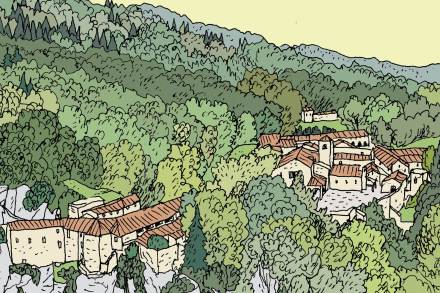
Beneath a stunning Della Robbia Crucifixion a lone candle burns on the floor of the Holy Stigmata Chapel in the sanctuary of La Verna. The immense tranquility belies the astonishing events that occurred in 1224 on this rocky outcrop in central Italy’s Umbrian hills. The chapel marks the spot where, two years before his death, Saint Francis, retreated to fast and pray with two of his brother friars. After some weeks, Francis saw a six-winged Seraphim, apparently crucified, who appeared and imposed the five wounds of Christ’s Passion on his body — in paintings the angel appears to be “lasering” St. Francis, who is often depicted as a sort of Franciscan version of Willem Dafoe getting it at the end of the film Platoon — including the nails protruding. Heady stuff.

la varna
Palio

The majesty of Siena’s Palio

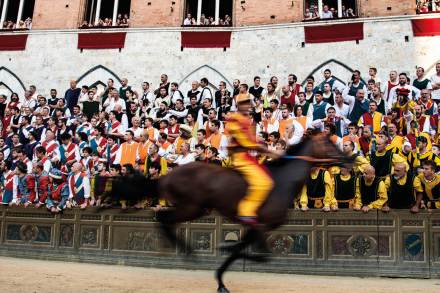
Twice a year, an almost deathly silence falls on the Tuscan city of Siena. It is the moment just before the rope drops in the Piazza del Campo to signal the start of the Palio, the city’s ancient horse race and fiercest rivalry. Siena’s Palio is as mad as it is old. Ten horses and ten riders, representing ten of Siena’s seventeen contrade, or districts, race three laps of the city’s main square at breakneck speed before thousands of screaming spectators, in a tradition dating back to 1633 — the year Galileo was convicted of heresy for insisting that the Earth revolved around the Sun. Every summer, two palii are held: one on July 2, in honor of the Madonna di Provenzano, and one on August 16, the Palio dell’Assunta during the feast of the Assumption. What’s at stake?

A far out weekend at the Vegas Sphere

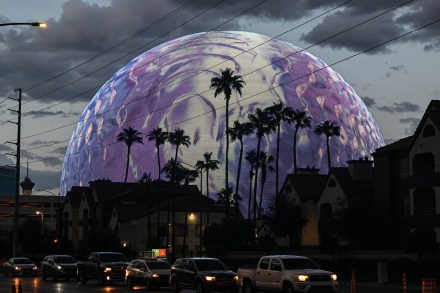
We were somewhere around the Palazzo when the drugs began to take hold. Unlike Hunter S. Thompson, though, we were surrounded not by imaginary bats but an amiable crowd of agèd hippies. Our destination was the Las Vegas Sphere, to hear Dead & Company. The venue itself eschews the definite article, but it’s futile. No one says they’re going to Sphere. It’s too much of a destination. It needs the definite article. Security was rather lax, though the price of tickets plus the age of the average attendee greatly lessened the chances of anyone showing up with mayhem on his mind. After going through a metal detector, where we are instructed not to empty our pockets, we headed up the stairs to find our seats.

Sphere
Virginia

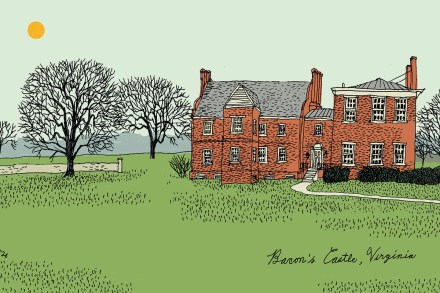
Old texts and Bacon’s Castle: a walk through Virginia history

You will find Bacon’s Castle amid the flat tobacco and peanut fields in Surry County, Virginia, across the James River from Jamestown, if not quite a “castle” then certainly a very fine Jacobean mansion and the oldest brick dwelling in America. When I first visited this part of the Tidewater in 1958, I was ten and Jamestown, the year before, had turned 350. Queen Elizabeth II and Prince Philip came to crown the anniversary, and replicas of the three ships that brought the first English here in 1607 — Susan Constant, Godspeed and Discovery — were tied up in perpetuity at Jamestown. I came on a field trip with my schoolmates to take in the sights and something of the history of the place and of Colonial Williamsburg, just up the road. Bacon’s Castle was not on our itinerary.