Features

DEI another day

Conservatives’ loathing for diversity, equity and inclusion is easy to understand. DEI’s very mission — junking Thomas Jefferson’s natural aristocracy of talents in favor of race- and gender-based advancement — runs against everything the American right is supposed to stand for. They watched with chagrin during the Biden years as DEI offices spread across the nation, into corporate C-suites and government departments and, of course, universities. Conservative heroes in the early 2020s were those like Florida governor Ron DeSantis who pushed back against DEI in their home states. Then Donald Trump returned and all that seemed to change. Upon taking the Oval Office, he shut down all DEI initiatives throughout the federal government.

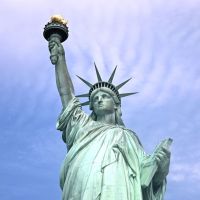
statue of liberty new york

America needs talent

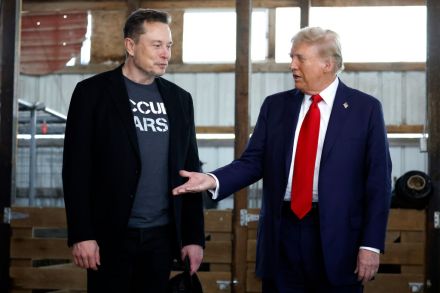
Before Donald Trump’s inauguration, Elon Musk caused a huge controversy within the MAGA movement by advocating increased high-skill immigration. As head of the Department of Government Efficiency he wanted, for example, to expand the H-1B visa program, which many Trump supporters are against. The angry debate over the visa issue still rages on social media and both sides tend to talk past each other. The MAGA movement is against any increase in immigration, whether high- or low-skill. Musk has acknowledged that the existing H-1B program was subject to abuse by employers and especially by IT firms that rely on outsourcing: the workers they import are often no better than the Americans they replace.

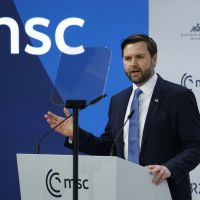
Vance

Vance Derangement Syndrome

Bret Stephens has come a long way in his estimation of Donald Trump. Back in 2016, when Trump was first running for the presidency, Stephens wrote in the Wall Street Journal that “the candidacy of Donald Trump is the open sewer of American conservatism.” As the election season progressed, Stephens mostly dropped the sewer talk, sliding into its place evocations of Trump’s “darker antipathies” and warnings that his “candidacy is manna to every Jew-hater.” A “Trump administration,” he explained,“would give respectability and power to the gutter voices of American politics.” At one point he giddily announced that Trump’s chances of victory were “next to nil.

Liberation

Neoconservative moment

In younger MAGA circles, “neocon” is a term of derision. It’s not always clear what twenty-somethings understand by the word, though its rough connotations are plain enough: “globalist” (often paired with “neocon”) and “forever wars.” The latter is what the US has fought continuously since the Soviet Union stood down thirty-five years ago — at great cost with no victories. Neoconservatism was the dominant strain of elite conservatism in the US from the Reagan era until fairly recently. So the new MAGA outlook might seem like a decisive turnabout in political and intellectual fashion. In some ways it is. Donald Trump mocked the neoconservatives’ most infamous project, the Iraq War, during his 2016 campaign and won nonetheless.

The climate has changed on climate change

Like the Marxist dialectic, or the predictions of the Gospels, the green movement has long seen its triumph as preordained. Yet sometimes the inevitable turns out to be not so. Over the past few years green policies — notably the drive for “net zero” — have been failing. Both markets and politicians have seen the light. WhatJoe Biden’s treasury secretary Janet Yellen once called “the greatest business opportunity of the twenty-first century” has revealed itself to be something of a disaster. The new American President is likely to be blamed for the implosion of the green agenda, but its collapse long pre-dates his re-ascension.

healthy

What would it take to make America healthy again?

The Executive Order establishing President Trump’s Make America Healthy Again Commission presented some big, fat, sobering truths. “Six in ten Americans have at least one chronic disease,” the order says, “and four in ten have two or more chronic diseases.” It also notes that our people don’t live, on average, as long as those in other developed nations: 78.8 years in the US compared to 82.6 years in our cousin countries. How did this happen? How did the world’s most powerful nation ever get to the point where 77 percent of its youth can’t qualify for military service and we need a commission to stop us from spiraling faster and faster down the Doritos Loco Tacos-Ozempic highway? Robert F. Kennedy Jr.

Art of the DoGE

No one can accuse Donald Trump of inaction. For once, the US has a government with the urgency of a private corporation. The speed at which the new administration has acted in all kinds of areas has pleasantly surprised Trump’s supporters and flummoxed his opponents. It is hard to grab on to anything and oppose it when the announcements are coming out of the White House at such a speed. As a leader, the Donald Trump of 2025 has already shown himself to be a very different figure to the political ingénu who entered office in 2017. Eight years ago, he came into government knowing little of how it operated, how its machinery can often thwart those who are notionally in power.

DoGe

Masters of corruption

I am reliably informed that the flow of water in the Potomac River is approximately 11,500 cubic feet per second. At Little Falls, near Washington, DC, that works out to about 7 billion gallons per day. Is it enough? I ask because all the chatter we hear about “draining the swamp” is completely pointless. The swamp that is the Washington establishment cannot be effectively drained. There is no valve huge enough to handle the requisite discharge. The institutional sewers would be overwhelmed by the effluvium. No, the fetid, corrupt, woke and self-serving bureaucracy that is the seat of government can be disburdened of its accumulated muck only by more vigorous means. Repristination requires that it be aggressively flushed, not passively drained.

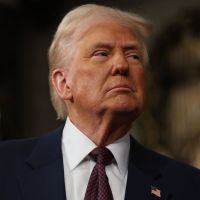
Trump

Who’s afraid of ghost guns?

Brian Thompson, CEO of UnitedHealthcare, was gunned down by Luigi Mangione in New York City on December 4. Surveillance footage hit the internet within hours. Wild speculation spread about the strange gun in the killer’s hands. The elongated barrel, the chamber movements that signaled repeated gun jams, the lack of recoil. Was it a veterinary euthanasia gun? As it turned out, it was a homemade gun, commonly known as a “ghost gun," printed using 3D technology. And, as the furore over Mangione dies down, it’s his weapon that remains the subject of violent disagreement and debate. Two months before Thompson’s assassination, the Supreme Court heard oral arguments in the great ongoing ghost gun case — Garland v. VanDerStok.

ghost

How Trump is revolutionizing Washington

Weeks into his second term, it’s clear President Trump intends to be the most transformative force our politics has seen in a century. He seems equally determined to change the course of the world — and perhaps its map, too. Trump’s enemies can blame themselves for making this possible. They showed him that impeachment is nothing to fear: securing conviction in the Senate is nigh impossible and whatever damage impeachment might do to a president’s reputation has already been inflicted on Trump. Two impeachments and a welter of post-presidential criminal prosecutions and even convictions failed to stain Trump in voters’ eyes. On the contrary, they left him more popular than ever and discredited the institutions his opponents employed as weapons of their “lawfare.

Trump
cosmetic

The Mar-a-Lago face-off

In all the post election danger-to-democracy commentary, one unexpected new peril has emerged: the “nationwide surge of Mar-a-Lago face." Best exemplified by demented far-right activist Laura Loomer and former Fox News host-slash-former Donald Trump Jr. squeeze Kimberly Guilfoyle, Mar-a-Lago face is a cosmetic look characterized by immense volumes of cheek filler, heavy eye shadow and enough Botox to petrify the face. The male version could be seen when Florida congressman and attorney general-nominee-for-ten-seconds Matt Gaetz stepped out at the RNC with so much Botox and foundation that he instantly became a bipartisan meme. I’d argue that Mar-a-Lago face is not taking over America anytime soon. It’s barely taking over the Republican Party.

Europe

The Europe of American imaginations no longer exists

Since the United Kingdom left the European Union five years ago, the pair have been in battle to prove who has performed better. But the real story of the past five years is not a stagnant UK falling behind a buoyant EU, but of Britain and Europe being trapped in the same cycle of relative decline. It’s America that has quietly raced ahead of Europe this century. Following the pandemic it has become impossible to ignore the gulf in economic vitality between the US and Europe, the former growing by 16.3 percent per capita since 2008. There are very good reasons for America’s success, or rather, Europe’s decline. The EU and the UK increasingly treat their industries as pieces of heritage which must be preserved against disruptors and foreign competition.

Elon

Elon Musk’s critics are more autistic than he ever could be

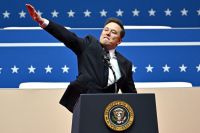
I’ve managed to keep most of my liberal family relationships and friendships intact, even after going public about voting for Trump. Most of them shrugged and applied the principle our grandparents taught us — blood is thicker than politics. That is, until Elon Musk. He has proven to be the straw that broke the liberals’ back. Realizing that they’d rendered calling Trump “literally Hitler” ineffective, many normie Democrats and liberal commentators have redirected this energy toward the “Chief Twit." First there was the hand gesture at the post-inauguration rally.

Trump

Trump’s hundred days of shock and awe

The second Trump administration has begun as it means to go on: moving fast and breaking Washington brains. Firings commenced immediately, from inspectors general to senior FBI officials to workers who refused to go back to the office (for the federal government, the pandemic never ended). The confirmations blasted through the Senate, with even controversial figures like Defense Secretary Pete Hegseth rammed through in the first week. Executive Orders flew out like a flock of war pigeons released from the battlements — forty-five in the first two weeks alone — bearing commands small and sweeping.

antifa

Whatever happened to antifa?

Since the 2024 presidential election, America has been braced for violence from the political far-left — and with good reason. Extremists like antifa, the “anti-fascist” group, are explicitly aggressive. They think looting, arson and intimidation are all acceptable, and until very recently they’ve had the support of the establishment. For a decade their liberal allies gave antifa carte blanche to cause criminal damage in the name of “resisting fascism” or opposing racism. So where is antifa now? What is it planning? It’s an understandable concern. The citizens of Portland remember all too well the bouts of rioting and violence by Black Lives Matter-antifa in November 2016, when Hillary Clinton lost to Trump.

Americans should feel uneasy about the new Archbishop of Washington

For an eighty-eight-year-old man who has spent only five days in the United States and doesn’t speak English, Pope Francis is a surprisingly partisan observer of American politics. For most of his life he was, like a typical Argentinean, viscerally but vaguely anti-American. By the time he became pope in 2013, he and the Democratic Party had embraced the ideology of the globalist left. And so they forged an alliance — one the Pope may soon regret, now that Republicans in the White House and on Capitol Hill are beginning to grasp the scale of the Vatican’s corruption. In 2016, Francis gave his blessing to the Hillary Clinton campaign’s Catholic front organizations, motivated not just by their shared obsession with anti-racism and climate change but contempt for Donald Trump.

Archbishop

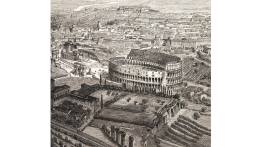
Rome is ready for its close-up

Rome Like a Parioli matron shedding her curlers, pins and hairnet in anticipation of a major family celebration, Rome’s monuments are emerging from shrouds of cladding and scaffolding ready for their close-up. The angels and river gods of the Ponte Sant’ Angelo and the Piazza Navona shine as blinding white as the day they emerged from Bernini’s workshop. The ancient granite basins of the Piazza Farnese fountains shimmer with an ethereal bluish light. The big occasion is the Papal Jubilee year of 2025, expected to draw a whopping 32 million visitors. That’s more than ten times Rome’s population, and half as many visitors again as in a normal year. If you’re planning a visit, do it soon before the city is entirely swallowed by crowds.

Rome

The donor center is the last bastion of civility

“Braiding Sweetgrass,” she cawed from the other side of the room. “By someone named Robin something. Robin Kimmerer, I think.” The source of this unsolicited book recommendation was Sandra, an eighty-six-year-old musician and Quaker. Since the 1960s — Sandra later told me — she’d donated “probably about three hundred pints” of blood. She was such a prolific giver, that when President Nixon proclaimed the first National Blood Donor Month in 1970 — which still is January — she was interviewed on TV. I met Sandra in early January. We were half-sitting, half-lying foot-to-foot in a donor center on the Upper East Side of Manhattan.

blood