Features

America’s new war on drugs will be tough to win

On New Year’s Eve a few years ago, I was in Medellín, Colombia, the city that gave its name to one of the world’s most notorious drugs cartels. Our taxi driver offered us some cocaine to fuel the party we were heading to: $10 for a gram; $15 for the “luxury” product. Our group decided to splash out and get a gram of the really good stuff. I’d tried coke a couple of times in London. It was like snorting drain cleaner. Whoosh… I found that half a line of Medellín’s best was enough to keep you going until sunrise. But the next day it was difficult to be within six feet of another human being, the coke having burned up all the dopamine in my brain. Coke is evil. I imagine a lot of other people were feeling the same in Medellín that New Year.

Maduro’s capture is mixed news for the Kremlin

For the Kremlin, the US’s snatching of Venezuela’s President Nicolás Maduro is a humiliation with a silver lining. True, little more than a year after the precipitous fall of Syria’s Bashar al-Assad, Russia has been shown to be completely hopeless when it comes to keeping its allies in power. In Caracas, US airborne forces breezed past Russian-supplied S-300 air defense systems, which were part of a $20 billion package of maybe not-so-great Russian military equipment that Moscow sold the Venezuelans. The Kremlin has lost a strategic bridgehead in South America which it could, potentially, have used to disrupt and challenge Washington’s regional hegemony – if Moscow weren’t so committed financially and militarily to its war in Ukraine.

Marla Maples’s divine purpose

The White House Christmas party really was beautiful this year. A very special festive night with beautiful friends and family. Don Jr. and Bettina got engaged at Camp David just before it and the party wasn’t supposed to be a celebration for them – but Donald decided to announce it to the world. I was so happy the official announcement was made while we were all there with them. It was a special night. Then the following night I attended the White House Hanukkah party because I believe we have to bring people of all religions together especially at difficult times. The cold and hustle of Washington, DC was a far cry from my normal routine.

Alice Marie Johnson and clemency in the Trump era

Late in his first term, Donald Trump pardoned a Memphis woman named Alice Marie Johnson, who was serving life in prison without parole. While in prison, Johnson was a more than exemplary inmate, becoming a certified hospice worker for the dying, writing plays and acting as a spiritual leader and mentor to her fellow female prisoners. Alice Marie Johnson is a voice for people, especially women, who are in jail for the wrong reasons After her release, Johnson published a book called After Life: My Journey from Incarceration to Freedom and became a public advocate for clemency. In February last year, Trump named her the US’s first-ever “pardon czar,” an informal advisor for pardons and clemency in his administration. “Alice has been just incredible,” Trump said.

AI porn will spawn a nation of addicts

If there is one safe prediction we can make about 2026, it is this: public debate and global news will be dominated by artificial intelligence and the anxieties that surround it. And near the top of that swelling list of worries will be “AI porn” – the fateful collision between ever more accomplished image-making machines and humanity’s eternal appetite for audiovisual sexual stimulation. The year has barely begun and already two loud tsunami sirens have sounded. The first is the latest Grok incident. For the uninitiated, Grok is Elon Musk’s AI, conceived a couple of years ago in a fit of pique after Musk’s spectacular falling-out with OpenAI.

The gender hydra is about technology, not ideology

I hope this is the year people fighting the gender hydra, with its proliferation of harms across society, finally recognize that this is not a culture war. It is a war against a rapidly expanding industry built on the deconstruction of sex and, like any profitable industry, it will continue growing until it is stopped. Calling it a medical scandal, misogyny, or social contagion will not create a sustainable resistance unless people understand it as an industry. At the heart of the matter is the fact that industries in capitalist systems must expand to survive. And once they do, once a market forms, they’re near-impossible to erase. They begin to multiply, as others see opportunity. Consider pornography: despite widespread harm, eliminating it has proven impossible, so far.

How ticks became bioweapons

On December 18 last year, Donald Trump signed into law an order to “review and report on biological weapons experiments on and in relation to ticks [and] tick-borne diseases.” The investigation is long overdue but even so, the facts it uncovers will come as a shock to many. A growing body of evidence shows that during the Cold War ticks were tinkered with and used as delivery mechanisms for biological warfare agents. And these weaponized ticks may have been released both intentionally and unintentionally on an unsuspecting public by the US military. Ticks and the diseases they transmit (such as Lyme) pose a growing threat to Americans, the military and to agriculture. Record numbers of tick bites have been reported in New York (in 2024), Maine (in 2024), and Wisconsin (in 2023).

The plot against J.D. Vance

The Republican establishment is on the verge of extinction. Donald Trump’s first term wasn’t enough to kill it off: Trump came into office in 2017 with establishment figures such as Mitch McConnell and Paul Ryan leading the party in Congress, and Trump’s own vice president, Mike Pence, had been chosen for that role as a reassurance to the old guard. Trump made some efforts to staff his administration with outsiders, but the likes of Steve Bannon or the ill-fated Rex Tillerson were heavily outnumbered by Republicans who would have been just as happy – or a great deal happier – to serve in another Bush administration.  This time, though, things are very different.

Immigration is foreign policy now

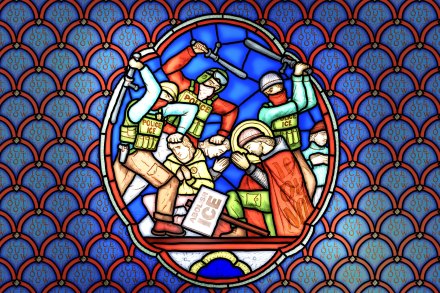
Invade the world, invite the world. That pithy phrase was invented in the 2000s by Steve Sailer, the right-wing writer, to mock the then bipartisan consensus which supported George W. Bush’s war on terror abroad while pushing open borders at home. Or, as Sailer also put it: "Bomb them over there and indulge them over here." Back then, such analysis was generally dismissed as the preserve of white supremacist cranks. Now, it’s fair to say that Sailerite thinking animates the spirit of the second Donald Trump administration. Disrupt the world, deport the world. That’s the order of the day. Since America’s stunning attack on Venezuela last weekend, almost everybody has had a stab at revealing Trump’s real intentions – including, naturally, Trump and his talking heads.

immigration

The scientific case for the existence of intelligent alien life

The foundation of science is based on the humility to learn, not the arrogance of expertise. When comet experts argued that the interstellar object 3I/ATLAS must be a familiar water-rich comet as soon as it was discovered in July, they behaved like artificial intelligence systems: only able to reflect the data sets they were trained on. For decades, the data set that established comet expertise largely comprised icy rocks in the solar system. My counterpoint is simple: humanity launched technological objects into space, so we must conclude that alien life forms could do the same. This possibility must be added to the training data set of comet experts when studying interstellar objects.

European leaders have changed their tune on war

Ten days after Thanksgiving, news watchers were exposed to one of the more culturally incongruous images in recent history: Ukrainian President Volodymyr Zelensky and French President Emmanuel Macron beaming in front of the British Prime Minister’s house at 10 Downing Street, giving each other the locked-thumbs handshake familiar to African-American jazz musicians and professional athletes of the 1970s. Right on, brother! At that moment, according to Ukrainian media, thousands of Zelensky’s soldiers had been encircled by Russian troops near the city of Pokrovsk (or Krasnoarmiisk, as it may well soon be renamed). Large gaps were appearing in the Ukrainian front, desertions were rising and Russians appeared to be opening a new front east of Kharkiv.

european leaders

For most people on Earth, learning is just another form of entertainment

When the anthropologist Bronislaw Malinowski traveled to Papua New Guinea in the 1920s, he discovered a group of remote and mostly naked tribes, none of whom had encountered literacy before. And without writing, he found, they organized knowledge in a different way from the rest of the world. Rather than label and categorize everything that exists into linear encyclopedic facts, for instance, they only bothered to record and give names to local flora and fauna if they were useful in their own lives. Animals that were neither food nor dangerous, for example, were treated as unimportant. That is just a bush, they would say, or, merely a flying animal. After centuries of mass literacy, we’ve forgotten that our brains still work like this, too.

An interview with the physicist David Deutsch

The Amazon reviews for David Deutsch’s The Beginning of Infinity don’t alert you to the fact that this is a book on theoretical physics. They sound more like a weepy divorcé’s YouTube comments below a Mark Knopfler guitar solo. “I didn’t so much read it,’ says one. “It read me.’ ‘I was honestly sad when it was over,’ writes another. “This book changed my way of seeing the world, politics, science and, most importantly, of seeing what I will understand as containing some truth.” When I talk to Deutsch – one of the most sensationally interesting theoretical physicists of our age – on Zoom, I see two beady eyes peering at me over some non-spectacular spectacles under a mess of thin white hair, borne by a thin white man in a thin white shirt.

slipshod

Slipshod: a short story by Sarah Perry

It was months before the difficulty with Marnie and Addison was talked about, or even alluded to. The sight of their names in emails circulated around the department was enough to cause a pall to settle on everything, like ash from fires only just put out. Besides, the nature of the difficulty (that was the word we all used) was both so opaque and so distressing we’d have had trouble talking about it, even if we’d wanted to. It fell to me to piece things together. My brief from Helen was simply to satisfy the university that nobody in the department was to blame. It fell to me because I am, she tells me, part of the furniture: unremarkable, functional, predictable.

looksmaxxing

The terrible logic of looksmaxxing

For years, I’ve had a fantasy of destroying my own life by following every piece of extreme self-improvement advice the internet offers. Not the wholesome stuff. I mean the industrial-strength protocols: starvation diets, rhinoplasty, Invisalign followed by double-jaw surgery, chemical peels that promise an entirely new layer of skin. Whatever surfaces in the algorithmic swamp. The appeal is the same as another, more respectable fantasy: the one where a doctor scans your chart, finds The Problem and hands you a pill. You swallow it and everything clicks. Your suffering had a single, nameable, diagnosable cause. The cure might give you rashes or IBS, but who cares? You finally know what’s wrong, and what’s wrong can be treated. The uncertainty is over.

The West has become ungovernable

My favorite opinion poll of recent times was the one which showed that Donald Trump is disliked by more than 90 percent of Danes. This is a glorious achievement and one of which the President should be proud, and perhaps boast about from time to time – averse though he may be to boasting, of course. This was the lowest favorability rating for Trump anywhere in Yerp and I suppose is partly occasioned by his determination to pry Greenland from the grasp of these ineffably smug Scandis because they have no idea what to do with it and have mismanaged its meager affairs for decades. A personal admission: I cannot stand Danes.

Why I corresponded with Jeffrey Epstein

Olivia Nuzzi, the young and talented Trump reporter, committed the apparently cardinal sin of becoming romantically entangled with a subject. And, worse than that, the subject was widely reviled, particularly among journalists: Robert F. Kennedy Jr., the anti-Kennedy. And then it turned out –her jilted fiancé, another journalist, was telling all – that there were other politicians she’d been involved with, too. This scandal, which has consumed the journalism world, was good for me because it forced the heaps of opprobrium I was getting from other journalists for my emails with the reviled Jeffrey Epstein off the front page.

Will we ever know the truth about Epstein?

Now that Congress has passed a law – not a flimsy resolution, but a law – mandating that the Trump administration release all its files on Jeffrey Epstein, here’s what we know, and what we still need to know. The basic elements of Epstein’s crimes were established back in 2006 by the Palm Beach Police, who began investigating the previous year after a woman reported that he had paid her 14-year-old stepdaughter for a massage. Over the next 13 months, the police gathered sworn statements from dozens of witnesses, including five underage girls who said they’d been paid $200 to $1,000 to engage in sex acts with Epstein. “The more you do, the more you get paid,” one of his assistants told a girl in a phone call recorded by the police.

Jared Kushner’s international friendships with benefits

In 1998, the conservative intellectual and moralist Bill Bennett published a book, The Death of Outrage: Bill Clinton and the Assault on American Ideals. Bennett had to rush the book out after “I did not have sexual relations with that woman” changed to: “Indeed, I did have a relationship with Miss Lewinsky that was not appropriate.” But the Death of Outrage is almost too quaint a title to capture the age of Donald Trump, especially now that his son-in-law Jared Kushner is back as his closest foreign policy advisor. Trump told reporters who questioned Kushner’s role: “I have Jared. Find anybody more capable.