Features

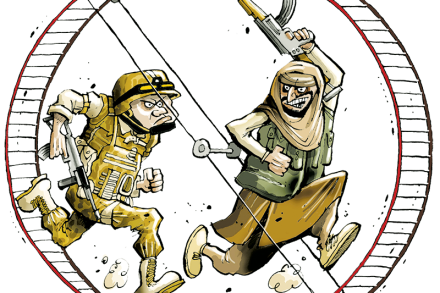
European leaders have changed their tune on war

Ten days after Thanksgiving, news watchers were exposed to one of the more culturally incongruous images in recent history: Ukrainian President Volodymyr Zelensky and French President Emmanuel Macron beaming in front of the British Prime Minister’s house at 10 Downing Street, giving each other the locked-thumbs handshake familiar to African-American jazz musicians and professional athletes of the 1970s. Right on, brother! At that moment, according to Ukrainian media, thousands of Zelensky’s soldiers had been encircled by Russian troops near the city of Pokrovsk (or Krasnoarmiisk, as it may well soon be renamed). Large gaps were appearing in the Ukrainian front, desertions were rising and Russians appeared to be opening a new front east of Kharkiv.

european leaders

For most people on Earth, learning is just another form of entertainment

When the anthropologist Bronislaw Malinowski traveled to Papua New Guinea in the 1920s, he discovered a group of remote and mostly naked tribes, none of whom had encountered literacy before. And without writing, he found, they organized knowledge in a different way from the rest of the world. Rather than label and categorize everything that exists into linear encyclopedic facts, for instance, they only bothered to record and give names to local flora and fauna if they were useful in their own lives. Animals that were neither food nor dangerous, for example, were treated as unimportant. That is just a bush, they would say, or, merely a flying animal. After centuries of mass literacy, we’ve forgotten that our brains still work like this, too.

An interview with the physicist David Deutsch

The Amazon reviews for David Deutsch’s The Beginning of Infinity don’t alert you to the fact that this is a book on theoretical physics. They sound more like a weepy divorcé’s YouTube comments below a Mark Knopfler guitar solo. “I didn’t so much read it,’ says one. “It read me.’ ‘I was honestly sad when it was over,’ writes another. “This book changed my way of seeing the world, politics, science and, most importantly, of seeing what I will understand as containing some truth.” When I talk to Deutsch – one of the most sensationally interesting theoretical physicists of our age – on Zoom, I see two beady eyes peering at me over some non-spectacular spectacles under a mess of thin white hair, borne by a thin white man in a thin white shirt.

The peril of playing with viruses

If a military team made a mistake during a nuclear war preparedness exercise and accidentally obliterated millions of people, you would not expect to find some of the very same people merrily admitting a couple of years later that they have carried out the very same kind of exercise with different live nukes and slightly fewer safeguards. Would you? That is roughly what I recently found out has apparently been going on in China. The Wuhan laboratory that conducted risky experiments on bat viruses at inadequate biosafety levels and almost certainly caused the pandemic has now revealed that it has done the same kind of risky experiments on another lot of horseshoe-bat viruses at low biosafety levels. Is accidentally killing millions not enough to give them pause?

looksmaxxing

The terrible logic of looksmaxxing

For years, I’ve had a fantasy of destroying my own life by following every piece of extreme self-improvement advice the internet offers. Not the wholesome stuff. I mean the industrial-strength protocols: starvation diets, rhinoplasty, Invisalign followed by double-jaw surgery, chemical peels that promise an entirely new layer of skin. Whatever surfaces in the algorithmic swamp. The appeal is the same as another, more respectable fantasy: the one where a doctor scans your chart, finds The Problem and hands you a pill. You swallow it and everything clicks. Your suffering had a single, nameable, diagnosable cause. The cure might give you rashes or IBS, but who cares? You finally know what’s wrong, and what’s wrong can be treated. The uncertainty is over.

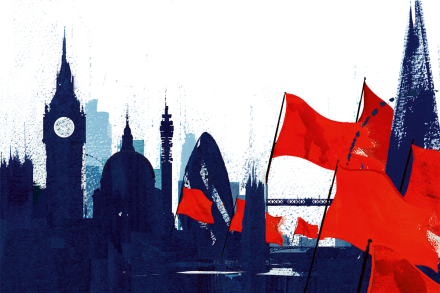
The West has become ungovernable

My favorite opinion poll of recent times was the one which showed that Donald Trump is disliked by more than 90 percent of Danes. This is a glorious achievement and one of which the President should be proud, and perhaps boast about from time to time – averse though he may be to boasting, of course. This was the lowest favorability rating for Trump anywhere in Yerp and I suppose is partly occasioned by his determination to pry Greenland from the grasp of these ineffably smug Scandis because they have no idea what to do with it and have mismanaged its meager affairs for decades. A personal admission: I cannot stand Danes.

Why I corresponded with Jeffrey Epstein

Olivia Nuzzi, the young and talented Trump reporter, committed the apparently cardinal sin of becoming romantically entangled with a subject. And, worse than that, the subject was widely reviled, particularly among journalists: Robert F. Kennedy Jr., the anti-Kennedy. And then it turned out –her jilted fiancé, another journalist, was telling all – that there were other politicians she’d been involved with, too. This scandal, which has consumed the journalism world, was good for me because it forced the heaps of opprobrium I was getting from other journalists for my emails with the reviled Jeffrey Epstein off the front page.

Will we ever know the truth about Epstein?

Now that Congress has passed a law – not a flimsy resolution, but a law – mandating that the Trump administration release all its files on Jeffrey Epstein, here’s what we know, and what we still need to know. The basic elements of Epstein’s crimes were established back in 2006 by the Palm Beach Police, who began investigating the previous year after a woman reported that he had paid her 14-year-old stepdaughter for a massage. Over the next 13 months, the police gathered sworn statements from dozens of witnesses, including five underage girls who said they’d been paid $200 to $1,000 to engage in sex acts with Epstein. “The more you do, the more you get paid,” one of his assistants told a girl in a phone call recorded by the police.

Jared Kushner’s international friendships with benefits

In 1998, the conservative intellectual and moralist Bill Bennett published a book, The Death of Outrage: Bill Clinton and the Assault on American Ideals. Bennett had to rush the book out after “I did not have sexual relations with that woman” changed to: “Indeed, I did have a relationship with Miss Lewinsky that was not appropriate.” But the Death of Outrage is almost too quaint a title to capture the age of Donald Trump, especially now that his son-in-law Jared Kushner is back as his closest foreign policy advisor. Trump told reporters who questioned Kushner’s role: “I have Jared. Find anybody more capable.

A late Congolese ruler with a new following

At the exit of the National Museum in Kinshasa, capital of the Democratic Republic of Congo (DRC), is a whiteboard for visitors to leave their comments. On that whiteboard, full of underlinings and exclamation marks, are messages like this: “Thank you for your life.” “Thank you for our national unity.” “You left behind a glorious historical legacy. We plan to follow in your footsteps.” A giant photograph of the man the messages refer to hangs in the museum’s main hall as part of its new exhibition, a man in dark glasses and leopard-skin toque, smiling down at his people. More than 28 years after fleeing into exile, Mobutu Sese Seko, once known as “The Leopard” and “The Great Helmsman,” is back in the limelight in the DRC.

A chief White House usher of 21 years is the ultimate insider

Gary J. Walters knows where a lot of the bodies are buried in the White House. He was chief usher for 21 years, worked there for 16 years before that, and has served and come to know intimately seven presidents and their families. Now he has written a book about his extraordinary career, White House Memories 1970-2007: Recollections of the Longest-Serving Chief Usher. Think what he must know of the skulduggery (Nixon), the marital strife (the Clintons), the chastising of children (the alcohol-inclined Bush daughters) and the shouting matches (doubtless all of them). As I gently prod Gary for gossip, he smiles mischievously – at 79, he still looks smart and spry enough to be running the White House machine.

Portrait of the year

January For three weeks wildfires raged around Los Angeles. Perhaps 30 people were killed but 200,000 were evacuated, 18,000 homes and structures destroyed and 57,529 acres burnt. Donald Trump was inaugurated as the 47th President. On his first day he issued about 1,500 pardons for people charged in connection with the attack on the Capitol in 2021; he created the Department of Government Efficiency (DoGE), led by Elon Musk; he signed executive orders on gender and immigration and withdrew the United States from the World Health Organization. The state funeral of Jimmy Carter, the 39th president, was held in Washington, DC. Israel and Hamas agreed to a ceasefire and the return of hostages held in Gaza.

The Sherlockians’ game

There is no better time to read a Sherlock Holmes story than a winter evening. As the rain lashes against the windows and the fog descends, we can imagine ourselves sitting companionably with the great detective and the good doctor around the Baker Street hearth, waiting for the step of a visitor upon the stair. Unfortunately, our 21st-century climate rarely cooperates. The rainstorm arrives when we’re far from a hearth, fighting with an umbrella that turns inside-out at the first breath of wind. And when were you last enveloped in a London fog? The savagery of the elements beating down on 221b seems to belong to another world. "It was a wild, tempestuous night, towards the close of November… Outside the wind howled down Baker Street" ("The Adventure of the Golden Pince-Nez").

Are angels real?

One day while out walking, William Blake saw angels sitting in the trees: “bright angelic wings bespangled every bough like stars.” He was eight years old. His fascination – some have called it an obsession – with angels lasted for the rest of his life. When he sat to have his portrait painted by Thomas Phillips, the two men began to argue about who painted a better angel, Michelangelo or Raphael. Phillips, not unreasonably, suggested that since Blake had never seen even an engraving by Michelangelo, he was not qualified to give an opinion on the matter. “But I speak from the opinion of a friend who could not be mistaken,” replied Blake. “And who may he be, I pray?” asked Phillips. “The Archangel Gabriel, sir.

How Queen Camilla is spreading the joy of reading

Queen Camilla loves a book. Almost any book will do. "There’s something so tactile about a book," she says. "I like the smell of the pages when you open the cover. I like turning the pages and folding down a corner ready for next time…" The Queen, 78, has loved books for as long as she can remember. She says her father, Bruce Shand, inspired this lifelong passion: "He read to us as children. He chose the books, and we listened. He was probably the best-read man I’ve come across anywhere. He devoured books." Bruce Shand was a soldier. His father was a writer, about architecture, food and wine. His father was another writer, who, incidentally, was briefly and secretly engaged to Constance Lloyd, who went on to marry Oscar Wilde. This is a family with literary leanings.

Jung Chang: what the West gets wrong about China

No writer has done more than Jung Chang to bring the horrors of Maoist China to the attention of western readers. In her monumental memoir Wild Swans (1991), she recounted the Chinese Communist Revolution, the Great Famine and the Cultural Revolution through the stories of her grandmother, her mother and herself. Its influence was enormous: Wild Swans sold more than 15 million copies, making it one of the best-selling nonfiction books of all time. In Mao: The Unknown Story (2005), co-written with her husband, the historian Jon Halliday, she blew apart decades of Chinese Communist party propaganda to reevaluate Mao as one of history’s greatest monsters, as bad, if not worse, than Hitler or Stalin.

What’s wrong with the West?

It is 25 years since Theodore Dalrymple published Life at the Bottom: The Worldview that Makes the Underclass. In this now famous set of essays, Dalrymple, who worked as a psychiatrist in British prisons, describes the damage done to the poorest in society by the West’s progressive middle-classes, who encourage criminals to see themselves as victims and cheer on the destruction of the traditions and norms that once guided working-class life. On the other side of the Atlantic – and the other side of the middle-class divide – the writer Rob Henderson came to the same conclusions as Dalrymple.

I want 1989 for Christmas

Here is my list of things I’ve been fantasizing about getting for Christmas, in no particular order: encyclopedia set, piano, record player, landline. In other words, I want 1989 for Christmas. I’m yearning for an analog world. For tactile experiences. Cool piano keys I can stumble over. Encyclopedias I can flip through, getting lost in whatever the pages land on when I open the book. I yearn for the stereo sound of a record when an entire side has played, uninterrupted. I want people to have to reach me on my terms, when I’m home or available, not at any and all times. Growing up in the 1980s and 90s, I spent a lot of time alone with my thoughts, or running around wild with siblings, friends and cousins.