

Westminster, London
Donald Trump might be determined to acquire more US land – here in Britain, however, our leaders are determined to give it away. A deal to hand over control of the Chagos Islands to Mauritius is in the final stages of parliamentary approval. Trump initially backed the deal, yet U-turned after his Greenland overtures were spurned. “The UK giving away extremely important land is an act of GREAT STUPIDITY,” he declared online. “NO REASON WHATSOEVER.” Bemused, he later asked a British reporter in the Oval Office: “I don’t know why they’re doing it. Do they need money?”
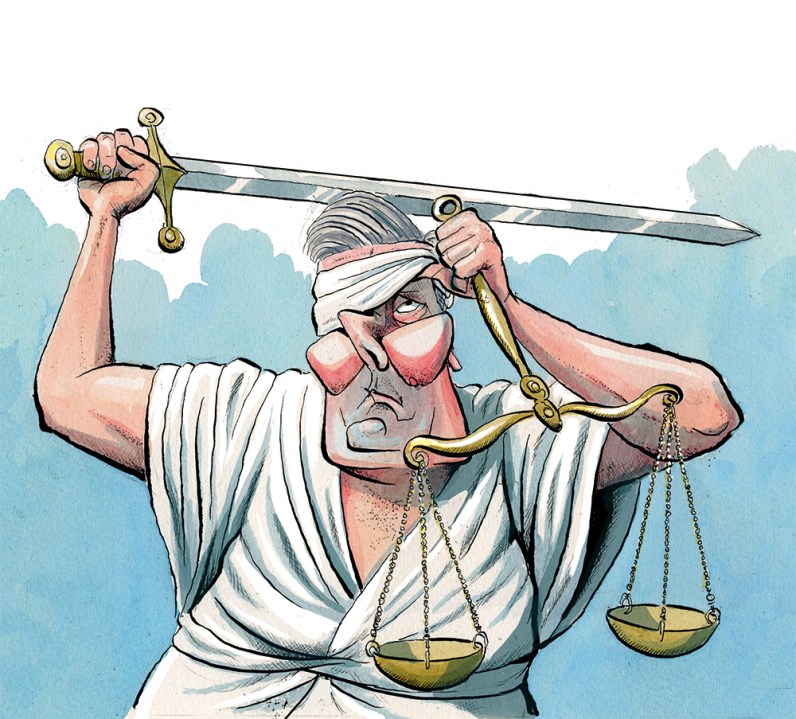
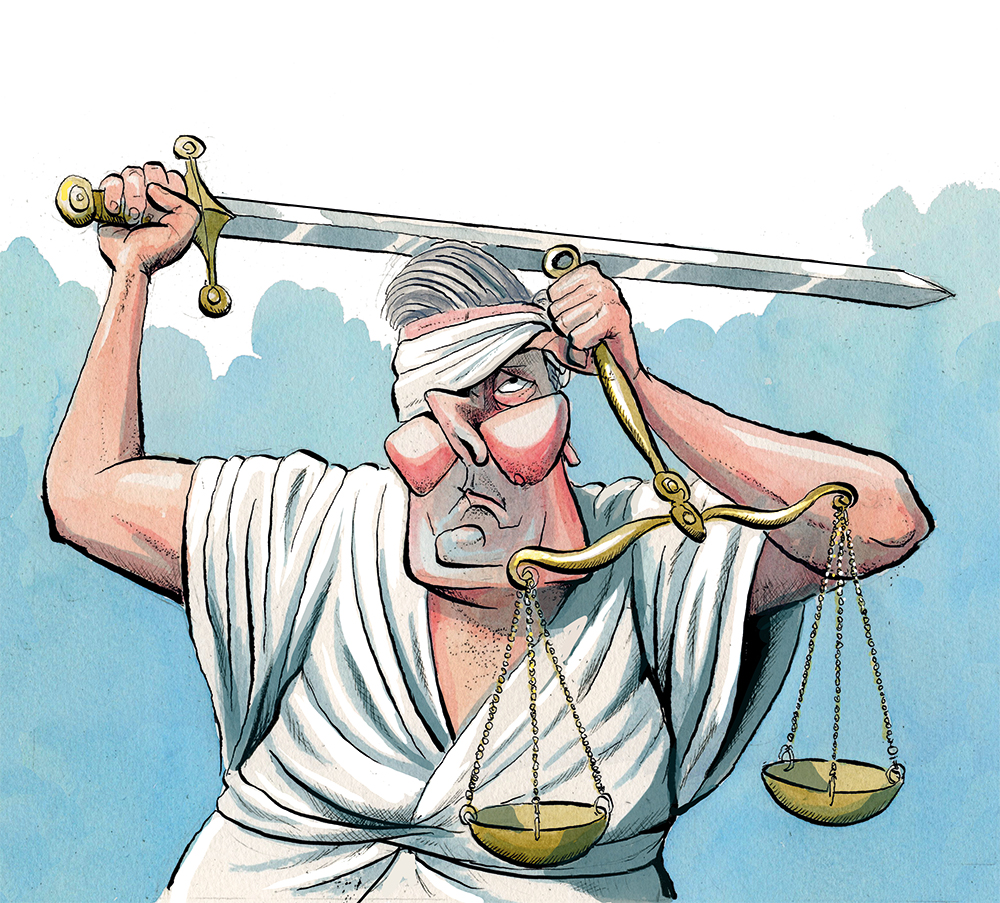
Keir Starmer chose to make the fate of the islands a foreign policy priority within his first 100 days
Britain does desperately need more revenue, but the Chagos deal is even more baffling and apparently self-defeating than any mere sellout story.
This strategic crown jewel in the Indian Ocean has been governed from London since 1814, after being captured from the French during the Napoleonic Wars. Yet now Britain plans to surrender control of some 60 islands to Mauritius – while paying rent for 99 years to use one of them, Diego Garcia, as a joint UK-US military base.
Projected costs for this arrangement range from the steep to the astronomical. One official estimate puts it at $47 billion: equivalent to ten Queen Elizabeth-class aircraft carriers. It is a hefty sum to pay a foreign state for the privilege of using a base which is already British. Rather than make money, it will cost the United Kingdom significantly. Trump’s bafflement is justified. His administration has spent weeks being lectured by the British Prime Minister and his European counterparts on the sanctity of self-determination. Yet the rights of the Greenlandic Inuit, so ardently championed by Keir Starmer, are seemingly denied to the Chagossians. Evicted by Britain from the islands in the 1960s, they are in the main opposed to Mauritian control. Cut out from talks on the future of their homeland, the pleas of the Chagossians have fallen on deaf ears. A late bid for a plebiscite has been blocked by ministers.
Starmer’s justification is that such costs are necessary to put the future of Chagos on a stable footing. Since the 1980s, Mauritius has waged a long-running war in international courts to claim control. Starmer, a former human rights barrister, argues that signing this deal will draw a line under the matter and demonstrate Britain’s adherence to international law.
Such faith seems grossly misplaced in the current climate – especially given Mauritius’s history of undermining past agreements. Not for nothing has Starmer been likened to a “kindly and possibly demented old lady who gives away her worldly possessions to a donkey sanctuary, leaving herself shivering and unfed” by one unimpressed Spectator colleague.
Similar sentiments are echoed on both sides of the Atlantic. A veritable succession of Pentagon intelligence and military leaders have warned in recent months of the dangers of conceding even an inch of turf in the Indo-Pacific region. Just 48 hours before Trump’s U-turn, nine security chiefs wrote to the President, reminding him of Diego Garcia’s role in the Cold War when it was “central to strategic deterrence, intelligence collection, long range strike and maritime dominance across the Indian Ocean.”
China hawks in London cite the increasingly pro-Beijing stance adopted by the Mauritian government. Both are explicitly committed to closer ties and signed a bilateral currency agreement at the end of 2024. “By ceding the archipelago to Mauritius – a state whose ‘Vision 2050’ is increasingly choreographed by Beijing’s credit lines – we have not secured a base; we have signed a century-long lease on a hostage,” says Luke de Pulford, head of the Inter-Parliamentary Alliance on China. “The suggestion that we can maintain a ‘security cordon’ while the Mauritians invite Chinese ‘fisheries’ into the outer islands is a fantasy.”

Then there is the nuclear angle. Mauritius is a signatory to the Pelindaba Treaty, which bans the stationing of nuclear weapons on African territory. This risks inhibiting Britain and America’s freedom to maneuver on Diego Garcia, with parties to the Treaty able to take Mauritius to the international courts. As Lord Lilley, one of Margaret Thatcher’s former cabinet, asked in the House of Lords in November: “Does it mean that no nuclear weapons can ever be stored, based or transited through Diego Garcia? If so, does the United States know about this?” Any potential compromise to the Treaty could subsequently then be used by China’s BRICS allies as a basis to station nuclear weapons across Africa, too.
Given such risks, senior officials in London are perplexed as to why the deal is being railroaded through with such speed. There is no domestic appetite to hand over the Chagos Islands and seemingly no urgent need to unburden Britain of this longstanding imperial possession. Yet Starmer chose to make the fate of the islands a foreign policy priority within his first 100 days.
The finger of blame is pointed at his national security advisor, Jonathan Powell, a Blairite grandee well-versed in the art of the imperial scuttle. One account of the Chagos deal being unveiled has Starmer’s aides, in late 2024, asking how they would justify paying Mauritius to use its existing base. It is said that Powell’s answer amounted to: “We have to.” He then refused to get into the matter in detail and appeared to reject the premise of having to explain himself at all.
Britain could end up paying development aid to a country more affluent than itself
The absence of a convincing explanation explains the lack of support for the handover at both an elite and a popular level. “There is not a single person other than the Chinese government who thinks that this is a good idea,” says one official. “And we are not getting anything from the Chinese government other than shit, constantly. I’m really struggling to understand the logic. There’s just so many things on foreign policy. Why have they chosen to pick another fight?” Another veteran offers an explanation: “Guilt, legalese and international hobnobbery – the classic Foreign Office trifecta.”
Hopes that British largesse might win friends in the “global South” already look to have been dashed. Just weeks after the terms of the handover were signed in late 2024, Mauritius joined many other non-western countries in calling for the UK to pay slavery reparations. One absurdity of the proposed Chagos deal is that Britain has agreed to send $60 million a year in annual development aid to the richest country on the African continent – for 25 years. With an annual growth rate of 4.5 percent, Mauritius could overtake the UK in GDP per head by 2051. Britain may up paying development aid to a country more affluent than itself.
Faced with such official incompetence, it is no surprise that some right-wing Britons are seeking liberation from abroad. Like Princess Leia in Star Wars, they believe Trump to be their only hope. The President’s initial approval of the deal was a key factor in convincing British MPs to back the agreement. Now it has been withdrawn, shouldn’t the deal go, too?
Nigel Farage, the leader of Reform UK, attended the World Economic Forum in Davos – in part to lobby team Trump on Chagos. “I have spoken to every senior member of this administration on this issue, face to face,” he says. “It’s not law. It hasn’t passed in parliament. The treaty’s not been signed. It’s totally reversible – and this to me sinks it below the water.” Kemi Badenoch, the Conservative leader, also met Republican Speaker Mike Johnson on his recent visit to London and warned him the deal risks weakening UK and US interests.
In Washington, British critics of the Chagos handover have found common cause with Trump’s allies
There are some signs that such pressure is working. Within Washington, British critics of the Chagos handover have found common cause with Trump’s allies. There is mutual contempt and suspicion for Starmer’s motives. “The only reason he’s doing this is because he feels guilty that the United Nations has said that the United Kingdom should be ashamed of its history,” spat John Kennedy, the garrulous Louisiana Republican, in the Senate this month. “I’m sorry he feels guilty – he needs to go buy an emotional support pony. But he doesn’t need to give away an American military base.”
Strikingly, Scott Bessent, the cerebral US Treasury Secretary, has gone further, suggesting, “the UK is letting us down with the base on Diego Garcia.” All eyes in London are on Trump what might do next, despite Starmer’s insistence that such pressure will not bounce him into a rethink on Chagos. In Labour circles, eyebrows have been raised at the Prime Minister’s determination to give the islands away. Critics mutter darkly about the role in this deal of Philippe Sands, a human rights barrister who represents the Mauritian government – and who is a close personal friend of the Prime Minister.
Within the government, there are fears that Starmer is twisting John 15:13 – “Greater love has no man than this: to lay down his country for his friends.” “I wish the Mauritians were our trade negotiators,” jokes one Labour MP. “Not sure how many votes it is going to win us at the next election though.” The deal looks set to complete its passage through parliament in the coming weeks, with only a thin red line of ermine-clad peers in the House of Lords standing in its way.
If the Chagos deal does pass, for the first time since the 18th century, the sun will set on the British empire. When the UK formally cedes sovereignty to Mauritius, there will once again be a point in the day where all of Britain’s remaining overseas territories will be in darkness. President Trump is the last man who can stop that from happening.
This article was originally published in The Spectator’s February 2, 2026 World edition.




Comments